NEW DELHI: As echoes of India's gold medal in equestrian at the ongoing Asian Games trickled into Patoda village in Rajasthan's Jhunjhunu district, a 72-year-old resident found himself going back in time. This ride down memory lane was a gentle trot, not a canter or a gallop.
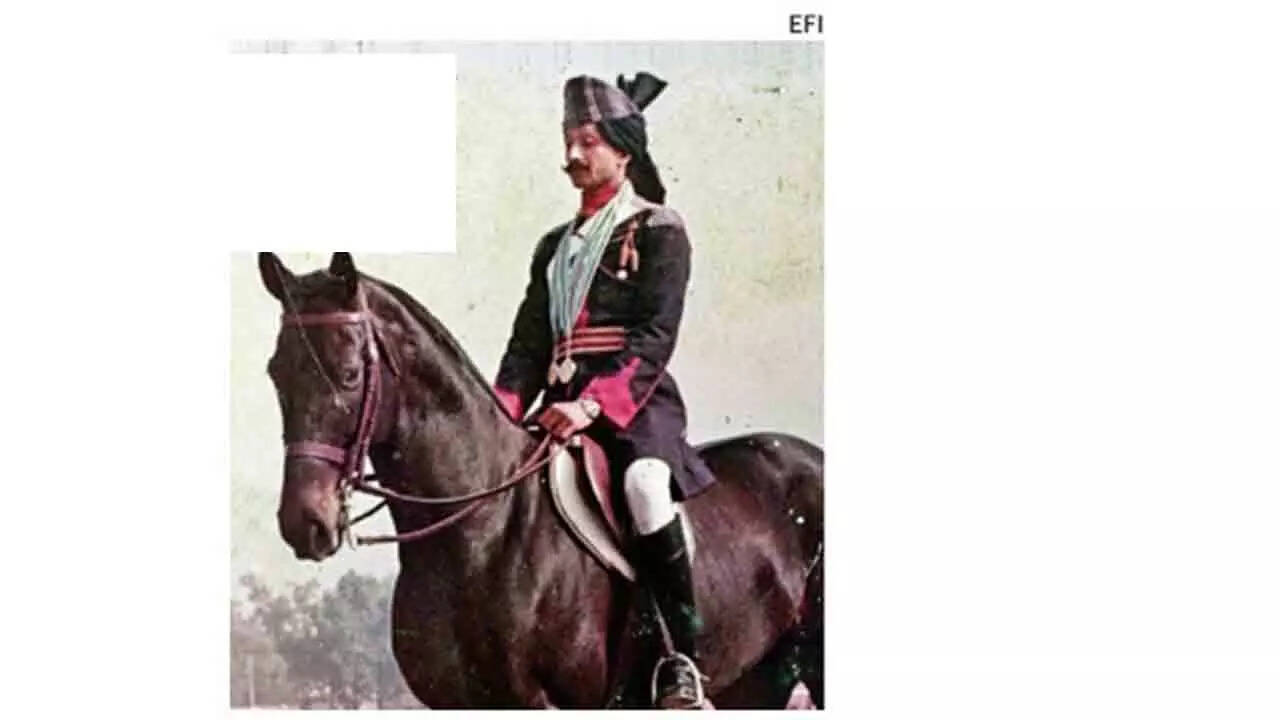
Forty-one years ago, at the memorable New Delhi Asian Games of 1982, Raghuveer Singh Shekhawat had won himself the distinction of finishing on top in eventing, the first Indian to do so when equestrian was making its debut at the Games.
Astride his loyal Shahzada, at Delhi-82, Shekhawat was on the podium not once, but twice - individual and team. Since then, the country has won a handful of silver and bronze medals in the sport at the continental event, but not another gold till Tuesday's feat in Hangzhou. India had also won a third gold in the sport in 1982.
"Today is a momentous occasion. It gives me immense pleasure to see my fellow Indians finish on the top of the podium again after such a long time," Shekhawat told TOI over the phone from Patoda.
"It still feels like yesterday," he said, when asked about his achievement 41 years ago, when he, just 31 then, became a household name in Rajasthan. "I was a daffadar (hawaldaar) in the army. We used to take part in few competitions here and there. One day we were told to be prepared for an upcoming event. We had little idea what Asian Games were or what its significance held. I even did not know that equestrian qualified as a sport."
Shekhawat and his team were told to give everything to win. "After the competition, I was asked by journalists what I felt about the win, I said, 'This is my routine. I do it every day.'
"We prepared for about two years and participated normally as we would in other competition. I managed to win two gold (individual eventing and team with Ghulam Mohammed Khan, Bishal Singh and Milkha Singh)," said Sekhawat.
Shekhawat turned a little emotional talking about the horse, Shahzada, who helped him create history. "We had local Indian horses then. Shahzada was my horse and it was from Uttar Pradesh. We came together in 1980 and stayed till 1988 when I retired from the army. It was something of a father-son relation. I used to ride it for two to three hours every day but was at its service for almost 20 hours a day, taking care of it. I even used to sleep in the stable if it fell ill," he remembered.
How did the twin gold medals change his life? "I became an instant hero in my village. Even before the event I had gained some popularity in Patoda as people would travel to watch me in action on TV. My father, also an armyman, travelled 40km from my village to Jhunjhunu to see it all on TV. The win brought me fame and I got Rs 50,000 for each medal from the state government," said Shekhawat who later rode at Seoul 1986 (two bronze) and Hiroshima 1994 Asian Games.
Shekhawat said his association with Shahzada ended when he retired from the army. "Shahzada was given to others after my retirement and it took part in other competitions. Once while returning after an event in 1991, it met with an accident near Dhaula Kuan in Delhi and unfortunately had to be euthanised."