WASHINGTON _ When Democratic strategists say they think _ or hope _ that Hillary Clinton is mighty enough to help down-ballot candidates win, they're talking about people like North Carolina's Deborah Ross.
Ross faces two-term U.S. Sen. Richard Burr, a Republican who has a relatively low profile in his home state but a choice spot in Washington as chairman of the Senate Intelligence Committee. Burr has more campaign cash, but Ross is trying to bridge the difference quickly, out-raising Burr in the most recent quarter.
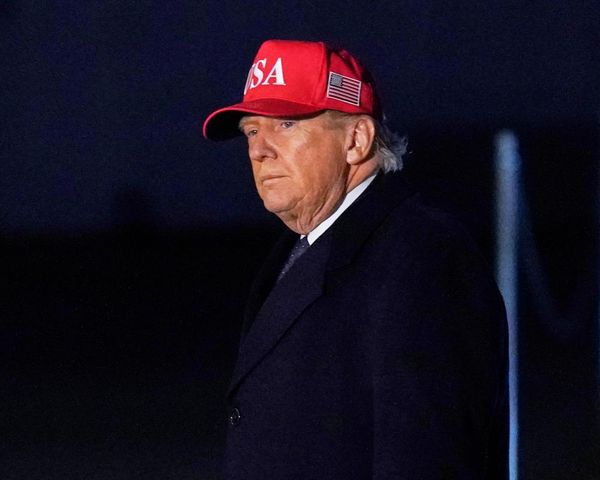
Clinton is pouring presidential campaign resources into North Carolina, one of the South's most important swing states, where Republican nominee Donald Trump lacks extensive field operations but has visited several times and has enough fans to be competitive.
Democratic Party insiders say Clinton has tied her North Carolina operations more closely to the state's party organization than past nominees have, including Barack Obama in 2008 and 2012. Clinton staff and volunteers work from the state Democratic headquarters in Raleigh, and they are in every county, running coordinated campaigns and voter turnout efforts with local candidates.
The coordination between Clinton and other Democratic campaigns in the state includes pairing up for door-to-door canvassing and phone banks.
"No campaign but a national campaign with those kinds of resources can really implement a statewide field operation ... . It's money," said Scott Falmlen, a former state Democratic Party executive director who now is a consultant. "All these races are intertwined to some degree."
For example, strategists think most voters won't split their ballots in November, even though North Carolina's election rules no longer allow one-step, straight-party-ticket voting. That means Ross and Roy Cooper, the Democratic candidate for governor, could benefit from Clinton's campaign if it can generated a high anti-Trump turnout.
"If Hillary Clinton carries North Carolina, Deborah Ross and especially Roy Cooper are guaranteed to win," said Gary Pearce, one of the state's most-prominent Democratic advisers, who helped run campaigns for former Gov. Jim Hunt.
Still, Falmlen said, the absence of easy straight-party ticket voting might shake up down-ballot races.
"We have a very long ballot," he said. "The worry is, what will the drop-off be?"
One Democrat running in North Carolina already knows how drop-off can hurt.
Four years ago, Linda Coleman ran as a Democrat for lieutenant governor against Republican Dan Forest. Nearly 100,000 people voted for Obama but not Coleman. She lost by fewer than 7,000 votes.
This year, Coleman is again running against Forest. Clinton supporters may help elect her, but Coleman said down-ballot pickups were no guarantee.
Still, Coleman has started using the Clinton slogan "stronger together." And, she said, Clinton's campaign has made itself available to help with rallies and fundraiser functions and to advise other candidates.
"Her strength can trickle down," Coleman said of Clinton. "People like to be on a winning team."
North Carolina voted for Obama win in 2008 but flipped four years later in supporting Republican Mitt Romney.
In both elections, North Carolina had the second-closest race in the country, and most polls and political observers say 2016 will be close, too.
Although Clinton can help down-ballot, she carries some liability.
"She's got baggage," Pearce said. "But the good news is Trump has bigger negatives."
For example, Clinton faces an onslaught of criticism from Republicans who think she should have been prosecuted for using a private email server to send sensitive information while she was U.S secretary of state.
Hours after FBI Director James Comey announced earlier in July that his office wouldn't pursue criminal charges against Clinton, she campaigned with Obama in Charlotte, North Carolina.
Ross was there to greet Clinton. The emails didn't come up in their conversations.
But Ross said in a recent interview: "I would have told her to her face that she was wrong ... . Make no mistake, what she did with those emails was inappropriate."
Still, Ross said she thought the FBI was thorough and accurate with its investigation and recommendation that Clinton not be criminally charged. The issue, Ross said, hasn't been a factor in her choosing to support Clinton.
Clinton is an asset, Ross said, in a year in which Democrats have strong candidates running statewide.
Still, Ross will need to distinguish herself and raise her name recognition to unseat Burr. An April survey by Public Policy Polling, a left-leaning group, found that nearly 65 percent of N.C. voters didn't have opinions about Ross; the rest were almost evenly split on whether they supported her.
Democrats in North Carolina say Clinton's potential down-ballot momentum might coalesce in their favor as the state party rebounds from past years of disorganization and reluctance from candidates to cheer-lead their national ticket.
Former U.S. Sen. Kay Hagan, D-N.C., distanced herself from Obama two years ago and, Falmlen said, channeled most of her campaign operations through the Wake County Democratic Party instead of the state organization.
"It's like night and day," Ross said in comparing her situation with Hagan's. "I have not seen this kind of unity and organization in a long time in the Democratic Party."
North Carolina Democratic Party spokesman Dave Miranda said Clinton was running an unselfish campaign, shown by her sharing office space and resources with the state party and county-level organizers.
North Carolina Democrats are "unified like never before. It has not always been the case," Miranda said.
Falmlen said 2016 was "light-years away" from how Democrats used to run statewide campaigns in North Carolina. "Twelve or 16 years ago ... Democrats often were leery of being seen with what was seen as a more liberal (nominee) ... . And that has changed."
Republicans are lining up behind Trump in North Carolina and think he, too, will help candidates running statewide, said Kami Mueller, spokeswoman for the state GOP group.
Trump has not set up a state network like Clinton's. But Mueller noted a recent Trump rally with vice presidential candidate Mike Pence, where N.C. Gov. Pat McCrory, Burr and other Republicans supported their nominee.
"Energy is an impossible thing to manufacture in a campaign: You either have it or you don't. And we have it in spades," Mueller said.
In heavily Democratic Durham County, Republican organizers could use a boost from a Trump field operation, said Durham County Republican Chairman Immanuel Jarvis.
Jarvis said he was still waiting for a call that Trump staffers and volunteers were headed his way. Such a move, he said, would help down-ballot Republicans like Burr and McCrory.
"It's manpower," he said. "You can piggyback both of your messages."
But, Jarvis said, Trump is running his self-funded campaign like a business and his collaboration with other campaigns has been limited.
"He's not a politician. ... It does look a lot different," Jarvis said.
Yet Trump's tactics appear to be working, Jarvis said. Trump doesn't need multimillion-dollar TV ads because he's getting plenty of media attention. He won North Carolina's March primary with little to no formal campaign infrastructure.
On the Democratic side, Clinton could help down-ballot candidates even more, Ross said, if she'd talk more about the party's plan for reducing student debt, raising the minimum wage, securing Medicare and Social Security, and ensuring equal pay for women.
"I think (Clinton) needs to hit it much harder, particularly for the seniors," Ross said. "We need to take these basic kitchen table issues to the public."