MOSCOW _ For the second time in two weeks, the Taliban were the focus of a major diplomatic encounter, this time in Russia, elevating the stature of a militant group blamed for killing thousands.
And just like the last time, in the Persian Gulf state of Qatar, the elected, internationally backed Afghanistan government was left on the sidelines, fuming.
Taliban representatives, after six days of talks with Trump administration officials during which the two sides discussed a possible agreement on the withdrawal of U.S. troops from Afghanistan, this week gathered with leaders of various Afghan political factions in Moscow for a two-day conference on Afghanistan's political future.
Participants included former Afghan President Hamid Karzai, who listened as a Taliban negotiator laid out the group's conservative manifesto and a vision of its role in a postwar political system. It called for a new constitution based on Islamic teachings and condemned what it described as the "immorality, indecency and circulation of non-Islamic cultures" that have accompanied the U.S.-led military intervention for more than 17 years.
By the time the talks concluded Wednesday, the Taliban appeared strengthened as a political movement. The Afghan government, which the insurgent group regards as a Western puppet and has refused to negotiate with, looked ever weaker.
"It has further eroded the authority of the Afghan government and strengthened the legitimacy of the Taliban on the international stage, and it has also deepened the fragmentation of the Afghan political class," said Davood Muradian, director of the Afghanistan Institute of Strategic Studies, a Kabul think tank. "It was the Taliban who won the show, at the expense of the Afghan state and even of a workable peace process."
Afghan President Ashraf Ghani dismissed the Moscow meeting, organized by an Afghan diaspora group and billed as an "intra-Afghan dialogue," as illegitimate. But the Taliban's demands are being taken more seriously than ever following last month's meeting in Qatar, with another round of talks scheduled for late February.
U.S. officials have said they were close to a framework agreement under which the U.S. would withdraw forces and the Taliban would promise that Afghanistan doesn't revert to a haven for international terrorists, as it was when the group sheltered Osama bin Laden and al-Qaida in the 1990s.
A formal peace deal remains a long way off. The lead U.S. negotiator, Zalmay Khalilzad, has said that any U.S.-Taliban agreement would include a condition that the militant group negotiate with the Afghan government, and he denied Taliban claims that they had discussed forming a new, interim Afghan government.
But Ghani, who leads a national unity administration that was brokered by the Obama administration following a disputed 2014 election, has not seemed reassured by such comments.
In an interview with Afghanistan's Tolo news network this week, he blasted the Moscow meeting, saying: "What will they agree upon there, and with whom? What is their implementing power?
"Let hundreds of such meetings be held, but these agreements would only be on paper unless there is an agreement by the Afghan government."
On Wednesday, Ghani said he had spoken to Secretary of State Michael R. Pompeo, who endorsed "the centrality of the Afghan government in the peace process" and said the U.S. was committed to supporting Afghan presidential elections scheduled for July, when Ghani is expected to seek a second five-year term.
"We both agreed that words, rumors and speculations cannot replace actions and that our partnership and resolve will remain strong in the pursuit of peace," Ghani said.
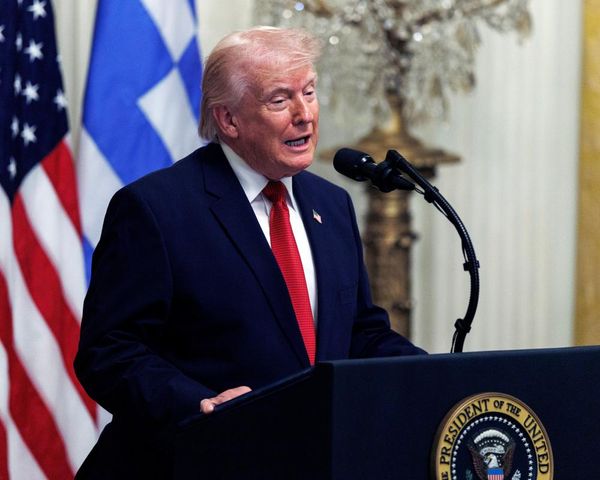
But with President Donald Trump telegraphing his desire to get out of Afghanistan _ "Great nations don't fight endless wars," he said in his State of the Union message Tuesday _ the U.S. has abandoned a longstanding policy that any talks on ending the Afghan war must take place among Afghans, and acceded to the Taliban's demand that the Kabul government be left out of the peace process for now.
"The U.S. is guilty of creating this situation, and by ignoring the Afghan government they have set a precedent for other players to follow suit," Muradian said.
After years of closed-door meetings with diplomats in foreign capitals from Norway to China, the conference at the President Hotel in Moscow marked a first in the history of abortive Afghan peace efforts: a face-to-face encounter between political leaders and the Taliban that was broadcast live in Afghanistan.
Many Afghans followed Tuesday's opening statements on television and social media, despite interruptions caused by electricity outages that are common in Kabul in the winter.
"I think it's a step," said Fawzia Koofi, a lawmaker and one of two women who participated in the meeting. "It's a very long way to go, but the first step is for us to be able to talk. Instead of using bullets we use microphones, we use statements and speeches and what we believe in."
In opening remarks, the Taliban spokesman, Mohammad Abbas Stanikzai, said the group was committed to peace, protecting civilian lives and women's rights, and did not seek "exclusive rule" over the country it led from 1996 until the 2001 U.S.-led military invasion.
But Stanikzai also condemned the U.S. military intervention for disseminating "Western, non-Afghan and non-Islamic dramas, paving the way for moral crimes and encouraging women to violate Afghan customs." While in power, the Taliban banned girls' education and carried out public stonings of convicted adulterers, among other forms of extreme punishment.
Stanikzai's remarks suggested the Taliban had not fundamentally changed their views and were cause to fear their re-entry into government, said Sima Samar, chair of the Afghanistan Independent Human Rights Commission.
"They should not see Afghanistan as it was 20 years ago _ they should remove that dream from their mind," Samar said. "The people have not forgotten their regime."
The Taliban have continued to carry out attacks even as they says they're ready to negotiate. Hours before the meeting began, Taliban militants carried out three attacks against government forces in northern provinces, killing 47 people, including at least one civilian.
The gathering was incongruous for another reason: The Taliban formed to fight the Soviet occupation of Afghanistan in the 1980s. Now it is Russia under President Vladimir Putin that is trying to cast itself as a stabilizing force in Central Asia.
But Russia's geopolitical competition with the U.S. is the larger factor at play, said Alexander Gabuev, the chair of Russia in Asia-Pacific Program at the Carnegie Moscow Center, a think tank.
Russia wants to exploit every possibility that is left on the global map as a result of the U.S. withdrawal, Gabuev said.