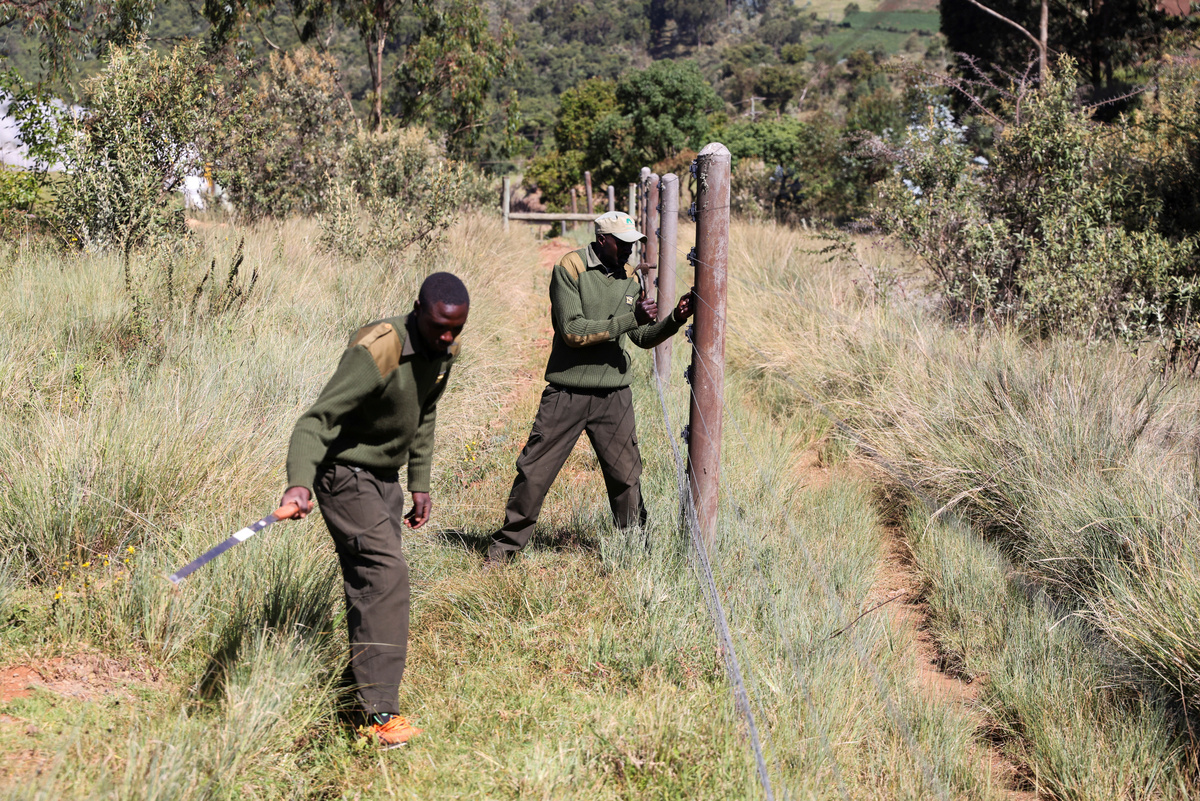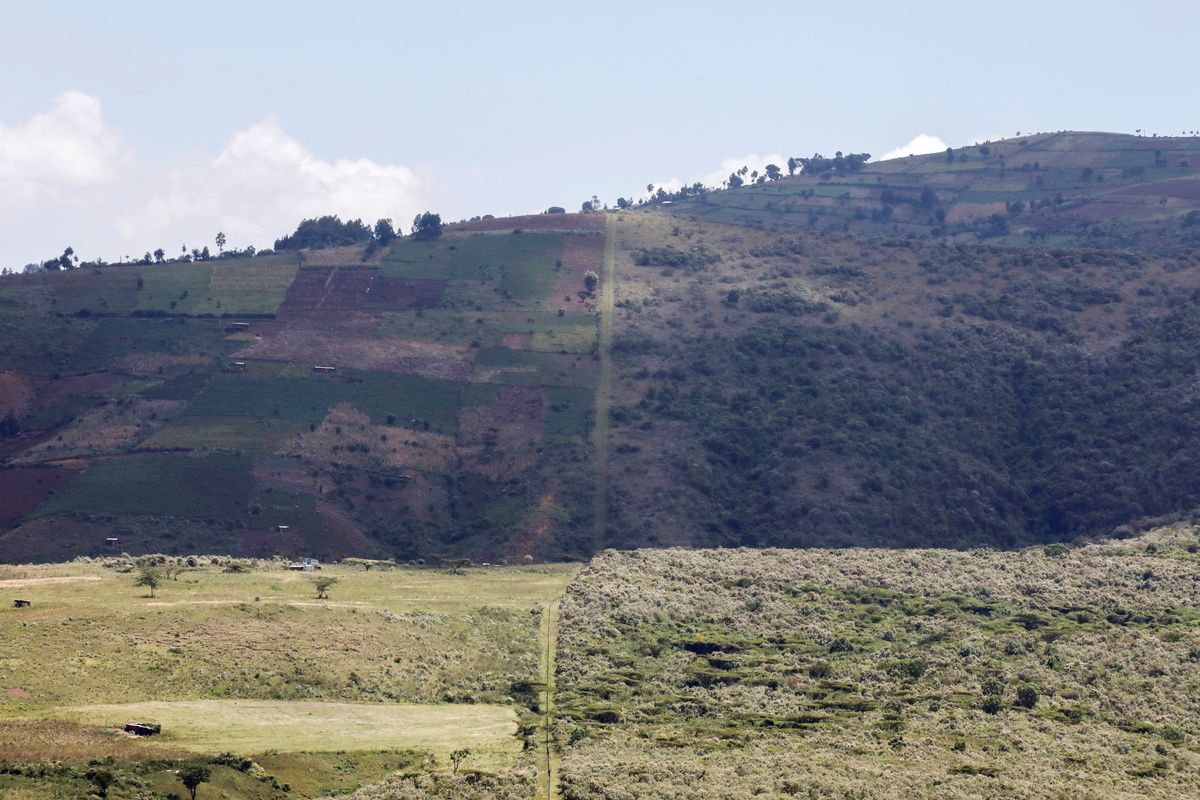
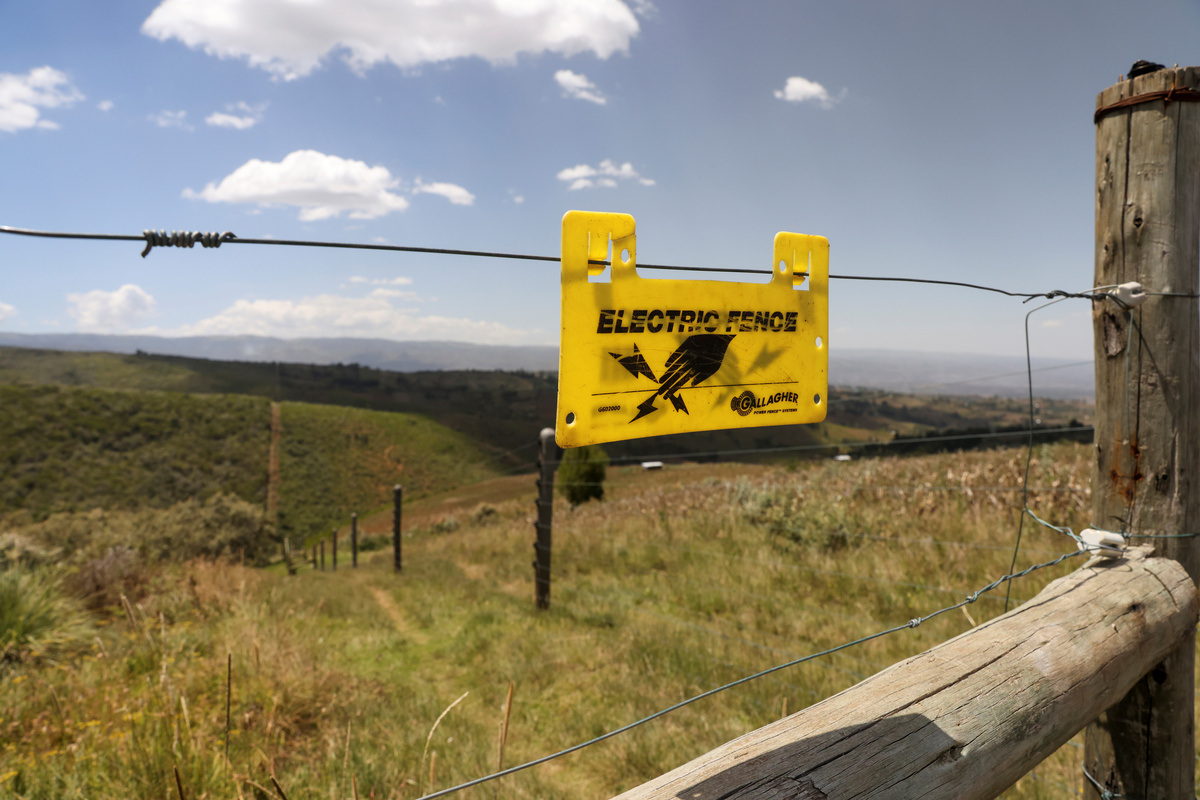
What can stop wandering elephants, illegal logging and protect sources of water? Kenyan environmental group Rhino Ark Trust says: electric fences. Lots of them.
The trust has put up fences around two key areas where rainfall feeds Kenya's rivers. It is adding more fencing around a third area in Mount Kenya, where 250 kilometres out of a planned 450 kilometres (280 miles) has been constructed.
A fence is already encircling the sprawling canopy of the Eburru Forest in Kenya's Rift Valley. The 43-kilometre long fence, set up in 2014, cut rampant illegal logging and charcoal burning to almost nothing, said Joseph Mutongu, the fence community manager at Rhino Ark Trust, a private conservation group that financed the fence.
Alarms on the fence alert rangers to any breach. Rhino Ark Trust estimates that its fences protect 570,000 hectares of prime mountain forests that are Kenya's key rain catchment areas.
Kenya aims to increase its forest cover to 10% of its land mass by 2022, attaining the standard set by the United Nations, from about 7% in 2015, data from the ministry of environment showed. Private conservation groups are vital help and fencing is being used more often after the success of the Eburru project.
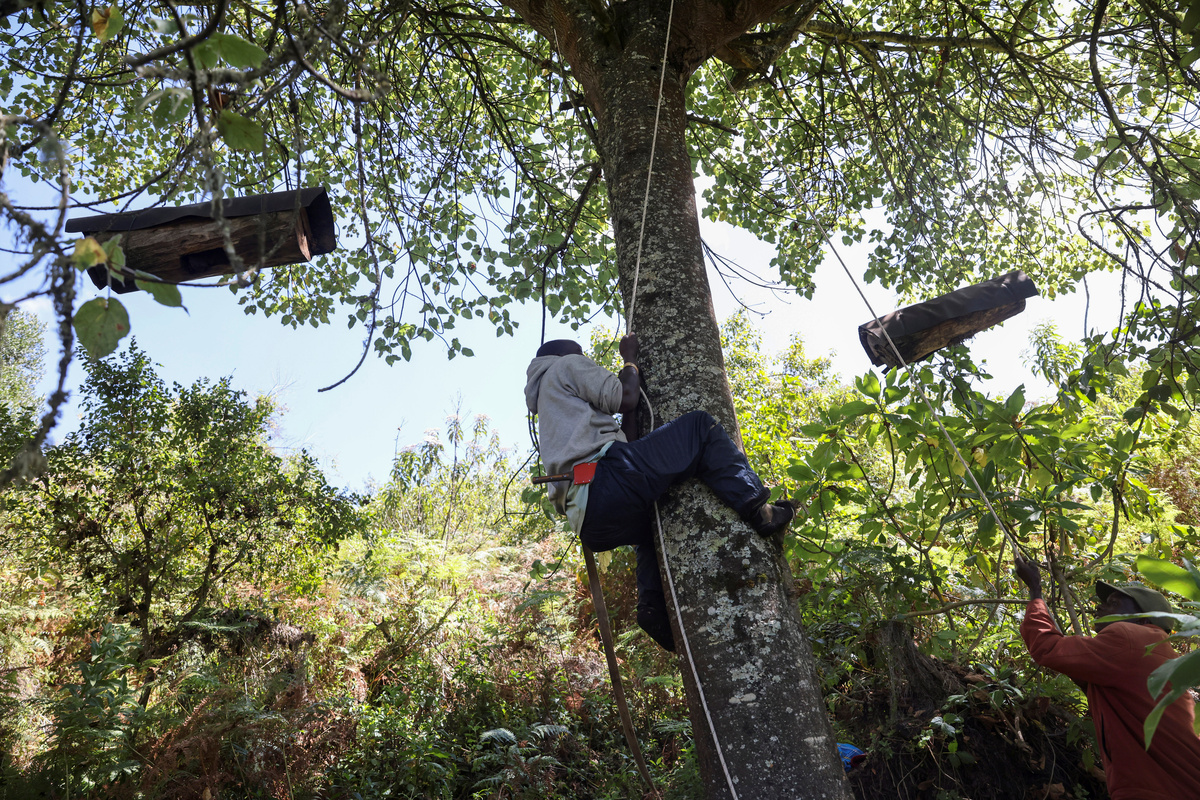
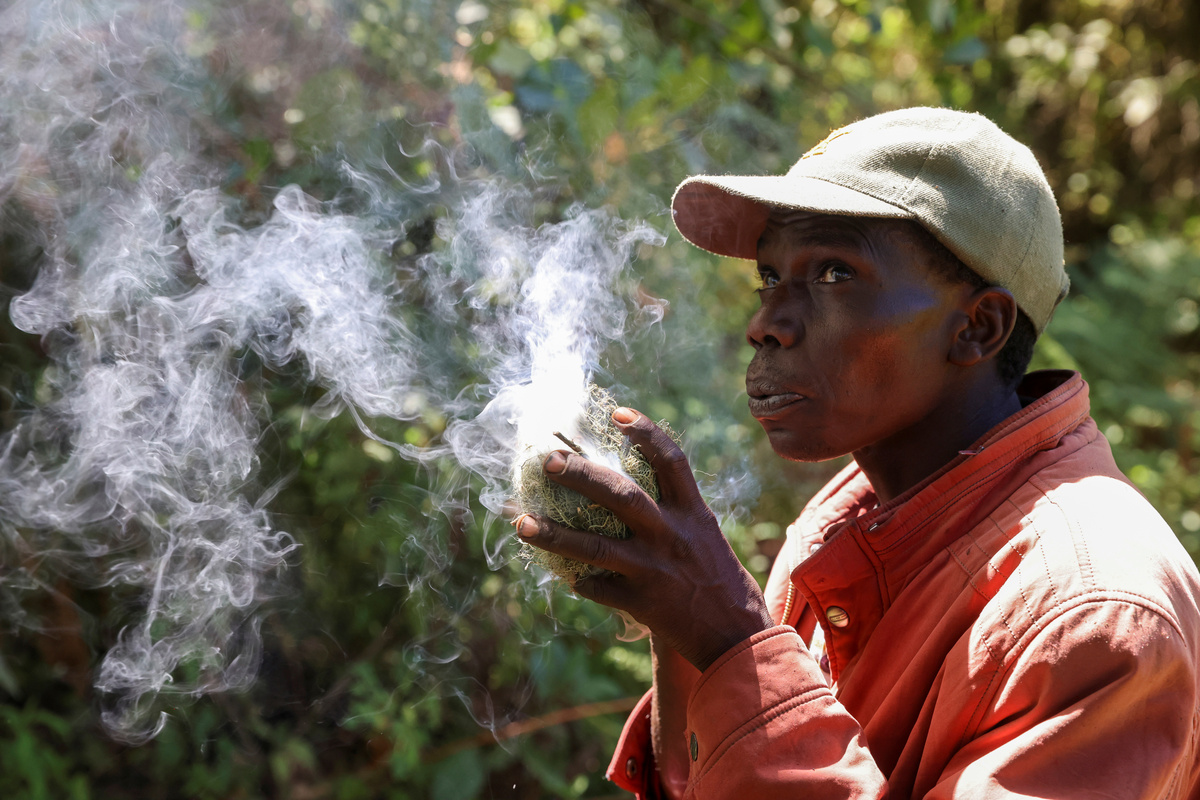
The fences help protect wildlife from hunting and trees from being chopped down. But they do not cut off local communities - Rhino Ark encourages the Ogiek community in Eburru to harvest honey and wild fruits.
"This was our only source of livelihood. We were greatly dependent on honey, meat and wild fruit," said Maseto Kusen, a member of the Ogiek.
Local farmers who had planted potatoes in the Eburru Forest have been resettled in land adjacent to the forest, where they grow fruits like tree tomatoes.
Farmers believe the trees will help ensure the rain, said fruit farmer Joseph Kariuki.
"It is green everywhere," he said. "The environment has really changed."
(Reporting by Edwin Waita; Writing by Duncan Miriri; Editing by Lisa Shumaker)