The Japan-U.S. Security Treaty, in its present form after a revision, saw the passage of 60 years in force on Jan. 19 this year. Faced with the inward-looking attitudes of the United States as symbolized by U.S. President Donald Trump, however, the Japan-U.S. alliance is being tested on whether it will be able to deter militarily rising China.
How should Japan cope with these developments? A look at the history of the security treaty offers some hints.
The United States has alliances in various regions of the world under the belief that forming networks that would enable its forward deployment of U.S. forces and securing regional peace and stability are linked to American interests.
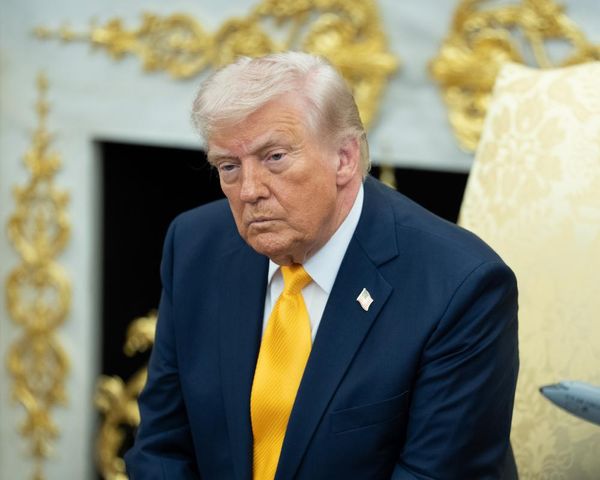
Yet Trump, who interprets the forward deployment of U.S. forces as an excessive burden on the United States to defend its allies, is calling on allies to increase their share of the burden related to spending on U.S. forces stationed in and defending these countries.
"From this moment on, it's going to be America First," Trump said in his inaugural address in 2017. The American president was emphasizing his determination to prioritize the rebuilding of the U.S. over providing security overseas.
Japan cannot escape Trump's claims. Trump has concluded that the Japan-U.S. Security Treaty is "unfair" because, while Japan provides U.S. forces with bases in Japan, the deal calls for the United States to assume the obligation of defending Japan in return.
Although Trump's assertion differs from mainstream opinions in diplomatic circles in the United States, it speaks to the sentiments of the American people, who have become weary of two wars, one with Afghanistan and the other with Iraq. So this cannot be cast aside as merely Trump's personal opinion.
Nixon Doctrine
If we look back at history, there were times similar to the present when public opinion in the United States became inward-looking.
In July 1969, U.S. President Richard Nixon made remarks emphasizing that although the United States would provide its nuclear umbrella to its treaty allies in a strategy of extended deterrence, each nation should assume responsibility for its own defense. These remarks later came to be called the Nixon Doctrine.
It can be safely said that Trump has taken over the Nixon Doctrine.
Negotiations over the revision of the special measures agreement on cost-sharing for U.S. forces stationed in Japan are scheduled to be conducted in earnest in the second half of this year, during which Japan expects to be leveled with U.S. demands that will be difficult to accept.
The threat posed by China that Japan faces today is more imminent than that posed during the Cold War when there was a nuclear "balance of terror." China, which has already surpassed the Self-Defense Forces (SDF) and the U.S. forces stationed in Japan in terms of conventional weapons, no longer hides its territorial ambitions, which encompass the East China Sea even including the Senkaku Islands of Okinawa Prefecture.
Placed in such a harsh situation, how should Japan deal with the circumstances? Neither putting up with becoming a peripheral country afraid of China, nor rising against China single-handedly without counting on assistance from the United States would be a good option for Japan to take.
In the end, there would be no other option but for Japan to make efforts to further secure its ties with the United States, while evading Trump's unreasonable demands.
It is necessary for Japan not to let discussions over money become overheated and be at the mercy of Trump's words and deeds.
Japan assumes more than 70% of the costs of stationing U.S. forces in Japan, an amount that is above what it would cost for transferring U.S. bases to the United States. If U.S. bases left Japan, the operation of U.S. forces will be greatly hindered in such regions as the western Pacific, the South China Sea and the Middle East.
It is a matter of course for Japan to explain these facts to the U.S. side in detail. But if Japan emphasizes that it is assuming an adequate share of the burden, the U.S. side will probably refute this by saying that Japan should compensate for the reinforced preparedness made in view of China and for the burden of U.S. personnel risking their lives.
Buying spree
If the discrepancy between Japan and the United States surfaces, China may misread it as Japan-U.S. ties having weakened.
What Japan should tackle now is to deepen its bilateral discussion with the United States on how both countries would deter China and share this strategy with the United States, as it did to strengthen its preparedness against the possible aggression of the Soviet Union in the latter half of the 1970s.
Fortunately, the Trump administration has adopted an approach of dealing with China in great-power rivalry by taking over the policy line of peace through strength, a line taken by former U.S. President Ronald Reagan.
Reagan, who took office in 1981, called the Soviet Union an "evil empire," and opted for all-out confrontation rather than coexistence with the Soviet Union.
In Japan, then Prime Minister Yasuhiro Nakasone, acting in concert with Reagan, reinforced the country's sea-lane defense, removed the hitherto official limit of defense spending up to 1% of gross national product (GNP) and started provisioning weapons technology to the United States, including in missile guidance. He also had the budget increased markedly for Japan's sharing of the cost for U.S. forces stationed in Japan.
Japan's capabilities have been reinforced by a large margin compared to those days. As China no longer hides its huge claws as a military power, however, Japan's capabilities cannot be considered enough to keep the nation safe by merely having defense outlays and defense cooperation at the status quo. It is indispensable for Japan to cooperate and join hands with the United States, thus further strengthening the alliance.
Prime Minister Shinzo Abe taking the lead in allowing Japan the limited exercise of the right of collective self-defense and expanding the sphere of activity for the SDF, centering around the protection of U.S. military vessels, is in line with this course of action.
Introducing cutting-edge equipment, such as F-35 stealth fighters and E-2D early warning aircraft, to enable high-level joint operations with U.S. forces will also be useful in buoying Japan's ties with the United States.
There are critical voices saying that this is tantamount to Japan engaging in a buying spree of U.S.-made weaponry. As China's military power has improved not only quantitatively but also qualitatively, these are necessary equipment to counter China.
As to what kinds of further capabilities and actions will be necessary for Japan, there should be no taboos in such discussions. Japan possessing the capability to attack a military base of an enemy country and the U.S. deployment of intermediate-range missiles after the lapse of the Intermediate-Range Nuclear Forces Treaty should be discussed.
In new spheres such as outer space and electromagnetic waves, Japan's strengths in science and technology should be vigorously utilized.
Japan's assistance to member states of the Association of Southeast Asian Nations in building their capability with regards to maritime security in the South China Sea, for instance, will also supplement those discussions the U.S. cannot keep an eye on and help maintain the influence of the Japan-U.S. alliance.
Read more from The Japan News at https://japannews.yomiuri.co.jp/