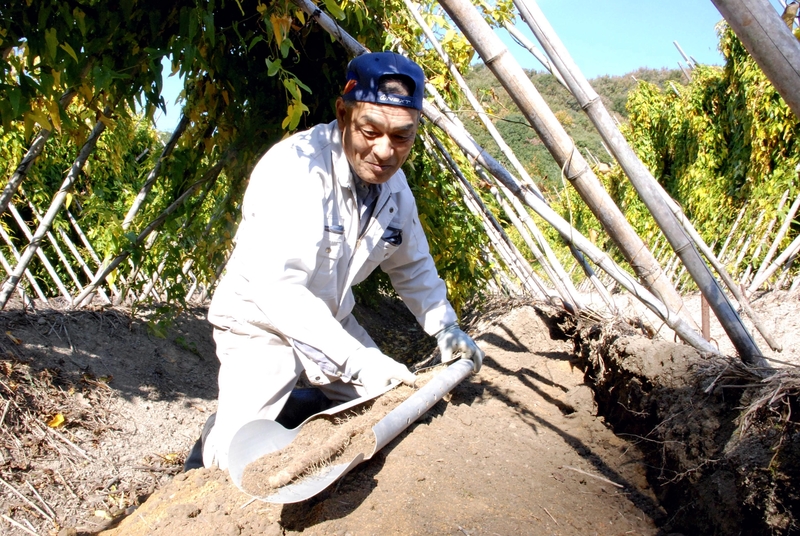
SANUKI, Kagawa -- Jinenjo wild yams usually grow twisted underground, but the ones produced in Sanuki, Kagawa Prefecture, are straight, as they're cultivated inside pipes buried under raised rows of earth in fields.
I visited the city in early November to watch some of the yams being dug as samples, before they went on sale this month. I was greeted by the sight of golden-brown yams shining under the soft autumn sun.
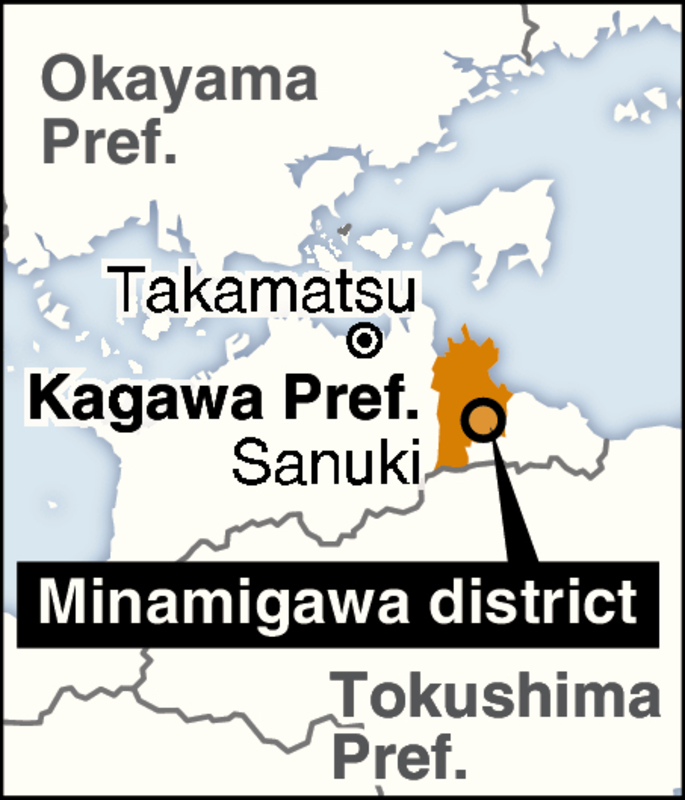
The farm I visited is in the city's Minamigawa district, about a 40-minute drive from Takamatsu Airport. A hoe was swung into a row and hit a plastic pipe about 1.3 meters long and 8 centimeters in diameter. The pipe was opened at its seam, revealing a ramrod-straight jinenjo 1 meter long and 5 centimeters thick.
"This year's jinenjo were grown in a harsh environment of scorching heat and typhoons, so they're slightly smaller than usual but they're in good shape," said Tsutomu Yoritomi, who chairs a local group studying the yam's cultivation, as he held the jinenjo and brushed away the soil.
The yield this year is expected to be about 70 percent of an average year.
Taking advantage of sandy soil with good drainage, farmers in the Minamigawa district started growing jinenjo in 1987 as crops to cultivate in former rice paddies. Two years later, about 30 farmers formed the study group.
Their cultivation method is as follows: A seed yam is planted in a ridge, and a plastic pipe is buried at a slight angle so that the tip of the seed yam touches the pipe's mouth. The yam extends its roots from the tip and over time moves into the pipe, which is filled with soil. It takes about two years for a straight jinenjo to grow.
"It all depends on luck whether the roots go into the pipe," said Yoritomi, 70. "If I plant 8,500 seed yams, I can harvest about 4,000 to 5,000 jinenjo out of that number."
After the sample was dug up, the yams were cooked for tasting at a nearby public facility. When Nagako Nakagawa, a 78-year-old member of the study group, grated them, the jinenjo was so thick and sticky, just like freshly pounded mochi rice cakes, that it stuck inside the mortar even when turned upside down.
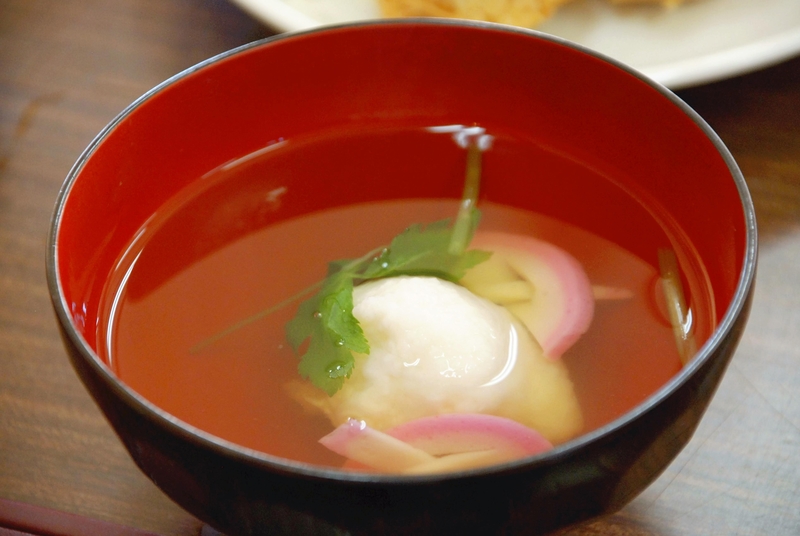
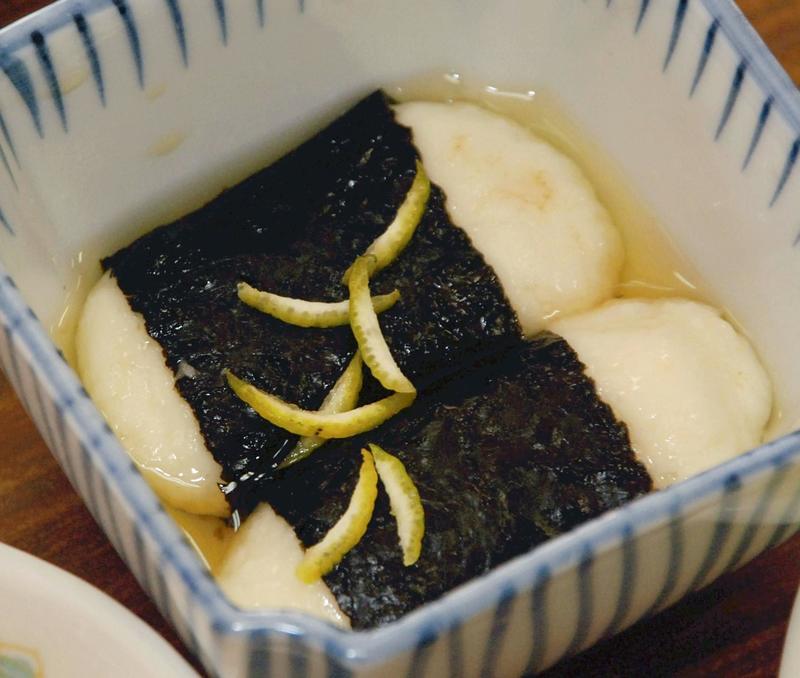
The grated jinenjo was mixed with refined rice flour to make dumplings, which were used in a soup using dashi broth prepared with kombu and bonito. Another portion was shaped into ovals to be seasoned with vinegar for a different dish.
The dumplings in the soup had a fluffy texture and left a rustic flavor distinctive of jinenjo in my mouth. The jinenjo in the vinegar dish had an even stronger aroma than the seasoning or kabosu citrus used as a garnish. The golden-brown jinenjo was filled with the autumn flavor of the satoyama countryside.
"This is a characteristic of jinenjo, which keeps its sweetness, flavor and pleasant texture no matter how it's cooked," Nakagawa said. "Adding a bit of soy sauce or dashi will complement the yam's delicious flavor."
To find out more about Japan's attractions, visit http://the-japan-news.com/news/d&d
Read more from The Japan News at https://japannews.yomiuri.co.jp/