The new coronavirus pandemic has drastically changed how live music concerts are being performed and watched in Japan.
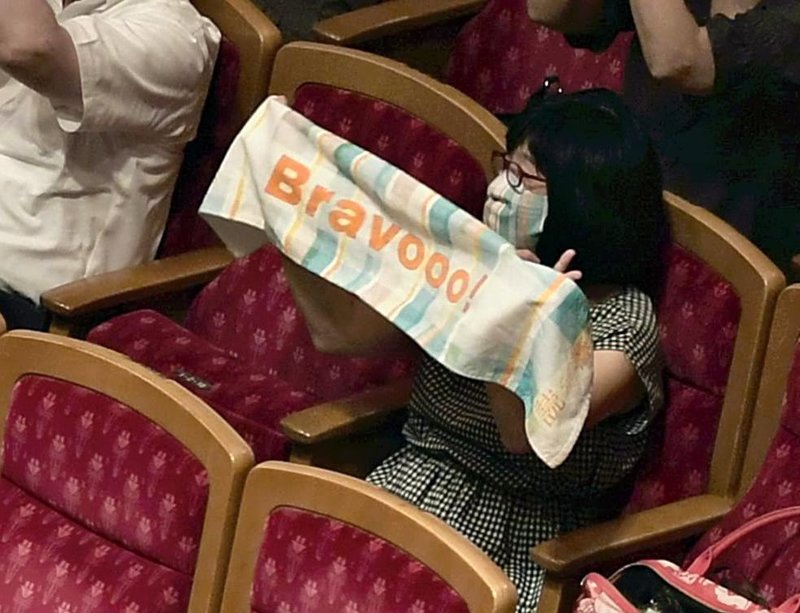
On Aug. 19, some of the spectators watching the Yomiuri Nippon Symphony Orchestra perform at Suntory Hall in Tokyo held up towels bearing the word, "Bravooo!" The towels had been distributed to holders of tickets that came with a special gift, and were inspired by the sight of an audience member holding up a piece of paper bearing the word, "Bravo" at a concert on July 5 -- the orchestra's first live performance in about 4-1/2 months. The towels were created following a request from spectators who wanted to express their feelings without speaking a word.
In the past, the audience would show their appreciation to the musicians at the end of a classical music concert by clapping and shouting, "Bravo!" However, after concerts resumed under the restrictions imposed due to the coronavirus, organizers called on spectators to refrain from yelling out due to concerns loud cheers could send potentially coronavirus-laden droplets flying. This was in line with infection prevention guidelines compiled by an association promoting classical music concerts. The guidelines also stipulated audience members themselves should tear the ticket from the stub when they enter the venue, and spectators should depart the venue at staggered times after the concert to avoid congestion. Fewer notices listing the musical numbers performed during an encore were displayed in the lobby.
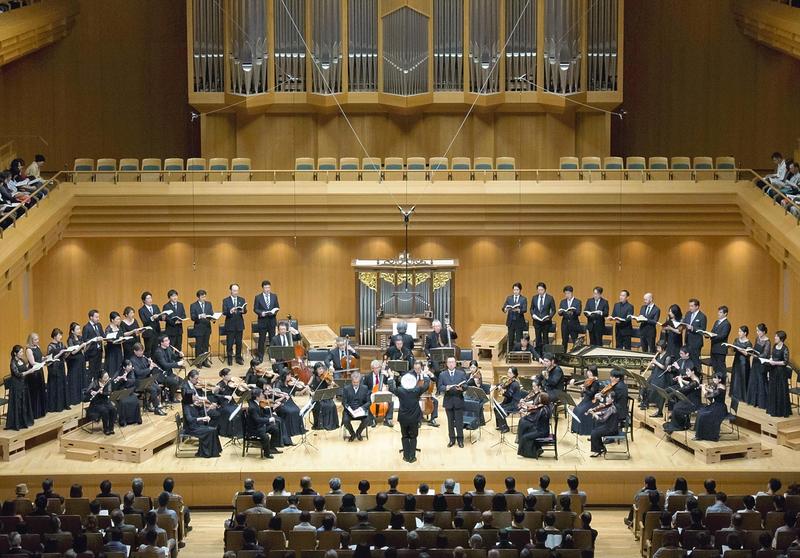
The risk of droplets spreading infection is considered to be higher for concerts featuring singing than at orchestra performances. While the curtain has gradually been lifted on these concerts, the stage layout looks completely different from before the pandemic struck.
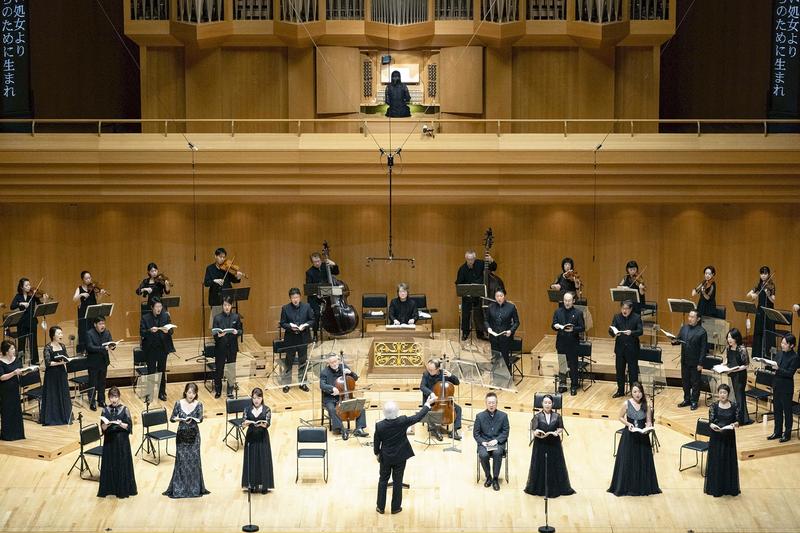
On Aug. 3, Bach Collegium Japan, a Baroque orchestra and choir, performed Bach's St. Matthew Passion at Tokyo Opera City Concert Hall. The typical stage layout was reversed to prevent the possible spread of coronavirus. Usually, the singers stand behind the orchestra. But at this concert, the singers fanned out at the front near the conductor, with the instrumentalists spread out behind them. The singers kept a 2.5-meter gap from the singers in front of them, and transparent acrylic screens were placed between them as another layer of protection. An infectious diseases expert had suggested these steps.
Singers and all choir members wore face shields during the Fujiwara Opera's performances of "Carmen" at the Teatro Giglio Showa opera house in Kawasaki on Aug. 15 to 17. The orchestra usually plays while sitting in a small pit, but this time the musicians were seated on the stage, which helped their music fill the venue even more clearly.
-- Waving is the new cheering
Wagakki Band, a popular band that incorporates traditional Japanese instruments such as the shamisen three-stringed lute and shakuhachi bamboo flute, held live concerts at Yokohama Arena on Aug. 15 and 16. This reportedly was the first concert held in an arena capable of seating at least 10,000 people since the coronavirus forced major events across Japan to be postponed or canceled. Yokohama Arena can hold up to 17,000 spectators, but numbers at the Wagakki Band's concert were capped at 5,000 each day.
Before the concerts began, an announcement over the loudspeaker system notified attendees that shouting, singing, handshakes and high fives were prohibited. During the shows, lead singer Yuko Suzuhana repeated these precautions and added, "When we say, 'Hoi! Hoi!' please think of this as us telling you when to wave your arms." Normally that call would elicit shouts from the crowd. This time, waving glow sticks or clapping were the only permissible ways to show support for the band.
Before Wagakki Band began their shows, the audience seats appeared rather deserted. But after the music kicked off, many fans held up two glow sticks, which made the arena feel considerably less empty. Suzuhana ended the show by urging the audience to refrain from going out to drinking parties after the concert -- another effort to prevent coronavirus infections spreading.
While these concerts are slowly returning, events where idol groups directly meet fans and shake their hands remain on ice. Nagoya-based idol group SKE48 has come up with an alternative. On July 11 and 12, the group held an "online talk" event. SKE48 members and fans assembled at the same venue, but they did not shake hands. Instead, the members and fans chatted online through tablets located about 4 meters apart. This was a last-ditch resort to continue holding events where fans could be close enough to see the faces of their idols, but also maintain social distancing practices.
Read more from The Japan News at https://japannews.yomiuri.co.jp/