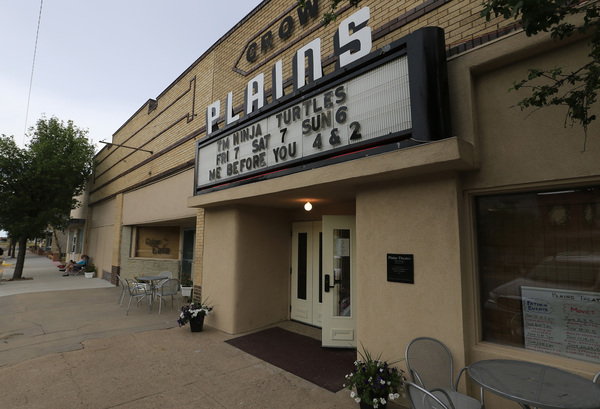
SAND CREEK MASSACRE NATIONAL HISTORIC SITE, Colo. _ Craig Moore knows that Sand Creek can be a hard sell, especially to a group of teenagers on spring break.
Groggy from the 2 {-hour drive from Denver, they pile out of two Chevy Suburbans and stand, almost bored, in the shade of junipers growing beside a picnic table.
"This is no Disneyland, no Grand Canyon," Moore says by way of introduction. "This is a sacred place where horrible things, unspeakable acts took place."
Moore talks slowly as if he hasn't said this before, but he has. Words just don't come easily when talking about the enormity of Sand Creek.
"One hundred and fifty two years ago, what happened here left an indelible mark on the land."
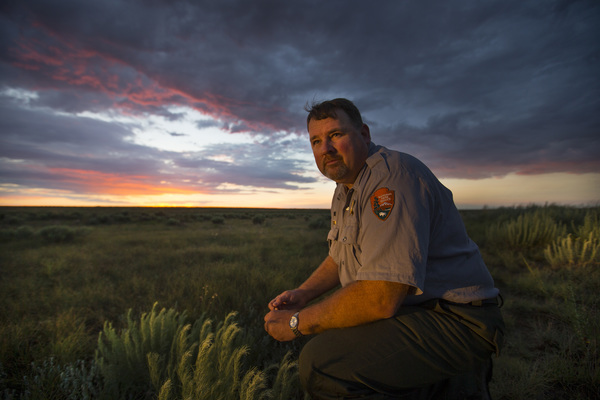
Twitchy adolescence in check, the teens start to pay attention. Moore, who recently retired from the National Park Service, started working as a ranger at Sand Creek in 2004. There are few better guides.
The park service manages 412 properties, each a chapter of America's storied past. Some make grand pronouncements on the merits of their landscape. Others commemorate lives and moments that have shaped the national identity.
None, however, tells a story as dark as Sand Creek, where, in 1864, federal soldiers stormed a peaceful camp of Cheyenne and Arapaho, killing more than 200.
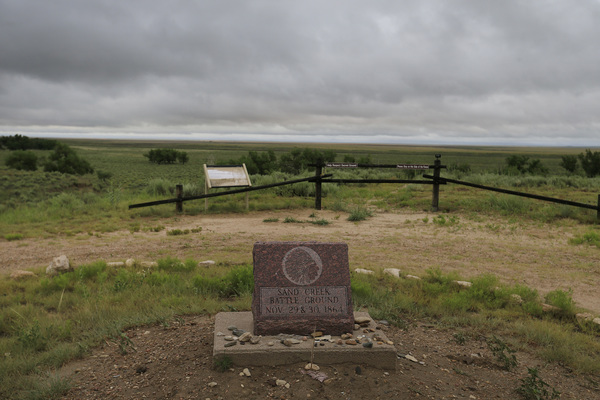
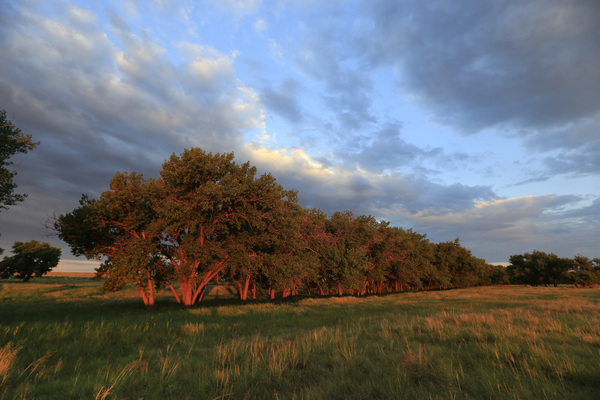
Moore leads the group on a half-mile walk to an overlook with commanding views north to a distant stand of cottonwoods.
"Spread out before you," he says, "as far as you can see, is where the massacre took place, nearly 30 square miles."
The students squint in the bright sun as if trying to look back in time and see the soldiers and horses fanning across these plains, hear the rattle of equipment, the crack of carbine fire and the screams that followed.
"There is no sound worse than the sound of babies crying," Moore says.
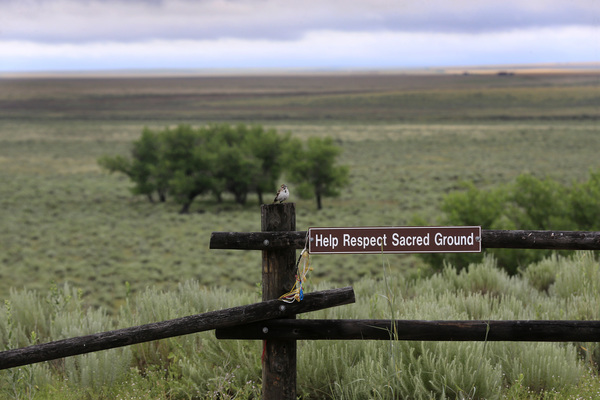
Almost 180 miles southeast of Denver, Sand Creek is an unusual property for the park service. Its visitors center is a double-wide trailer that also serves as office space. Its primary feature is a one-mile trail on a bluff that overlooks the killing field where no one is allowed.
Sand Creek is mostly a place of the imagination, where visitors are asked to consider a time in America before sea to shining sea, a time when mean circumstances or greed drove people to the gold fields and cities of the West and to a hatred of anything different from themselves.
The picture may not be easy to conjure, but the park service can help. When a car pulls into the dirt lot, a chime in the trailer plays "Fur Elise," and a ranger steps outside to greet each arrival with as much or as little information as the visitors might need to understand the site.
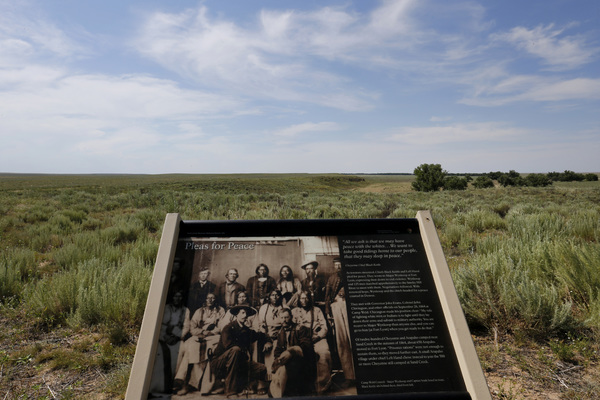
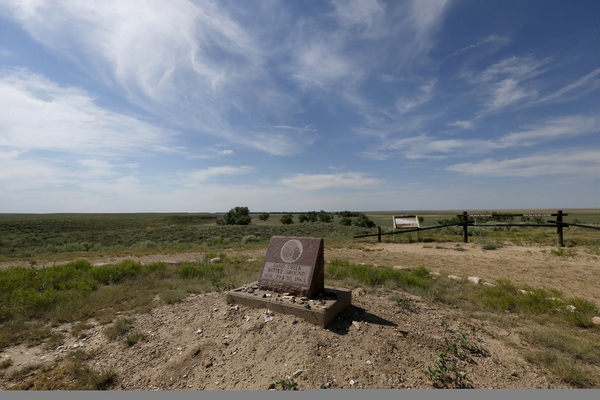
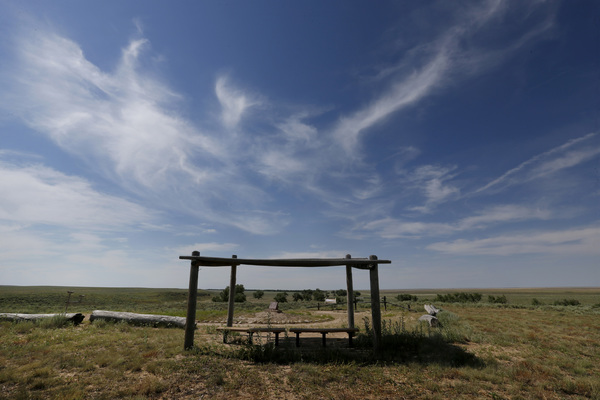
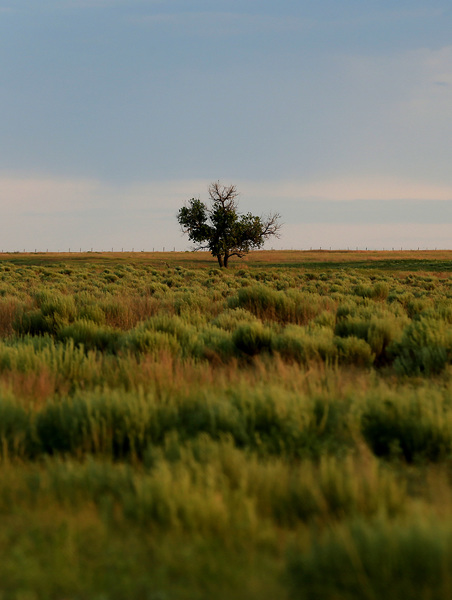
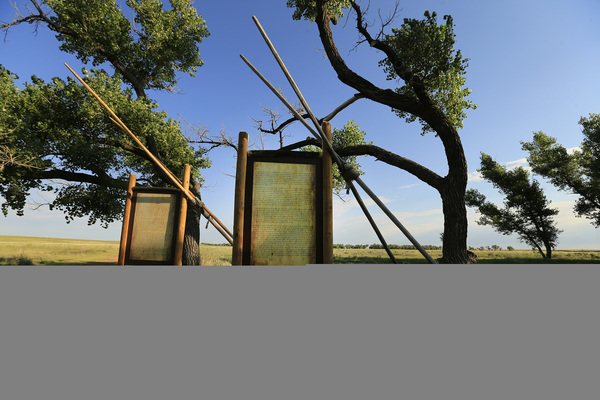
Nearly a dozen interpretive signs along the bluff trail lay out the history. Beyond that, though, there is little more than the land stretching to the far-away horizon, a stark canvas that seems to compete with the sky for emptiness.
But in emptiness, Sand Creek is most eloquent. Some visitors claim to hear children's voices in the wind-whistling quiet.