Could it be time to outsource your payroll? As regulations evolve and your company grows, managing an effective payroll strategy in 2026 can be difficult.
After over half of UK companies reported facing payroll penalties in the last five years due to non-compliance, many are choosing to outsource the process to a third party for peace of mind.
The question is, when is the right time to outsource, and what are the benefits? We’ve put together a side-by-side comparison of in-house vs outsourced so you can make the right decision when it comes to your payroll.
What is In-House Payroll?
Let’s start with in-house payroll, which refers to managing your payroll system by an employee-led team.
If you’re a large business, you’ll likely have a dedicated payroll team within your HR department. This team is responsible for managing your monthly payroll, storing confidential employee data and maintaining compliance with location-specific regulations.
If you’re a smaller organisation, your payroll team may consist of a single HR specialist who manages monthly payments and other responsibilities.
What are the Benefits?
Keeping payroll in-house offers a wide range of benefits for teams equipped to manage the workload:
- Total Control: In-house payroll teams have full control over every step of the payroll process. This makes it easy to access employee data, update monthly payslips, and correct errors swiftly.
- Customised to your Company: In-house payroll strategies are designed to fit the company culture. In-house, your team can choose when paychecks are delivered and how the process operates month to month.
- More Flexibility: If you’re frequently making last-minute adjustments to overtime, salaries or bonuses, an in-house solution offers more flexibility for real-time payslip changes.
- Cost Control: In-house teams can handle your entire payroll process, saving your company money by avoiding the need to hire an external provider.
- Access to Employee Data: In-house payroll teams have access to a long history of employee payment data, which can be used to analyse trends in compensation, benefits spending, labour cost and even workforce growth.
What are the Drawbacks?
While an in-house payroll system is optimal for companies that can manage it, it doesn't come without its drawbacks.
Running payroll successfully in-house requires teams to have fully reliable software, extensive and regular training on compliance and UK payroll regulations, as well as full control over data security.
If your payroll team is unprepared, you risk making recurring payroll errors that delay monthly payslips, overpaying or underpaying frustrated employees, and incurring hefty fines for non-compliance.
Manual data entry and reliance on disparate software just don’t cut it in 2026. Those who opt to perform payroll operations in-house must have the tech, team capacity and updated knowledge to do so.
Repeated payroll mistakes have significant effects on employees' financial well-being, with more than 89% of employees reporting that financial stress directly affects their concentration, confidence, energy, and ambition in the workplace.
As compliance pressure rises, smaller businesses that rely on one or two employees to manage payroll may find year-end, parallel runs, new acquisitions, or regulatory changes extremely overwhelming.
Is Outsourcing Your Payroll the Answer?
Outsourcing your payroll means transferring some or all of your payroll responsibilities to a third-party team.
These are usually specialist providers that can handle anything from individual administrative tasks to your entire payroll process.
Outsourced payroll models tend to fall into a few categories:
Partial Outsourcing: This is essentially a 50-50 split between your in-house team and an external provider. Using this model, your in-house payroll team stays in control of data entry and important approval processes, while a third party handles any labour‑intensive or high‑risk tasks.
Full Managed Payroll: If you choose to outsource your entire payroll, you do lose some control. However, specialist payroll providers do complete all calculations and validations and manage all reporting and compliance management, so your team don’t have to.
If you’re struggling to stay afloat as a smaller business, outsourcing your payroll can reduce internal workloads and strengthen compliance.
When to Outsource Your Payroll
For smaller businesses and those struggling to stay compliant, outsourcing could be the key to transforming your payroll process.
The question is, when is the right time to outsource your payroll? Here are some of the red flags that could suggest it’s time to outsource in 2026:
- Compliance Pressure is on the Rise: If you’re struggling to stay afloat when it comes to payroll rules, pensions and ever-changing HMRC requirements, it may be time to ask for help to avoid non-compliance penalties.
- You have Limited Capacity: If your team has only one staff member, or a team with split duties, on your payroll, you may not be equipped to handle a growing workforce and tighter compliance pressures.
- In-House Costs More than Outsourcing: Growing businesses often find that expanding an in-house payroll team is more expensive than outsourcing the process altogether. Outsourcing allows for scalable monthly payments and planned expenses.
- You Are Looking for Scalable Support: As your business grows, third-party teams grow with you, scaling support to meet your needs.
How to Make a Smooth Transition from In-House to Outsourced Payroll
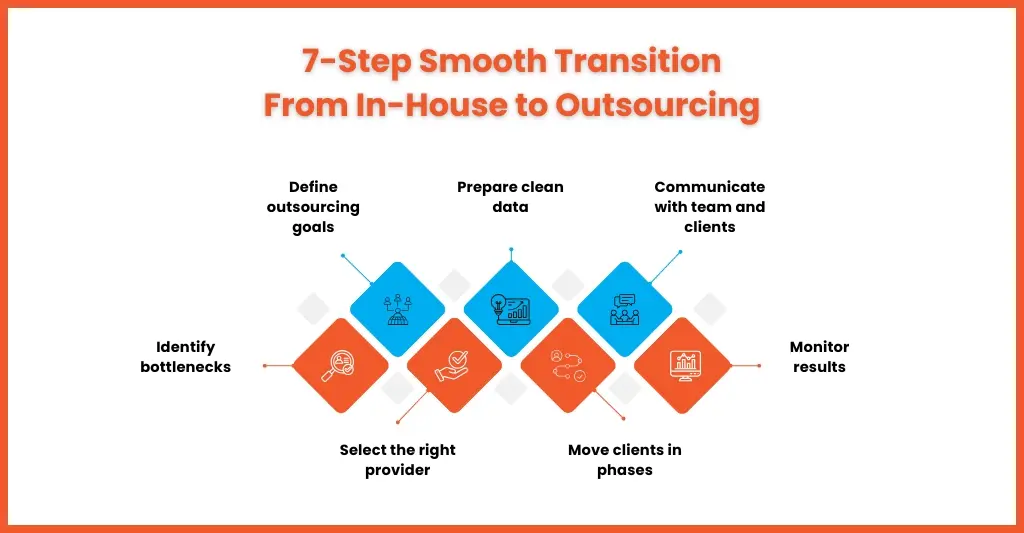
If you’ve chosen to outsource your payroll, there are a few ways to make the transition process smoother.
The key here is to start by identifying your current bottlenecks and defining your outsourcing goals. This will make it easier to secure the best third-party package for your business and a provider that provides the services you’re looking for.
(Image Source: Equallto)
Once you’ve chosen your provider, start preparing clean data for them to use. If your records are accurate, you’ll encounter fewer payroll errors moving forward.
Lastly, don’t forget to monitor the results. Not every outsourcing mission pays off. It can take time to find the best third-party partner for your business. The best approach for outsourcing beginners is to adopt a hybrid model for your payroll operations.
Keeping one foot in the door is key to ensuring a smooth, compliant, and efficient transition for your business.