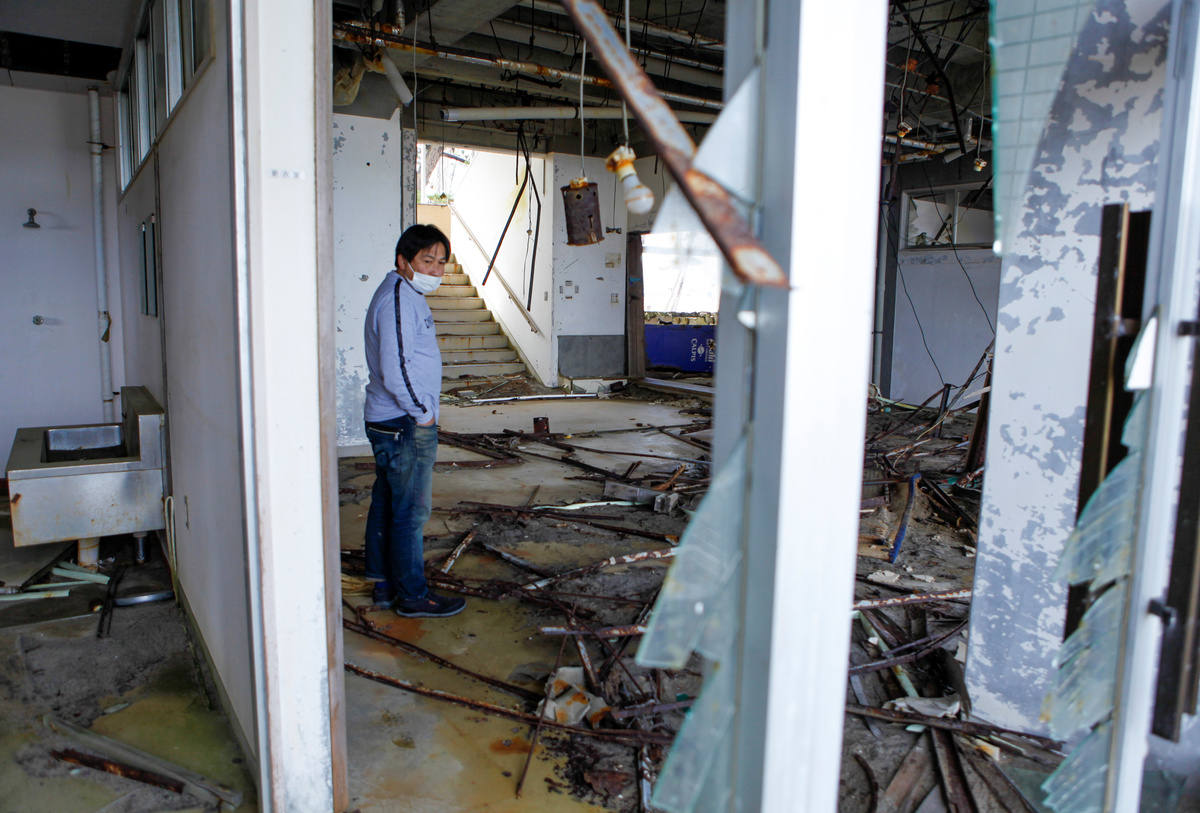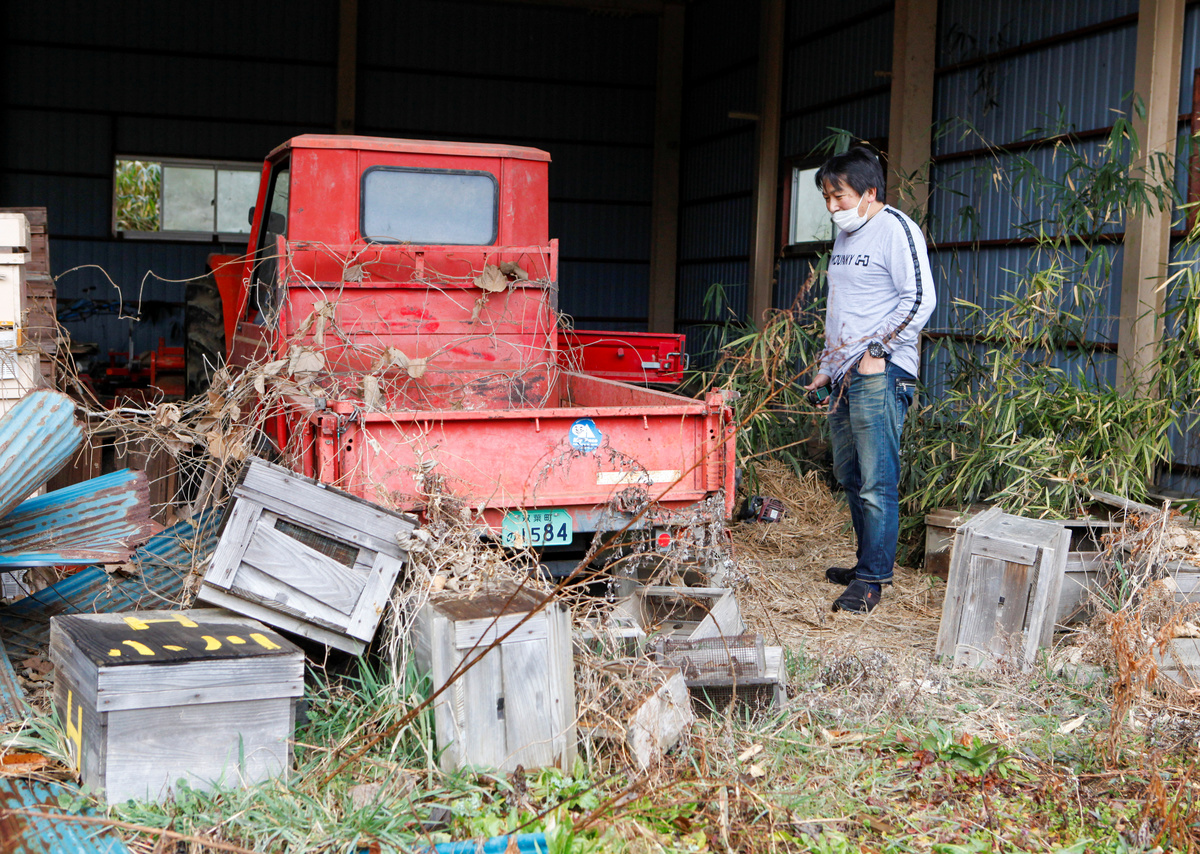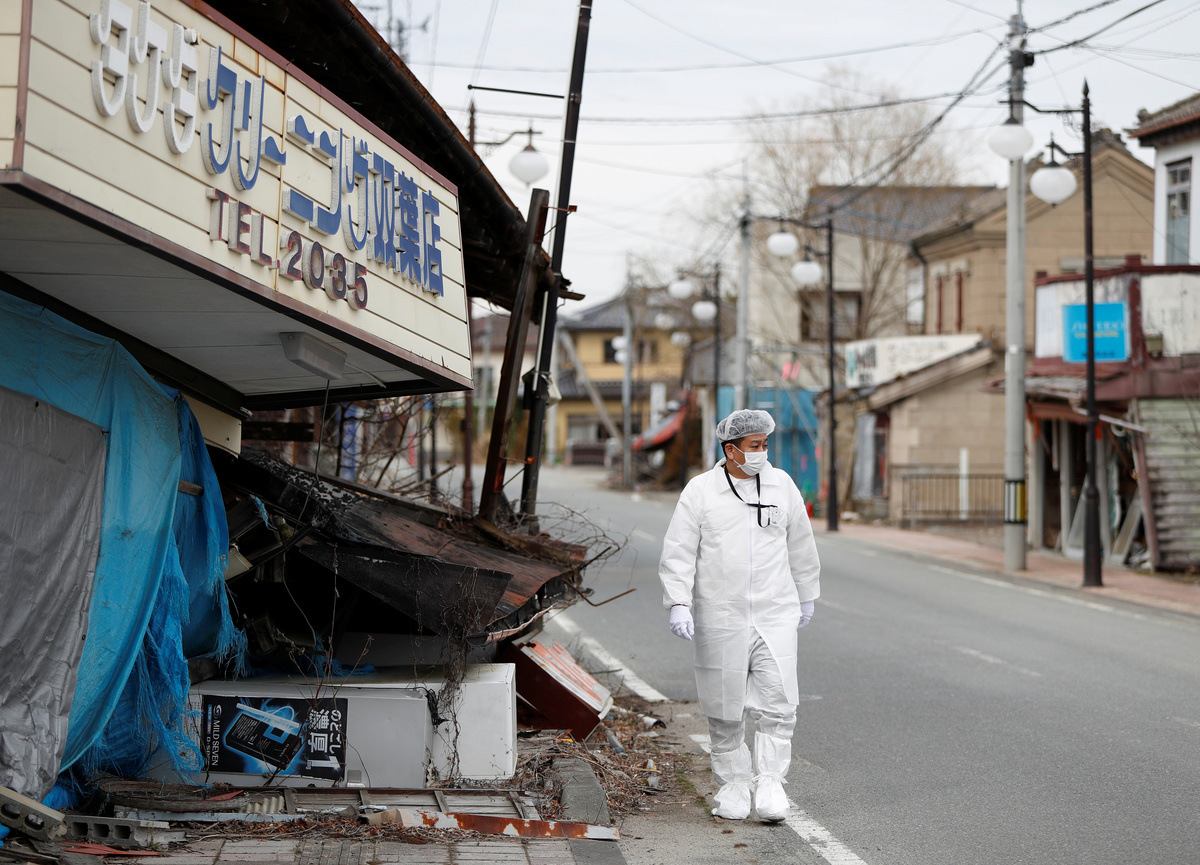
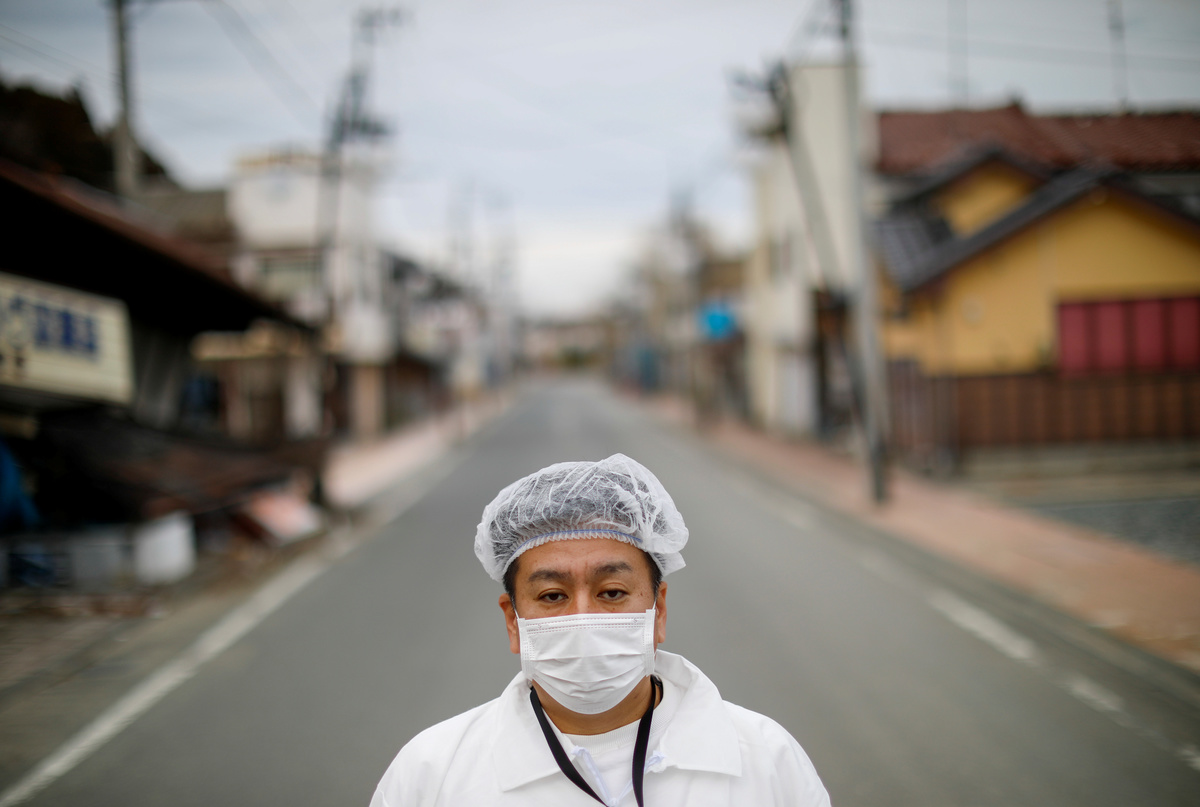
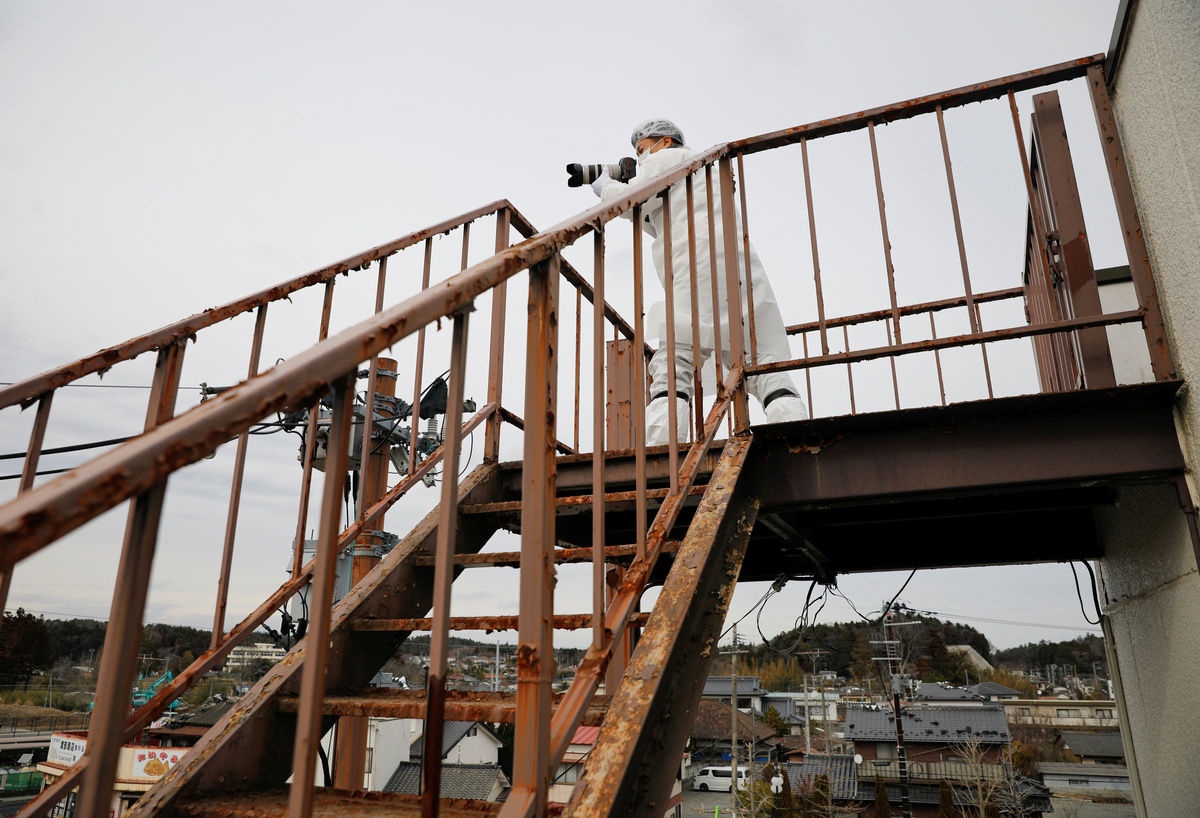
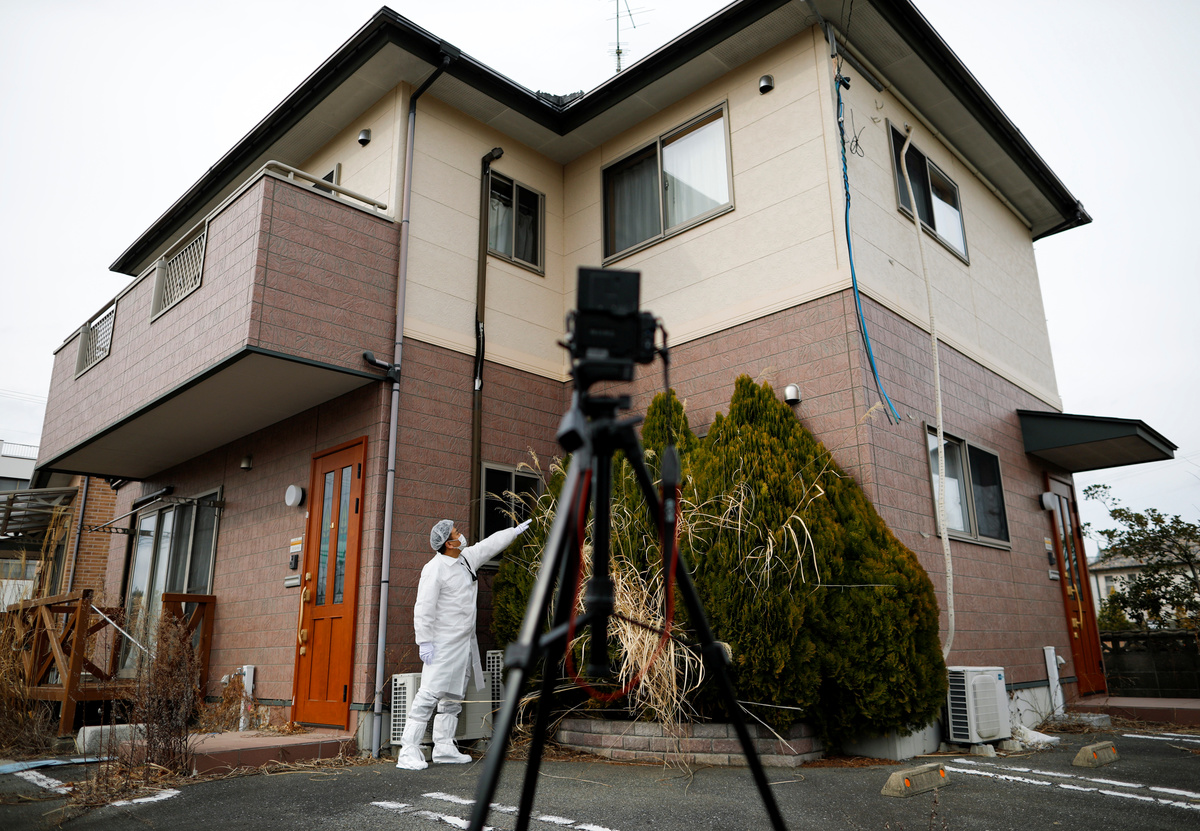
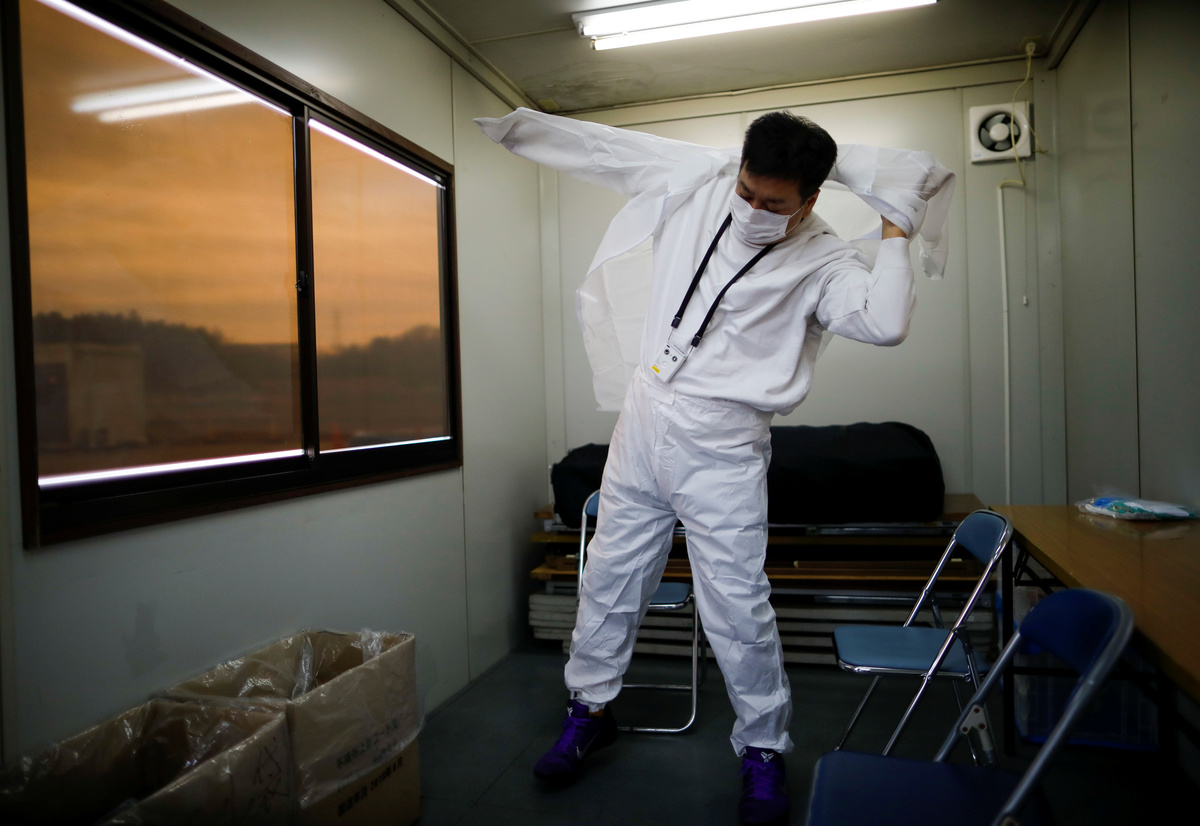
Dressed in protective plastic coveralls and white booties, Yuji Onuma stood in front of the row of derelict buildings that included his house, and sighed as he surveyed his old neighbourhood.
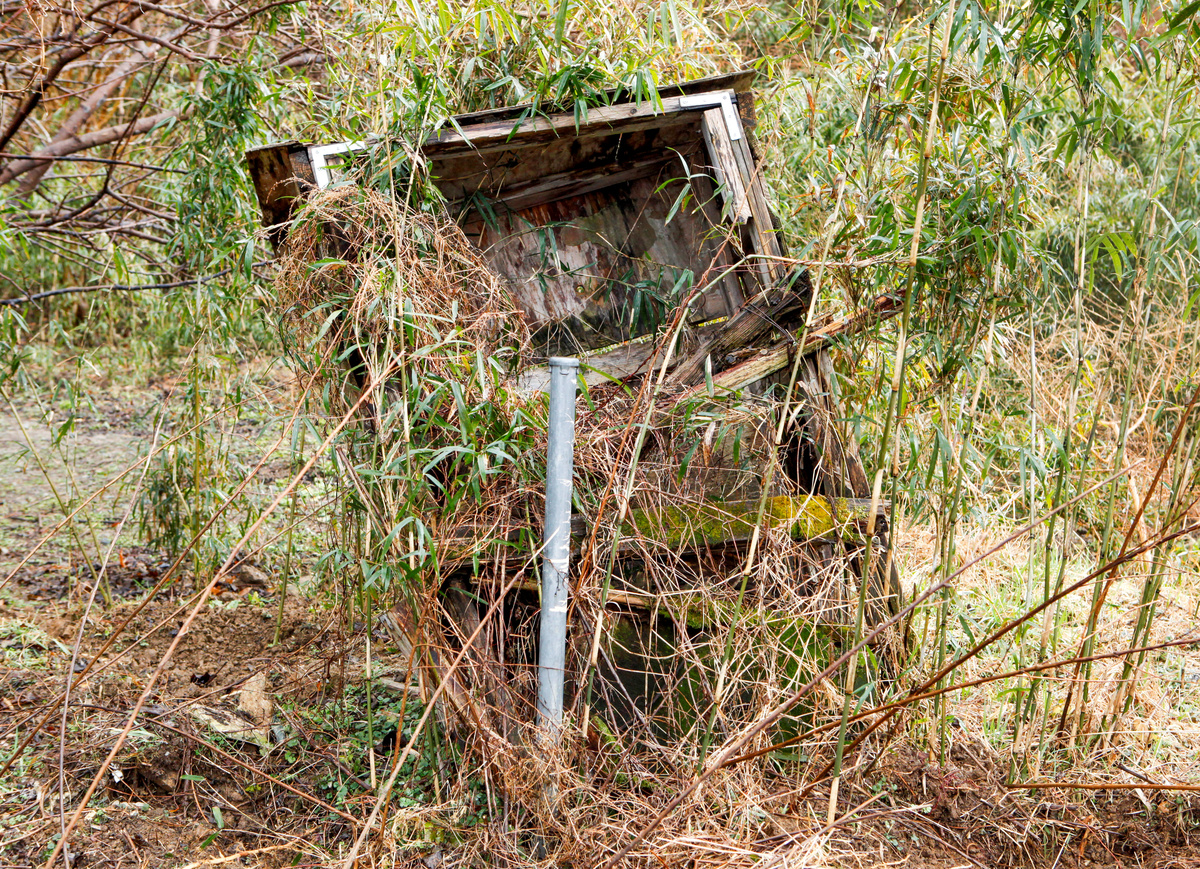
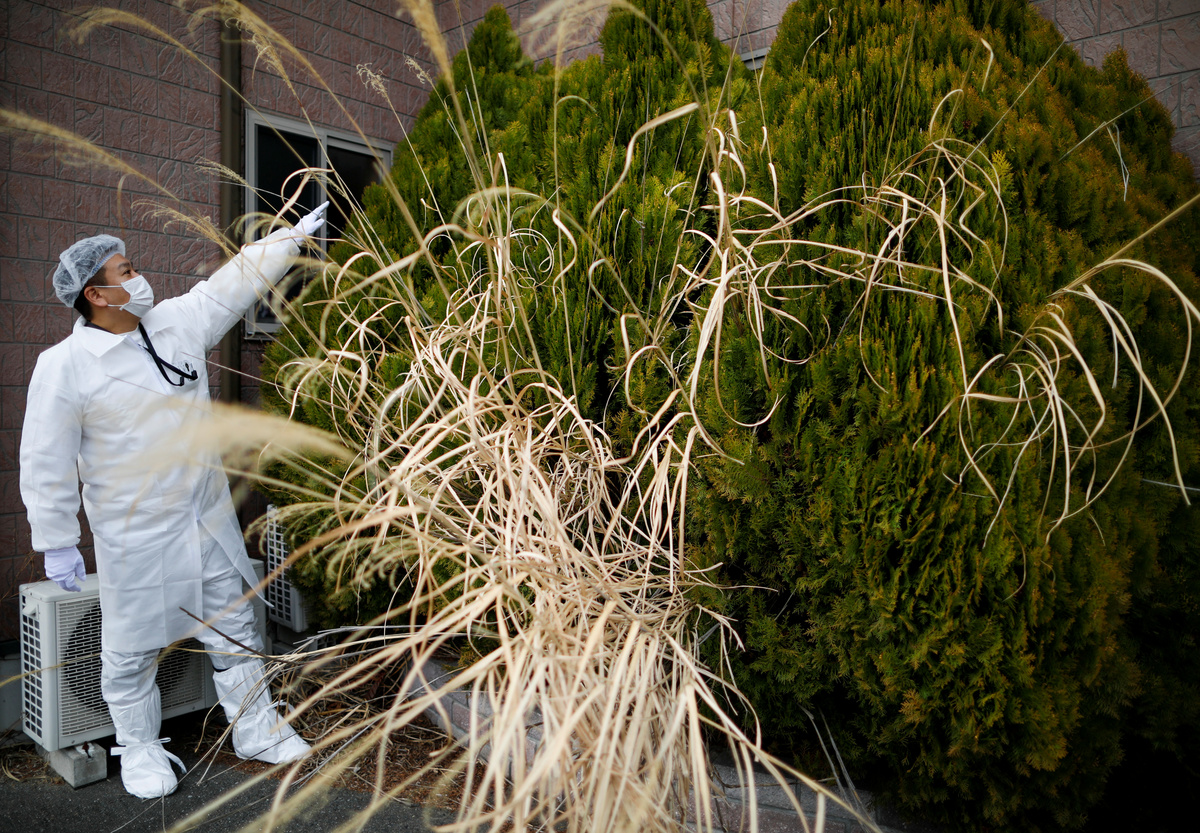
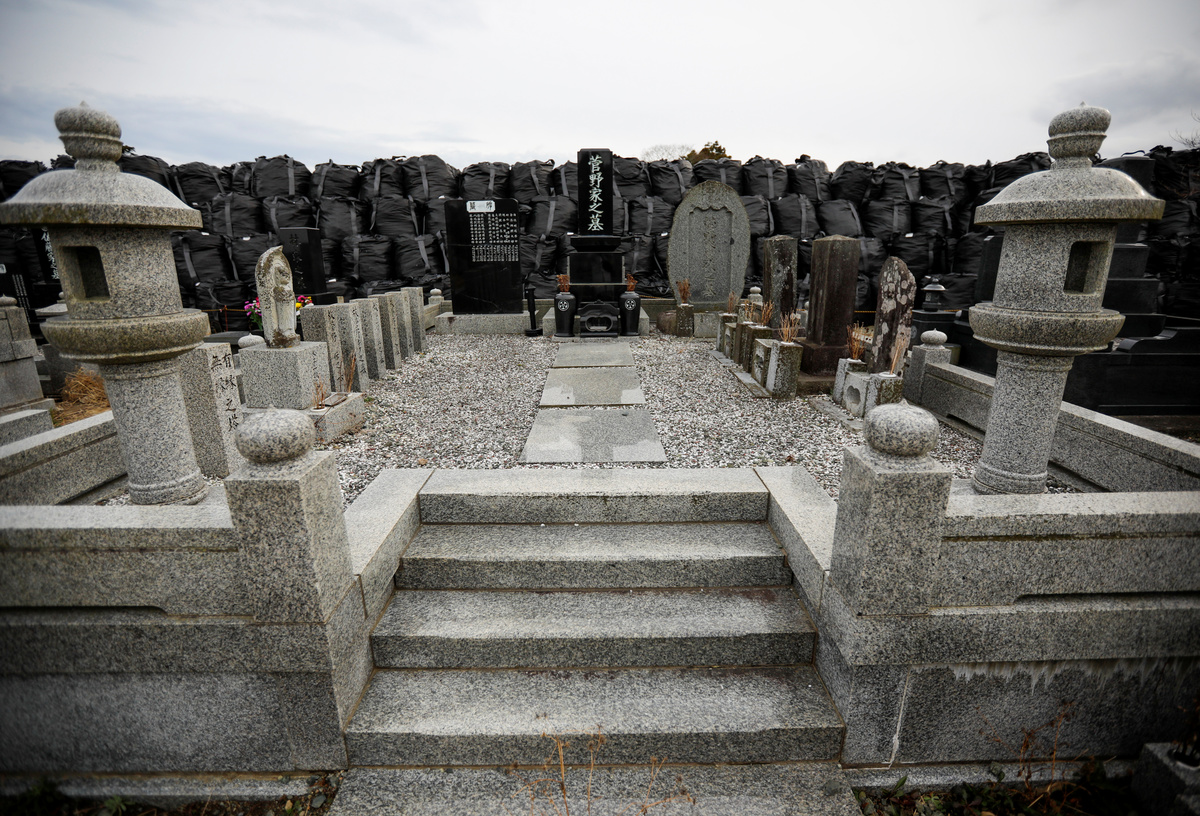
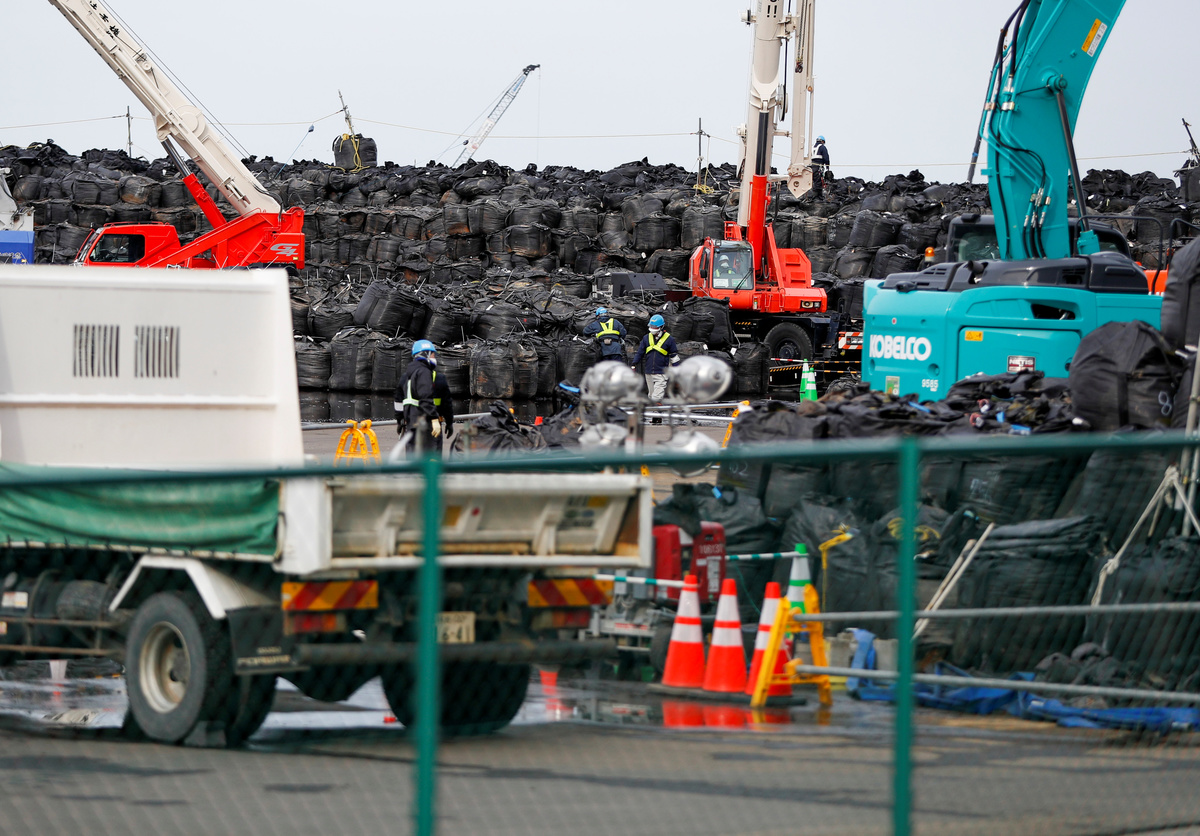
On the once-bustling main street, reddish weeds poked out of cracked pavements in front of abandoned shops with caved-in walls and crumbling roofs. Nearby, thousands of black plastic bags filled with irradiated soil were stacked in a former rice field.
"It's like visiting a graveyard," he said.
Onuma, 43, was back in his hometown of Futaba to check on his house, less than 4 kilometres from the Fukushima nuclear power plant, which suffered a triple meltdown in 2011 following an earthquake and tsunami, leaking radiation across the region.
The authorities say it will be two more years before evacuees can live here again, an eternity for people who have been in temporary housing for nine years. But given the lingering radiation here, Onuma says he has decided not to move back with his wife and two young sons.
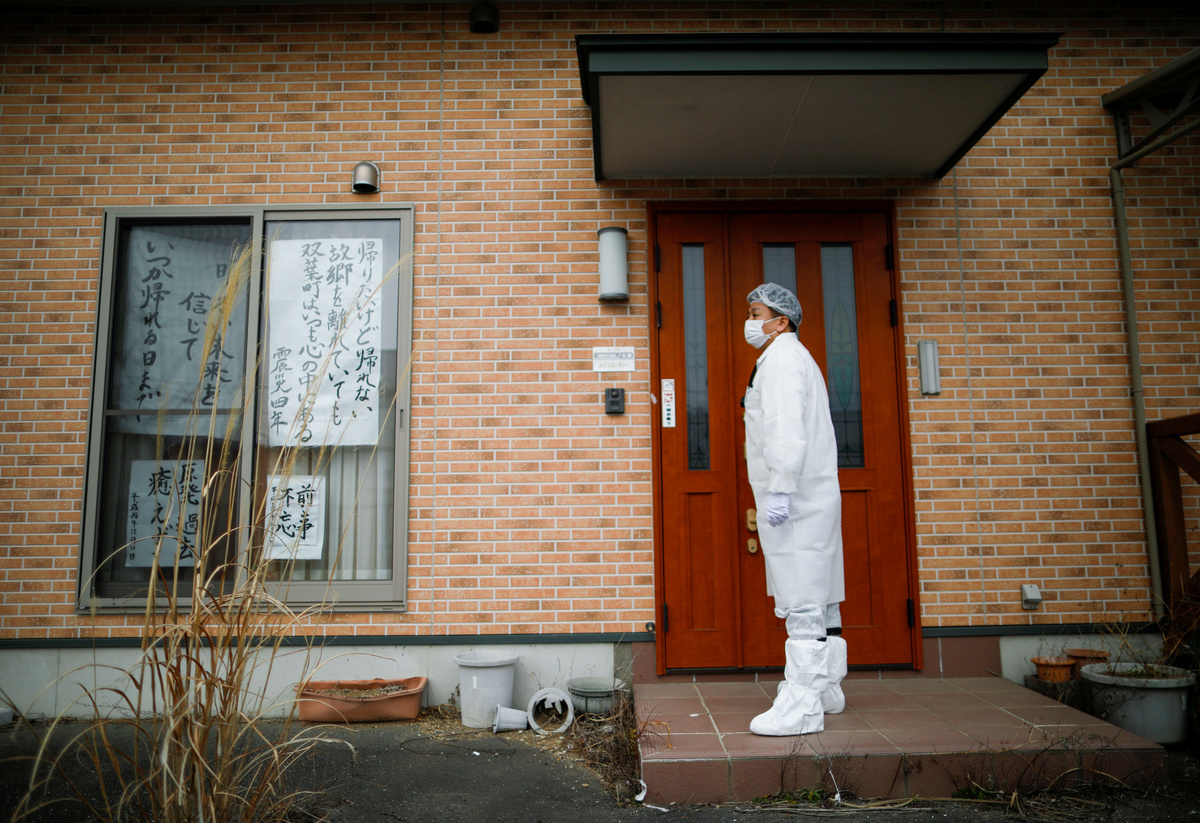
Most of his neighbours have moved on, abandoning their houses and renting smaller apartments in nearby cities or settling elsewhere in Japan.
Given the problems Futaba still faces, many evacuees are chafing over the government's efforts to showcase the town as a shining example of Fukushima's reconstruction for the 2020 Tokyo Olympics.
While there has been speculation that the global spread of the coronavirus that emerged in China last month might force the cancellation of the Olympics, Japanese officials have said they are confident the Games will go ahead.
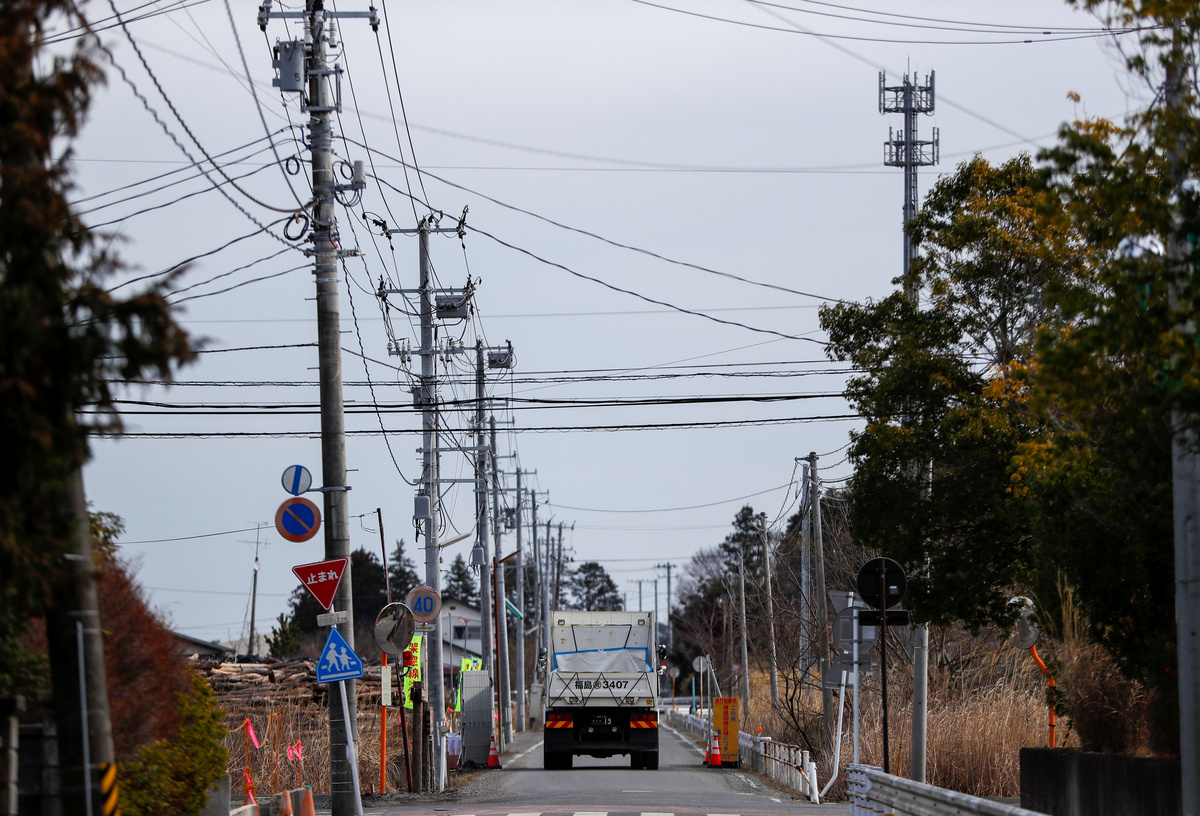
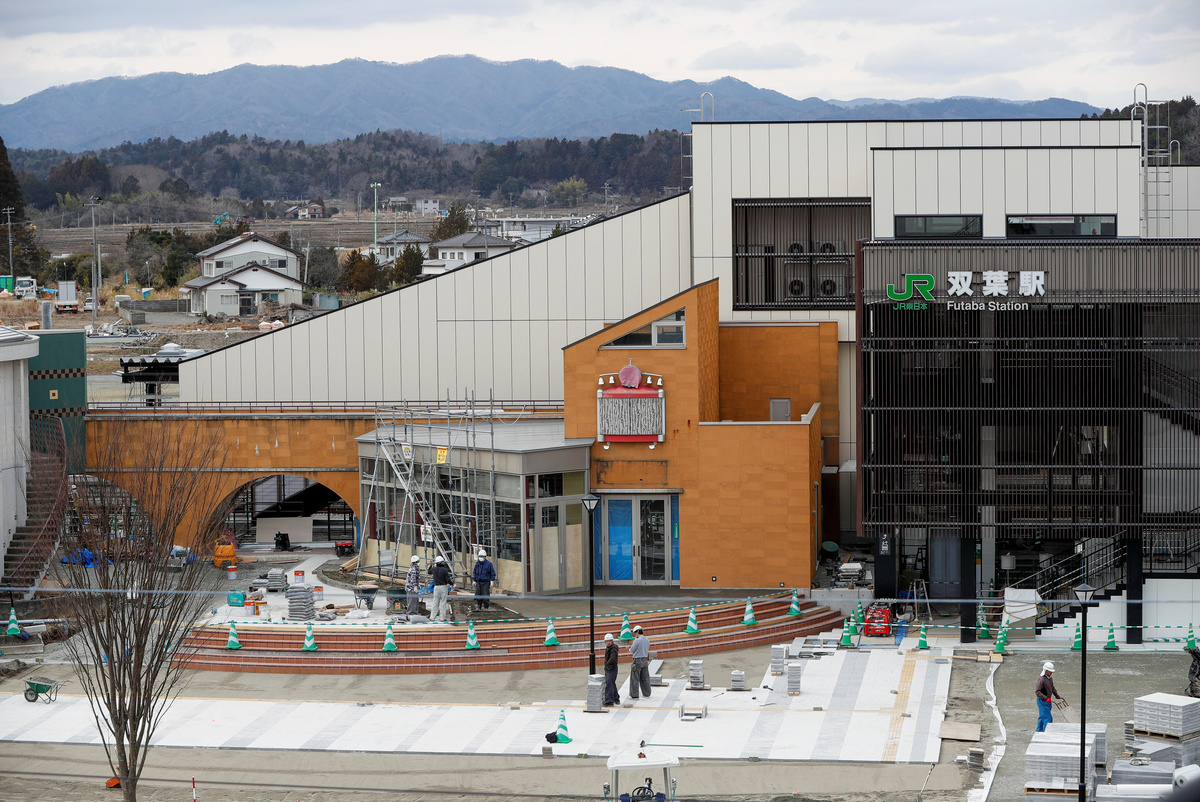
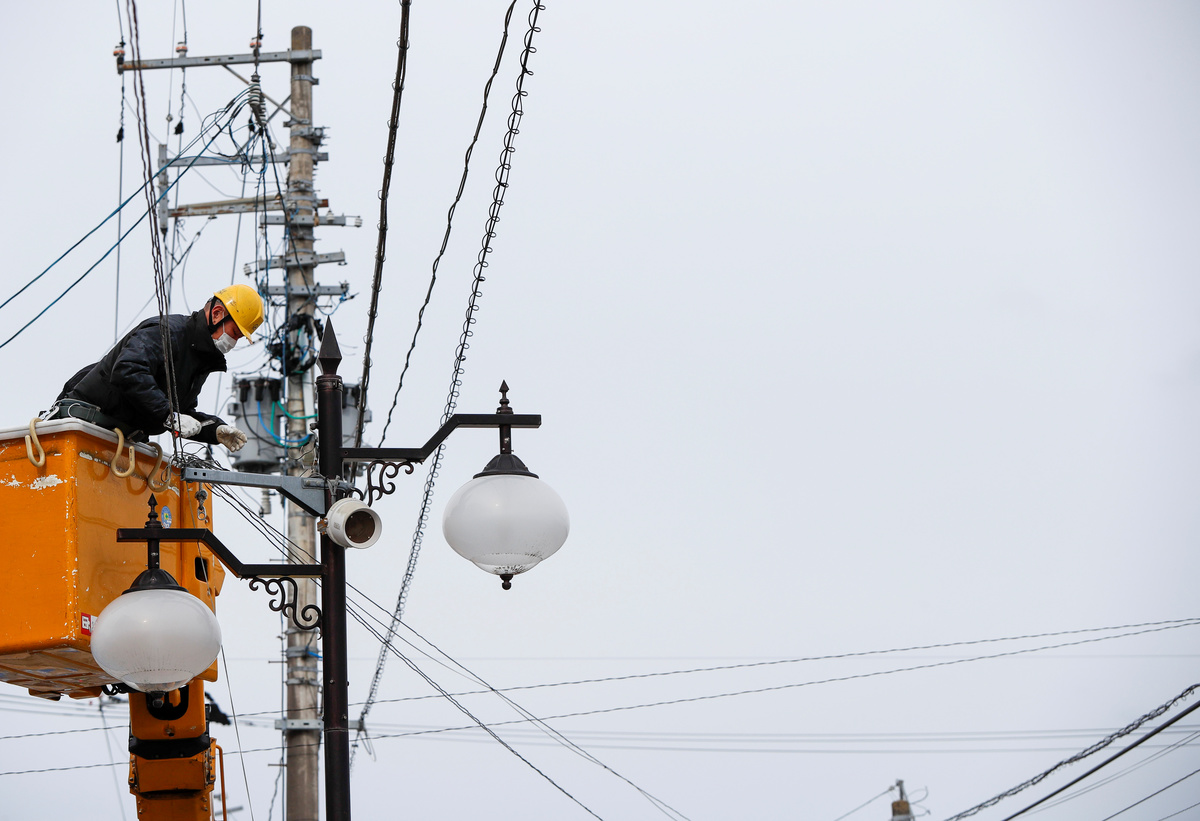
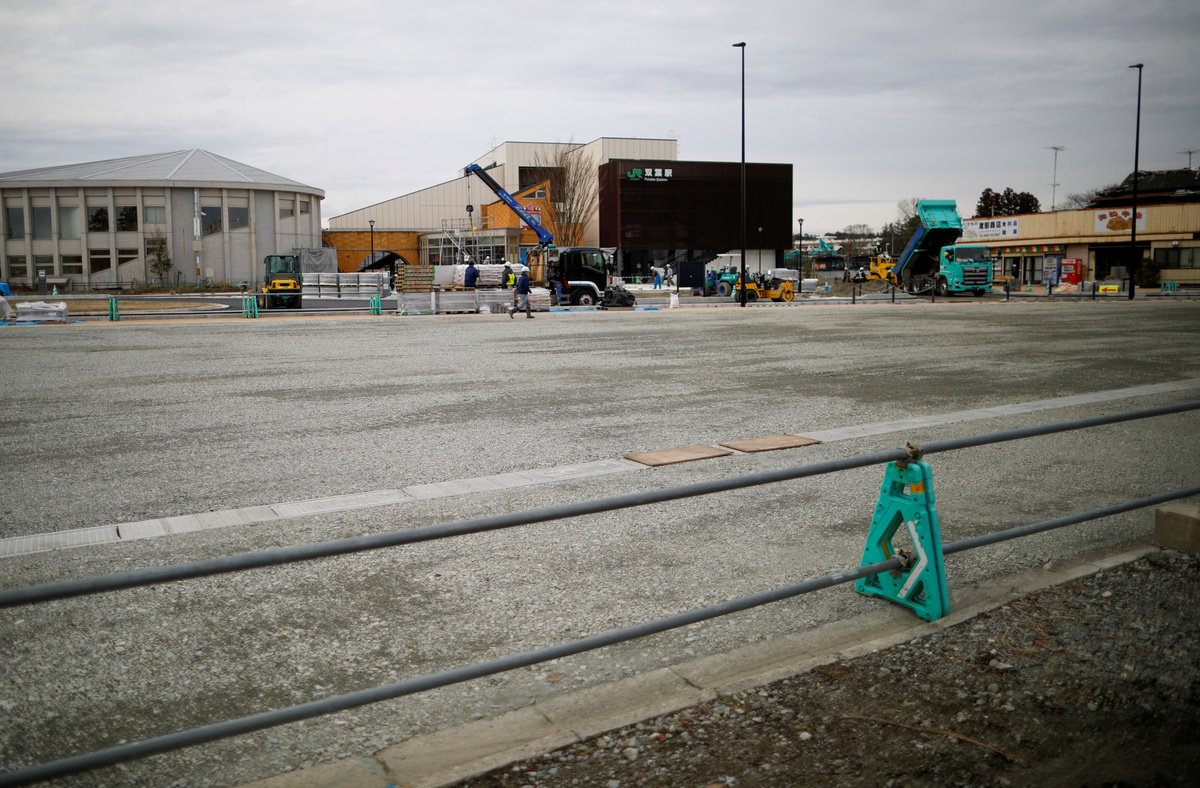
The Olympic torch relay will take place in Fukushima in late March - although possibly in shortened form as a result of the coronavirus, Olympic organisers say - and will pass through Futaba. In preparation, construction crews have been hard at work repairing streets and decontaminating the centre of town.
"I wish they wouldn't hold the relay here," said Onuma. He pointed to workers repaving the road outside the train station, where the torch runners are likely to pass. "Their number one aim is to show people how much we've recovered."
He said he hoped that the torch relay would also pass through the overgrown and ghostly parts of the town, to convey everything that the 7,100 residents uprooted of Futaba lost as a result of the accident.
"I don't think people will understand anything by just seeing cleaned-up tracts of land."
"UNDER CONTROL"
In 2013, when Prime Minister Shinzo Abe was pitching Tokyo as the host of the 2020 Games to International Olympic Committee members, he declared that the situation at the Fukushima nuclear plant was "under control".
The Games have been billed as the "Reconstruction Olympics" - an opportunity to laud Japan's massive effort to rebuild the country's northeastern region, ravaged by the earthquake and tsunami, as well as the meltdowns at the nuclear plant owned by Tokyo Electric Power Co.
After the disaster, the government created a new ministry to handle reconstruction efforts and pledged 32 trillion yen ($286.8 billion) in funding to rebuild affected areas.
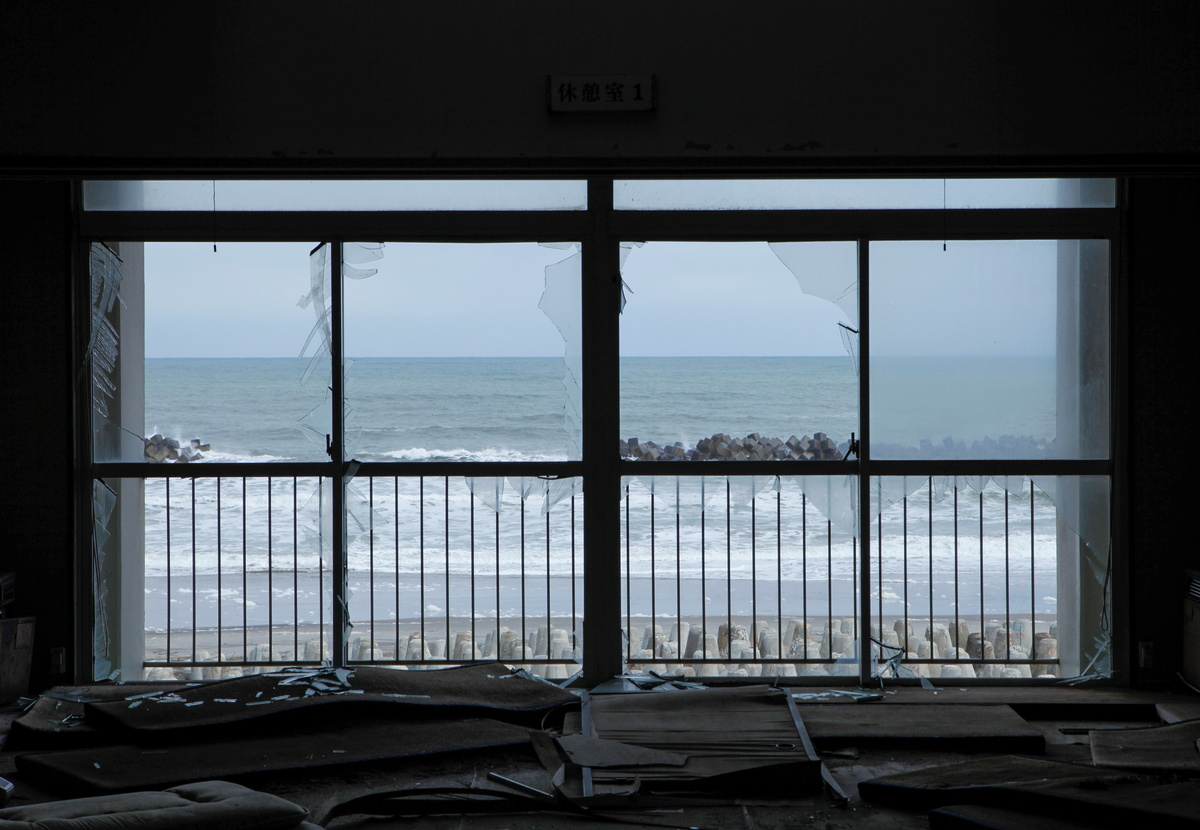
Signs of the reconstruction efforts are everywhere near the plant: new roads have been built, apartment blocks for evacuee families have sprouted up, and an imposing tsunami wall now runs along the coastline. An army of workers commutes to the wrecked plant every day to decommission the reactors.
In March, just days before the Olympic relay is scheduled to be held across Fukushima, Japan will partially ease a restriction order for Futaba, the last town that remains off-limits for residents to return.
This means that residents like Onuma will be able to freely come and go from the town without passing through security or changing into protective clothing. Evacuees will still not be able to stay in their homes overnight.
After a few years bouncing between relatives' homes and temporary apartments, Onuma decided to build a new house in Ibaraki, a nearby prefecture. His two sons are already enrolled in kindergarten and primary school there.
"You feel a sense of despair," said Onuma. "Our whole life was here and we were just about to start our new life with our children."
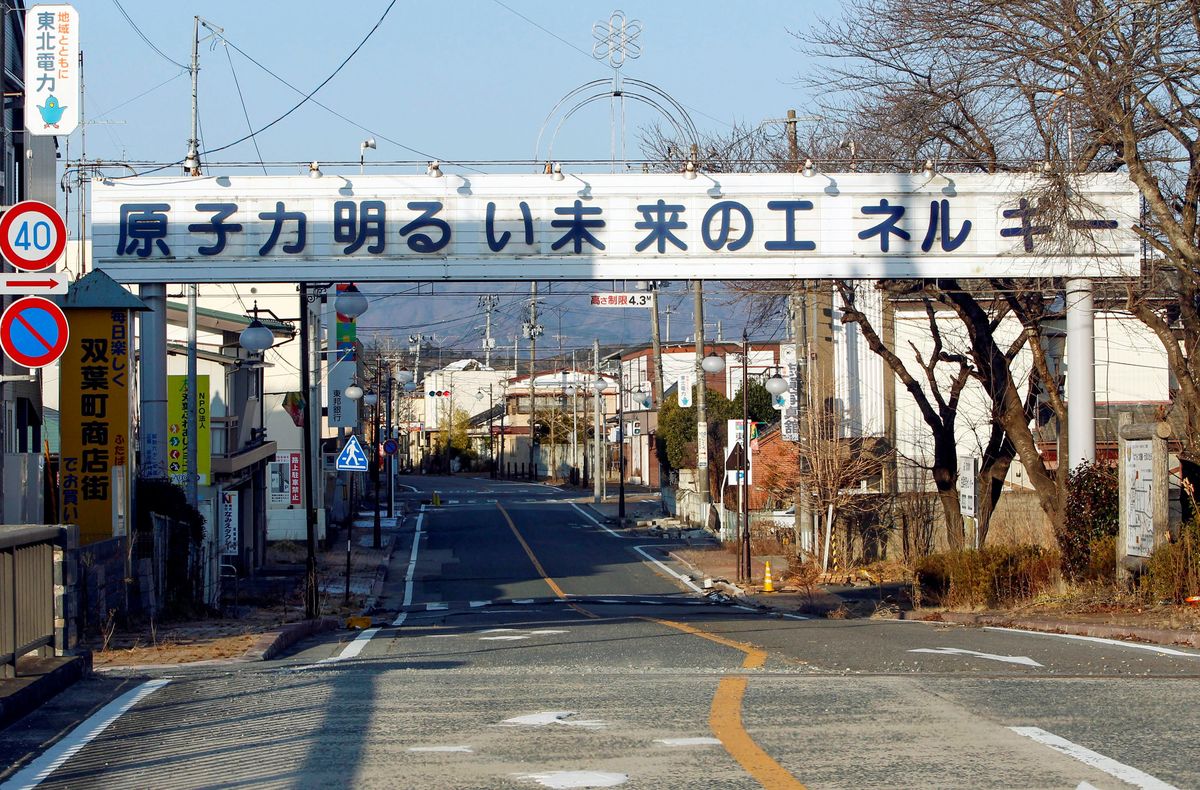
When Onuma was 12, he won a local competition to come up with a catchphrase promoting atomic energy. His words, "Nuclear Energy for a Brighter Future" was painted on an arch that welcomed visitors to Futaba.
After the nuclear meltdowns, the sign was removed against Onuma's objections.
"It feels like they're whitewashing the history of this town," said Onuma, who now installs solar panels for a living.
The organising committee for the Tokyo 2020 Olympics did not respond to requests for comment from Reuters.
"BACK BURNER"
Other residents and community leaders in nearby towns say the Olympics may have actually hindered the region's recovery.
Yasushi Niitsuma, a 60-year-old restaurant owner in Namie, said the Olympics stalled local reconstruction projects because of surging demand and costs to secure workers and materials ahead of the games in Tokyo.
"We need to wait two years, three years to have a house built because of the lack of craftsmen," said Niitsuma. "We are being put on the back burner."
Fukushima's agriculture and fisheries industries have also been devastated.
"I was astonished by the "under control" comment made in a pitch to win the Olympic Games," said Takayuki Yanai, who directs a fisheries co-op in Iwaki, 50 kilometres south of the nuclear plant, referring to Abe's statement.
"People in Fukushima have the impression that reconstruction was used as a bait to win the Olympic Games."
A government panel recently recommended discharging contaminated water held at the Fukushima plant to the sea, which Yanai expects to further hurt what remains of the area's fisheries industry.
At a recent news conference, Reconstruction Minister Kazunori Tanaka responded to a question from Reuters about criticism from Fukushima evacuees.
"We will work together with relevant prefectures, municipalities and various organisations so that people in the region can take a positive view," he said, referring to the Olympics.
Local officials also say they are making progress for the return of residents to Futaba.
"Unlike Chernobyl, we are aiming to go back and live there," Futaba Mayor Shirou Izawa said in an interview, calling the partial lifting of the evacuation order a sign of "major progress".
There were a lot of misunderstandings about the radiation levels in the town, including the safety of produce and fish from Fukushima, Izawa said.
"It would be great if such misunderstanding is dispelled even a little bit," he said.
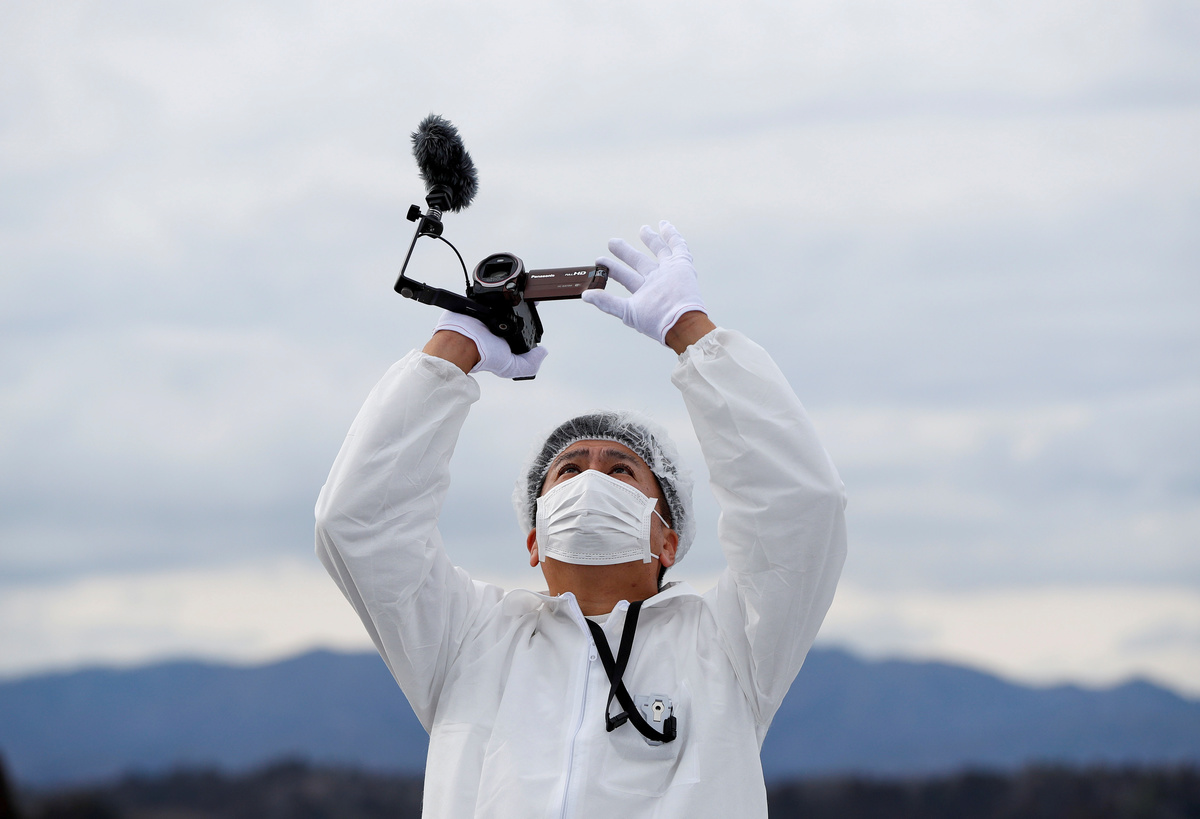
Radiation readings in the air taken in February near Futaba's train station were around 0.28 microsieverts per hour, still approximately eight times the measurement taken on the same day in central Tokyo.
Another area in Futaba had a reading of 4.64 microsieverts per hour on the same day, meaning a person would reach the annual exposure upper limit of 1 millisievert, recommended by the International Commission on Radiological Protection, in just nine days.
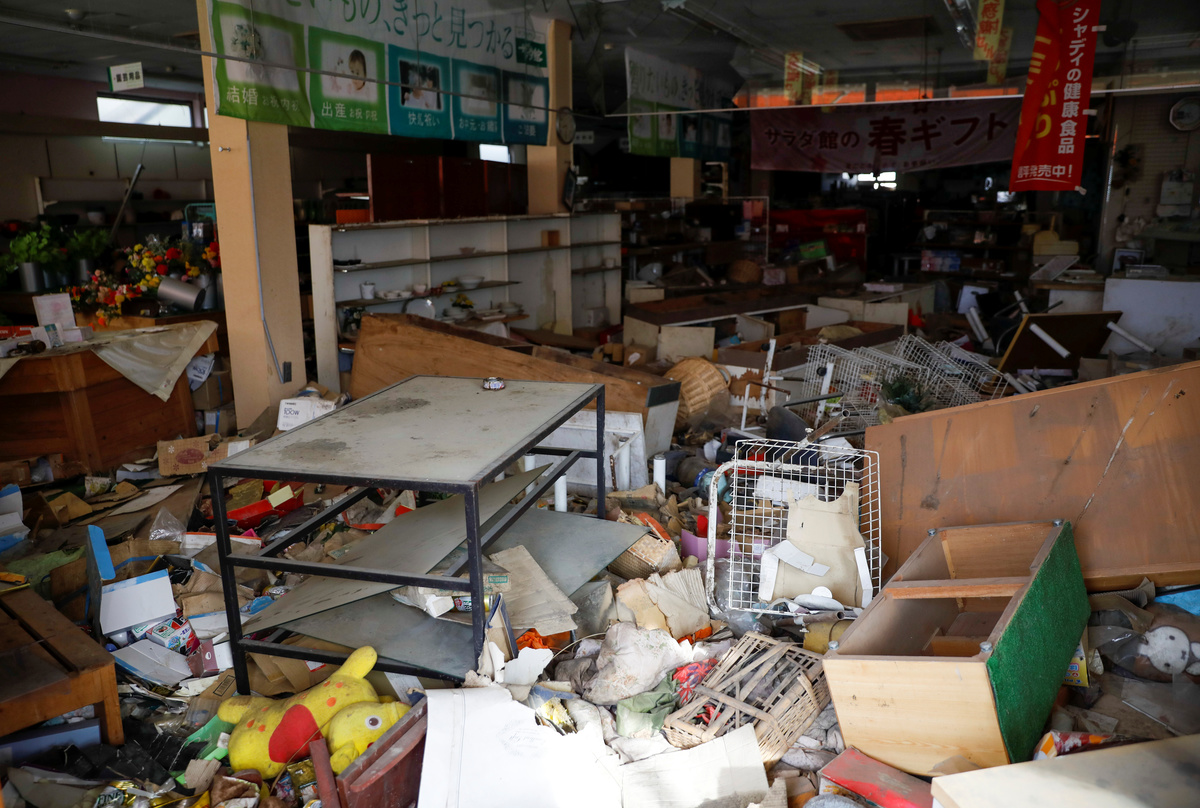
Despite the official assurances, it's hard to miss the signs of devastation and decay around town.
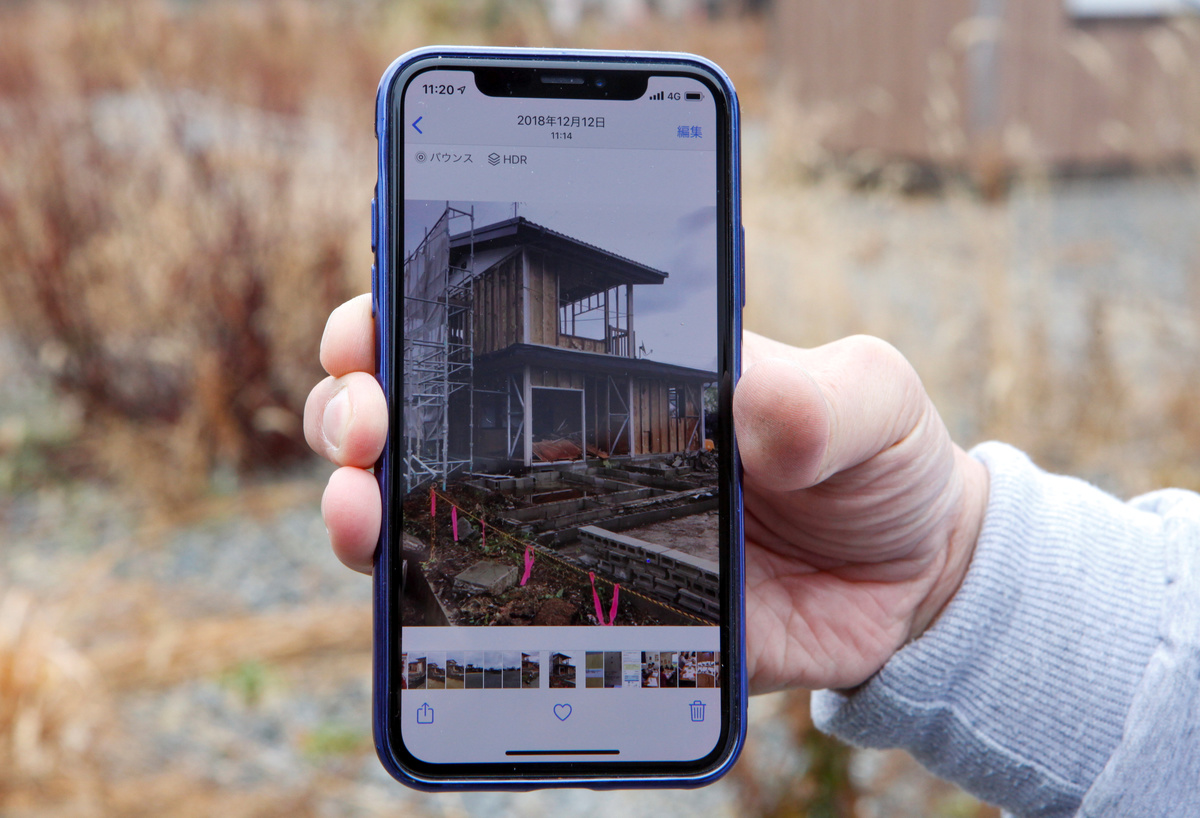
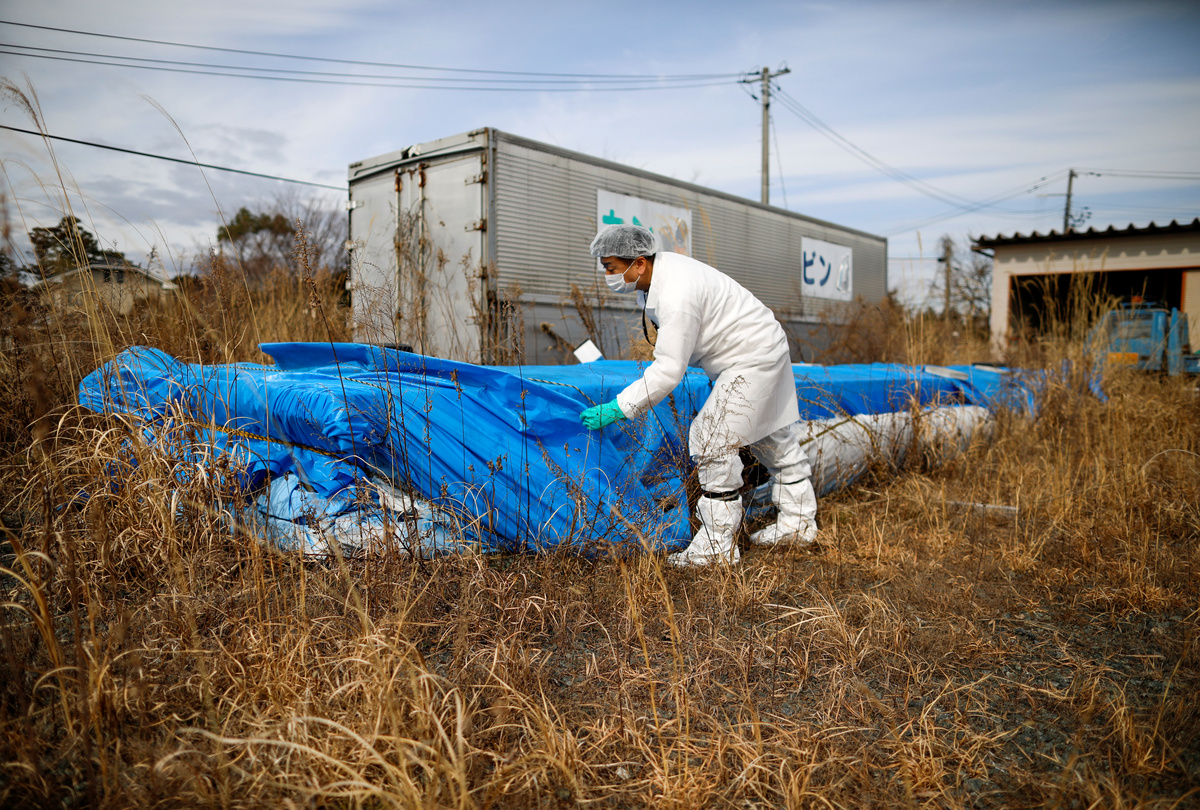
The block where Takahisa Ogawa's house once stood is now just a row of overgrown lots, littered with concrete debris. A small statue of a stone frog is all that remains of his garden, which is also scattered with wild boar droppings.
He finally demolished his house last year after he failed to convince his wife and two sons to return to live in Futaba.
Ogawa doubts any of his childhood friends and neighbours would ever return to the town.
"I've passed the stage where I'm angry and I'm resigned," he said.
(Reporting by Mari Saito and Kiyoshi Takenaka; Writing by Mari Saito; Editing by Philip McClellan)