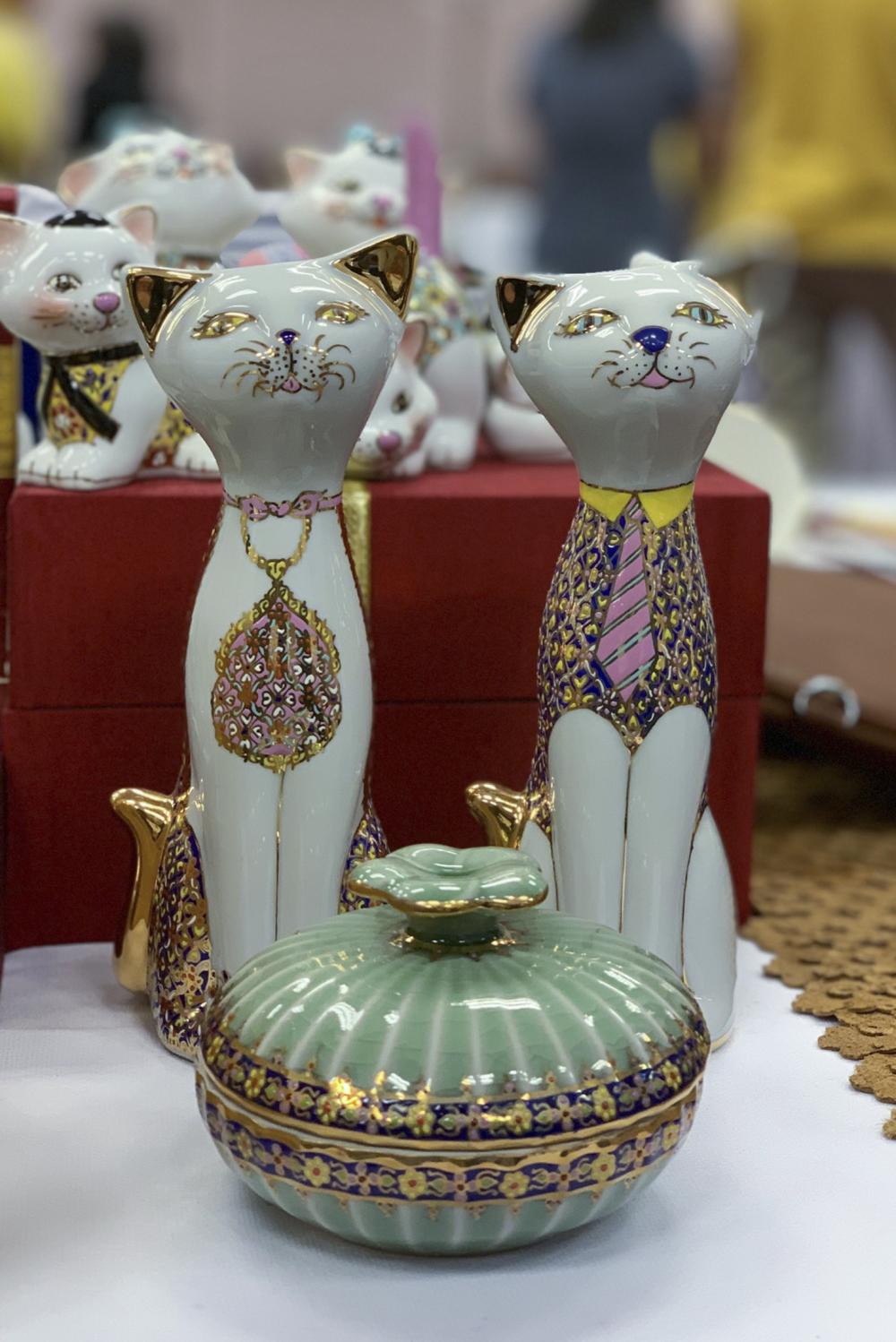
In-flight magazines are typically a cache of merchandise of international products. However, the reading literature in the seat pockets can provide an ideal channel for marketing prized, local products unrivalled in look, quality and prices.
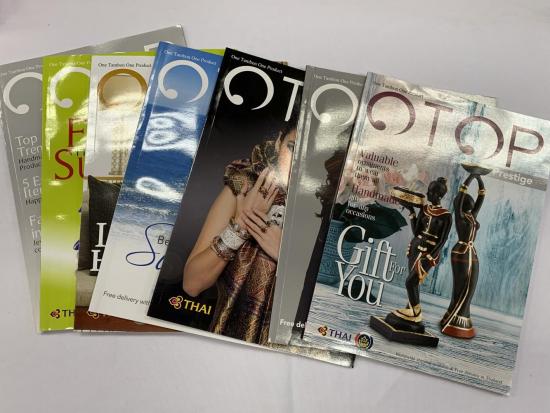
That is precisely what the Otop Prestige magazine on board Thai Airways (THAI) has done for the country's renowned One Tambon One Product (Otop) scheme.
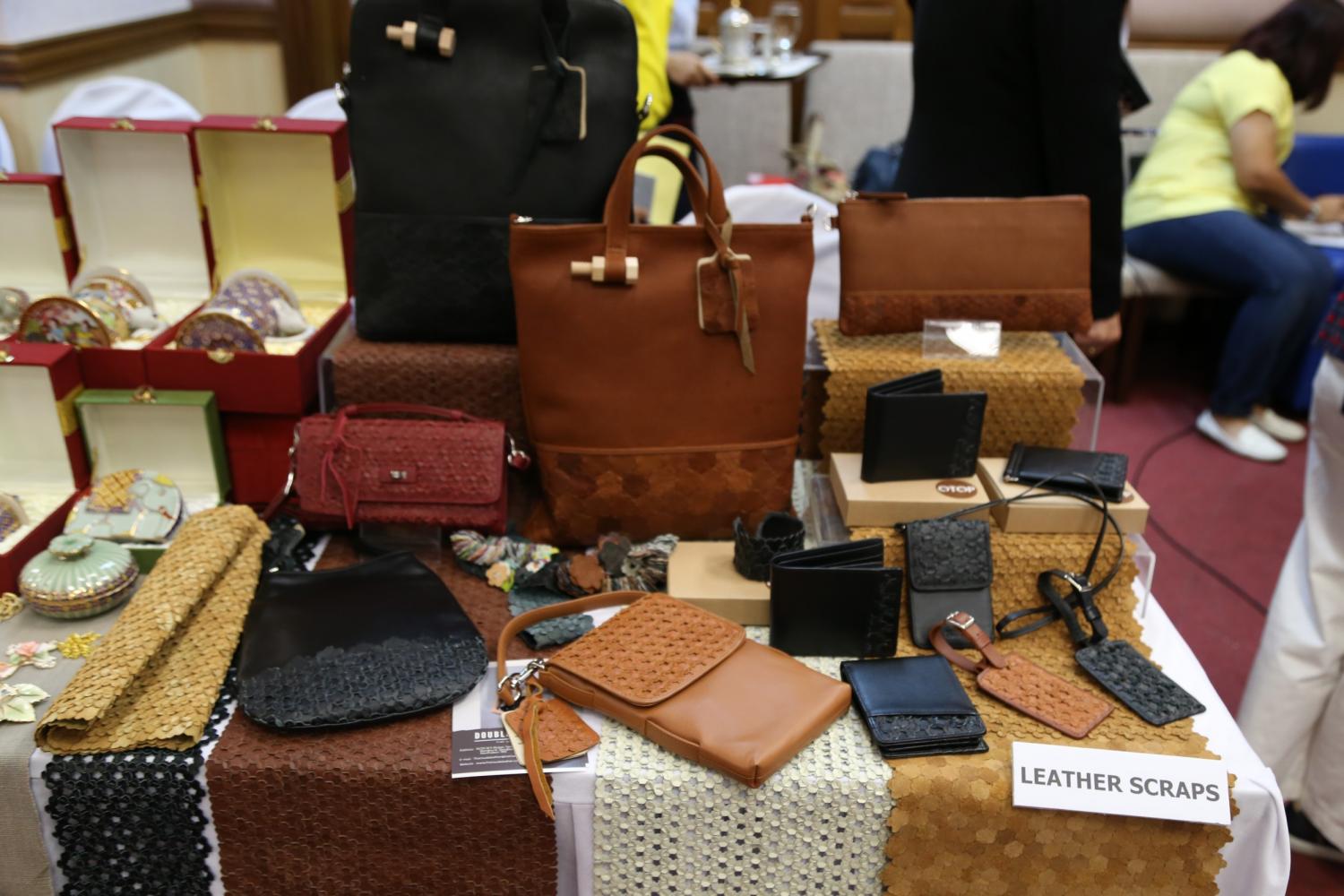
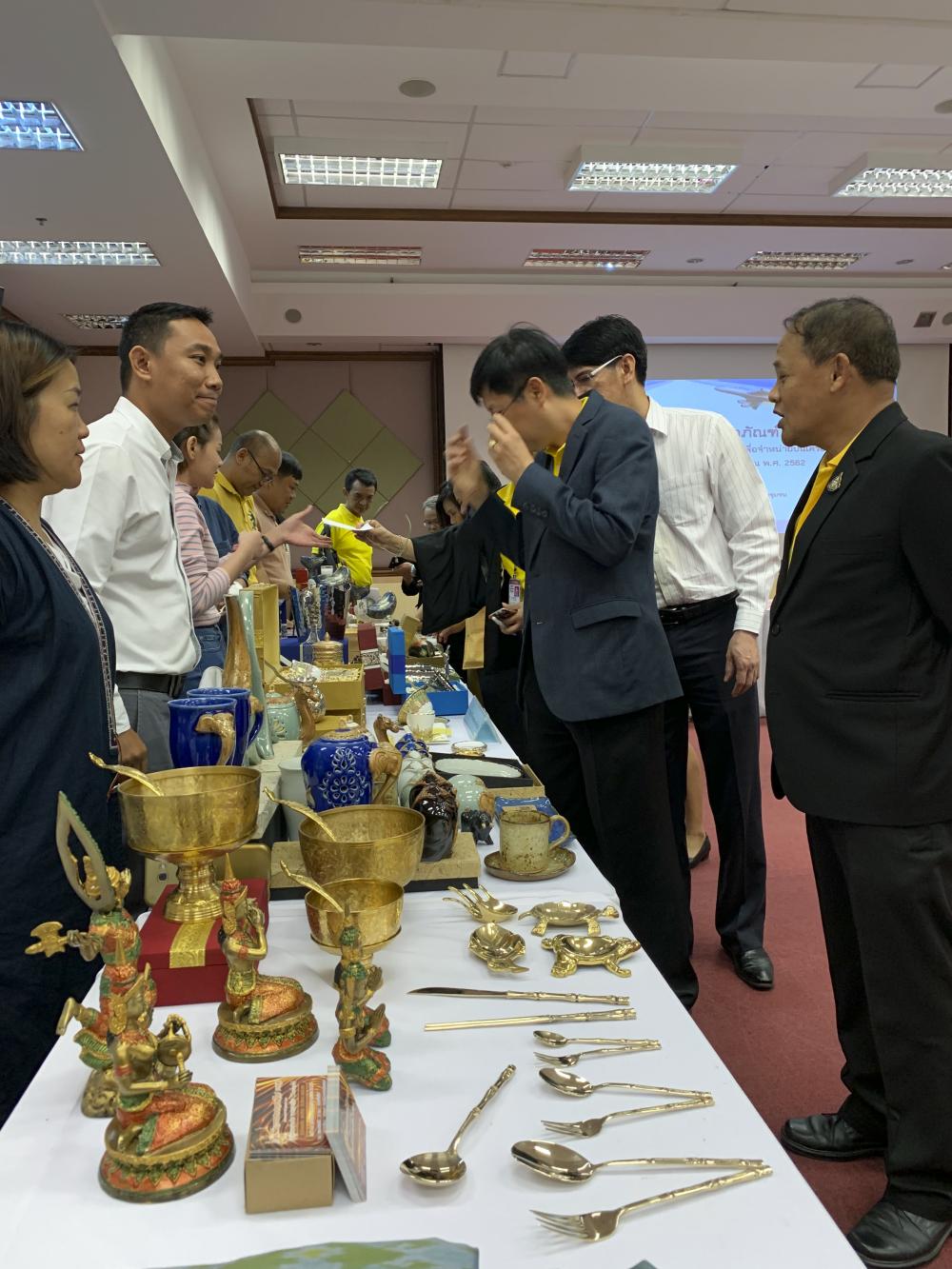
A flick through the pages of this magazine brings to view a vast array of locally made products, ranging from nielloware to hand-woven clothes that represent the wisdom and traditional arts of local villagers.
The Otop Prestige magazine, out every three months, has entered its seventh edition.
Nisit Jansomwong, director-general of the Department of Community Development (DCD), said only premium-quality products are featured in the magazine.
"People have trust in Thai Airways (to carry the products for in-flight sales)," said Mr Nisit.
"They believe products sold on THAI flights meet the highest standards," he added.
Prime Minister Prayut Chan-o-cha came up with the idea of giving appealing Thai traditional handicrafts deemed "marketable" with a high commercial value a chance to be sold on THAI flights, according to Mr Nisit.
During the premier's tours of the provinces, Gen Prayut and his cabinet paid attention to goods which residents produced that could earn them steady income. Government offices were also asked to showcase products locally made by communities to Gen Prayut who thought their outlets for sales should be expanded.
Mr Nisit said the magazine is not just a collage of Otop photos. It tells stories about the cultural roots and wisdom behind various products, some of which accrued over generations before the products finally came to fruition. The magazine mentions villages and communities behind the products, which helps put them on the tourism map.
Also having a say in choosing the products for print in the magazine are leading chains of stores such as King Power Duty-Free and The Mall, which bring years of experience into consumer behaviour, product segmentation and marketing, observers say.
A representative from THAI said certain products displayed on the pages are also carried on board for sale, although the items are of suitable size to be stored in the limited space in the aircraft.
The source said tourists also prefer small items which can be bought as souvenirs or for personal use.
"The criteria for selection in the magazine is that the items' appearance and stories about where they were made must grab readers' attention.
"Customers buy products, first and foremost, from the images they see. But the products sold must be the same as in the picture," the source said.
A source at King Power said the stories behind the products make an instant impression on customers. For certain groups such as Chinese tourists, the products tend to incorporate elements about good fortune, love and business prospects.
Another source from The Mall, which also delivers the Otop products to THAI flights and customers who place mail orders, said orders for Otop products sold via the national airline are rising.
"When THAI sends out customer orders, we immediately deliver the products to customers both in and outside of the country," The Mall source said.
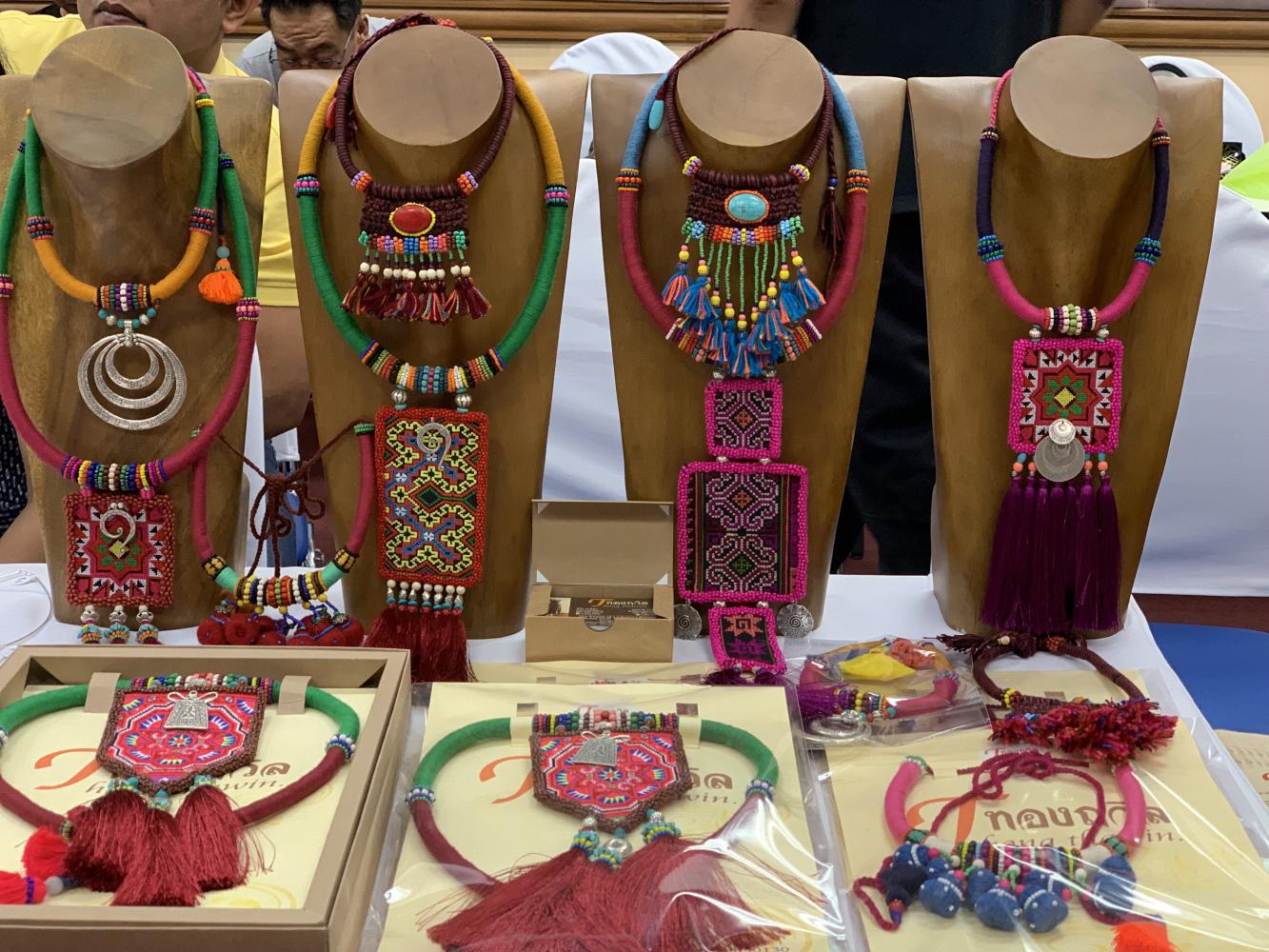
One handicraft maker chosen to supply products for in-flight sales is the Chiang Mai-based Thongthawin Group that specialises in hand-woven fabrics. The group was formed by Narit Boonsathit and his sister Boonruay Ratcha-oon.
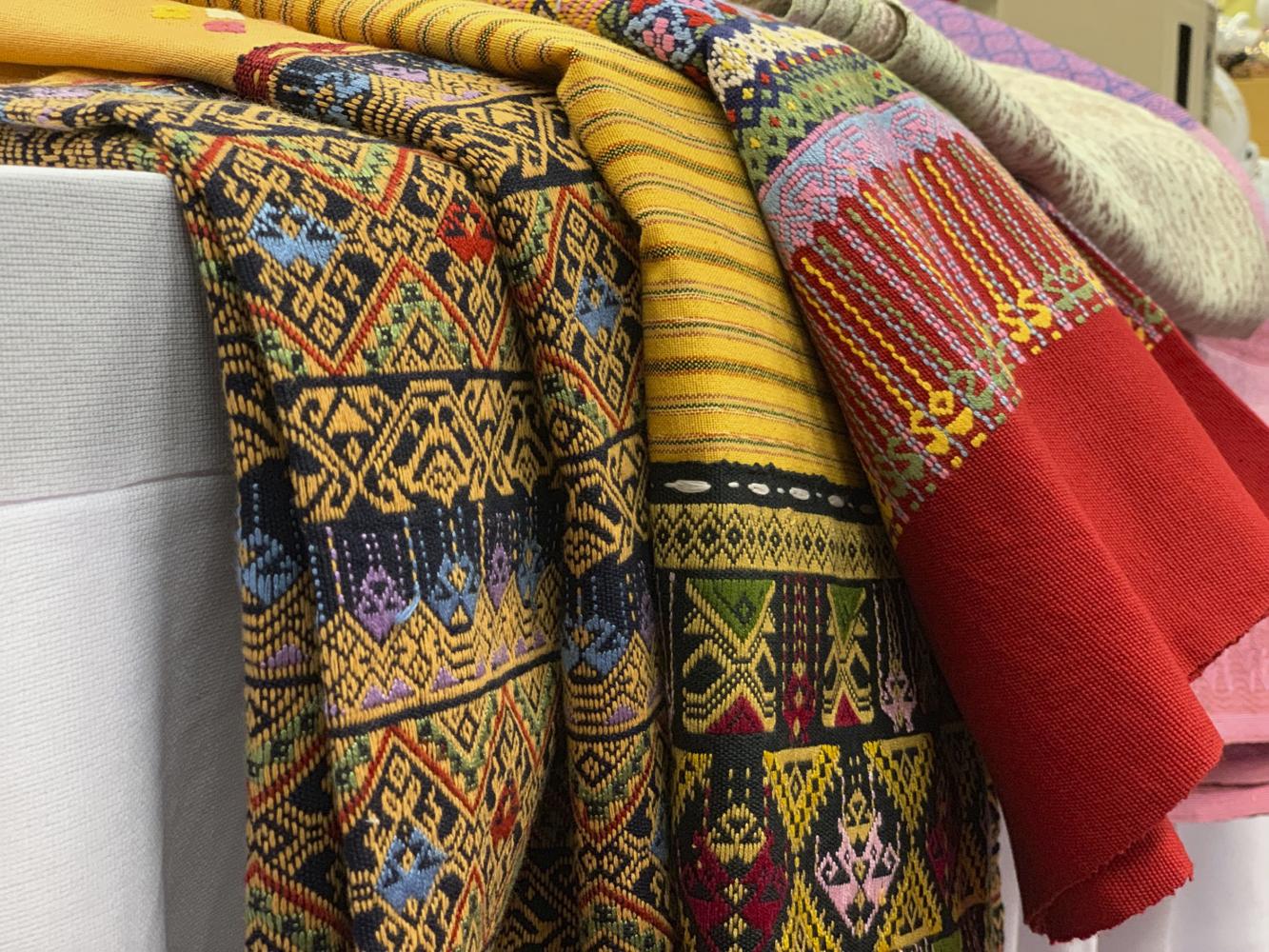
The siblings said their embroidered fabrics bears the identity of their local community. The products were recognised as Otop brands by the government in 2000 and admitted to the prestigious "four-star tier" two years later.
According to them, their hand-woven fabrics incorporate ethnic patterns and style.
Their fabrics were also tailored into gowns worn by guests at the royal wedding of Prince Harry and Meghan Markle in 2018, according to the siblings, who said around 50 local residents are employed in embroidering the material based on the designs they put together.
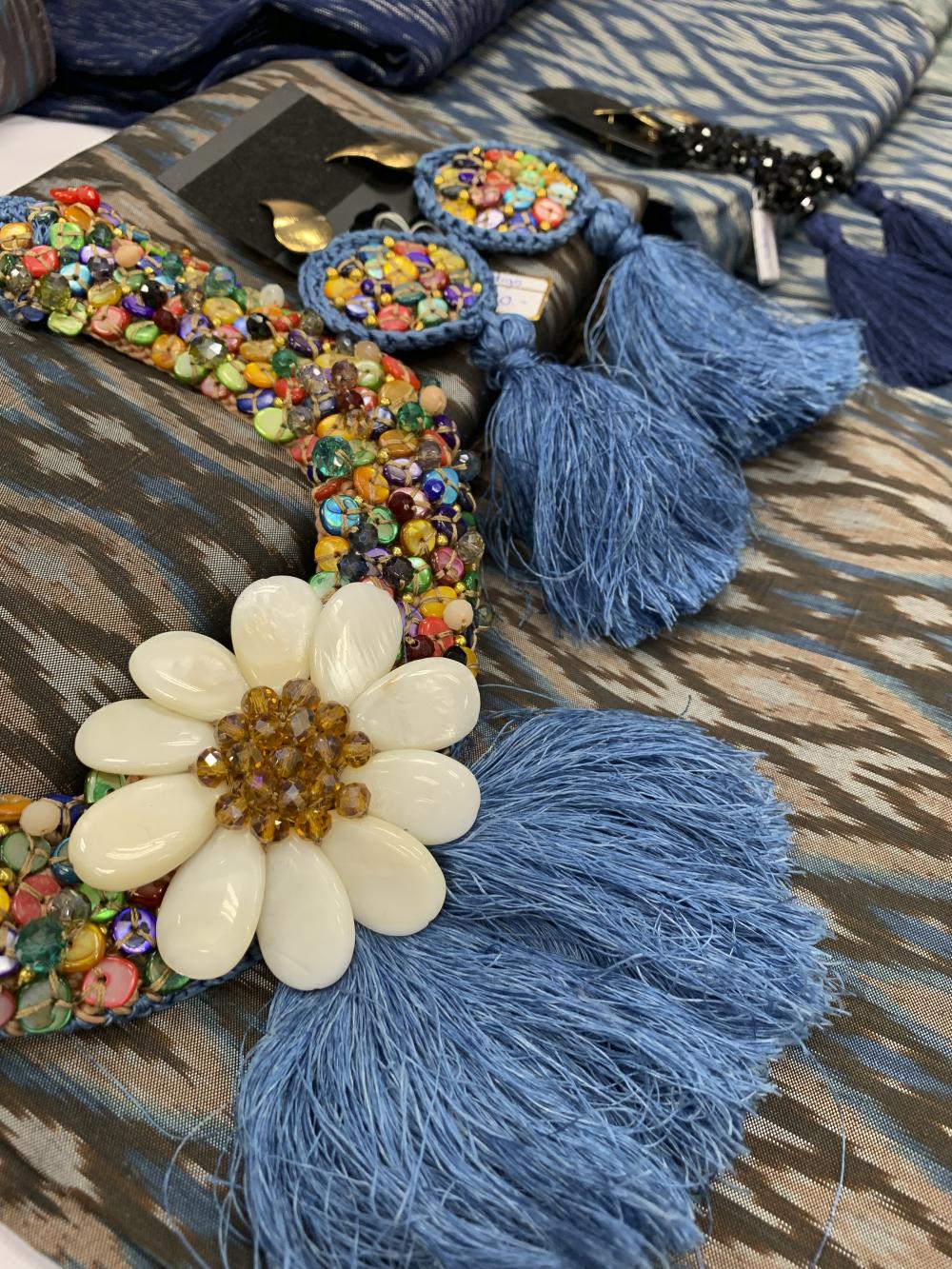
The group also produces wearable accessories and jewellery items, including necklaces studded with coloured stones, the style of which is influenced by the culture of local villages.
Their products have been regularly promoted at Otop fairs but were never sold on board an airline before.
Mr Narit conceded he was apprehensive about stocking 200 pieces of each item earmarked for on-board sales since he needs to invest more money for production.
"But there's no cause for whining. I was chosen to supply the items and I am ready for it," Mr Narit said.
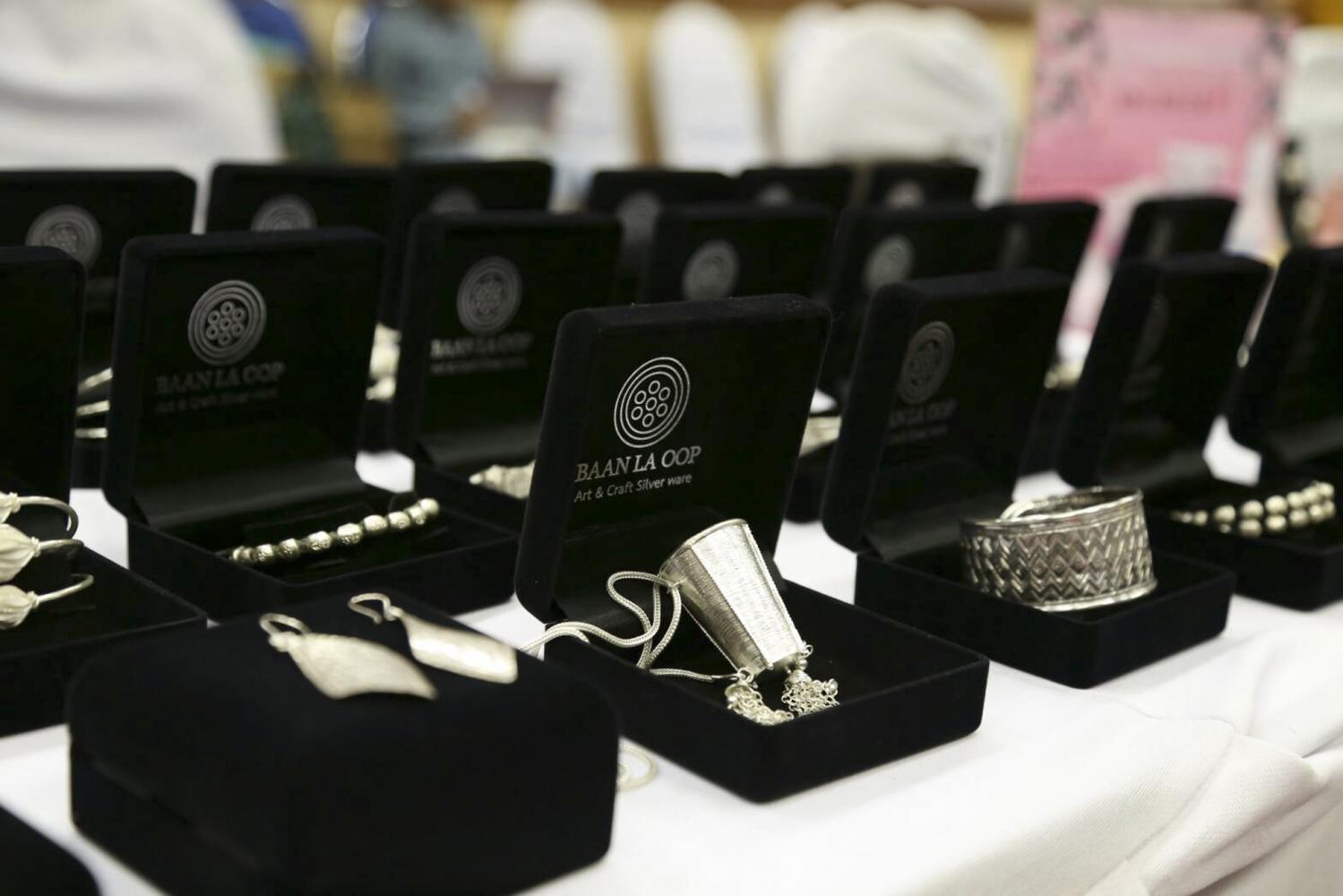
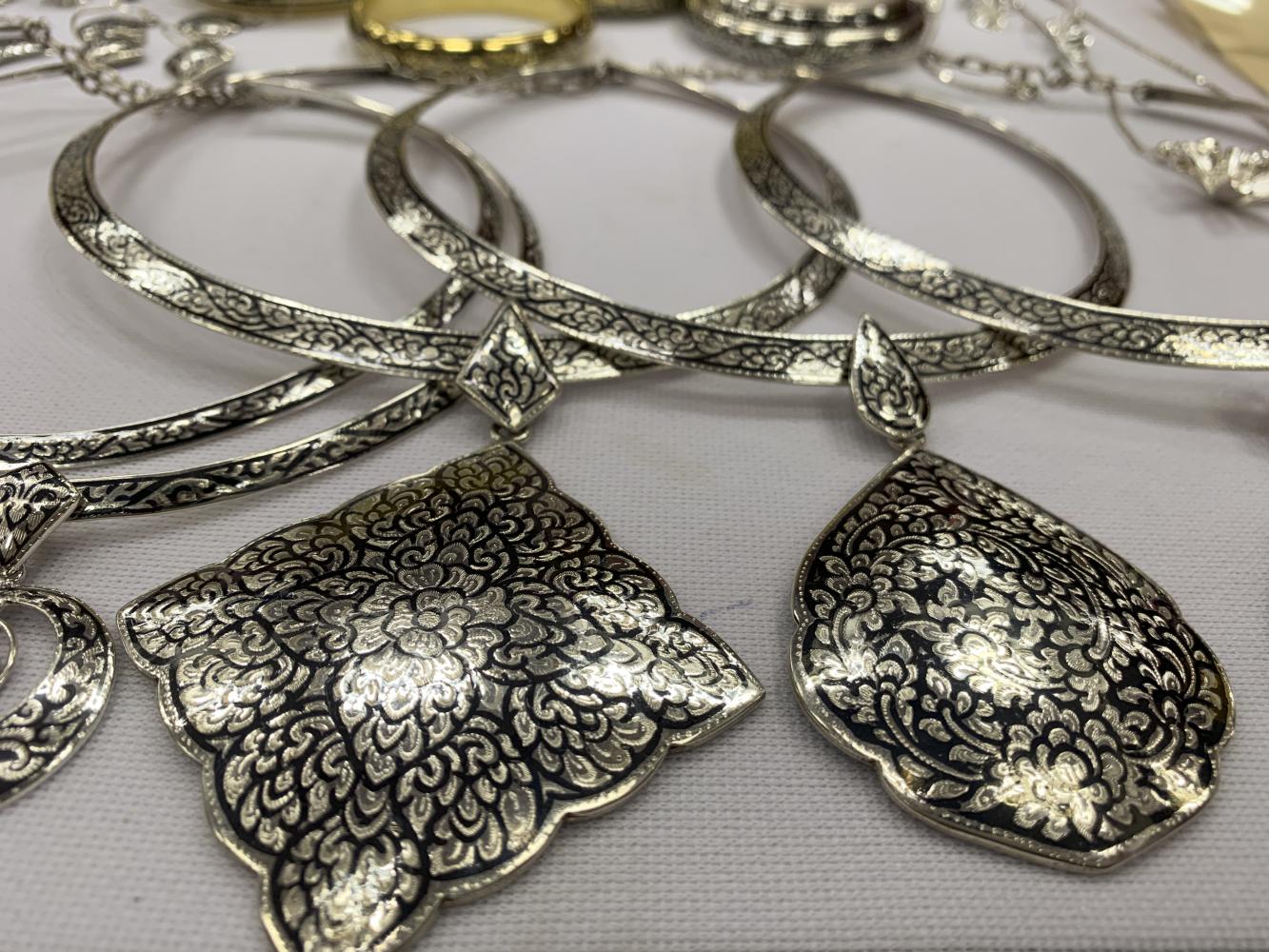
Niellowares, known as Krueng Thom, produced by Aporn Temkongkaew from Nakhon Si Thammarat, were also offered for sale on the flights.
He had students from the Nakhon Si Thammarat Arts and Craft College work as trainees at his factory. Some students were also hired to draw up patterns for the items after being trained at the college.
Mr Aporn said his products are accessories that can be worn in everyday life and show off modern patterns. Selling neilloware on board a flight gave him a rare chance to "internationalise" the appeal of the traditional nielloware.
Nielloware items are normally expensive. However, the in-flight magazine would at least afford the international travelling public a "visual taste" of the items which they do not often, if at all, come across.
If they see the products a second time, they may decide to buy them, Mr Aporn said.
This year, 165 handicraft Otop producers are vying to have their products listed in the THAI in-flight magazine. However, there are places only for up to 21 producers whose products will adorn the pages of not only the Otop Prestige magazine but also of King Power duty-free publications.
On-board sales of Otop products have raked in 239 million baht since they were first introduced for in-flight purchases in mid-2016.
Otop producers who are appointed suppliers are guided by THAI, King Power and The Mall on packaging aspect and the proper product sizing for in-flight sales.
"One credible indication of how well the products sell on board is the many copies of Otop Prestige magazine that passengers take home with them.
"Some copies that remain in the aircraft have had pages removed, probably by potential customers who were after the suppliers' contact numbers," Mr Nisit said.
"Some customers even took the trouble of making the trip to the local communities to purchase the items they wanted," the DCD chief said.