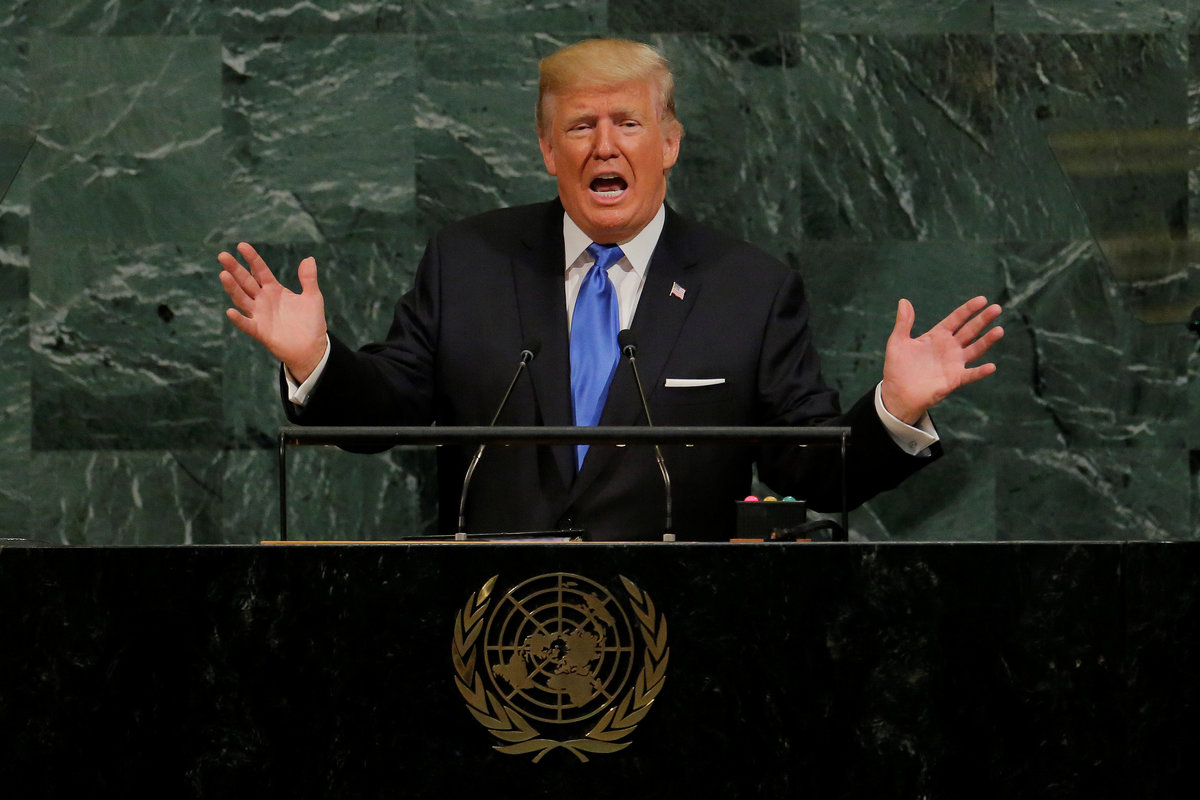
UNITED NATIONS (Reuters) - U.S. President Donald Trump escalated his standoff with North Korea over its nuclear challenge on Tuesday, threatening to "totally destroy" the country of 26 million people and mocking its leader, Kim Jong Un, as a "rocket man."
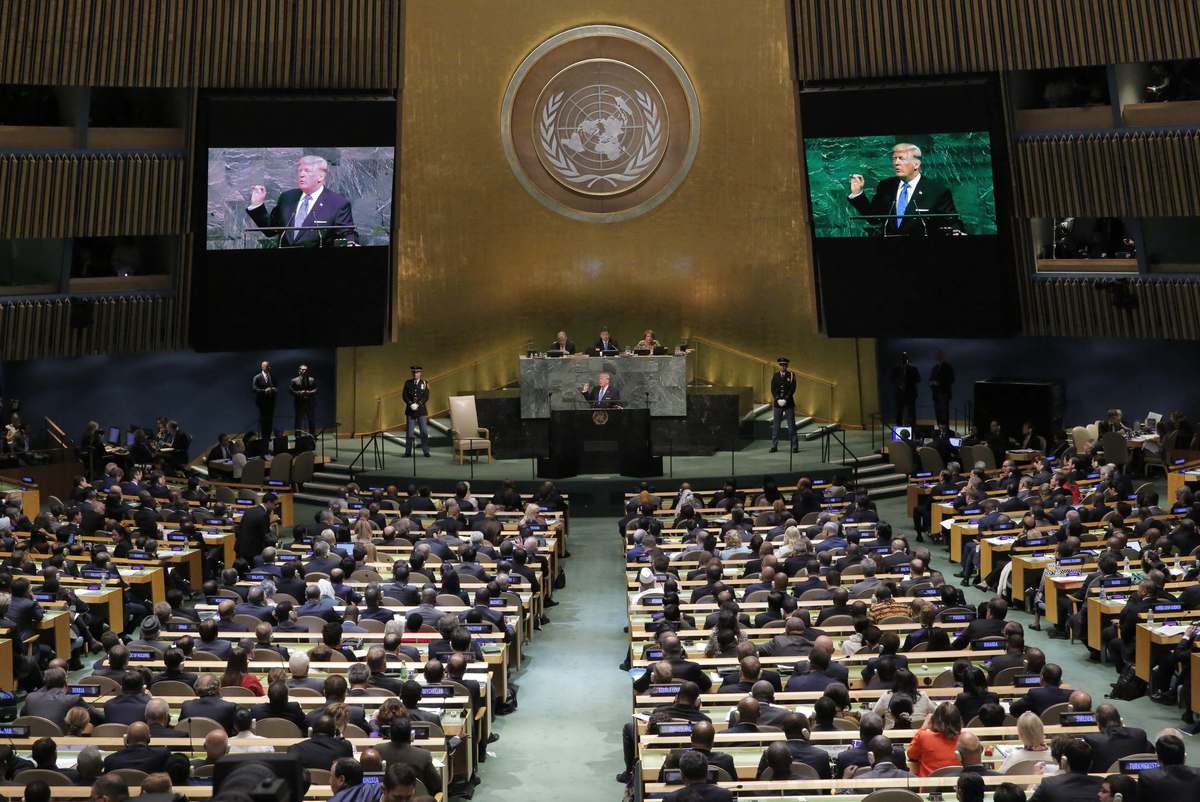
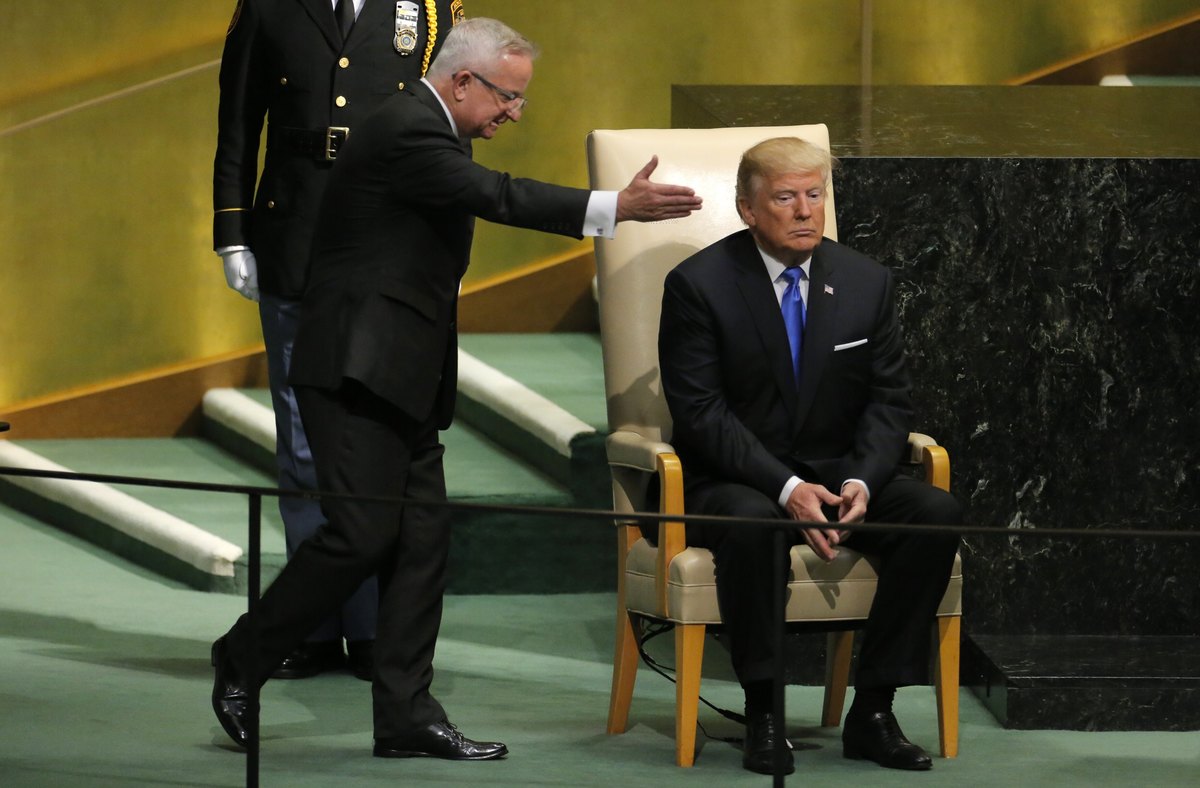
In a hard-edged speech to the United Nations General Assembly, Trump offered a grim portrait of a world in peril, adopted a more confrontational approach to solving global challenges from Iran to Venezuela, and gave an unabashed defence of U.S. sovereignty.
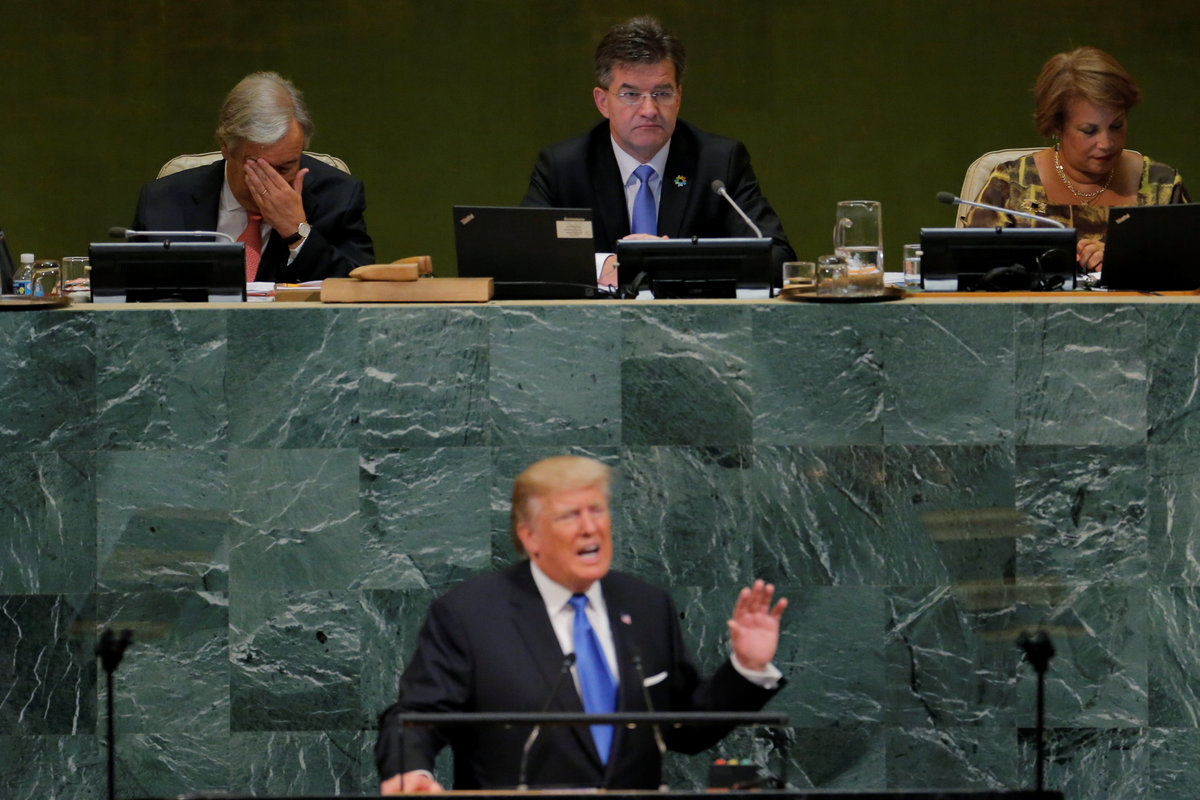
"The United States has great strength and patience, but if it is forced to defend itself or its allies, we will have no choice but to totally destroy North Korea," Trump told the 193-member world body, sticking closely to a script. (http://live.reuters.com/Event/Live_US_Politics/1092226107)
As loud, startled murmurs filled the hall, Trump described Kim in an acid tone, saying, "Rocket man is on a suicide mission for himself and his regime."
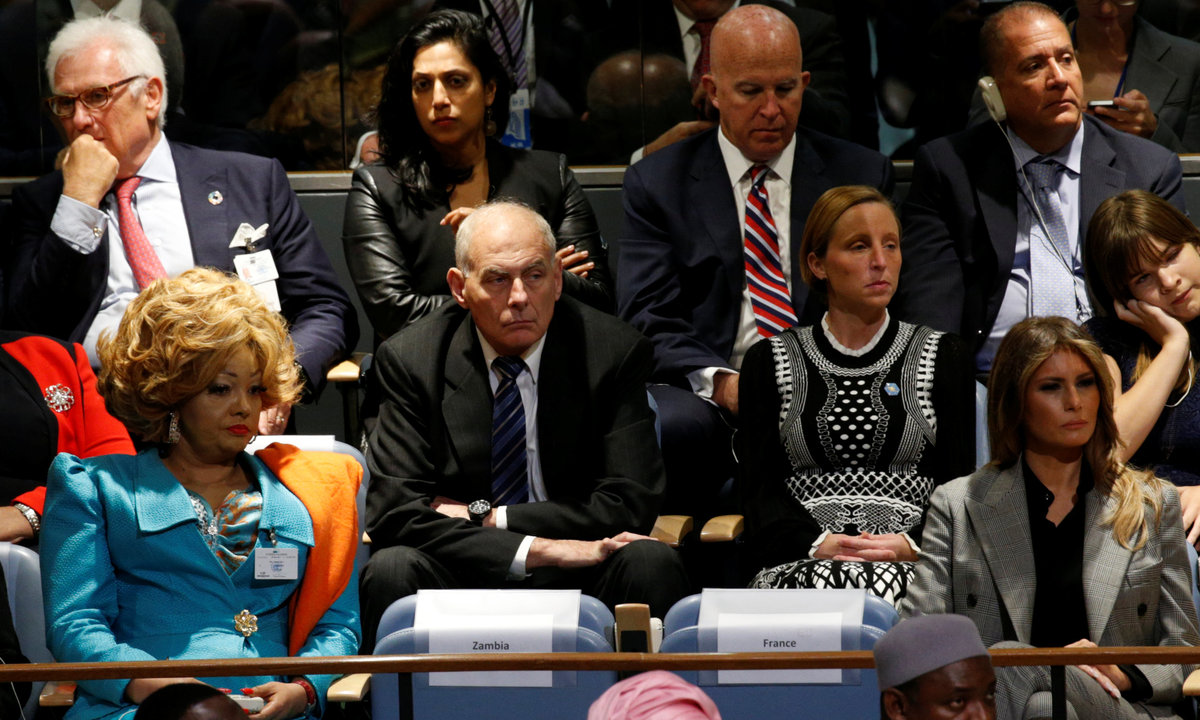
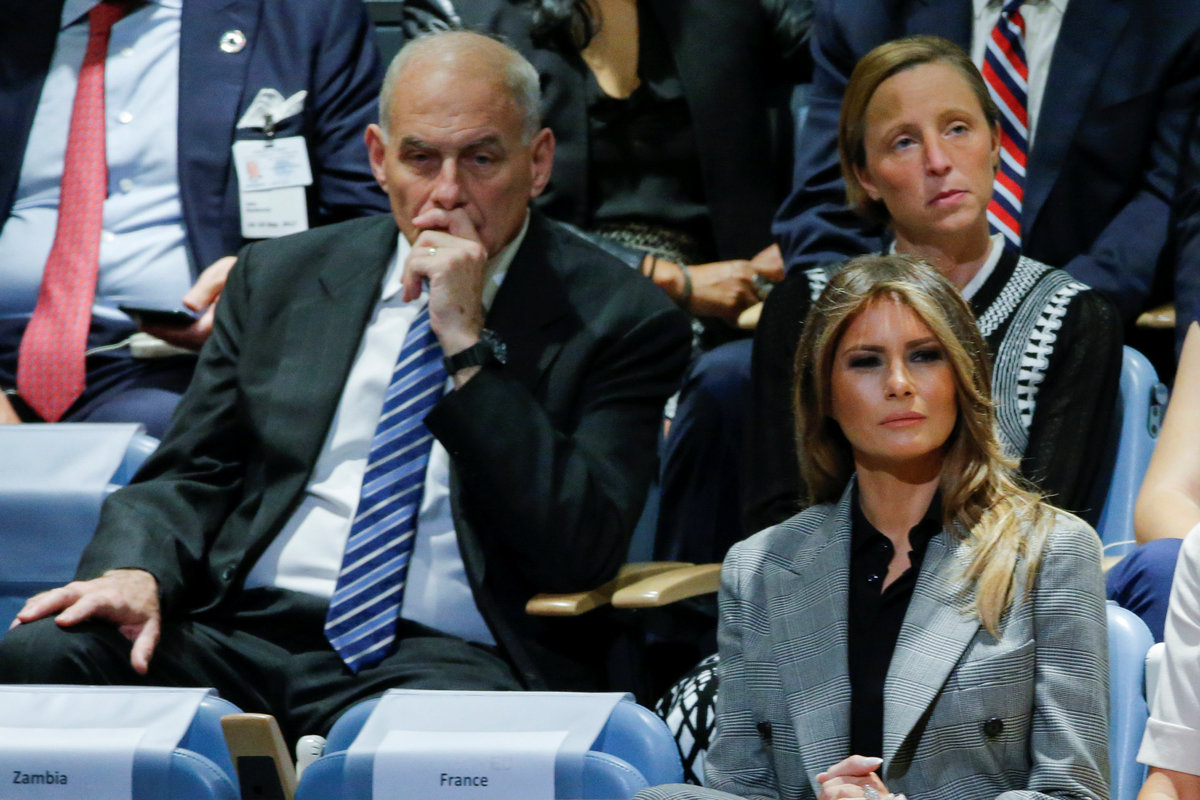
His remarks rattled world leaders gathered in the green-marbled General Assembly hall, where minutes earlier U.N. Secretary-General Antonio Guterres appealed for statesmanship, saying: "We must not sleepwalk our way into war."
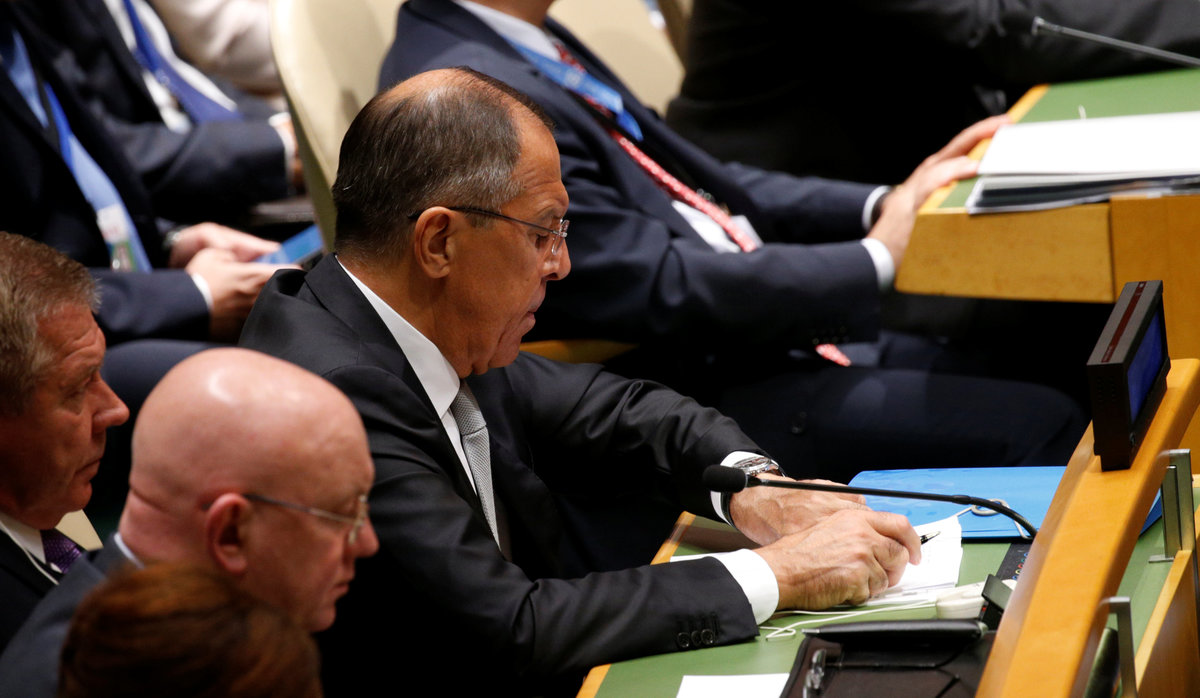
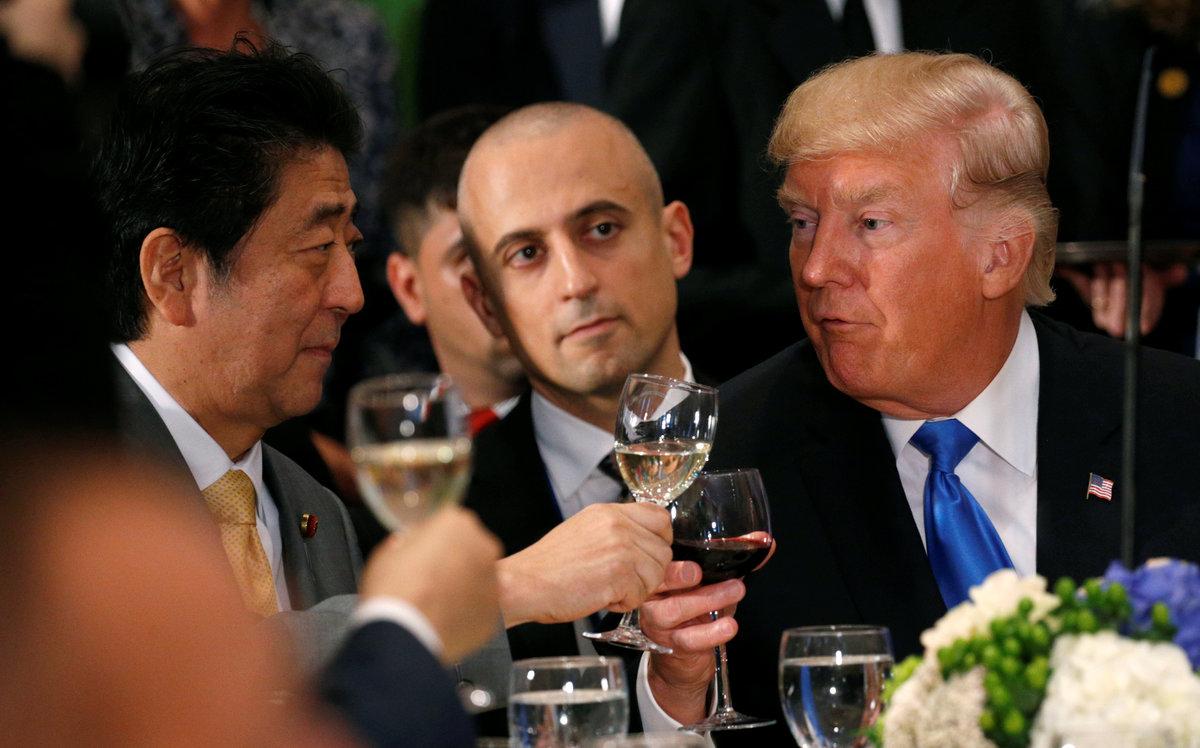
Trump's most direct military threat to attack North Korea, in his debut appearance at the General Assembly, was his latest expression of concern about Pyongyang's repeated launching of ballistic missiles over Japan and underground nuclear tests.
Swedish Foreign Minister Margot Wallstrom crossed her arms during the speech.
"It was the wrong speech, at the wrong time, to the wrong audience," Wallstrom later told the BBC.
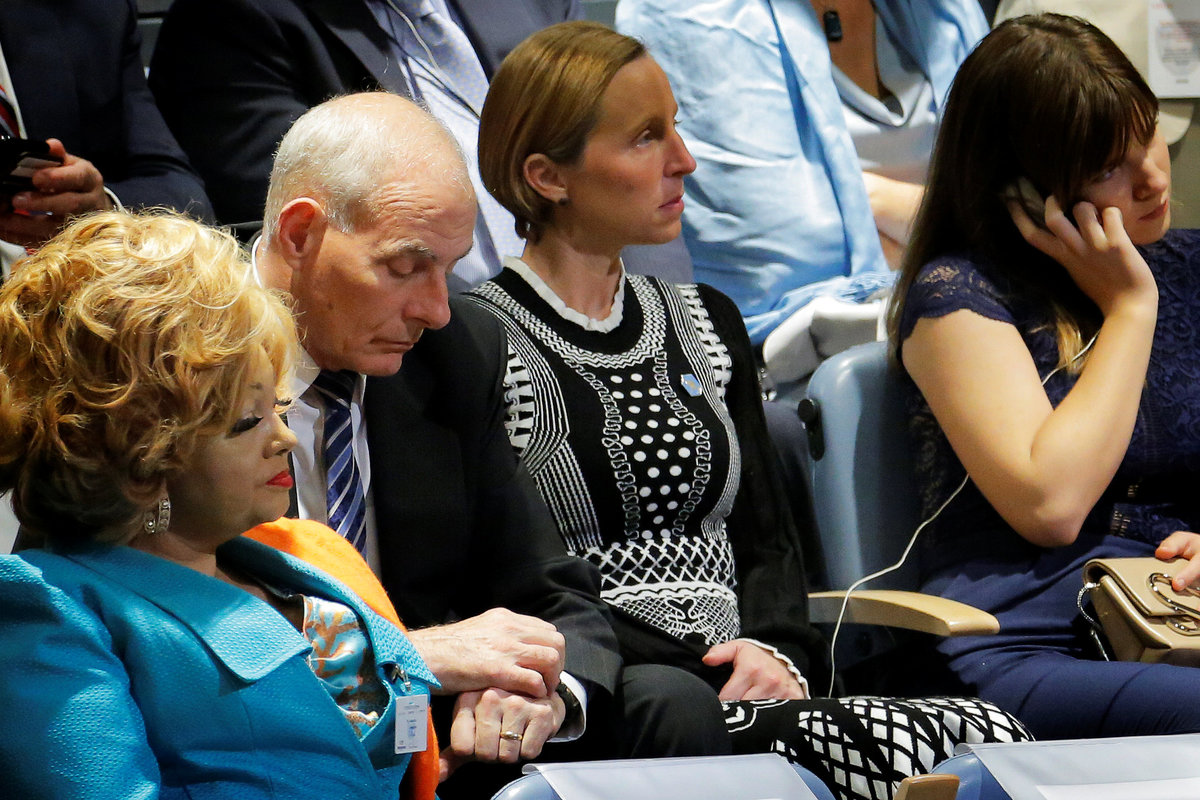
A junior North Korean diplomat sat in the delegation's front-row seat for Trump's speech, the North Korean U.N. mission said. The mission did not immediately respond to a request for comment.
In Germany, Chancellor Angela Merkel said she would do everything in her power to ensure a diplomatic solution. “Anything else would lead to disaster," she said.
CABINET CONTRAST
Trump's sabre-rattling rhetoric, with the bare-knuckled style he used to win election last November, was in contrast to the comments of some of his own Cabinet members who have stated a preference for a diplomatic solution.
Defense Secretary James Mattis, who earlier this month raised the prospect of a "massive military response" if needed, on Tuesday told Pentagon reporters that Secretary of State Rex Tillerson was working to resolve the crisis diplomatically.
Interviewed by Fox News, Tillerson highlighted Washington's policy of pressuring North Korea through sanctions.
"We have the strictest sanctions ever put in place. We do believe there are early signs of those having an effect," he said. "Ultimately though we’re going to need the assistance of the neighbours in the region.”
Reaction in the United States to Trump's speech was mixed.
Mitt Romney, the 2012 Republican presidential nominee, tweeted that Trump, a fellow Republican, "gave a strong and needed challenge" to U.N. members to confront global challenges.
But Democrat Ed Markey of the U.S. Senate Foreign Relations Committee denounced Trump's remarks, telling CNN the president had yet to exhaust his other options in encouraging Pyongyang to negotiate.
In a thunderous speech, 42 minutes long according to the official transcript, Trump took aim at Iran's nuclear ambitions and regional influence, Venezuela's collapsing democracy and the threat of Islamist extremists.
"Major portions of the world are in conflict and some in fact are going to hell," he said.
His speech recalled the fiery nationalist language of his Jan. 20 inaugural address when he pledged to end what he called an “American carnage” of rusted factories and crime.
'HOSTILE' BEHAVIOUR
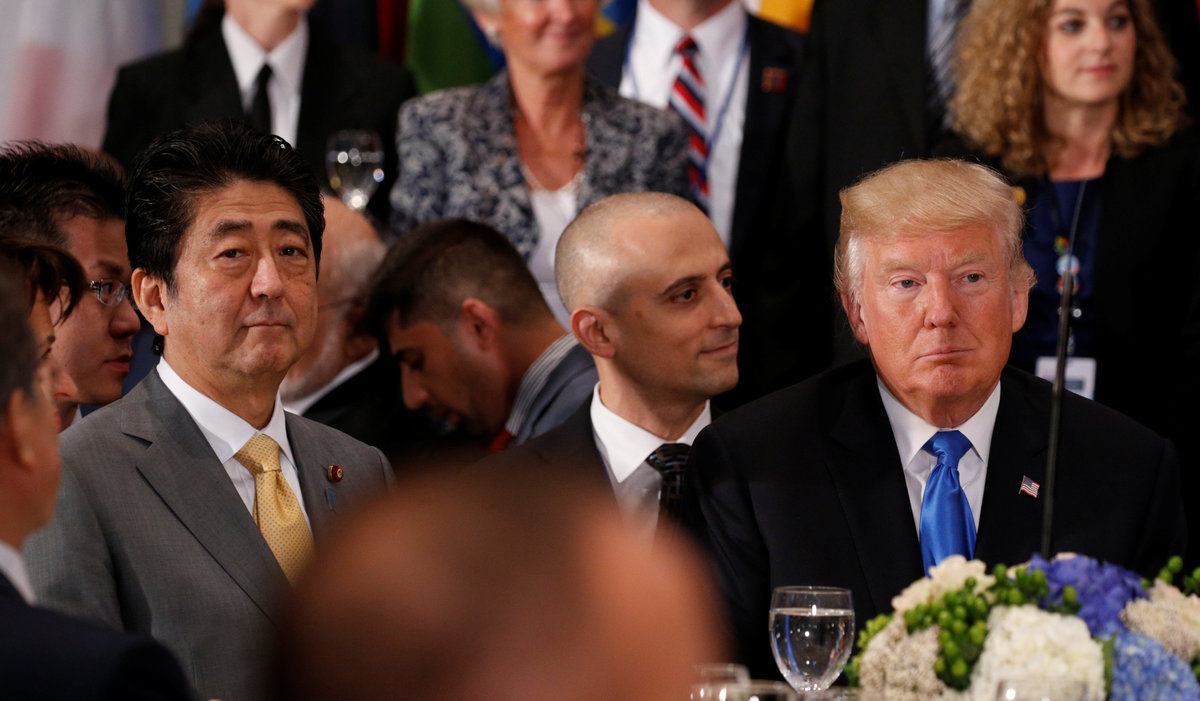
His strongest words were directed at North Korea. He urged U.N. member states to work together to isolate the Kim government until it ceases its "hostile" behaviour.
In an apparent prod at China, the North's major trading partner, Trump said: "It is an outrage that some nations would not only trade with such a regime but would arm, supply and financially support a country that imperils the world with nuclear conflict."
The U.N. Security Council has unanimously imposed nine rounds of sanctions on North Korea since 2006 and Guterres appealed for that 15-member body to maintain its unity.
Turning to Iran, Trump called the 2015 nuclear deal negotiated by his predecessor, Barack Obama, an embarrassment and hinted that he may not recertify the agreement when it comes up for a mid-October deadline.
"We cannot abide by an agreement if it provides cover for the eventual construction of a nuclear programme," he said. He said the Iranian government "masks a corrupt dictatorship behind the false guise of a democracy."
Iranian Foreign Minister Mohammad Javad Zarif tweeted a withering response: "Trump's ignorant hate speech belongs in medieval times - not the 21st Century UN - unworthy of a reply. Fake empathy for Iranians fools no one."
French President Emmanuel Macron, in his U.N. speech, said his country would not close the door to negotiations over North Korea and staunchly defended the Iran nuclear deal. “Renouncing it would be a grave error," Macron said.
Trump called the collapsing situation in Venezuela "completely unacceptable" and warned the United States was considering what further actions it can take. "We cannot stand by and watch," he said.
Venezuela rejected Trump's threats and said it was prepared to resist any U.S. actions, even a military invasion.
At what was billed as an “anti-imperialist” rally in Caracas, Venezuelan President Nicolas Maduro described Trump as “the new Hitler of international politics.”
Stocks, bonds and currency markets ended little changed on the day. “I think world markets have become complacent about North Korea,” said Scott Minerd, global chief investment officer of Guggenheim Partners.
(Additional reporting by Michelle Nichols, Arshad Mohammed, John Irish, Parisa Hafezi, David Brunnstrom, Anthony Boadle and Yara Bayoumy at the UNITED NATIONS, Richard Leong in NEW YORK, Eric Beech in WASHINGTON, Dan Williams in JERUSALEM and Diego Oré in CARACAS; Writing by Steve Holland; Editing by Howard Goller)