BOWRAL: The biggest pieces of history at times remain embedded in the most nondescript of places.
You don't realise it at the onset as you walk around thinking that it is another back of the beyond quaint suburban town in Australia.
But Bowral has a different feel to it, just like it felt when one stepped out of the train at the Tunbridge Wells Station.
Tunbridge Wells has an Indian sentiment attached to it because of Kapil Dev's epic 175 not out while Bowral's essence cannot simply be described in words.
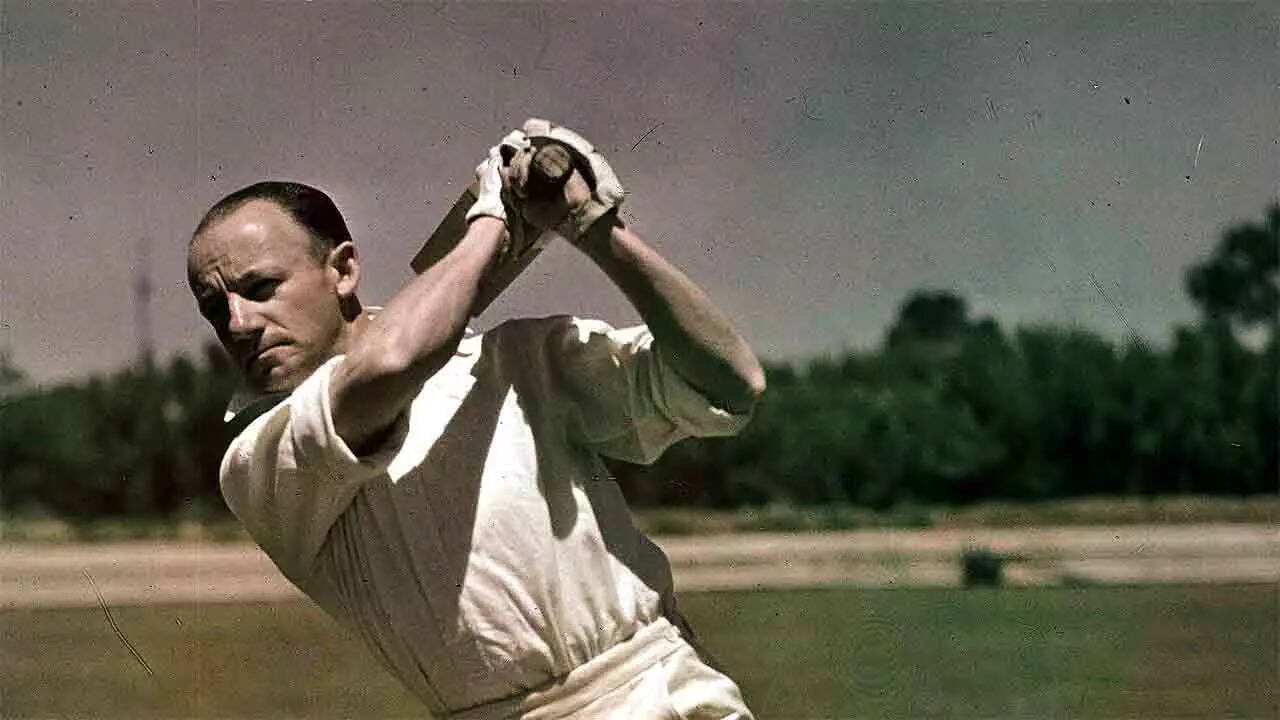
After all, it is not every day you get that heady feeling of being in the August company of none other than Sir Donald George Bradman.
Bowral belongs to only one man -- the genius who has been a part of Aussie conscience since he made his Test debut 94 summers back and has left the world over two decades ago.
It is a pilgrimage for cricket devotees across the globe, who make a beeline to get a sense of how geniuses can come up from anywhere.
Bradman stayed in Bowral for 19 years before shifting to Adelaide in 1928 before his Test debut and stayed there till his last breath in 2001. But Bowral as a town has remained steeped in nostalgia.
It seems Bowral, as a town, has decided to sit in a 'Time Machine' and stay put in 1928. Savour the young Don's first steps to greatness and those first cover drives on the Glebe Ground which was rechristened as 'Bradman Oval' in mid '70s.
It won't be an understatement if someone perceives Bowral to be a village.
An Indian cricket tourist, who has of late grown on a heady dose of Hollywood Christmas movies on Netflix, could instantly relate to a sleepy town like Bowral.
From two-platform railway station, the 'Bradman Walk' (as they call it) to the 'Oval' is the most joyful 10 minutes you will have ever spent.
It's an uphill country side walk with a lining of maple trees on one side and cedar on the other, with the English type thatched roof houses giving that exact retro feel that you might have envisaged.
Once you enter the Bradman Oval, one of the volunteers Paul Jennings tells PTI, "You know when it was renamed Bradman Oval, it was Bill 'Tiger' O'Reilly, one of his biggest adversaries, who bowled the symbolic first delivery on the re-laid pitch and Bradman."
While the world revered Bradman, there were people who never liked him and O'Reilly, the master leg-spinner who took 140 wickets in 27 Tests before his career ended prematurely was one of Bradman's greatest critics.
Some feel that Bradman being perceived by Australian public as 'Good Christian', a protestant had ideological differences with 'Tiger' O'Reilly, who was an Irish Catholic.
The Oval is a ground where Bradman scored his first hundred in Grade Cricket (a level below first-class in Australia). A walk down the ground and towards the re-laid track is sure to give you goosebumps.
Just close your eyes and feel that 100 years back, Bradman had bossed on this very little personal cricket ground. Every blade of grass on this field must have felt the punch packed in his drives.
It is a small ground but as beautiful as one you would find in England where minor league games are played.
At one corner is the Bowral High School where Bradman had studied during his middle and high school years.
Behind the ground, at one corner is a street lamp post and you couldn't miss the green-coloured marker -- Bradman Avenue.
As you pass the marker, before you realise, you are at 20 Glebe Street, a house where Bradman lived during his teenage years.
In fact, a plaque inscribed on the boundary wall states that Bradman had helped his father George in building the house.
Those were days when Civil engineers and building planners were not in vogue. As one looked around the house which is the official residence of the curator of Bradman's trust, you are marvelled at the simplicity of it.
From there, one takes another detour and walks down to the other end at the 52 Shepherd Street where he had stayed in his formative years before shifting to the Glebe Street residence.
You want to enter the residence, get a feel of it all but obviously there is no way and you walk down to the Bradman Museum, which is a treasure island for connoisseur of cricket.
The life-size landscape photograph of Bradman's Invincibles proudly adorns the wall. There is Bradman, a young Neil Harvey (only living cricketer to have played alongside Bradman), Don Tallon and Bill Brown, who adorn the wall.
Even if you have been here once, you rejig your memory but even then every moment spent inside the museum feels like a new memory created.
The gloves used by Bradman during one of the Ashes series, the typewritten manuscript of his book 'Farewell to Cricket', some of the leather balls used in those era and the famous baggy green cap - you feel like a child in a candy store.
The old English willow bats which used to be seasoned with linseed oil and those gloves which makes one wonder how did one survive Harold Larwood's lightening quick deliveries wearing those.
And then there are remains of a black overhead water tank which Bradman used for his own little throwdowns. Bradman would throw the golf ball and use a stump to play forward defence on rebound.
There is a TV interview of Bradman where he was seen speaking about why he declined offers to play county cricket as a professional and how despite not being a trained accountant, he worked in a company which allowed him to concentrate on playing for Australia.
Legend has it that when Australia played in Adelaide, Bradman would work in his office for a couple of hours before walking down the street to enter the Adelaide dressing room and changed from his three-piece suit to white flannels.
The only thing that's off putting is the number of recent collectibles that have been included along with the old memorabilia.
Somehow, the gravitas gets a bit lessened as nostalgia is the USP of this place and everything around it. The zeal to attract new audience through jerseys of current stars lessens the pristine value of the museum.
What attracts everyone's attention is a handwritten note by the Don, on December 10, 1928, "If it's difficult, I will do it now. If it's impossible, I will do it presently."
Something that holds true for cricket and life. The 99.94 will stay on forever.
Long Live The Don, in our hearts.