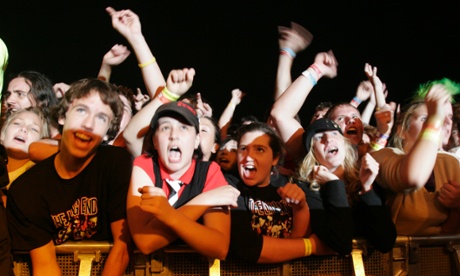
Teens. What are teens? Where do teens come from? Which memorial to genocide will they take selfies at next? Why don’t they care about the Rapture? Where do they learn so many ways to get high?
What will teens be obsessed with next, I wonder? Here’s the other thing I wonder about: why are adults so obsessed with teens? Why not old folks, or the perimenopausal?
Teensploitation, one of my favourite film and television genres that peaked in the 2000s, speaks to a pre-GFC variant of this obsession quite plainly: Cruel Intentions, The OC, Gossip Girl, The Craft, even Buffy the Vampire slayer – they’re packed with salacious depictions of teens taking drugs, committing crimes, practising witchcraft and, in one memorable scene from the particularly brazen Jawbreaker, picking up and having sex with Marilyn Manson.
There are some common themes in this teen-centric media. You may also recognise them as some of our most cherished cultural neuroses: self-discovery, reckless or passionate love and sexuality, fun, rejection of authority. Being a teen is about being, or becoming, your true self. Unlike other life stages, like childhood, which is about dependence; or parenthood, whose deep concern is responsibility, the tropes of adolescence are decidedly egocentric.

Given the amount of emphasis we place on self-oriented pursuits, it’s unsurprising that we’ve graduated from Teensploitation to the pursuit of the “Uber Teen”. Young adult fiction like The Hunger Games, while less hedonistic than the Teensploitation flicks I watched while growing up, it is still concerned with self-discovery, independence, and triumph over oppressive authority. Of course, adults have gone nuts for it. Now we’re in the odd position where adults, defending themselves against charges of immaturity for being into teen media, are being sledged by other adults for being huge bipedal babies.
This new genre of pop culture criticism will probably become a defining cultural curio of our time. We’ll look back on 2014 and think, “Oh right, that was when adults spent an entire 12-18 months bickering over teen media and not doing anything about global warming for the 25th year in a row”.
Actual teens are the element that remains absent from these debates. Many adults seem to think they’re too busy “hanging 10” and shouting “fuck the police” at their school canteen lady to participate in conversations about themselves, but since the Teens Surfing Online accord of 2010, they have been permitted to access and even use the internet.
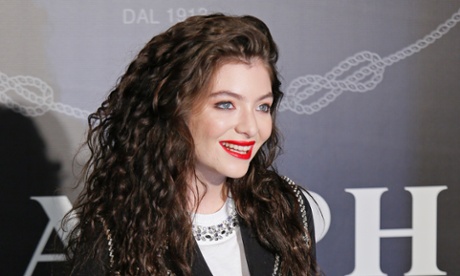
Tavi Gevinson and Lorde, two highly successful modern teens, touch on this broad theme of adult-teen engagement in an amazing interview on Gevinson’s magazine site Rookie:
Gevinson: That’s good. I want to start out by saying that what I want to do with this is … I’m in a unique position in interviewing you because we’re the same age–
Lorde: Holla.
And I feel like everything I read about you is like grown men writing—
Oh my god, that tweet you made where you were like, “She laces her Converse…” I was like, “This is so accurate!” There’s a definite viewpoint of the think piece by an adult writing about kids.
It’s true! The end is always like, “She does [this childlike thing] but she also does [this adultlike thing]. Whoa!”
Mine is “She squeals…”
As you can see here, the teens are onto us. How must it feel, as a teen, to have hordes of adults passionately defending their God-given right to read Young Adult fiction? We probably could’ve asked them if we weren’t so busy investigating in exactly what ways the teenage brain works badly and should probably be banned.
Although not quite as bad as being a little girl who likes My Little Pony in a world that for some reason tolerates the existence of Bronies, it must be a bit weird that there aren’t many cultural products specifically for teens any more. Then again, maybe the teens don’t care. The sociopolitical consequences of grownups reading Harry Potter does seem like a very boring thing to worry about.
And maybe that’s the point: lots of adults tend to relate to teens as though they’re small adults with pimples and bad taste, who are wrong all the time. But they’re not. They are learning, and becoming, in a way that adults are not. The uniqueness of this experience is something that grown-ups have trouble dealing with, and we vacillate between treating teens like infants and treating them like criminals.
We appropriate and indulge in memories and themes of adolescence that matter to us, but react to accounts by and for teens with shock and disapproval. It’s not for adults to try and understand teens better, necessarily. Rather, we should render unto teens what is theirs, and go do our damn taxes.