In Congo, part-time hunters boost income with bushmeat
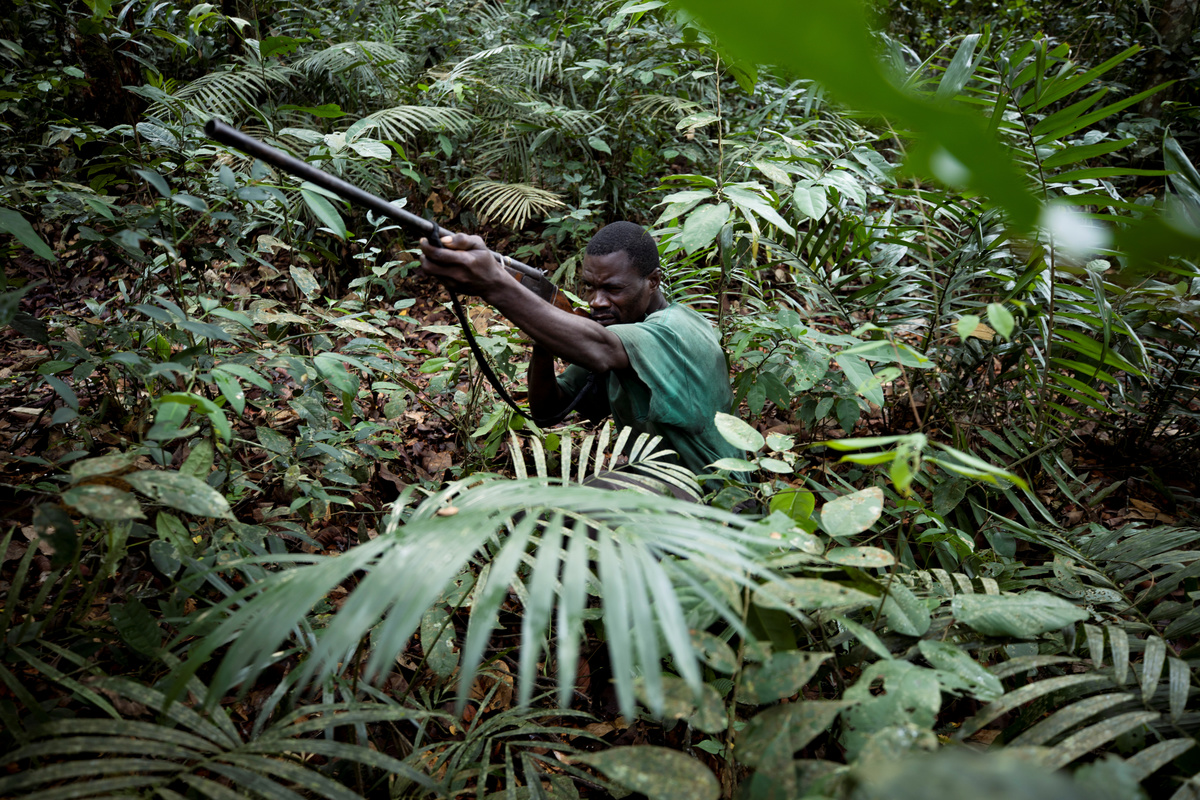
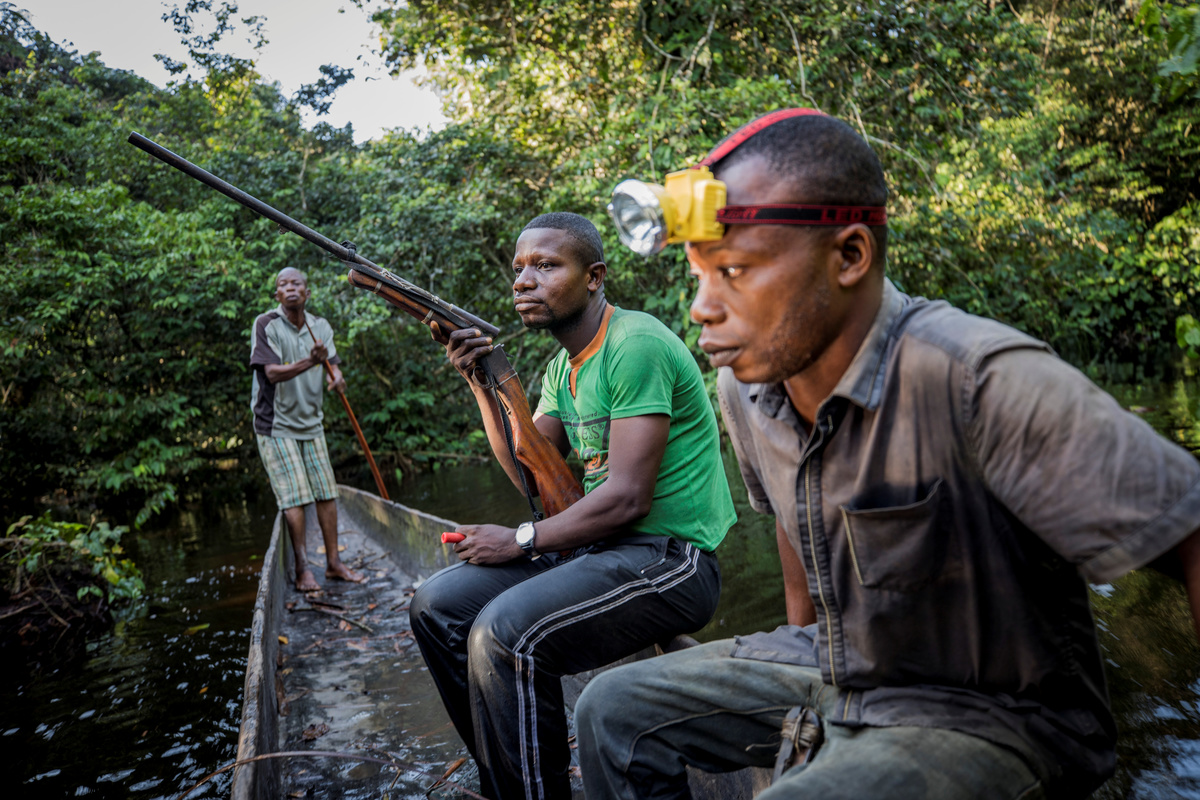
Pascal aims his gun at a monkey as he hunts in the forest near the city of Mbandaka, Democratic Republic of the Congo, April 5, 2019. REUTERS/Thomas Nicolon
MBANDAKA, Congo (Reuters) - Once a month, Mohamed Esimbo Matongu leaves his home in the western Congolese city of Mbandaka and hunts for wild animals.
Though he works for a government agency, he says he needs the income from selling most of what he kills to provide for his family. But bushmeat hunters like him are emptying Central Africa's forests at a high rate, researchers say.
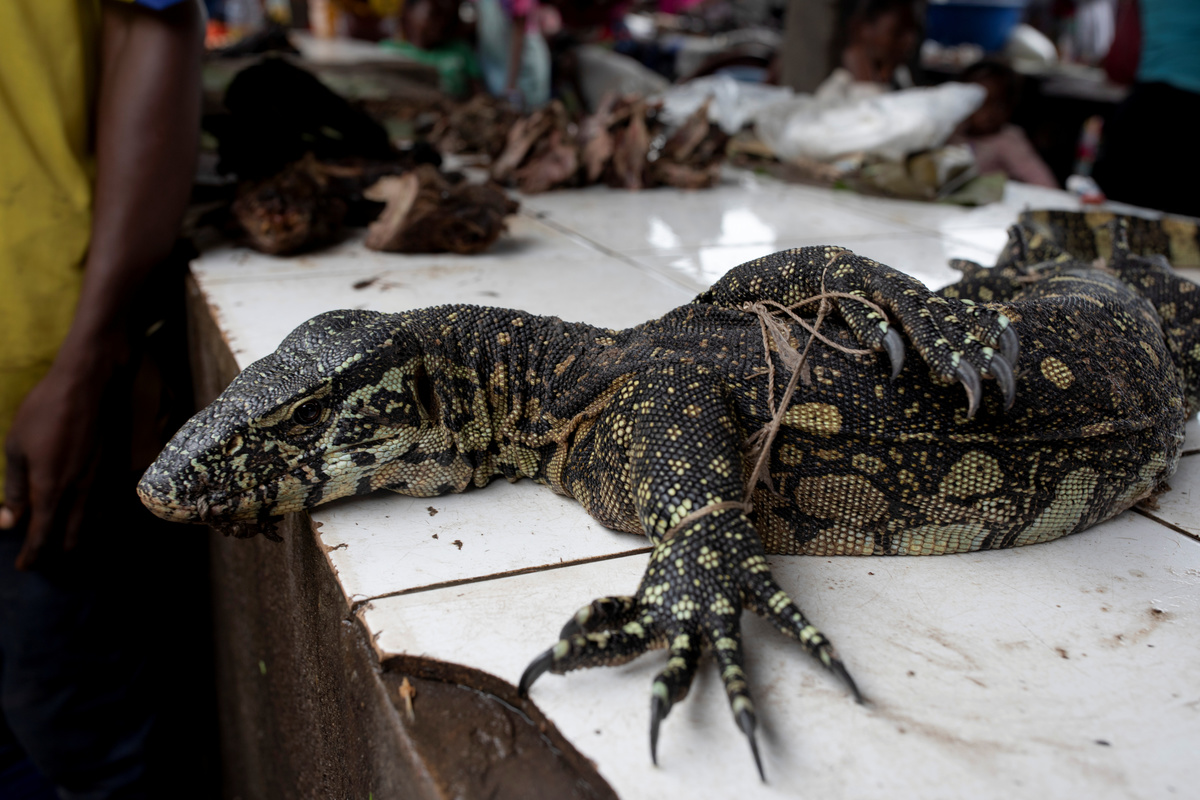
A monitor lizard is displayed for sale in Mbandaka's central market, Democratic Republic of the Congo, October 17, 2018. REUTERS/Thomas Nicolon
"When I was a teenager, I had to travel no more than 10 km (6 miles) upriver to find animals. But now I have to go as far as 40 km to come across a decent hunting ground," said 61-year-old Matongu.
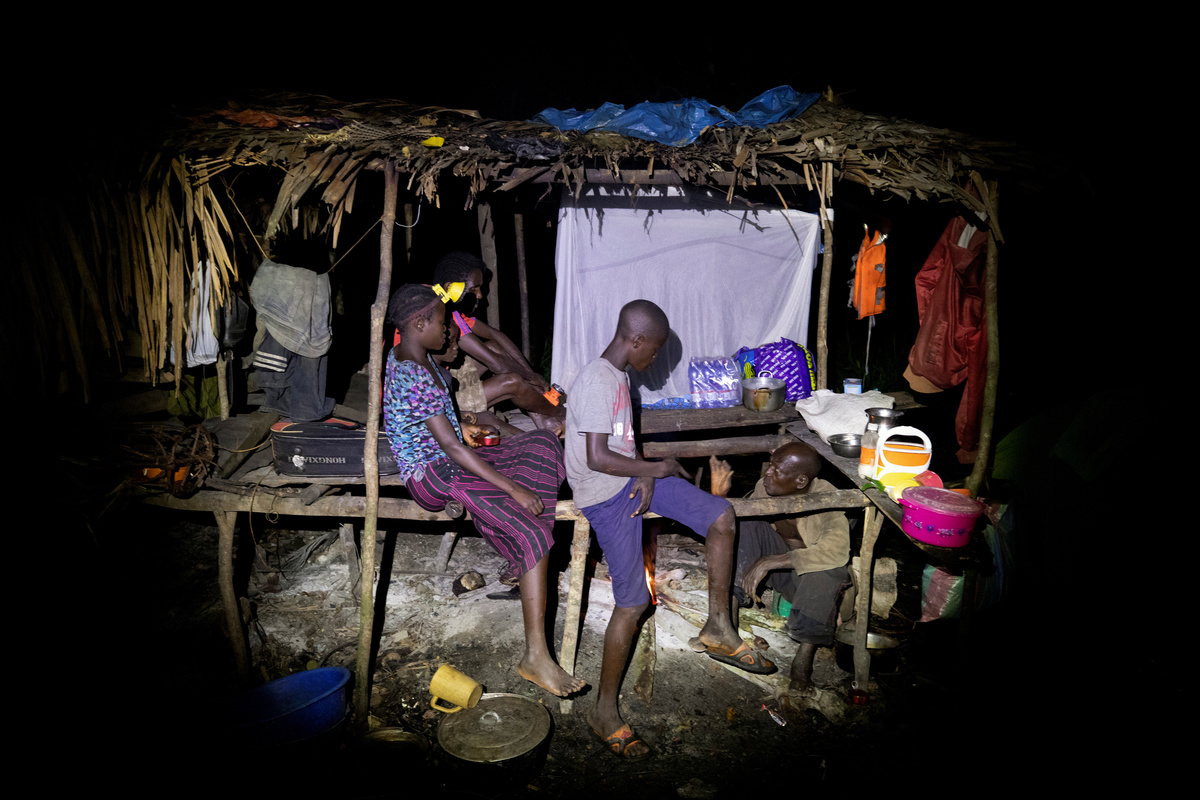
When he goes hunting, he rents a dugout canoe and a couple of paddles, and packs a homemade rifle, a dozen cartridges and enough kwanga, a traditional bread made from cassava, to last a few days.
He stays in a cabin on a tributary of the Congo river and roams the forest day and night in search of whatever quarry he can find, including monkeys, forest antelopes, crocodiles, pythons and river hogs.
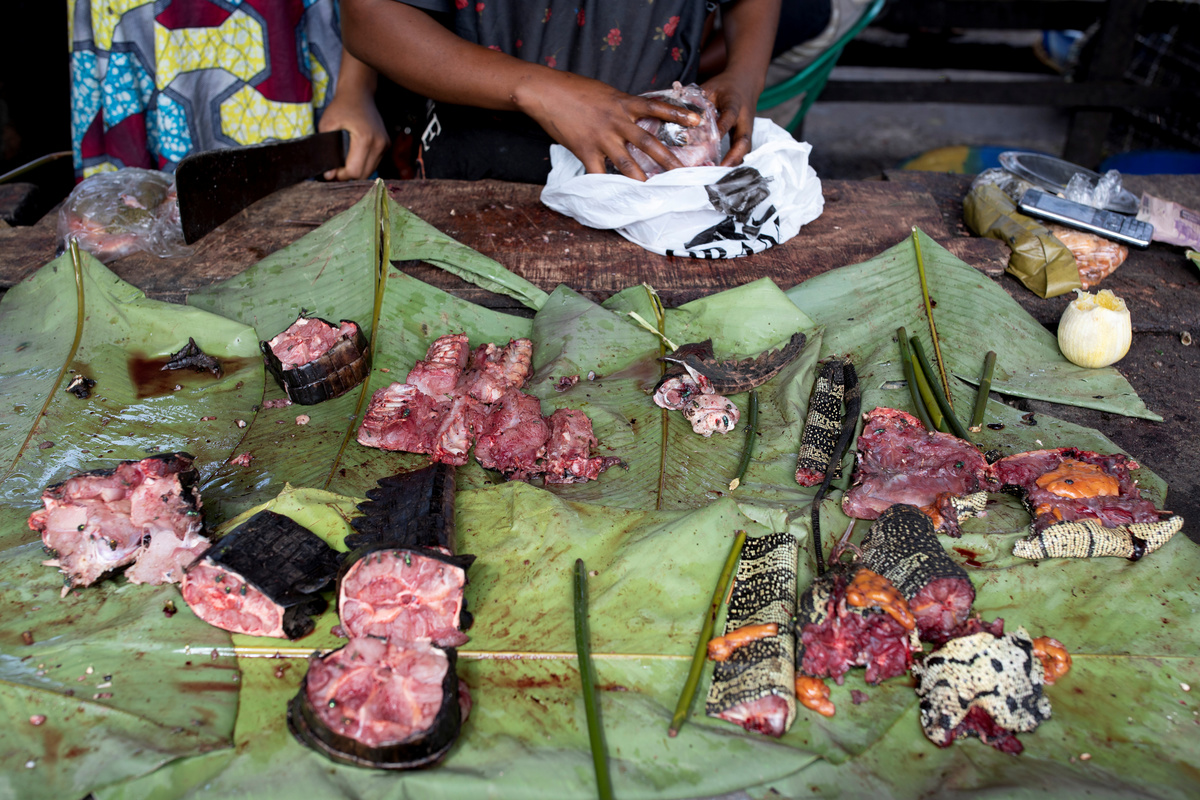
Crocodile and monitor lizard meat are displayed for sale at a market in Mbandaka, Democratic Republic of the Congo, October 18, 2018. REUTERS/Thomas Nicolon
Until the 1990s, hunters like Matongu killed for personal consumption, but growing appetite for wild meat in cities has ramped up the scale of hunting.
The impact on wildlife numbers is clear, according to locals and researchers.
Research shows around 6 million tonnes of bushmeat are sourced annually from the Congo Basin, whose forest spans across six countries and is second in size only to the Amazon.
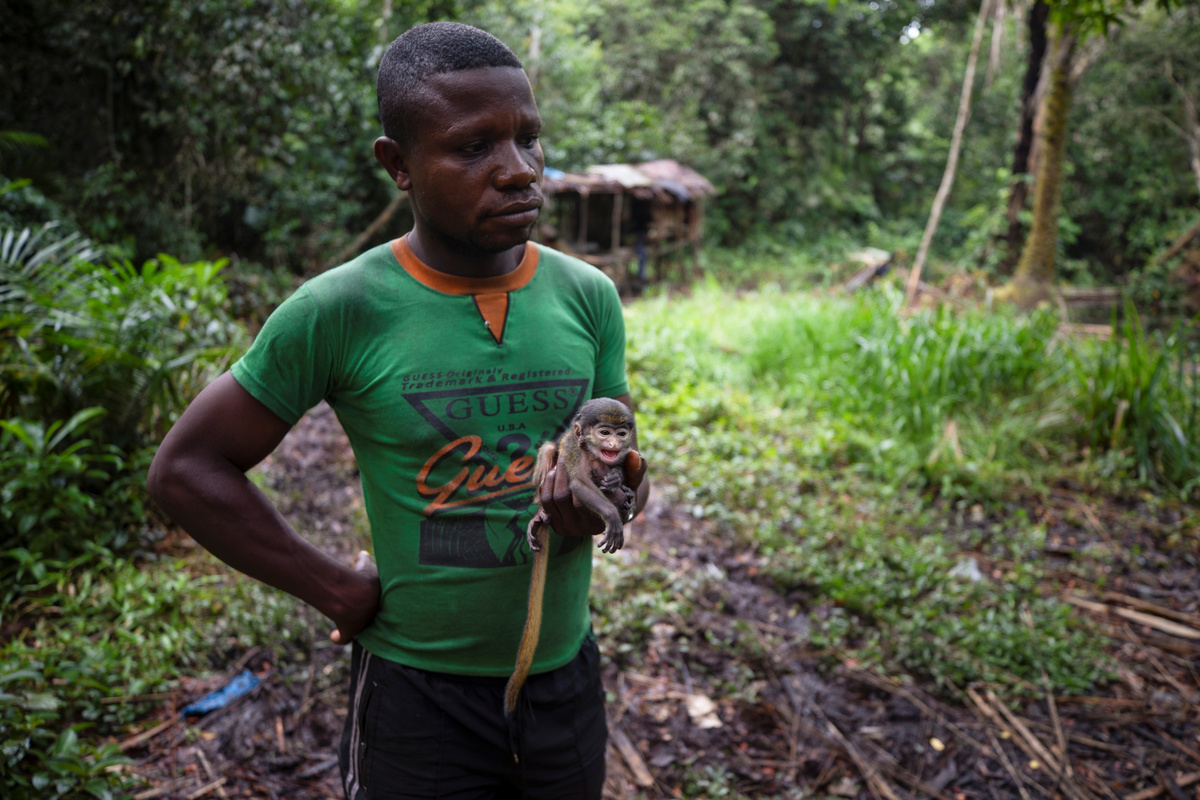
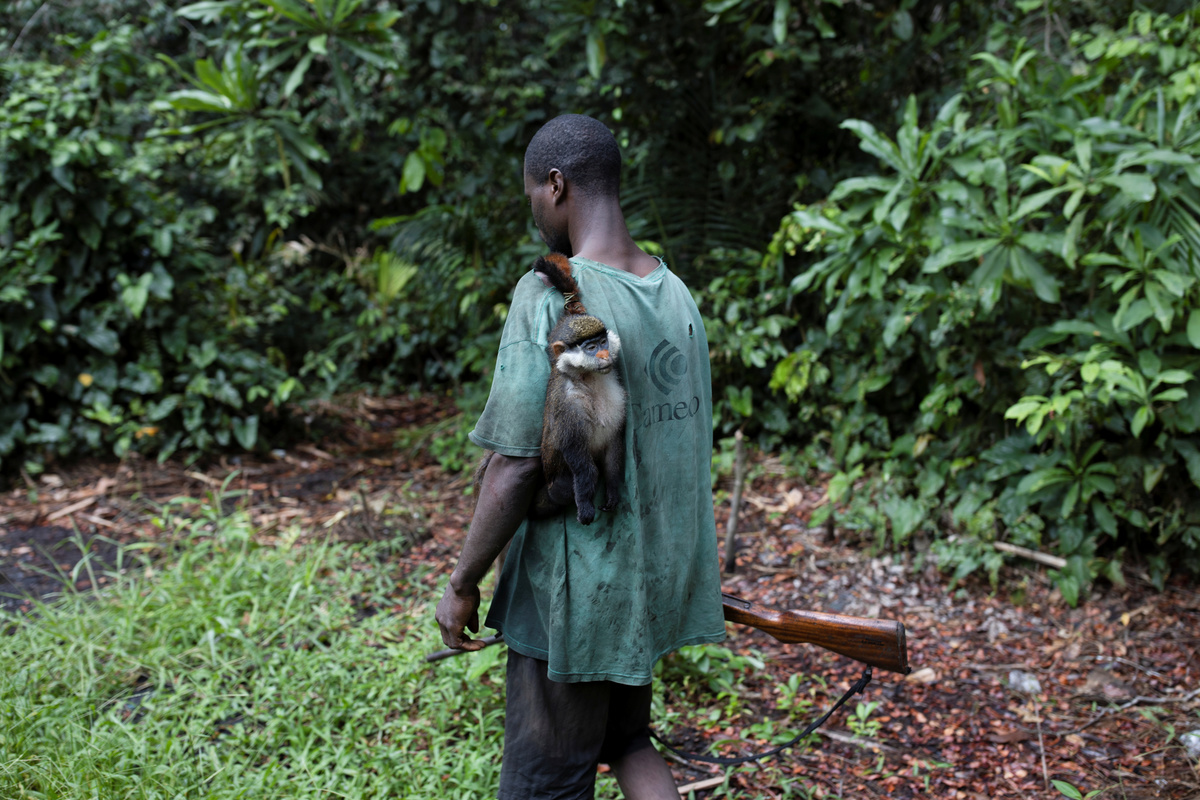
Papy holds a baby red-tailed monkey which a hunter caught after killing its mother, in the forest near the city of Mbandaka, Democratic Republic of the Congo, April 4, 2019. REUTERS/Thomas Nicolon
"Our surveys show that animals from many species are disappearing around villages," said Michel Bakanza, who works on community forests for the World Wildlife Fund (WWF) in Mbandaka.
MAKING ENDS MEET
Mohamed Esimbo Matongu, Sadate and Papy return to their campsite empty-handed after a night hunting in the forest near the city of Mbandaka, Democratic Republic of the Congo, April 3, 2018. REUTERS/Thomas Nicolon
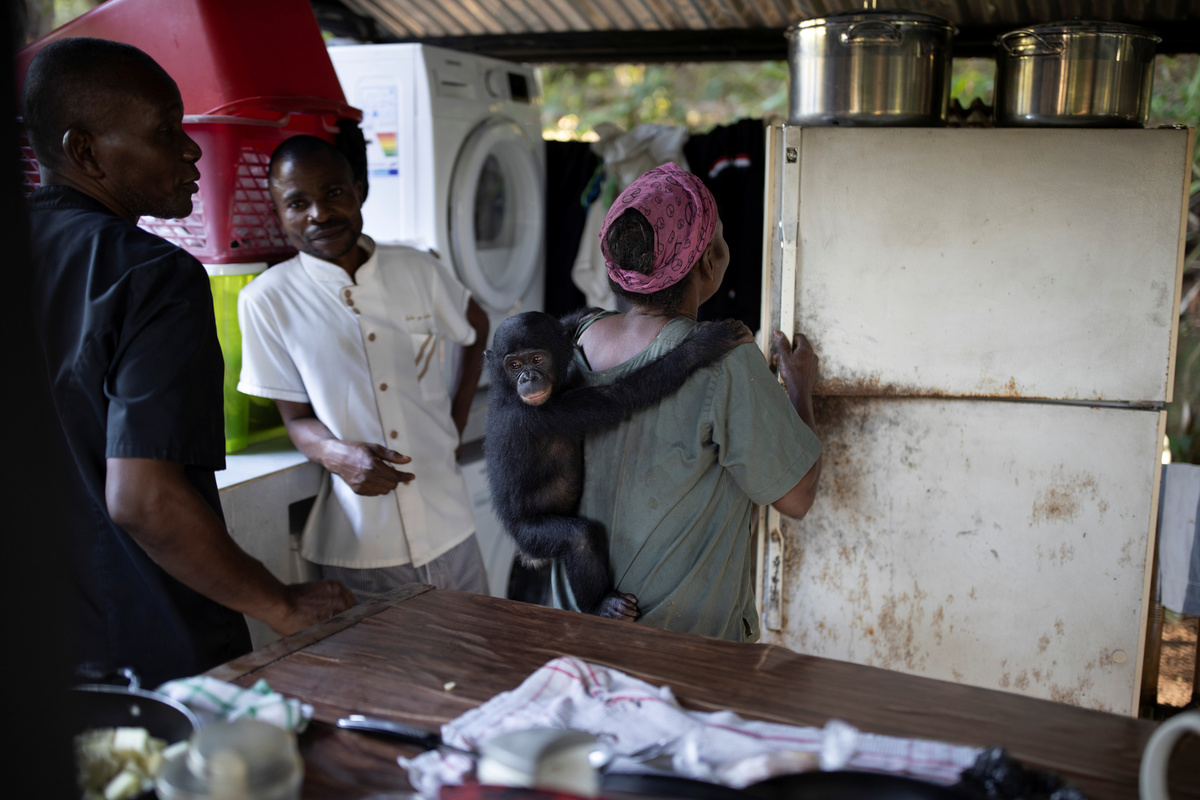
Many animals, including bonobo apes and pangolins, are protected by international law, but a lack of government oversight means these endangered species are regularly killed.
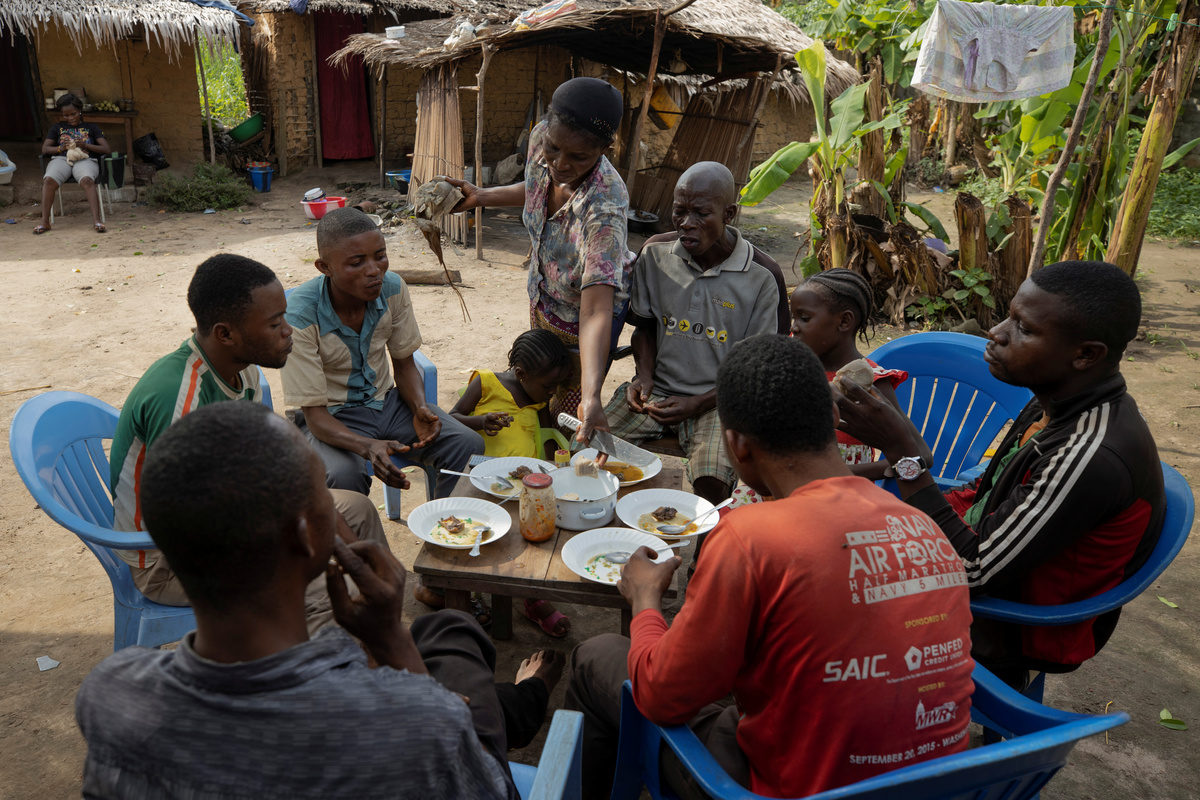
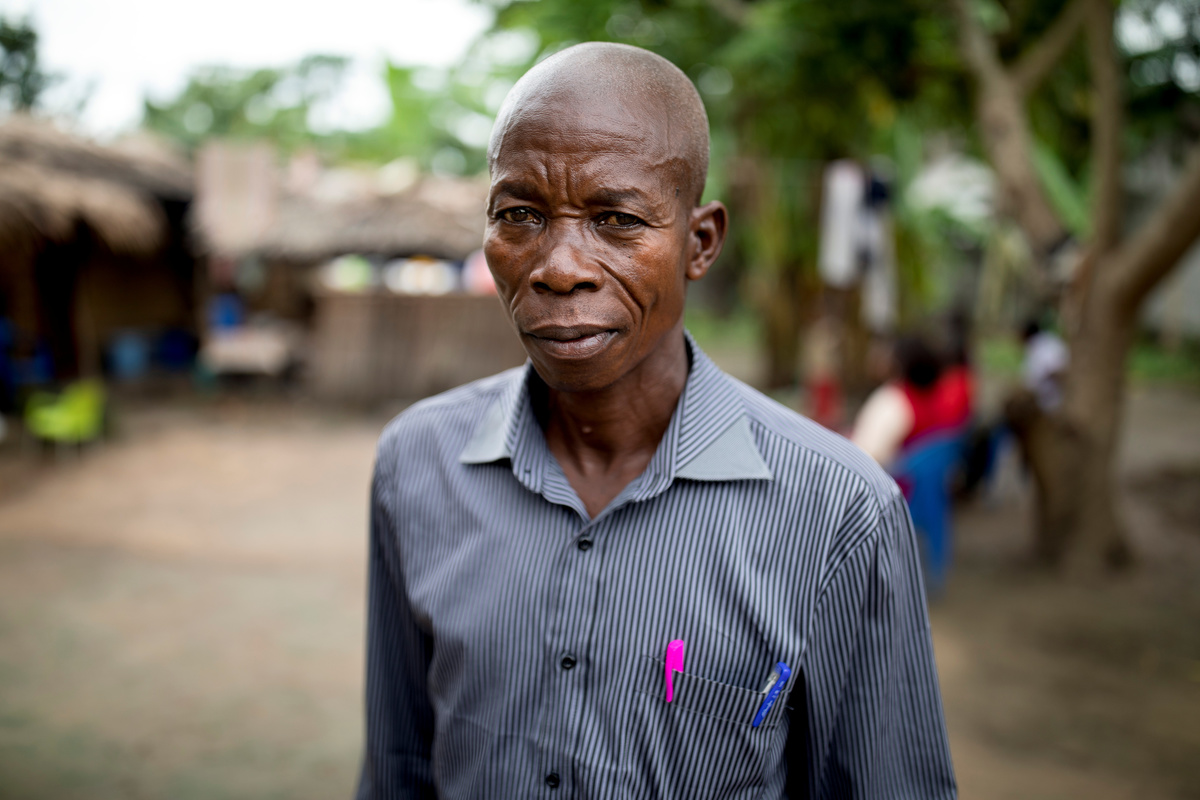
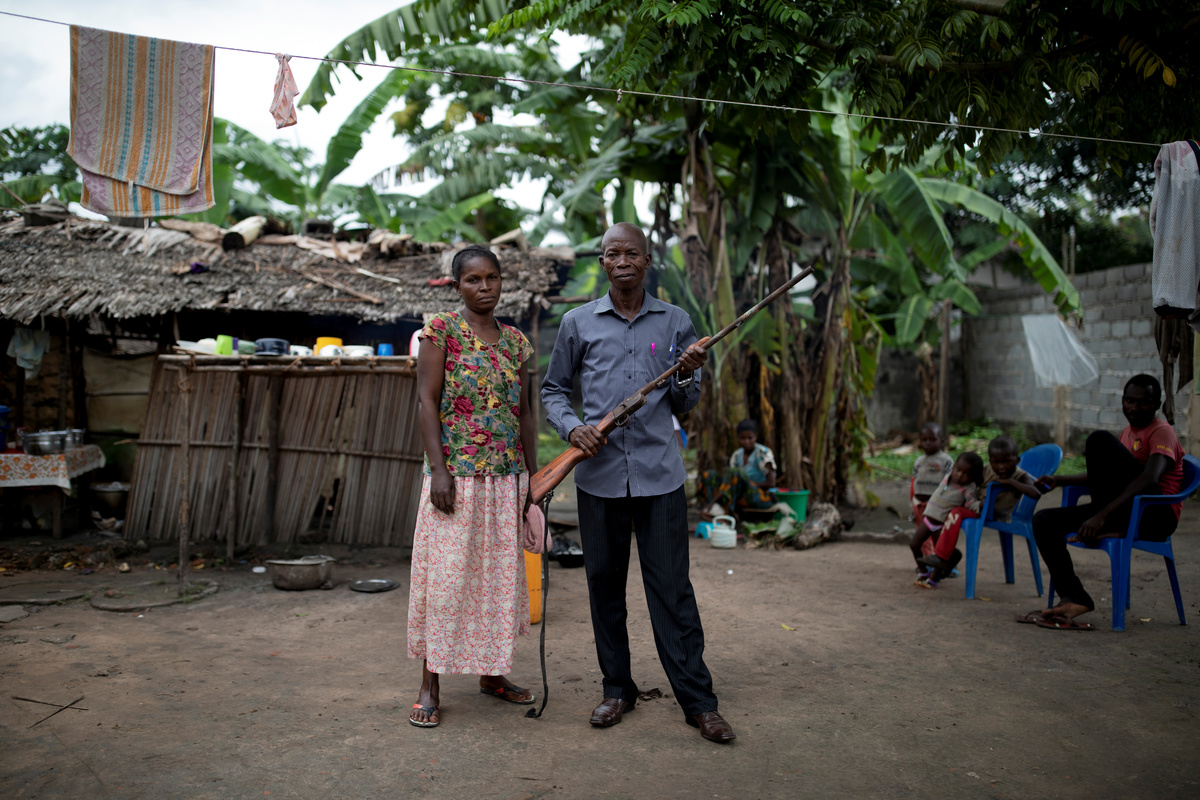
Matongu says his monthly salary of about $75 is not enough to cover the needs of his wife, four daughters, two brothers and nephew who live under his roof.
"How am I supposed to provide for so many people? Sometimes I don't even get paid at the end of the month," he said. "This is Congo: we try to do whatever we can to make it."
Pascal returns to camp after spending the night hunting and killing a red-tailed monkey and its baby in the forest near the city of Mbandaka, Democratic Republic of the Congo, April 4, 2019. REUTERS/Thomas Nicolon
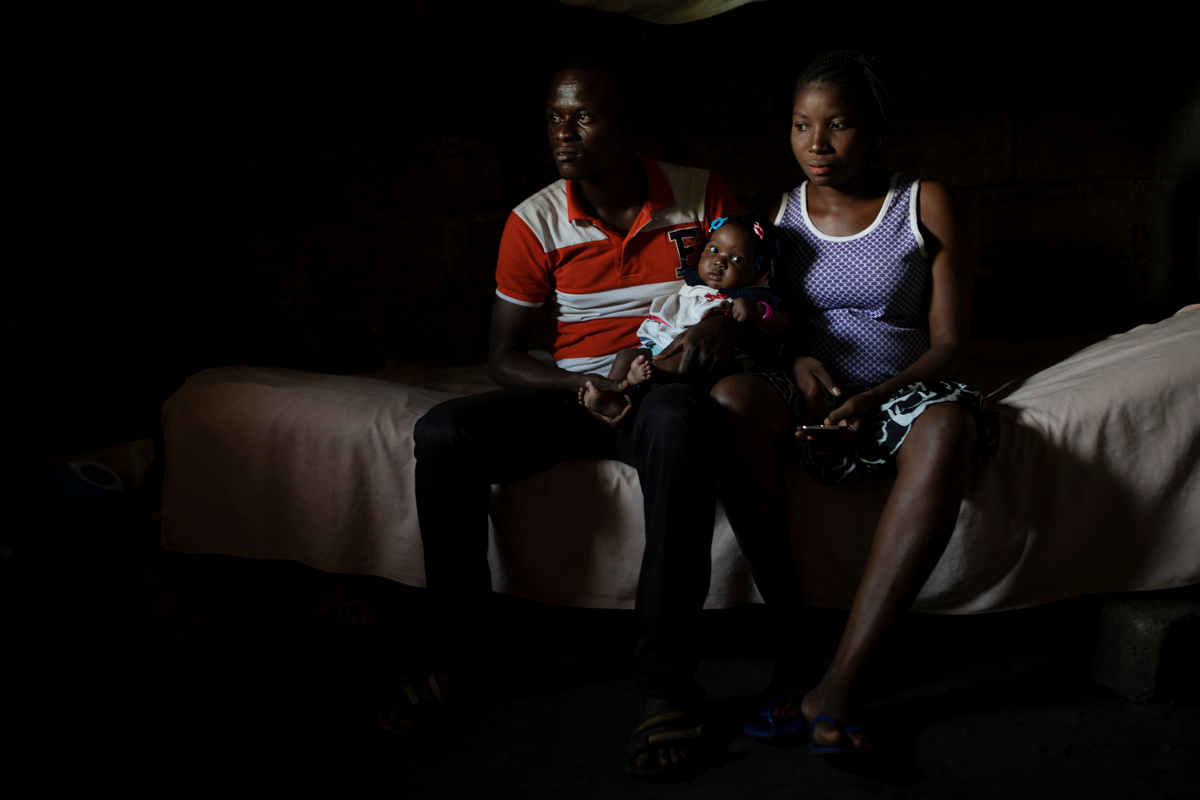
For other hunters, like Celestin, a conservation student in Mbandaka who asked not to be named in full, the need to make ends meet in one of the world's poorest countries can override concerns about the animals.
"Hunting some species is prohibited, I know that, but it allows me to pay my university fees and provide for my family,” he said.
After a few days hunting in the forest, Matongu sells most of what he killed - making from 5,000 to 100,000 Congolese francs (around $7 to $60) – and keeps just enough meat for his family for a couple of days.
Mohamed Esimbo Matongu and his family eat the monkey that was killed in the forest, at their home in Mbandaka, Democratic Republic of the Congo, April 5, 2019. Matongu says his monthly salary of about $75 is not enough to cover the needs of his wife, four daughters, two brothers and nephew who live under his roof. "How am I supposed to provide for so many people? Sometimes I don't even get paid at the end of the month," he said. "This is Congo: we try to do whatever we can to make it." REUTERS/Thomas Nicolon
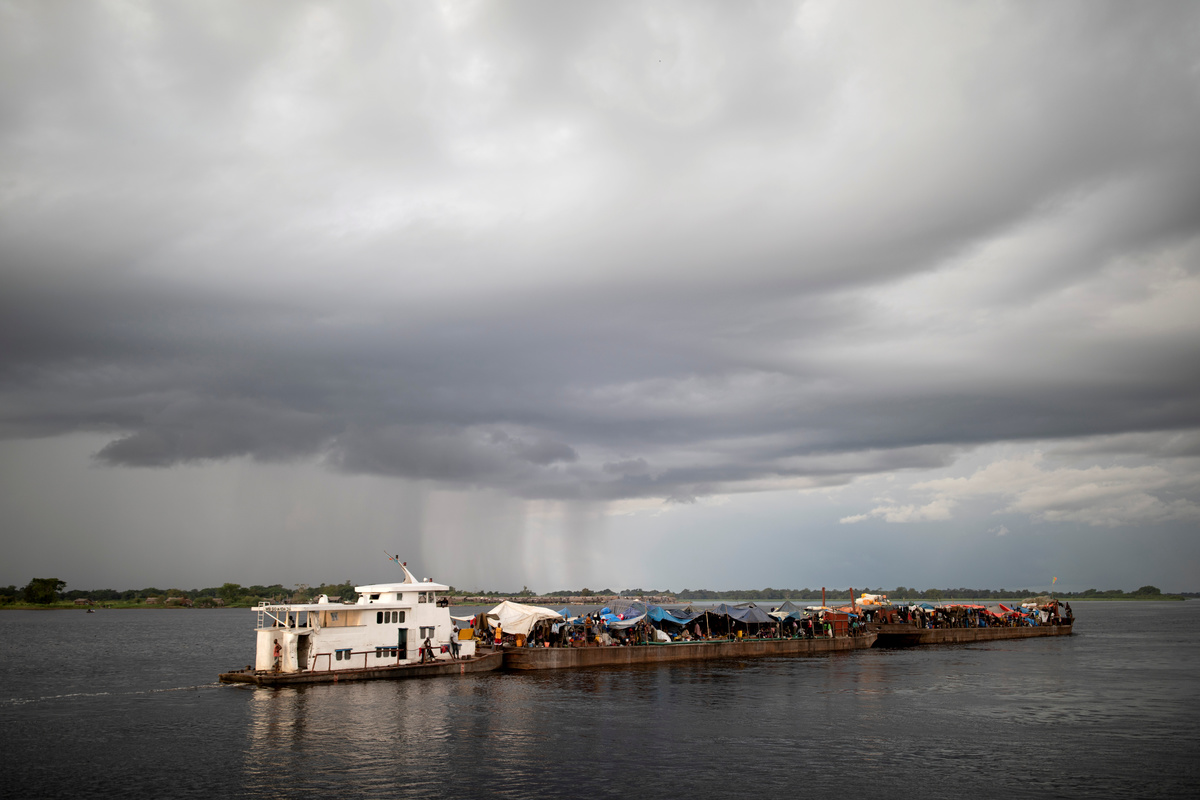
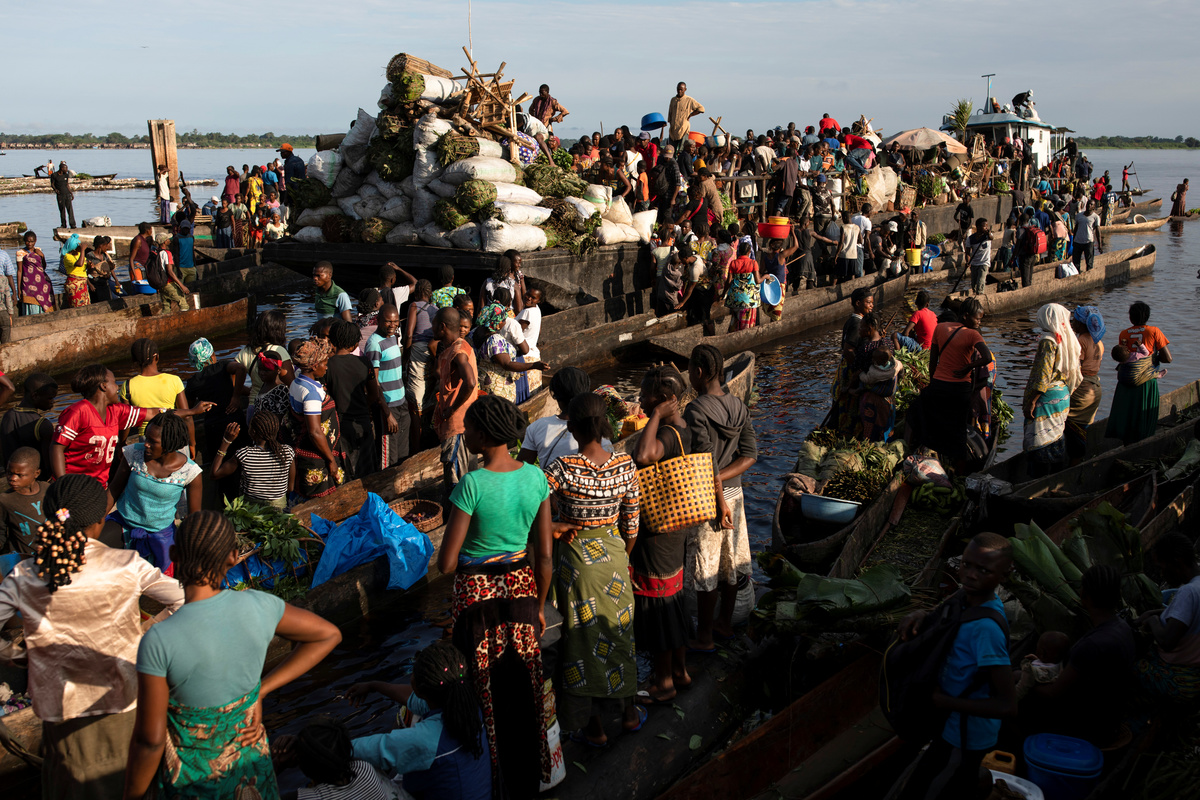
His catch goes to Mbandaka's markets, where thousands congregate every Friday to buy bushmeat from incoming barges.
Stands are filled with trussed crocodiles and monitor lizards, as well as freshly killed monkeys, antelopes and other species.
For a photo essay: https://reut.rs/2nisNoE
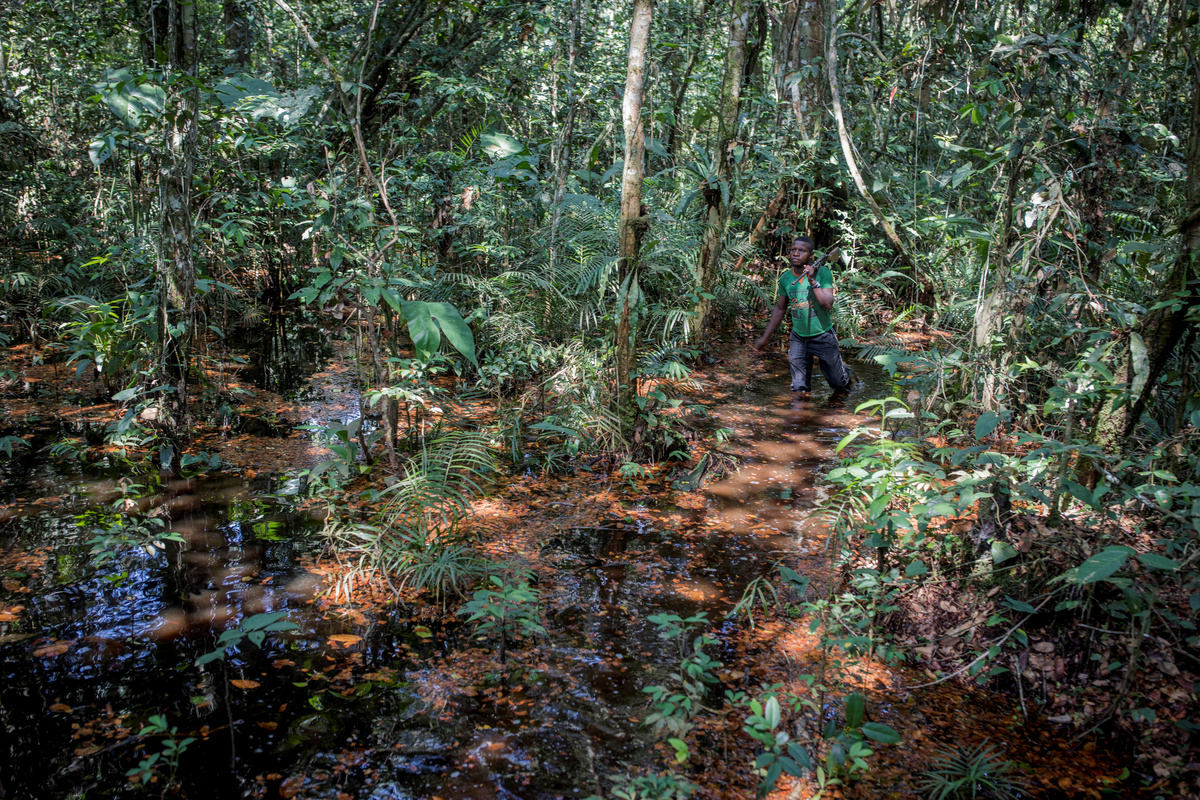
Papy walks through a swamp, looking for wildlife, as he hunts in the forest near the city of Mbandaka, Democratic Republic of the Congo, April 3, 2018. REUTERS/Thomas Nicolon
(The photographer of this story was part of the 2018 Reuters photojournalism grant program)
(Reporting by Thomas Nicolon, editing by Anna Pujol-Mazzini and Timothy Heritage)
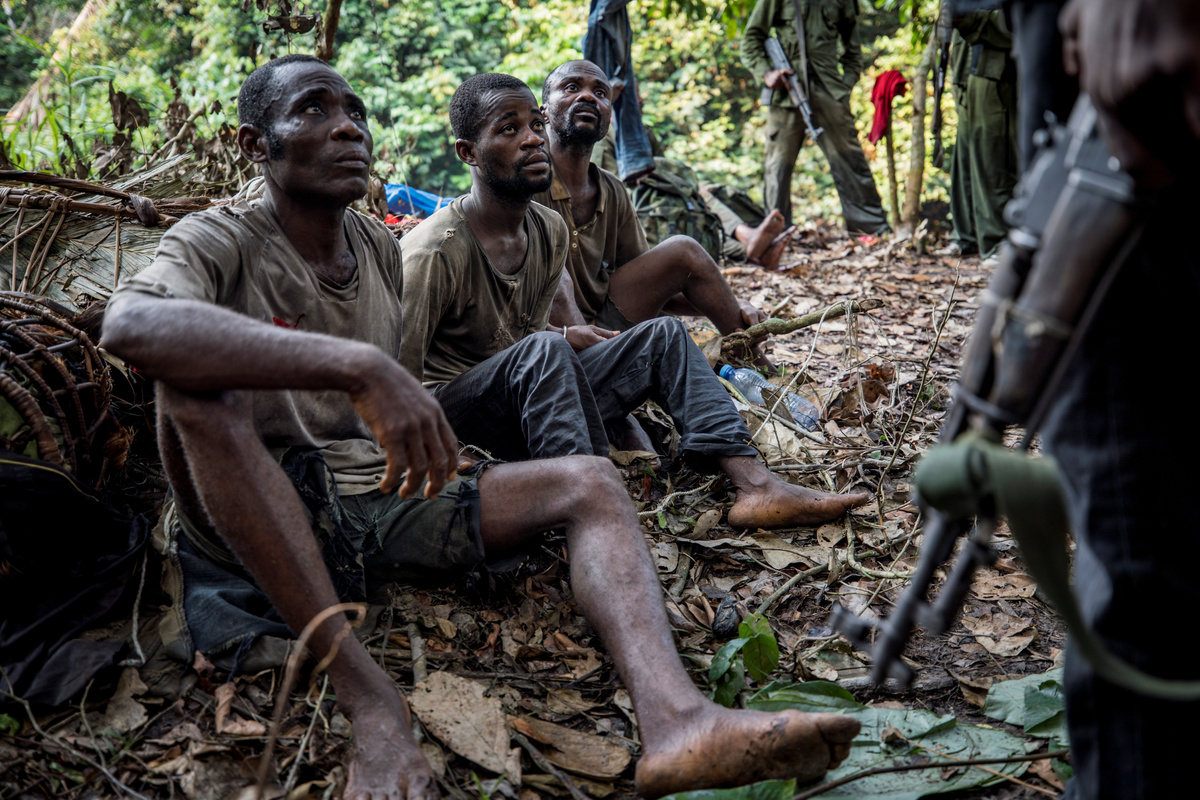
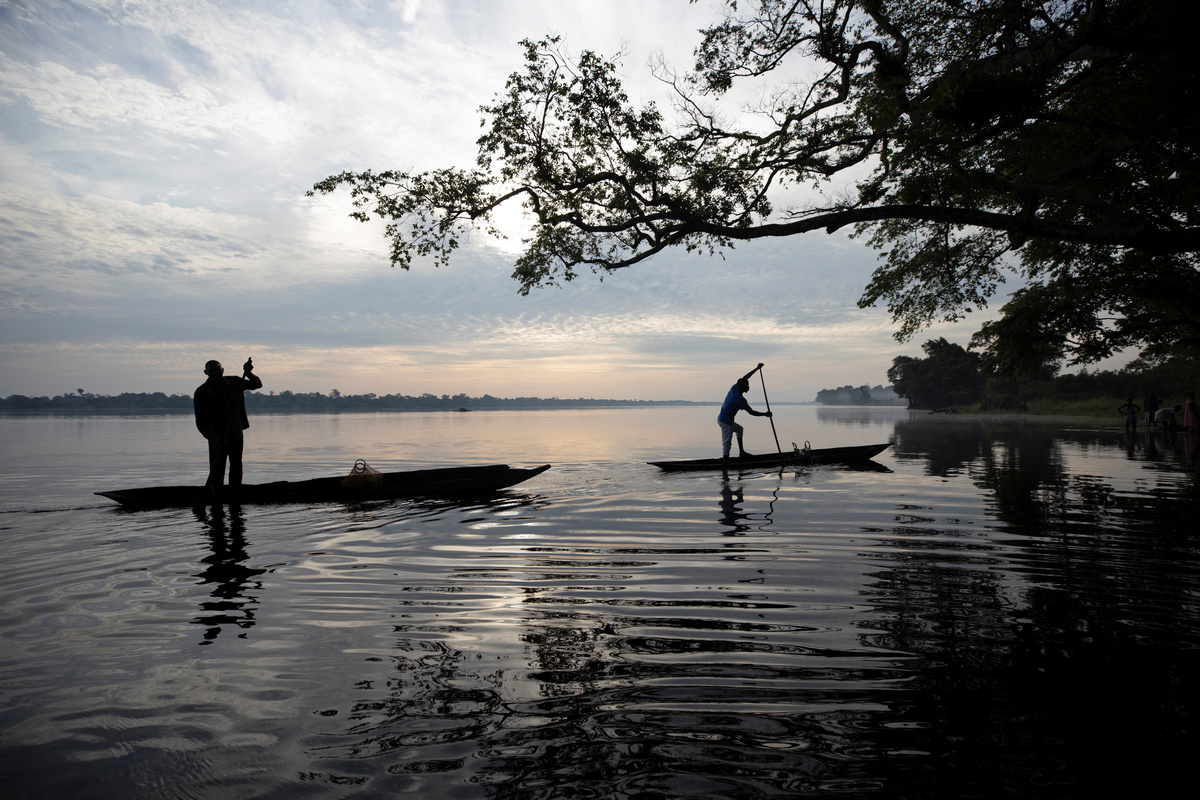
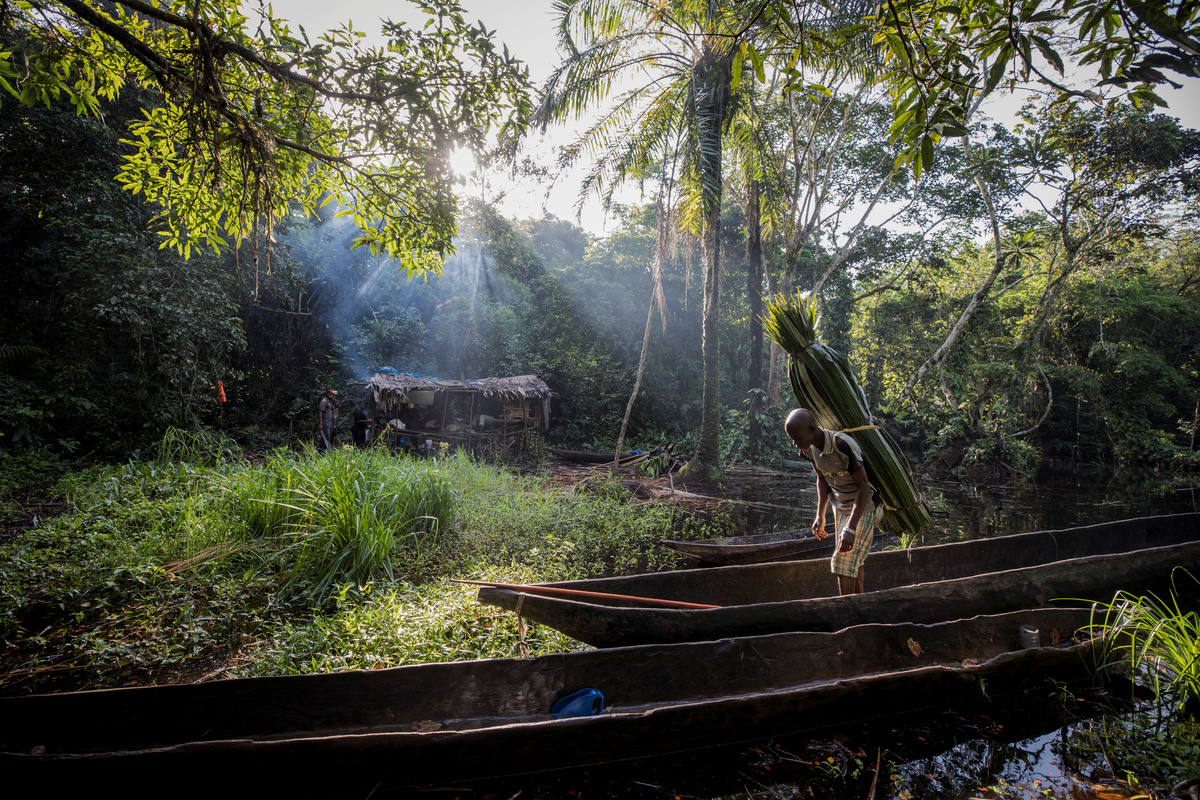
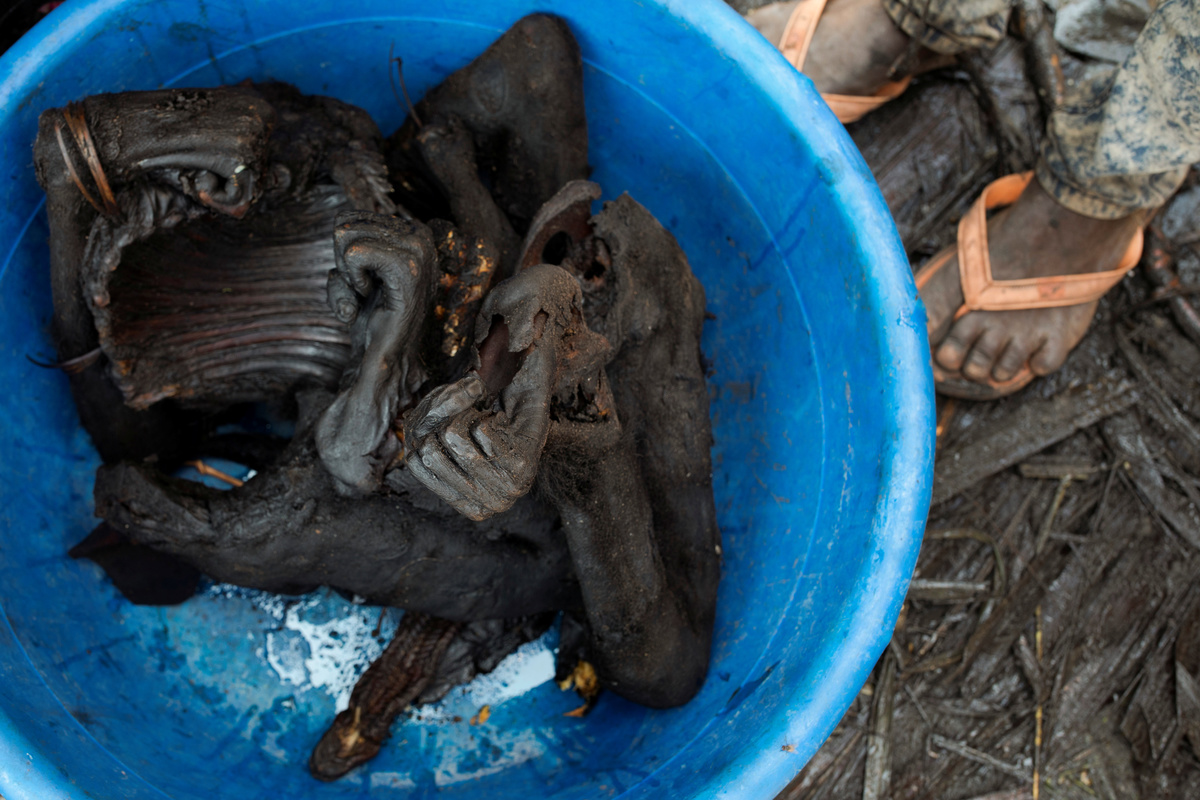
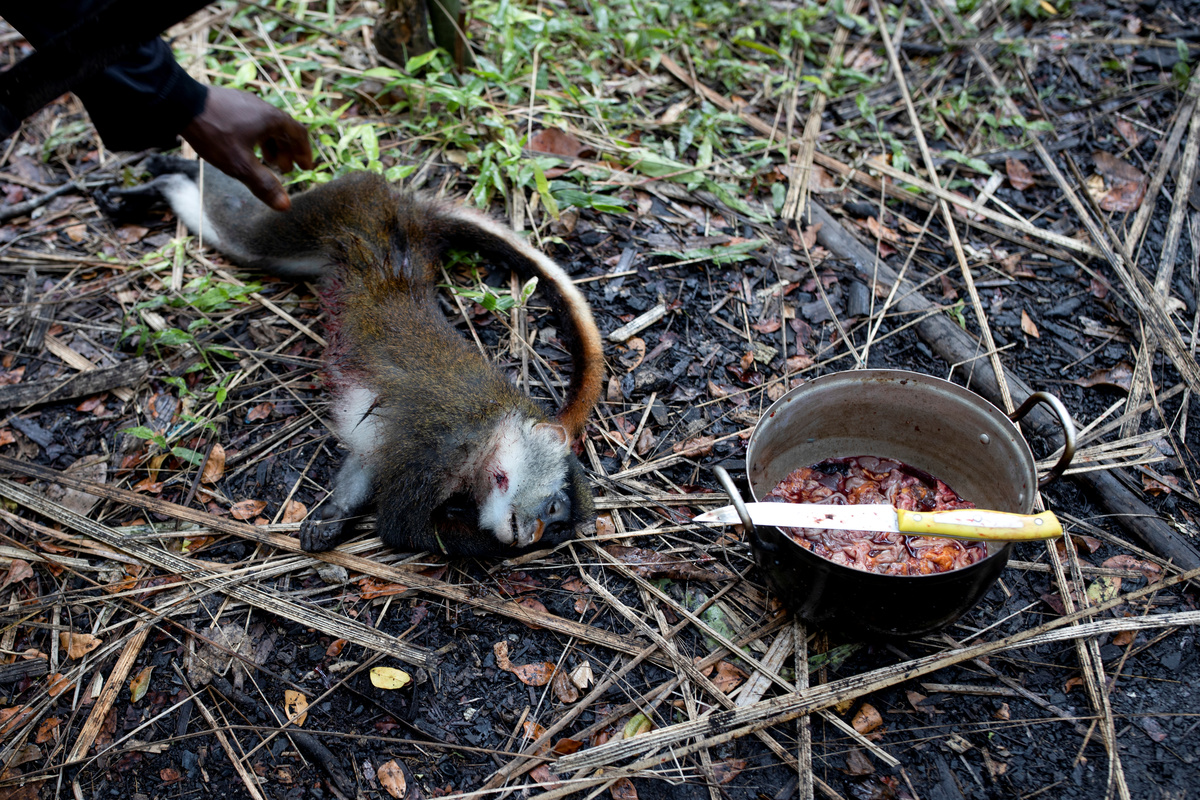
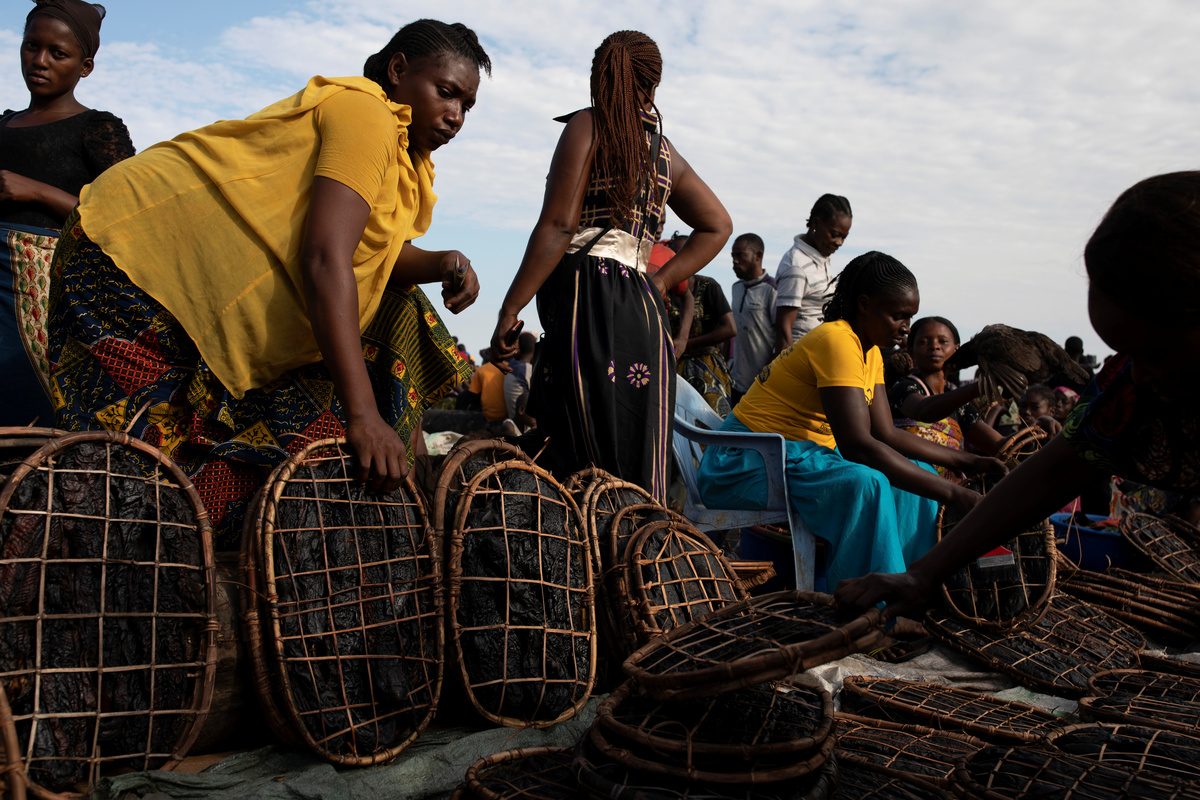
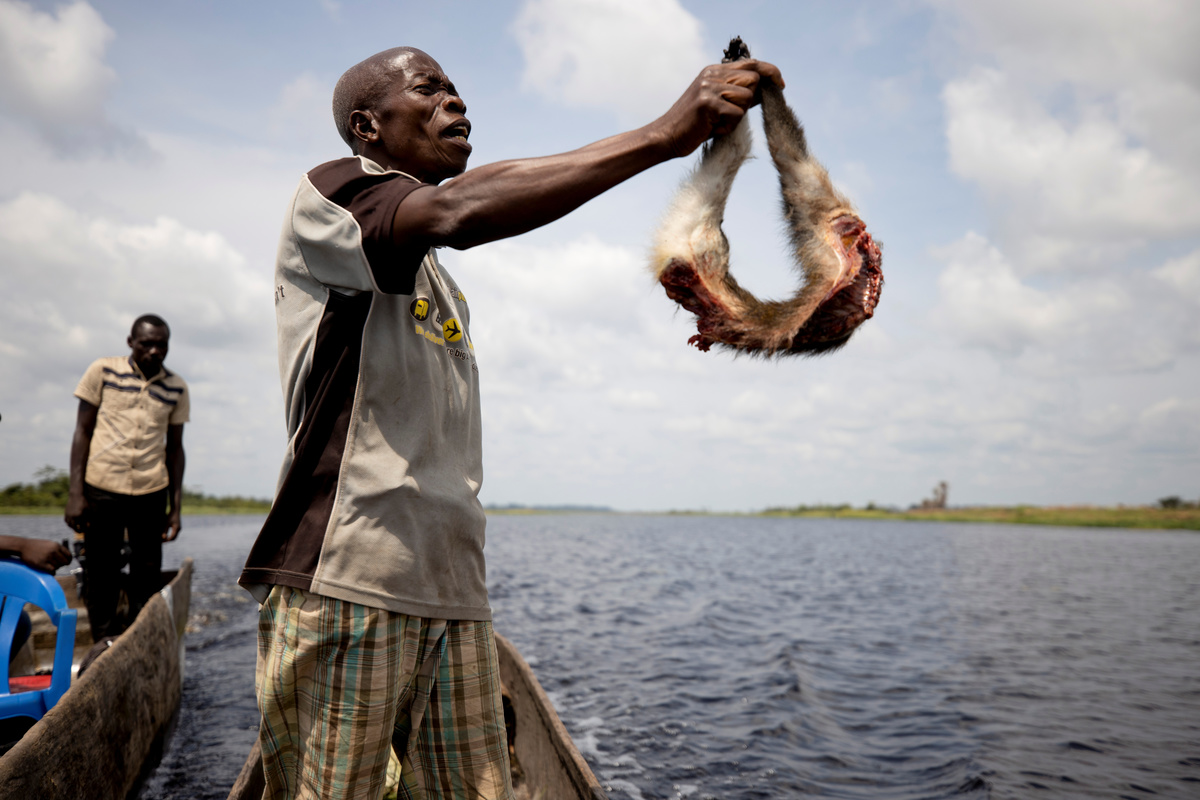
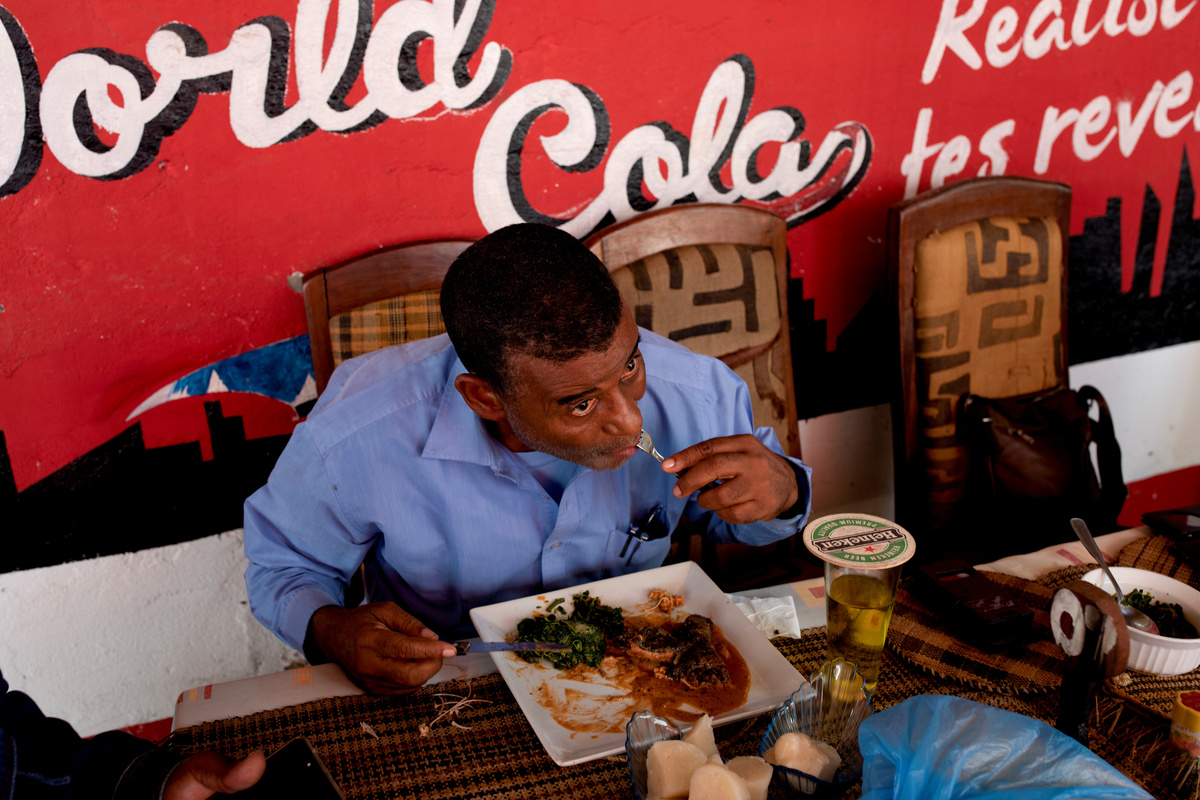
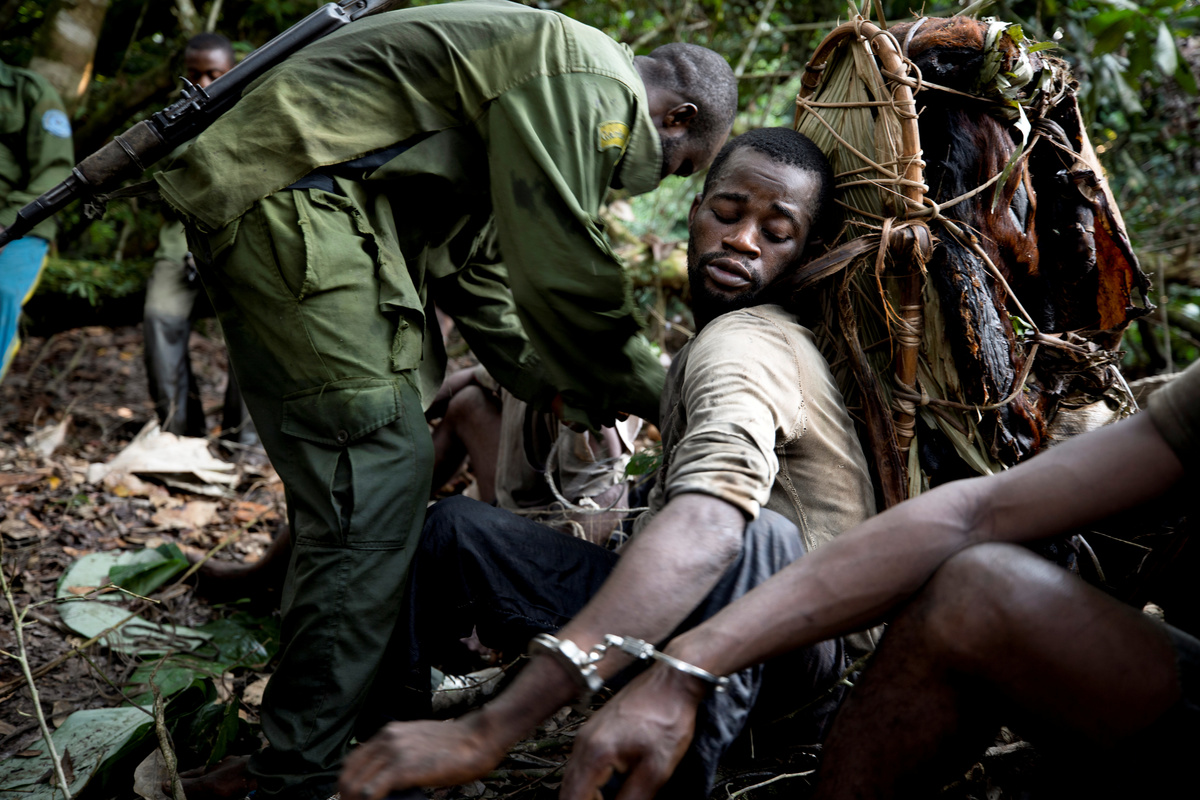
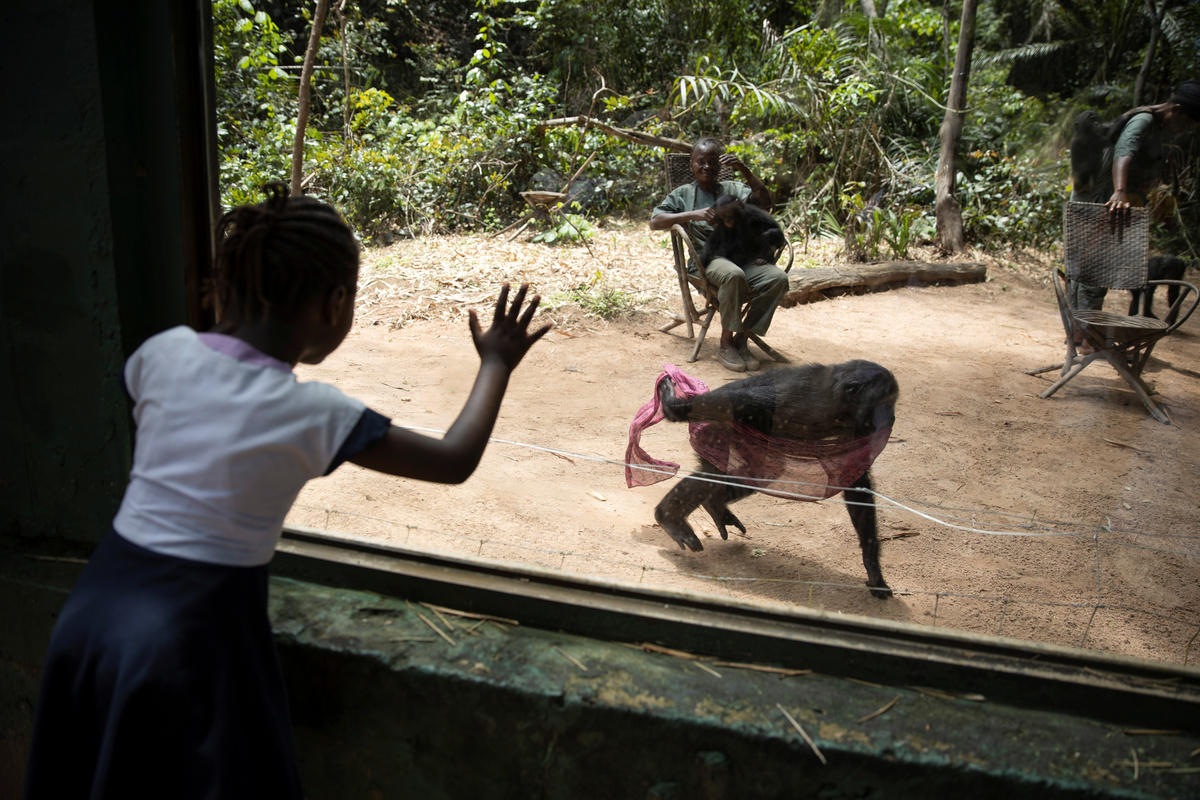
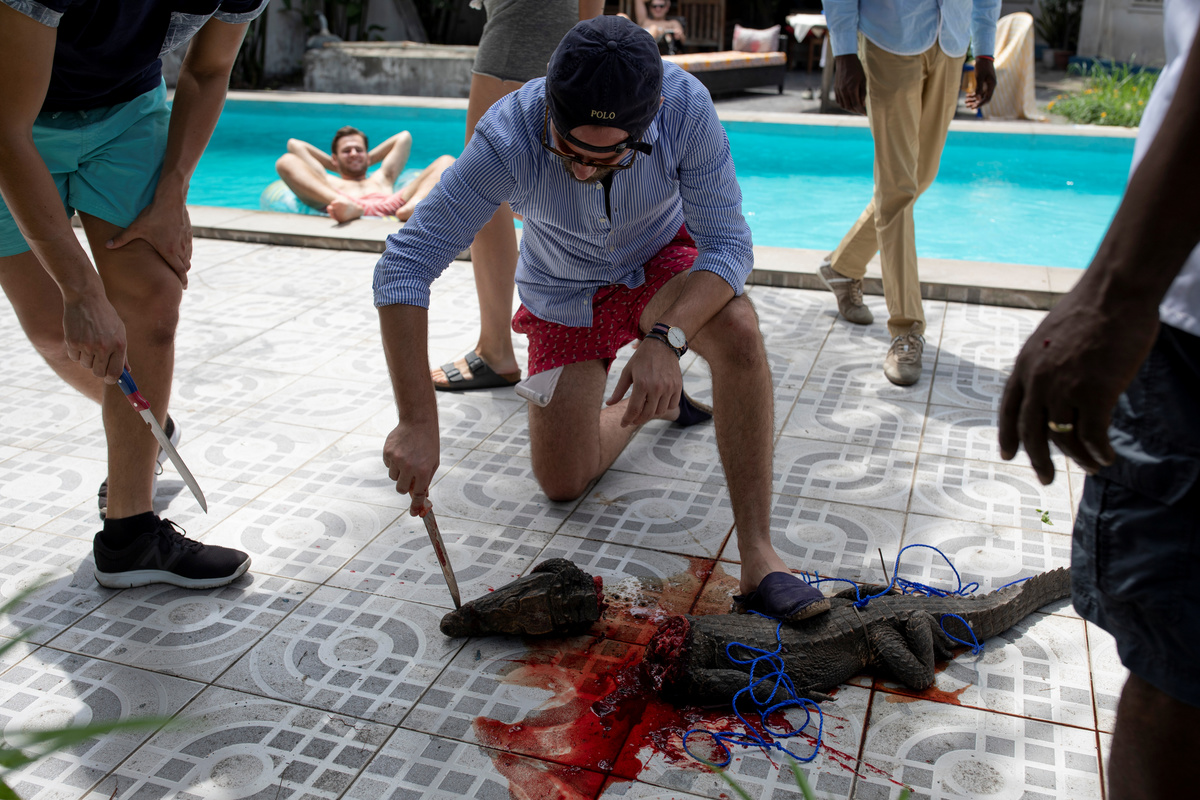
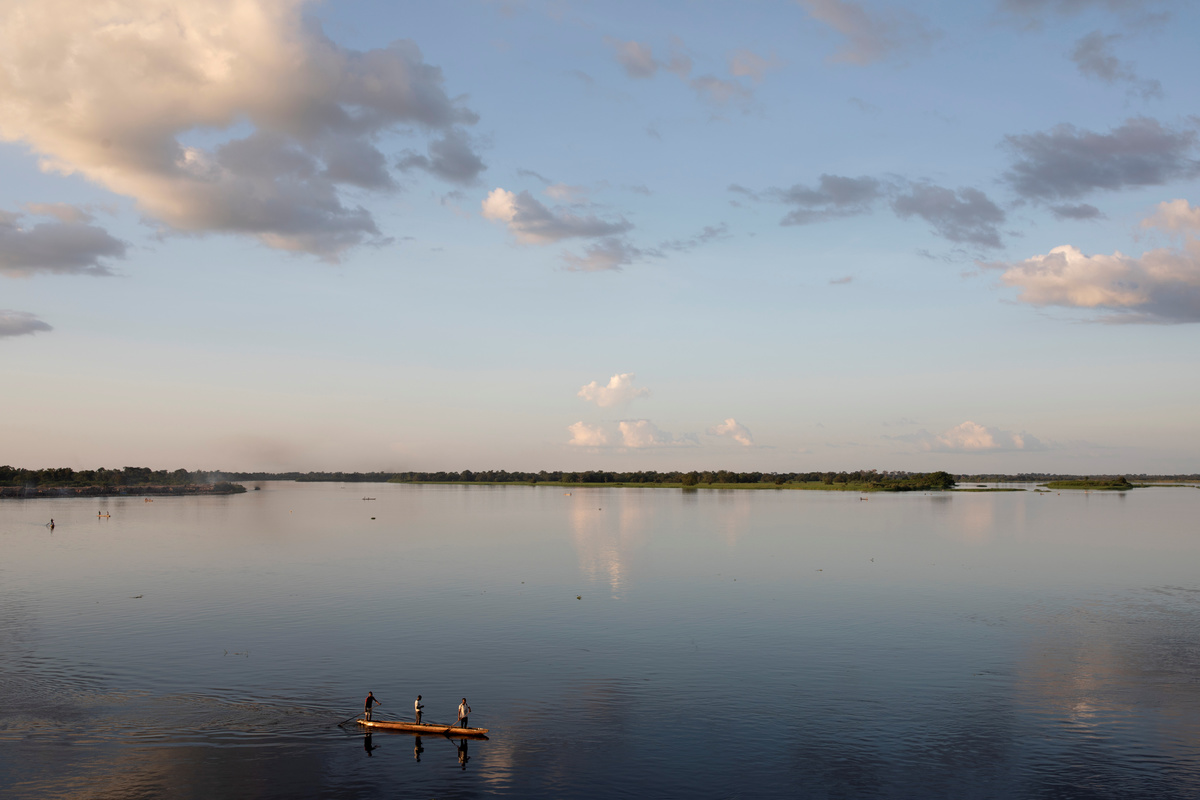
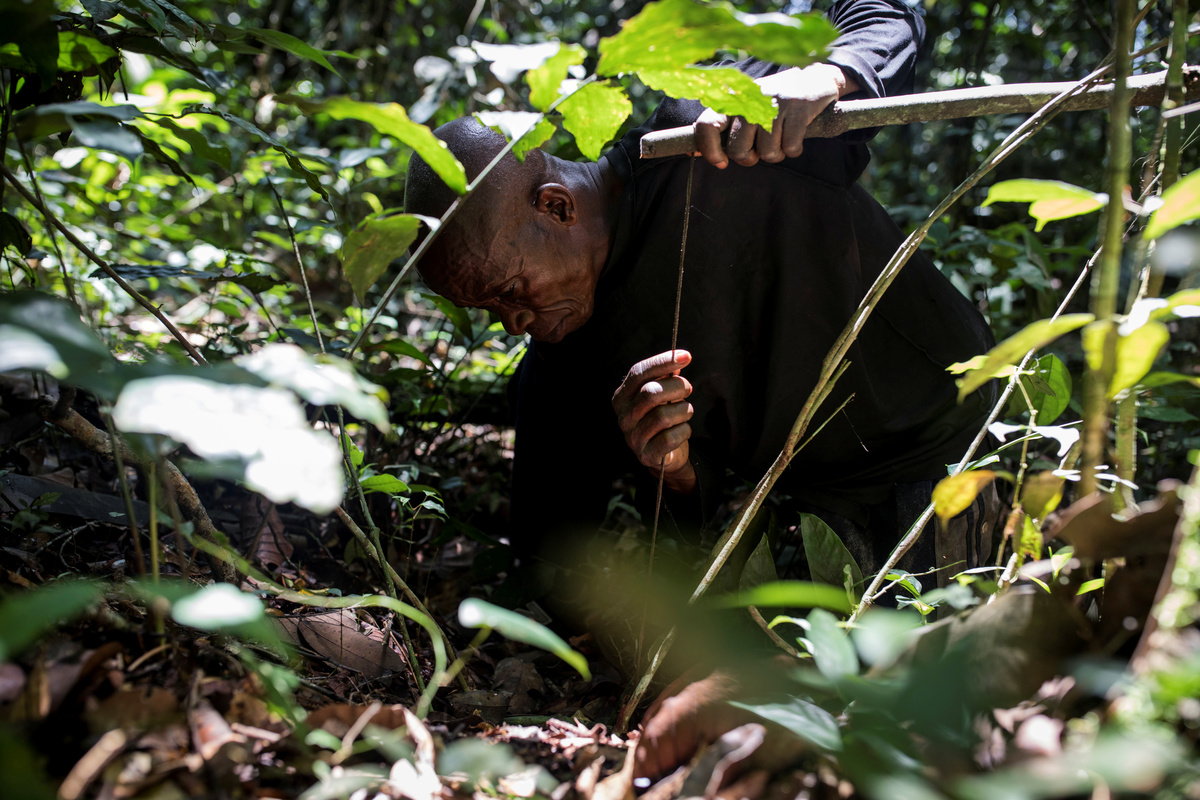
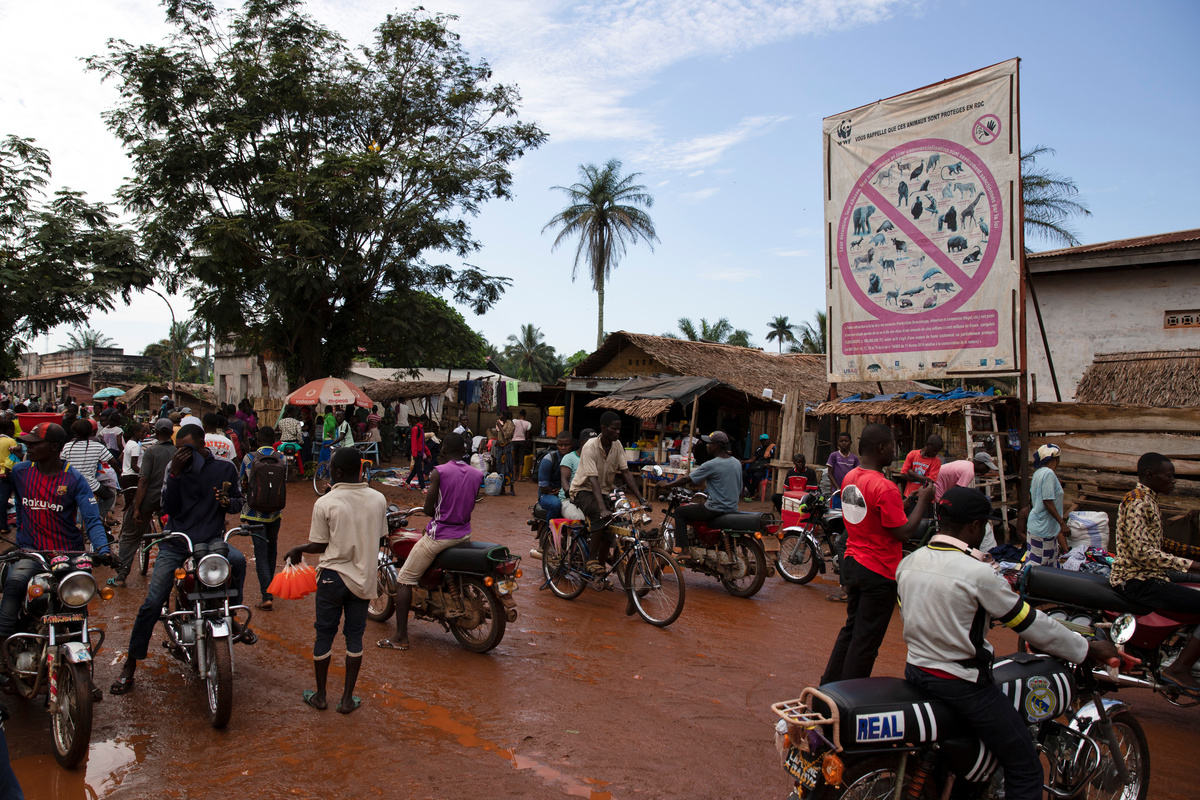
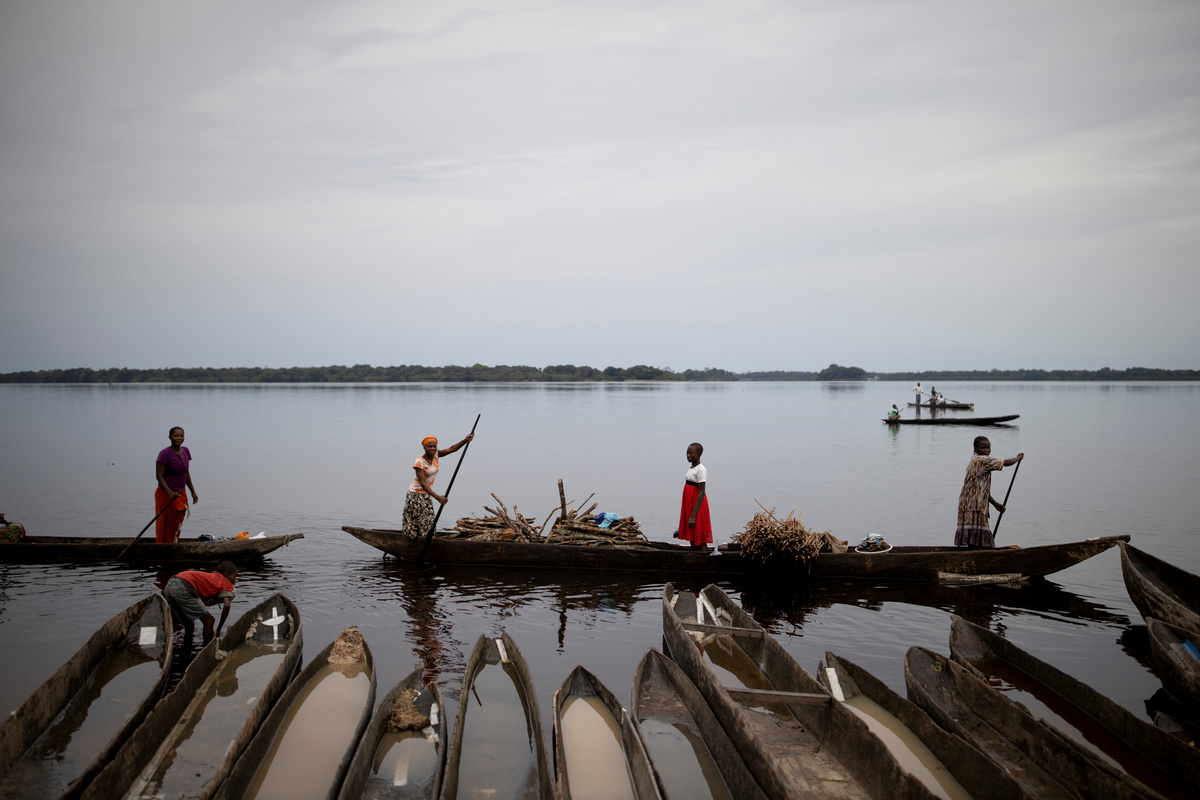
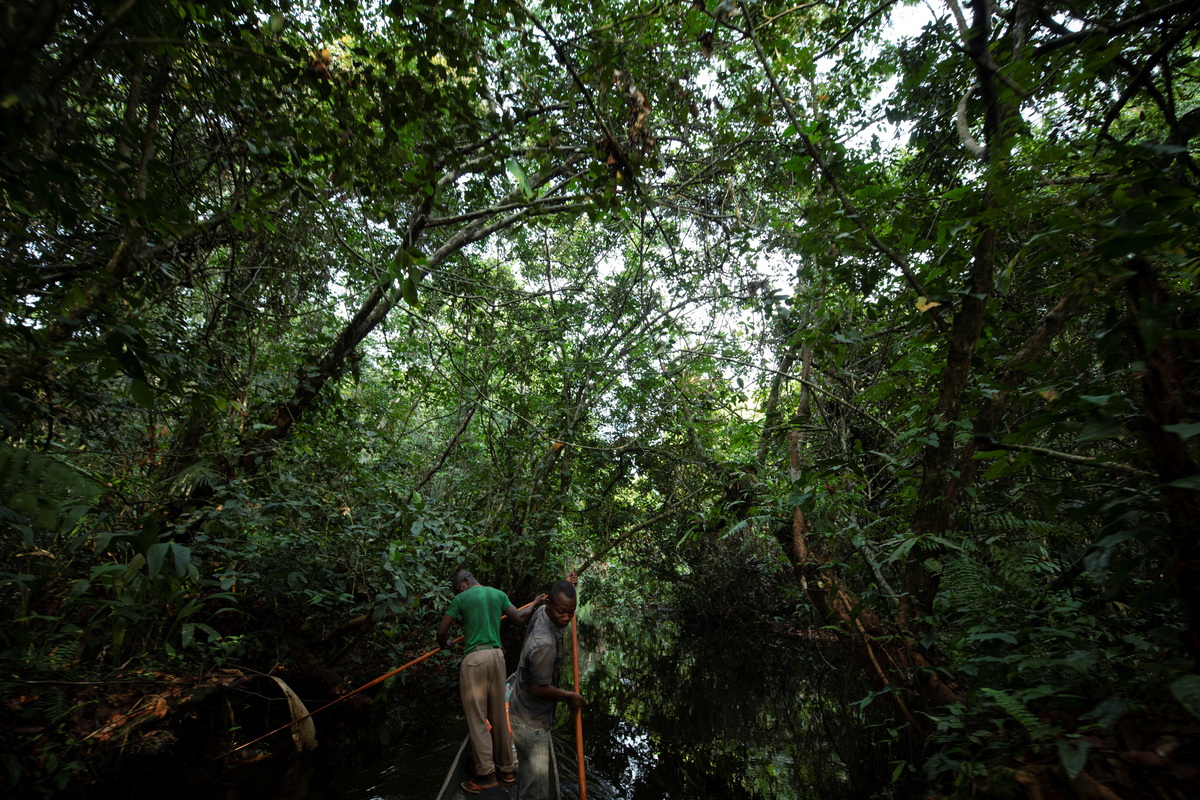
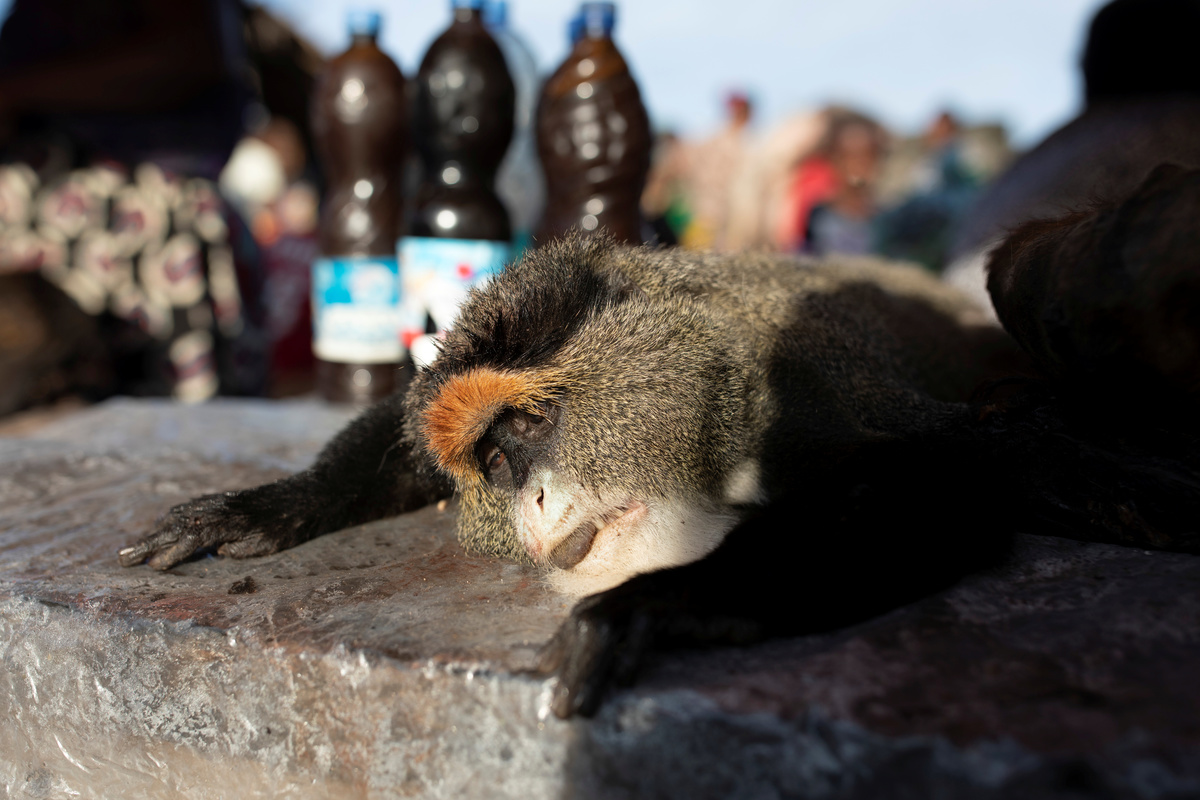
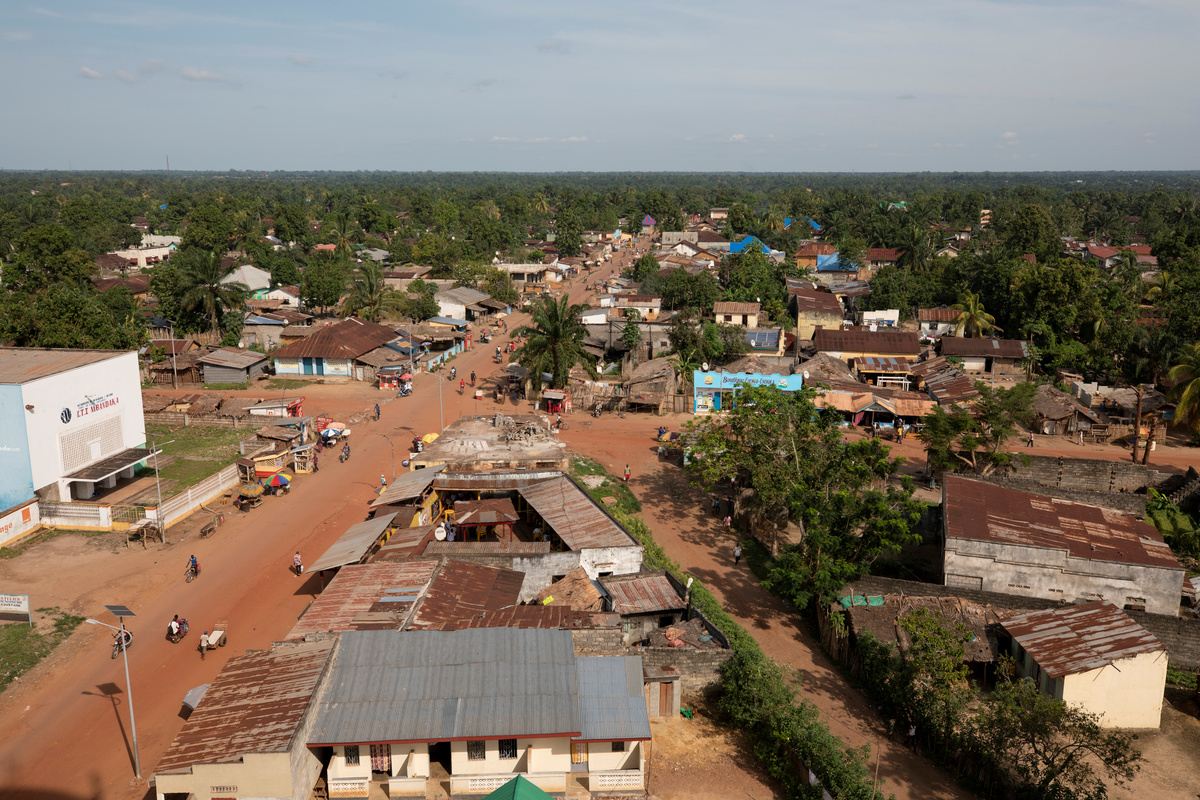
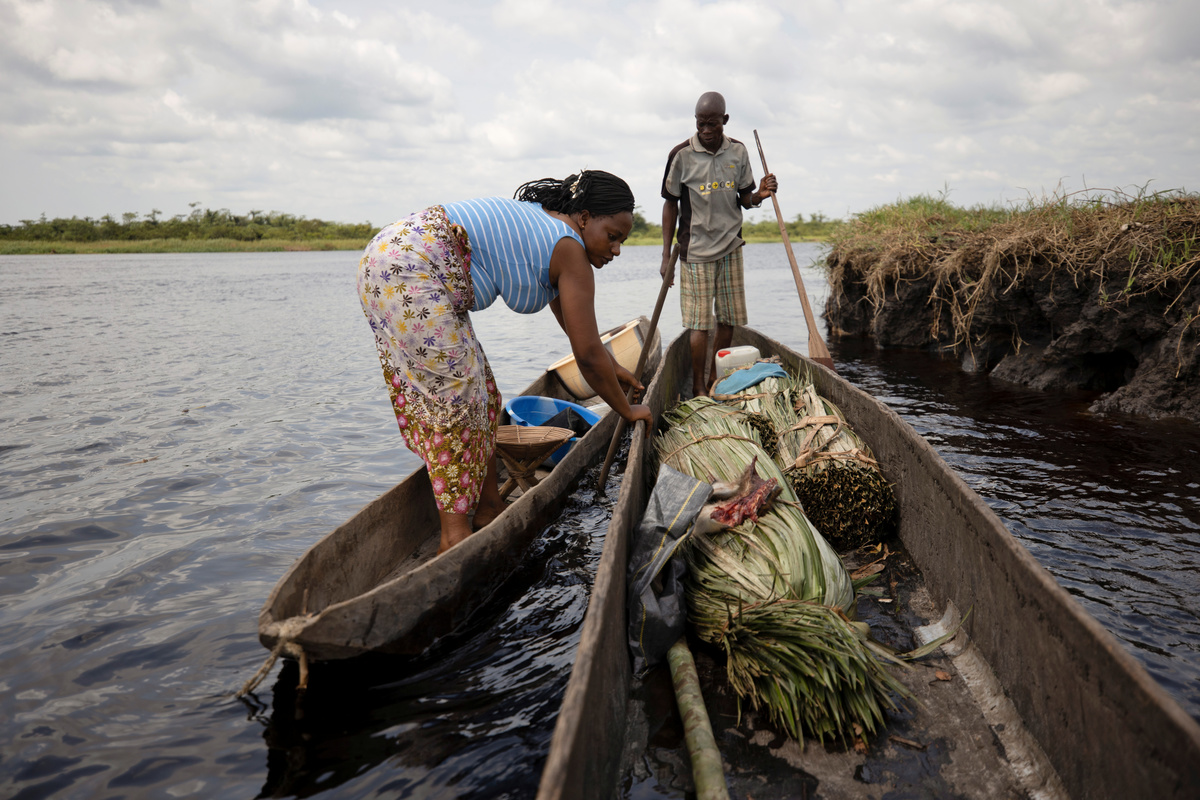
Three poachers sit on the floor after being detained by park rangers in Salonga National Park, Kinshasa, Democratic Republic of the Congo, July 10, 2018. Hunting is prohibited in national parks, which means wildlife is more abundant so poachers often hunt inside the protected areas to find animals with greater ease. REUTERS/Thomas Nicolon Fishermen paddle along the Ruki river, a tributary to the Congo river, near the village of Bantoyi in the Democratic Republic of the Congo, April 9, 2019. REUTERS/Thomas Nicolon Mohamed Esimbo Matongu carries thatch, which he will use for the roof of his hut, back to his campsite which lies deep in the forest near the city of Mbandaka, Democratic Republic of the Congo, April 3, 2018. "When I was a teenager, I had to travel no more than 10 km upriver to find animals. But now I have to go as far as 40 km to come across a decent hunting ground," said Matongu. REUTERS/Thomas Nicolon Bonobo meat is offered for sale at a market in Mbandaka, Democratic Republic of the Congo, October 20, 2018. Bonobos are endangered and despite most marketplaces not selling the meat openly, it is still possible to buy on request. REUTERS/Thomas Nicolon Mohamed Esimbo Matongu eviscerates a monkey that was killed by his cousin Pascal in the forest near the city of Mbandaka, Democratic Republic of the Congo, April 4, 2019. "When I was a teenager, I had to travel no more than 10 km upriver to find animals. But now I have to go as far as 40 km to come across a decent hunting ground," said Matongu. REUTERS/Thomas Nicolon A woman displays smoked fish for sale in Mbandaka's Lingunda market, Democratic Republic of the Congo, October 19, 2018. REUTERS/Thomas Nicolon Mohamed Esimbo Matongu offers half a monkey to paddlers on the Ruki river, on his way back to Mbandaka, in the Democratic Republic of the Congo, April 5, 2019. "When I was a teenager, I had to travel no more than 10 km upriver to find animals. But now I have to go as far as 40 km to come across a decent hunting ground," said Matongu. REUTERS/Thomas Nicolon A man eats a python meat dish in a restaurant in Mbandaka, Democratic Republic of the Congo, October 18, 2018. REUTERS/Thomas Nicolon A barge transporting people, vegetables and bushmeat, leaves Sonatra harbor in Mbandaka, Democratic Republic of the Congo, October 18, 2018. REUTERS/Thomas Nicolon A poacher carrying bushmeat on his back, is detained by park rangers in Salonga National Park, Democratic Republic of the Congo, July 10, 2018. Hunting is prohibited in national parks, which means wildlife is more abundant so poachers often hunt inside the protected areas to find animals with greater ease. REUTERS/Thomas Nicolon Poacher and a government worker, Mohamed Esimbo Matongu poses in front of his home in Mbandaka, Democratic Republic of the Congo, October 23, 2018. Matongu says his monthly salary of about $75 is not enough to cover the needs of his wife, four daughters, two brothers and nephew who live under his roof. "How am I supposed to provide for so many people? Sometimes I don't even get paid at the end of the month," he said. "This is Congo: we try to do whatever we can to make it." REUTERS/Thomas Nicolon A surrogate mother carries a baby bonobo which was rescued from poachers in Lola ya Bonobo sanctuary in Kinshasa, Democratic Republic of the Congo, November 9, 2018. Many animals, including bonobo apes and pangolins, are protected by international law, but a lack of government oversight means these endangered species are regularly killed. REUTERS/Thomas Nicolon A schoolgirl observes baby bonobos which were rescued from poachers in Lola ya Bonobo sanctuary in Kinshasa, Democratic Republic of the Congo, November 9, 2018. Many animals, including bonobo apes and pangolins, are protected by international law, but a lack of government oversight means these endangered species are regularly killed. REUTERS/Thomas Nicolon A man cuts off the head of a crocodile he bought at the market before holding a barbecue with friends at his house in Kinshasa, Democratic Republic of the Congo, December 9, 2018. REUTERS/Thomas Nicolon A dugout canoe cruises along the Ruki river at sunset in Mbandaka, Democratic Republic of the Congo, October 20, 2018. REUTERS/Thomas Nicolon Mohamed Esimbo Matongu checks a trap in the forest near the city of Mbandaka, Democratic Republic of the Congo, April 3, 2018. "When I was a teenager, I had to travel no more than 10 km upriver to find animals. But now I have to go as far as 40 km to come across a decent hunting ground," said Matongu. REUTERS/Thomas Nicolon Mohamed Esimbo Matongu poses with his wife Mboyo Maponga in front of their home in Mbandaka, Democratic Republic of the Congo, October 23, 2018. Matongu says his monthly salary of about $75 is not enough to cover the needs of his wife, four daughters, two brothers and nephew who live under his roof. "How am I supposed to provide for so many people? Sometimes I don't even get paid at the end of the month," he said. "This is Congo: we try to do whatever we can to make it." REUTERS/Thomas Nicolon Boats filled with bushmeat arrive at Lingunda market, in Mbandaka, Democratic Republic of the Congo October 19, 2018. Several hundred men and women wait to buy meat before selling it. REUTERS/Thomas Nicolon Hunter Celestin, a conservation student, sits on his bed with his wife and daughter in Mbandaka, Democratic Republic of the Congo, October 19, 2018. "Hunting some species is prohibited, I know that, but it allows me to pay my university fees and provide for my family," Celestin said. REUTERS/Thomas Nicolon The hunters and their children rest at night after paddling for eight hours to get to their campsite in the forest near Mbandaka, Democratic Republic of the Congo, April 2, 2019. REUTERS/Thomas Nicolon A WWF billboard listing protected species stands in front of a bushmeat market in Mbandaka, Democratic Republic of the Congo, October 19, 2018. REUTERS/Thomas Nicolon Women arrive at Wenzi Socli market paddling in Mbandaka, Democratic Republic of the Congo, March 31, 2019. REUTERS/Thomas Nicolon Sadate (R) and Papy paddle along a small river on their way to their campsite in the forest near Mbandaka, Democratic Republic of the Congo, April 2, 2019. REUTERS/Thomas Nicolon A red-tailed monkey is displayed for sale at Lingunda market in Mbandaka, Democratic Republic of the Congo, October 19, 2018. REUTERS/Thomas Nicolon People travel along a road in the city of Mbandaka, Democratic Republic of the Congo, April 6, 2019. REUTERS/Thomas Nicolon Mohamed Esimbo Matongu sells half a monkey to a saleswoman he encountered on his way to Mbandaka, in the Democratic Republic of the Congo, April 5, 2019. "When I was a teenager, I had to travel no more than 10 km upriver to find animals. But now I have to go as far as 40 km to come across a decent hunting ground," said Matongu. REUTERS/Thomas Nicolon
Sign up to read this article
Read news from 100’s of titles, curated specifically for you.