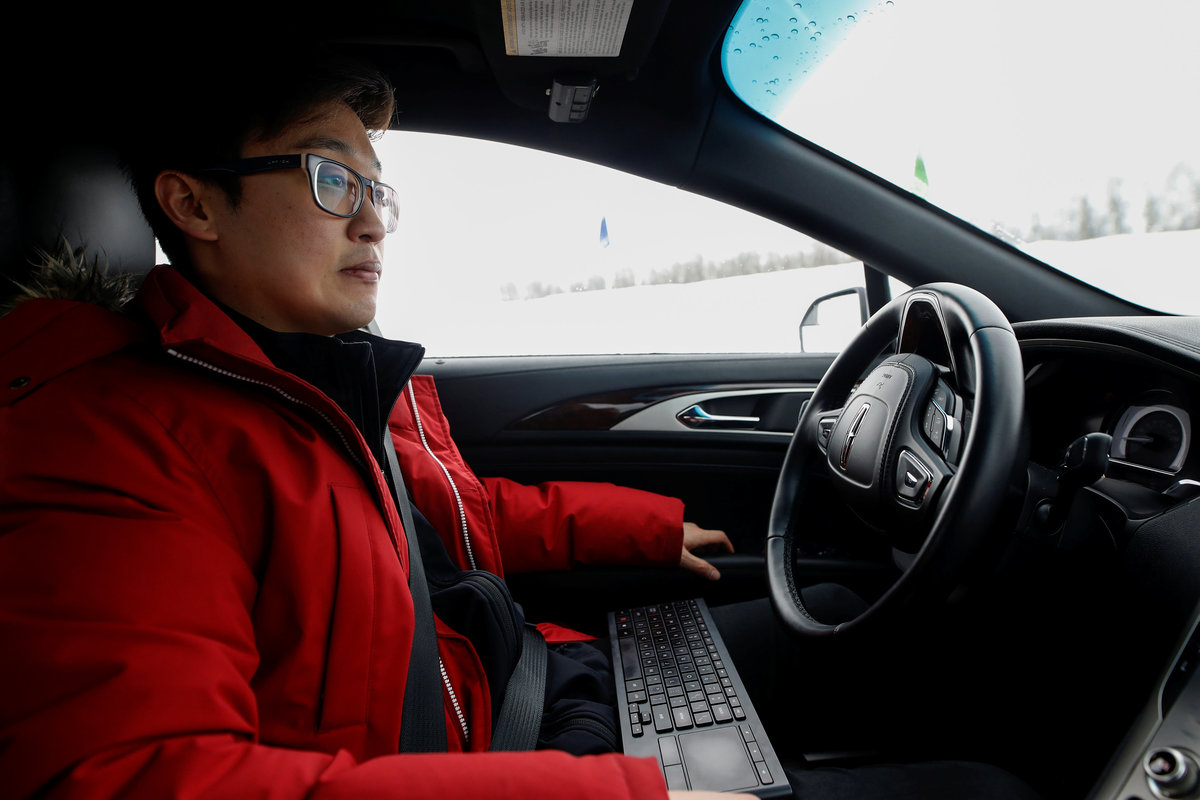
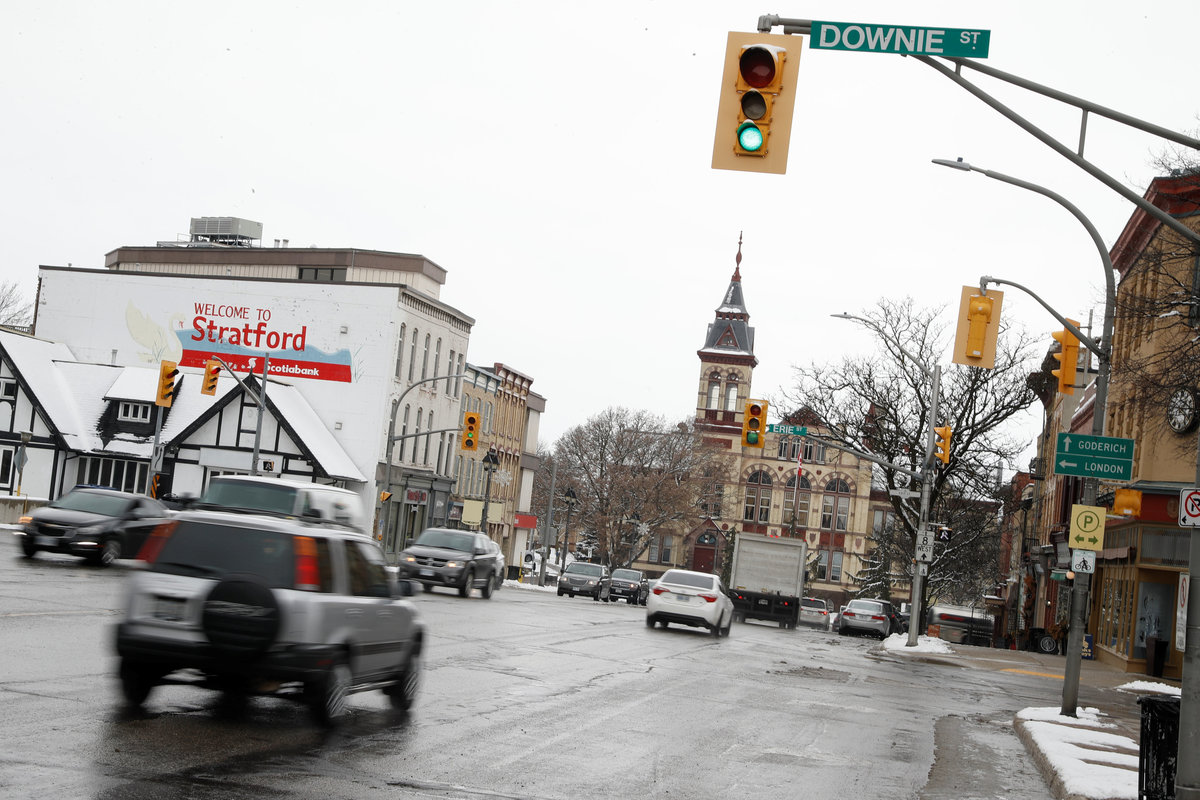
STRATFORD, Ontario (Reuters) - A Canadian town known for its annual theater festival is emerging as a hub of "snowtonomous" research, as automakers face demands to produce self-driving cars that can perform in snow and sleet.
But testing driverless cars in cold climates brings added challenges to an industry grappling with the first fatality involving an autonomous vehicle.
On Sunday, an Uber Technologies Inc self-driving sport utility vehicle hit and killed a woman crossing the street in Arizona.
Blackberry <BB.TO> said on Wednesday it will continue testing its self-driving concept car on the road in Ottawa.The Canadian province of Ontario, which allows autonomous vehicles on roads only if there is a human driver behind the wheel, has said it would follow the Arizona investigation and take "action if warranted."
Canada's largest city, Toronto, is one of three places where Uber tests driverless technology - the other cities are Phoenix, Arizona, and Pittsburgh, Pennsylvania.
Automakers, ride services companies and others are investing in self-driving technology said to reduce accidents, and the costs of a driver, with robo-taxis expected to hit the road as early as this year.
A wider rollout, however, is expected to take years, if not decades, as companies work to prove autonomous vehicles can run not just in balmy U.S. states, where they are mostly tested, but in colder areas like Ontario and Michigan where snow and sleet can render cameras and sensors ineffective.
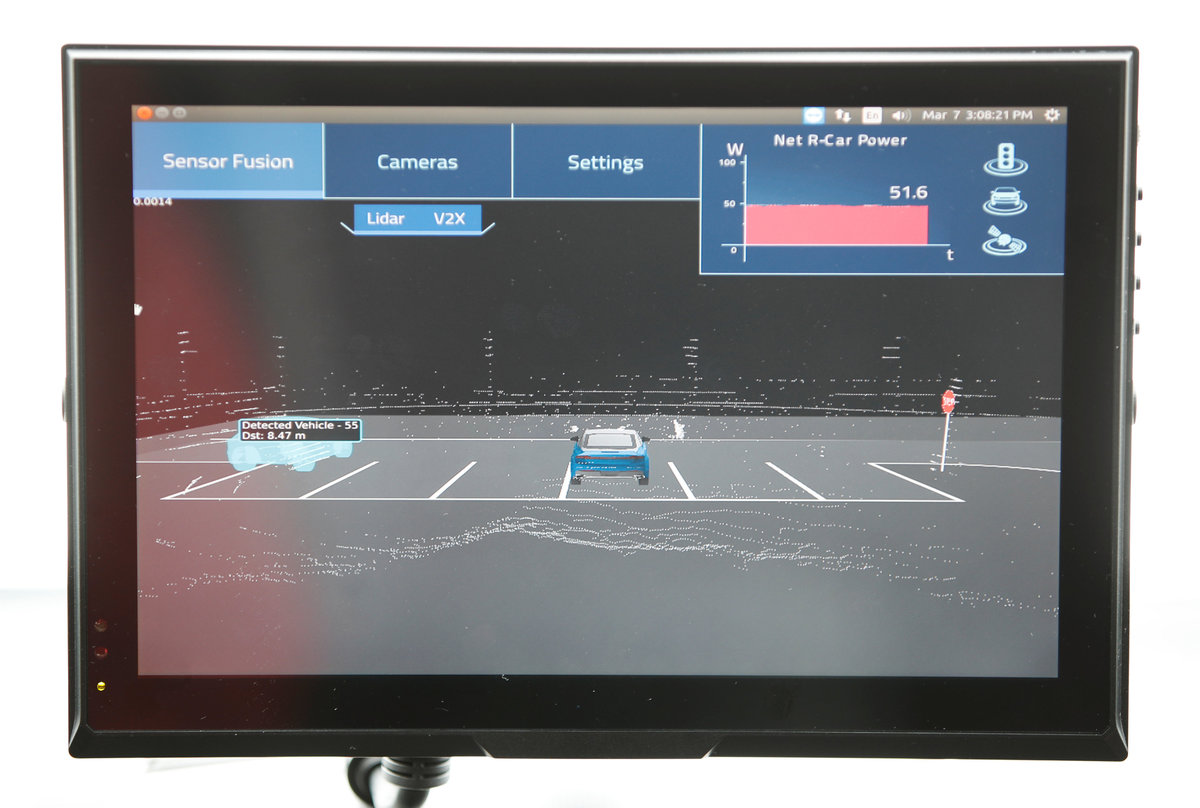
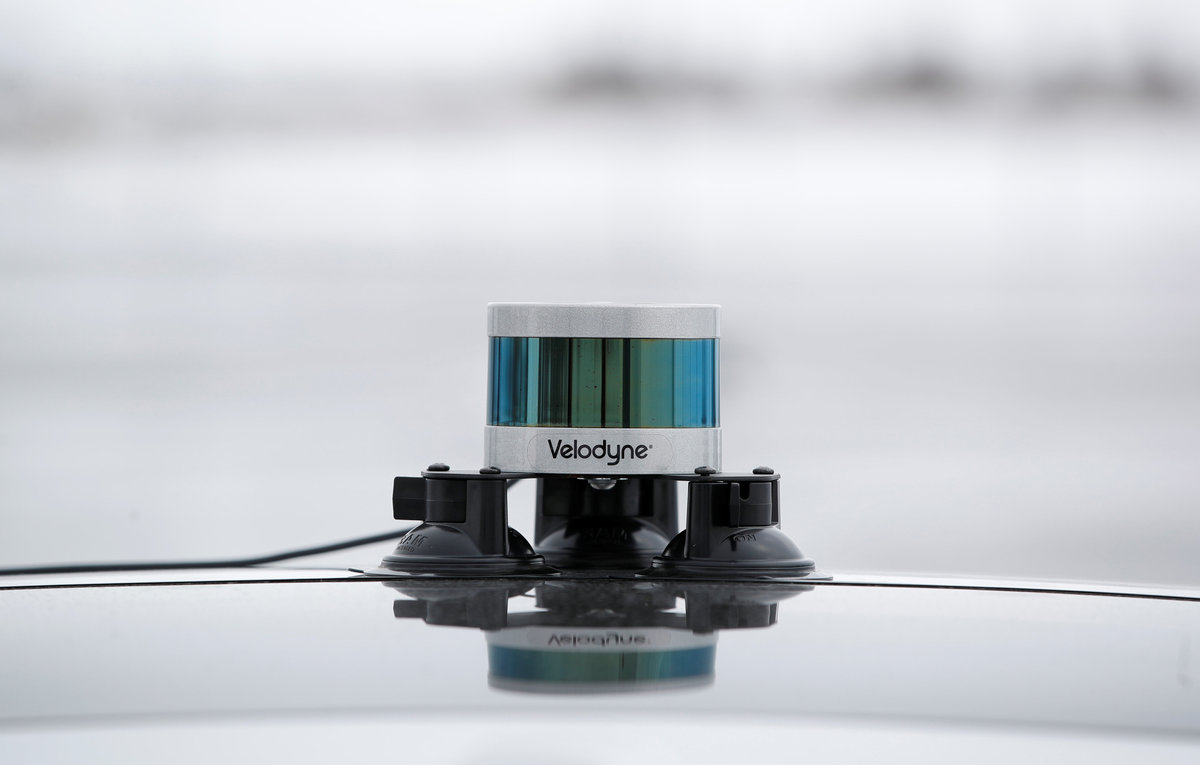
Ross McKenzie, managing director of the Waterloo Centre of Automotive Research, recalled how a vehicle's lidar, which uses laser light to help autonomous cars "see" nearby objects, once mistook an ice patch for a pothole.
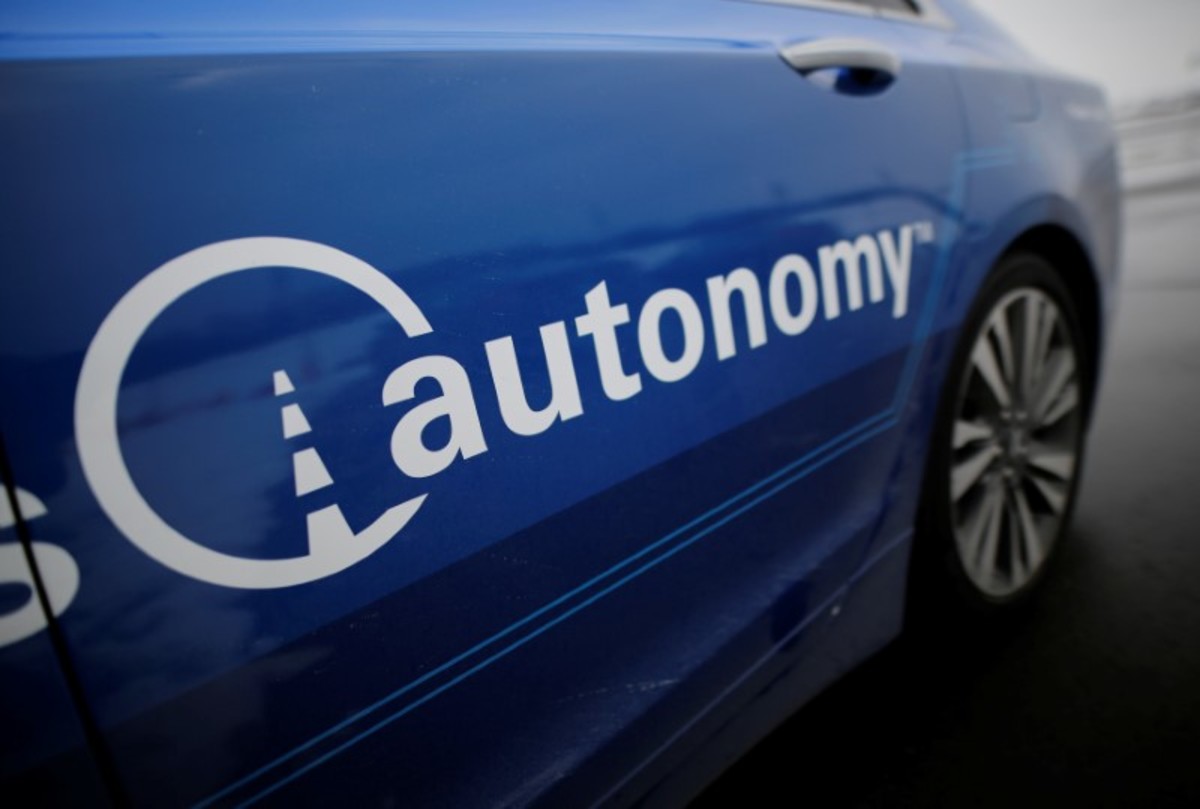
McKenzie's research team at the University of Waterloo responded by tweaking the sedan's software so it would factor in the time of year and weather when driving in the snow and ice, conditions that autonomous vehicles will have to navigate to be commercially viable.
The car needs to consider "we have winter driving conditions because I'm in Canada, it's November and it’s 15 below," McKenzie said by phone.
Ontario, which has lost automaking jobs to lower-cost Mexico in recent years, is counting on the lure of its snowy winters and the strength of its automotive and software engineering sectors to establish a "Silicon North." Since 2016, Ontario has attracted about C$1 billion ($765 million) in private-sector investment for autonomous and connected cars.
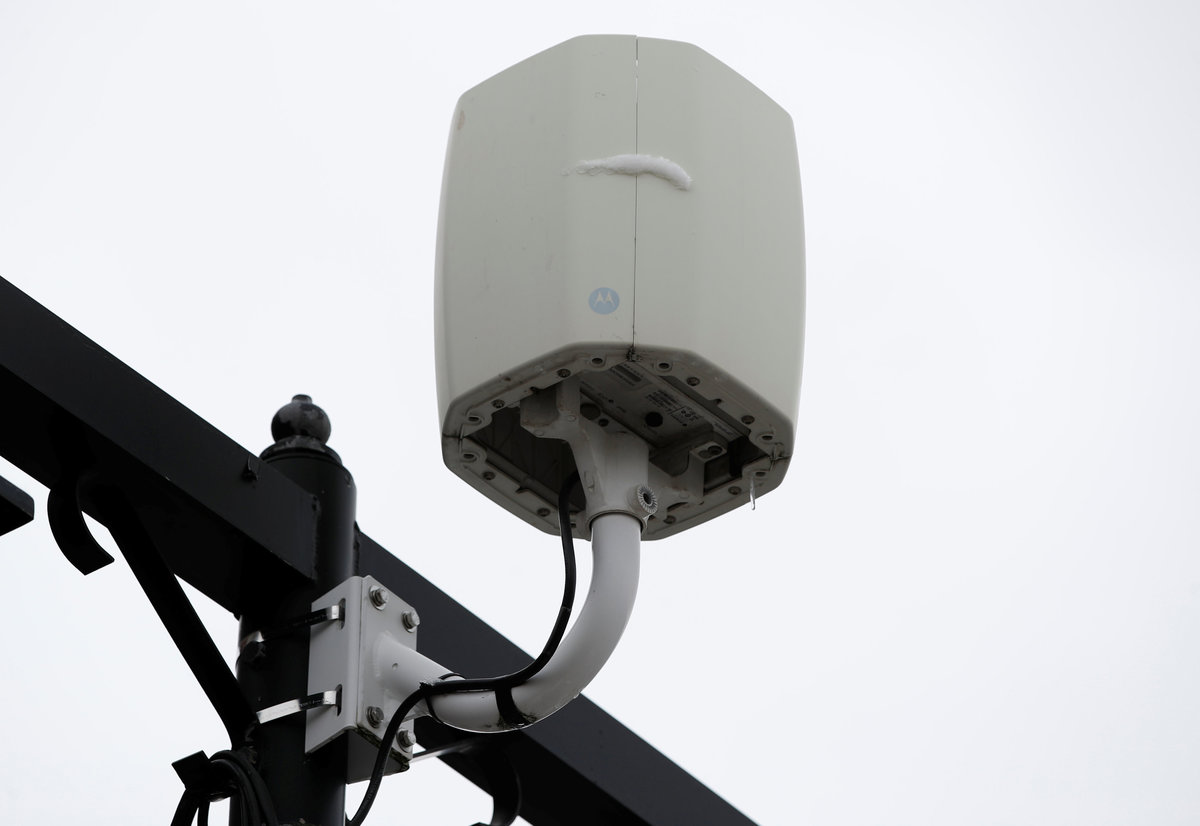
In Stratford, where the theater festival is an important employer of its 31,000 residents, the city-wide wireless network and weather are helping to attract companies researching connected driving technologies. Ubiquitous Wi-Fi gives companies the option to test vehicle-to-vehicle communication over a 4G band, McKenzie said.
HARSH WINTERS
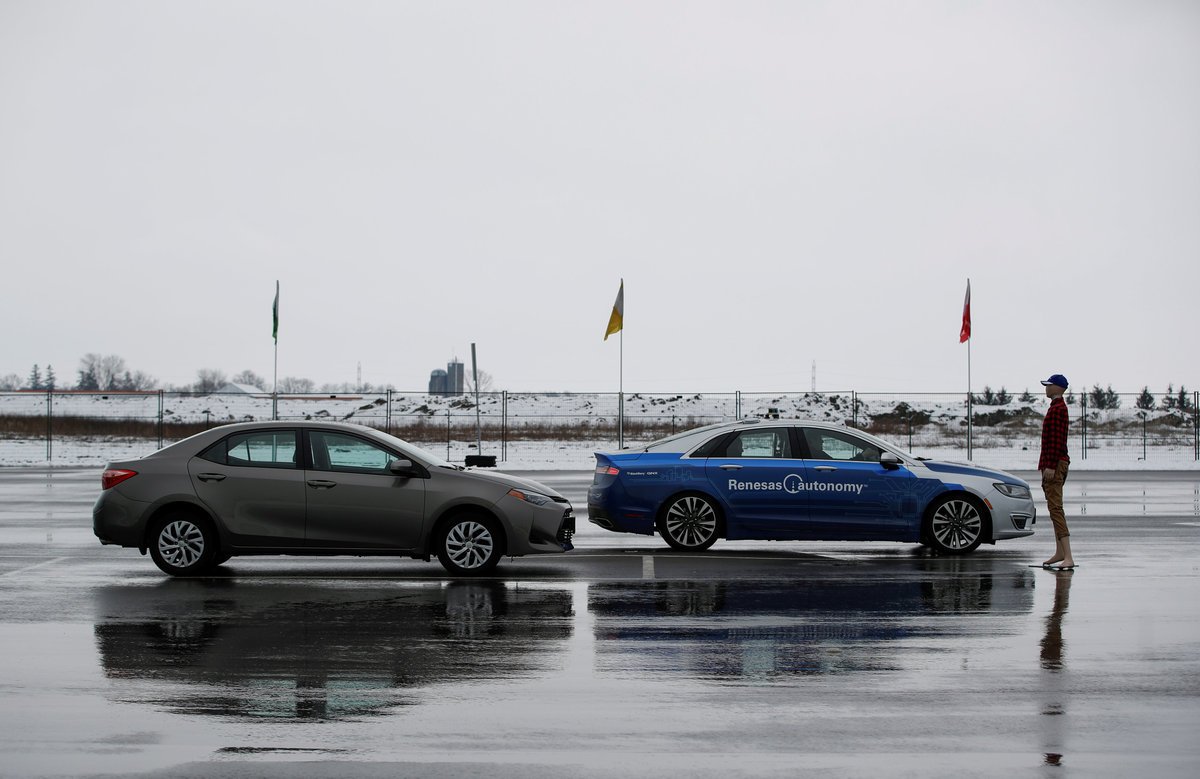
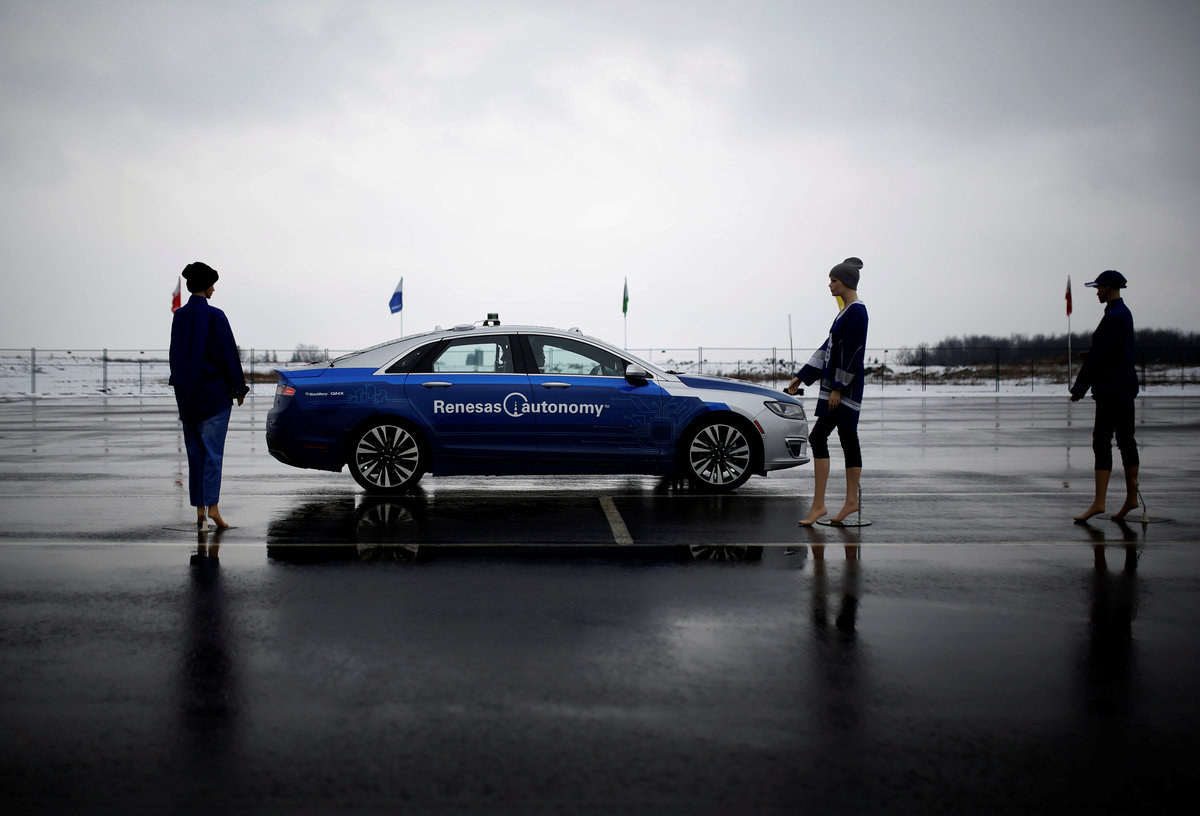
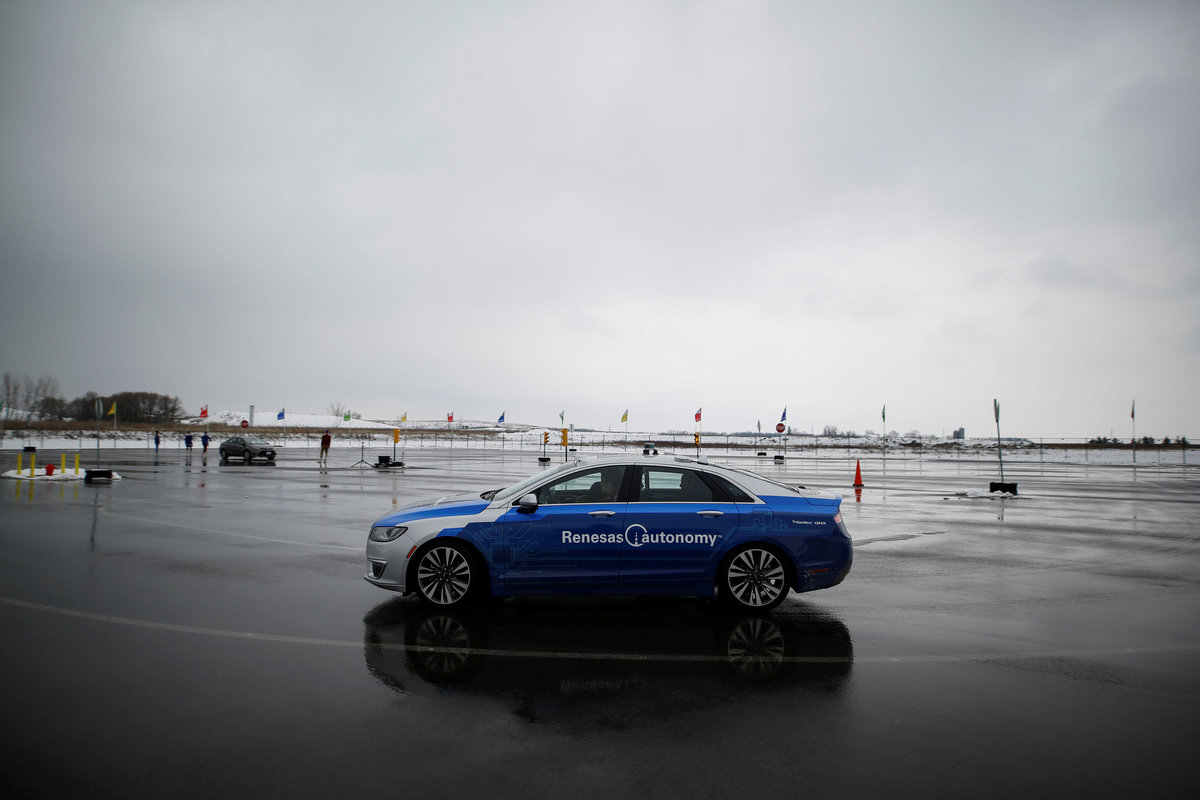
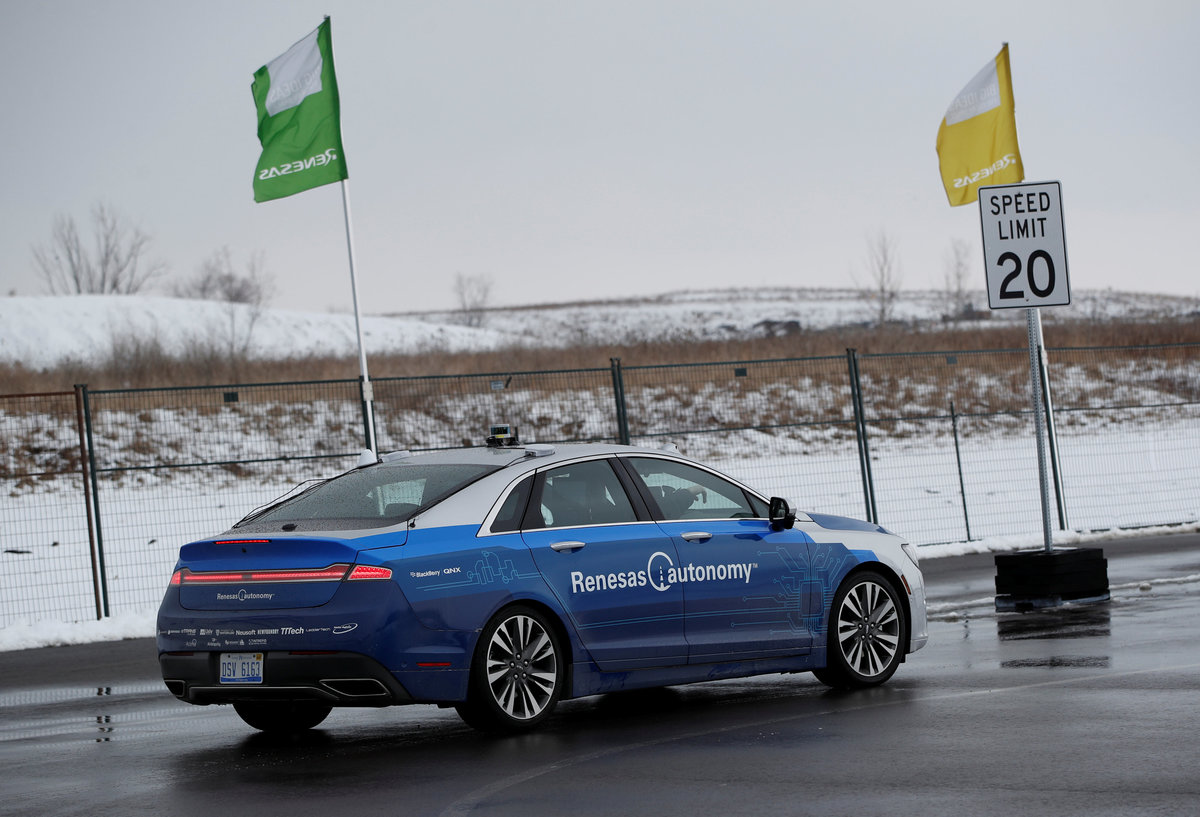
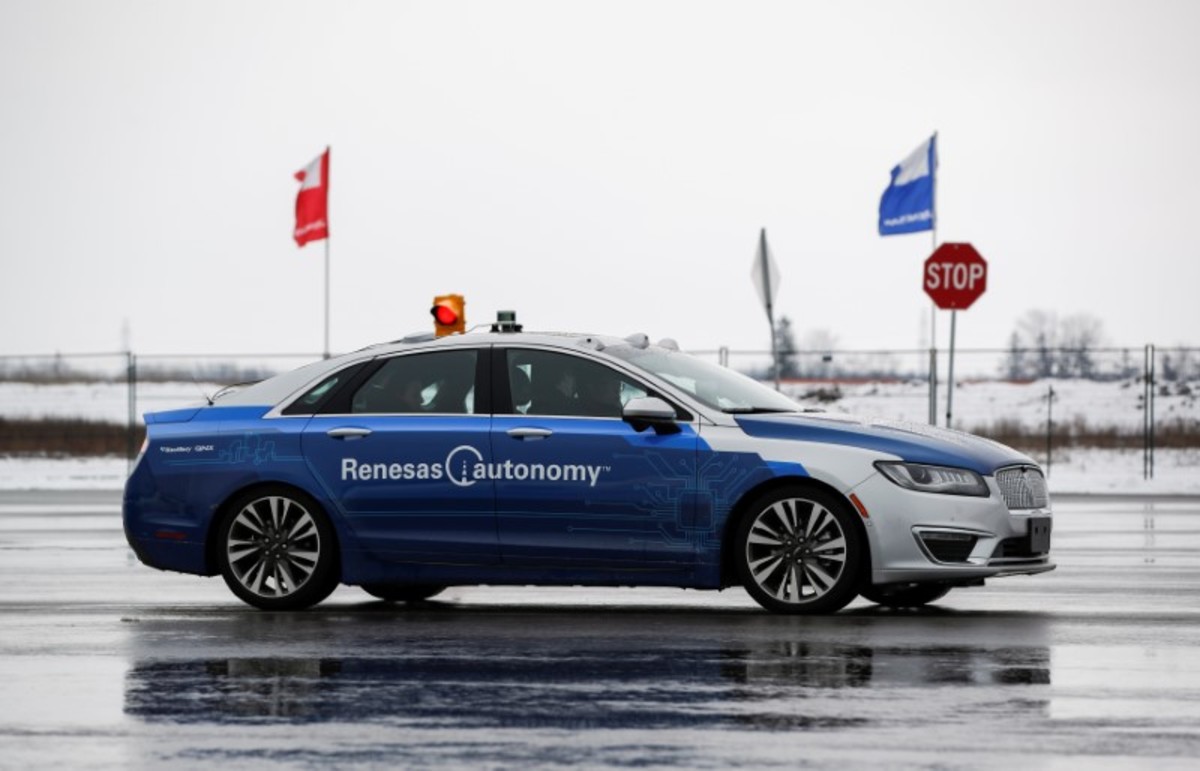
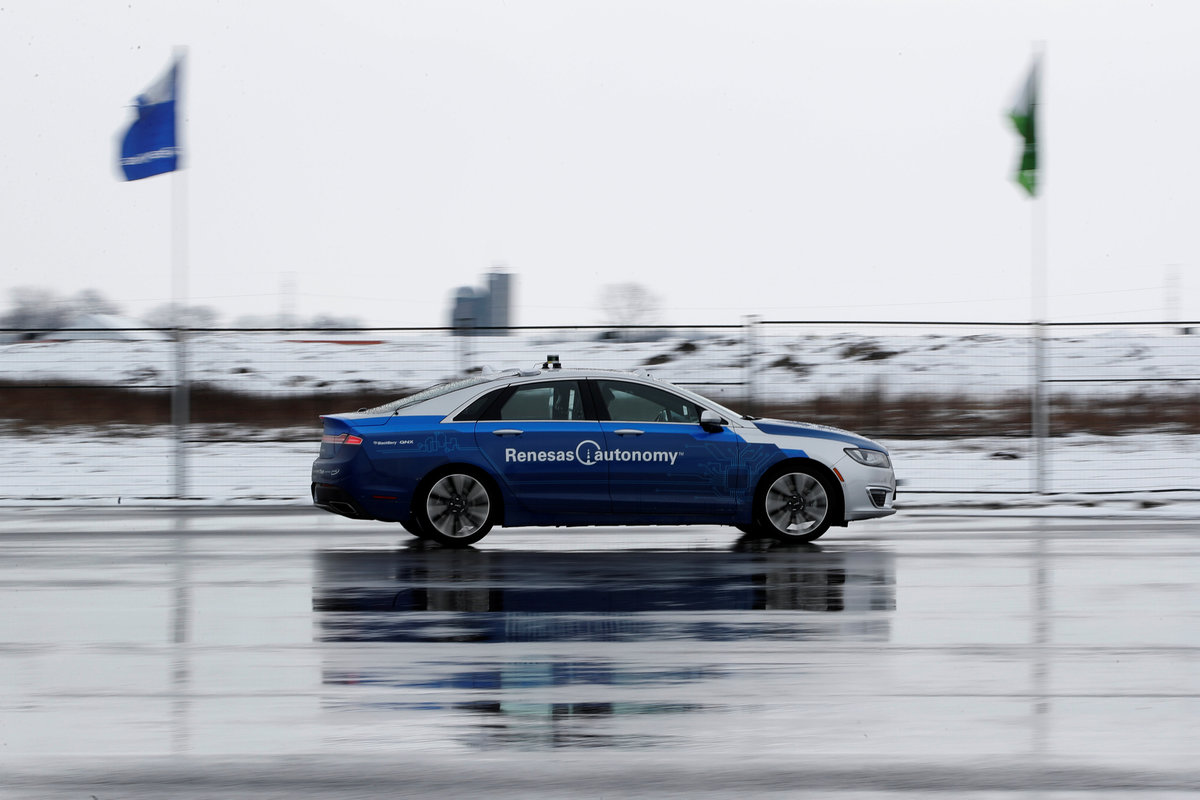
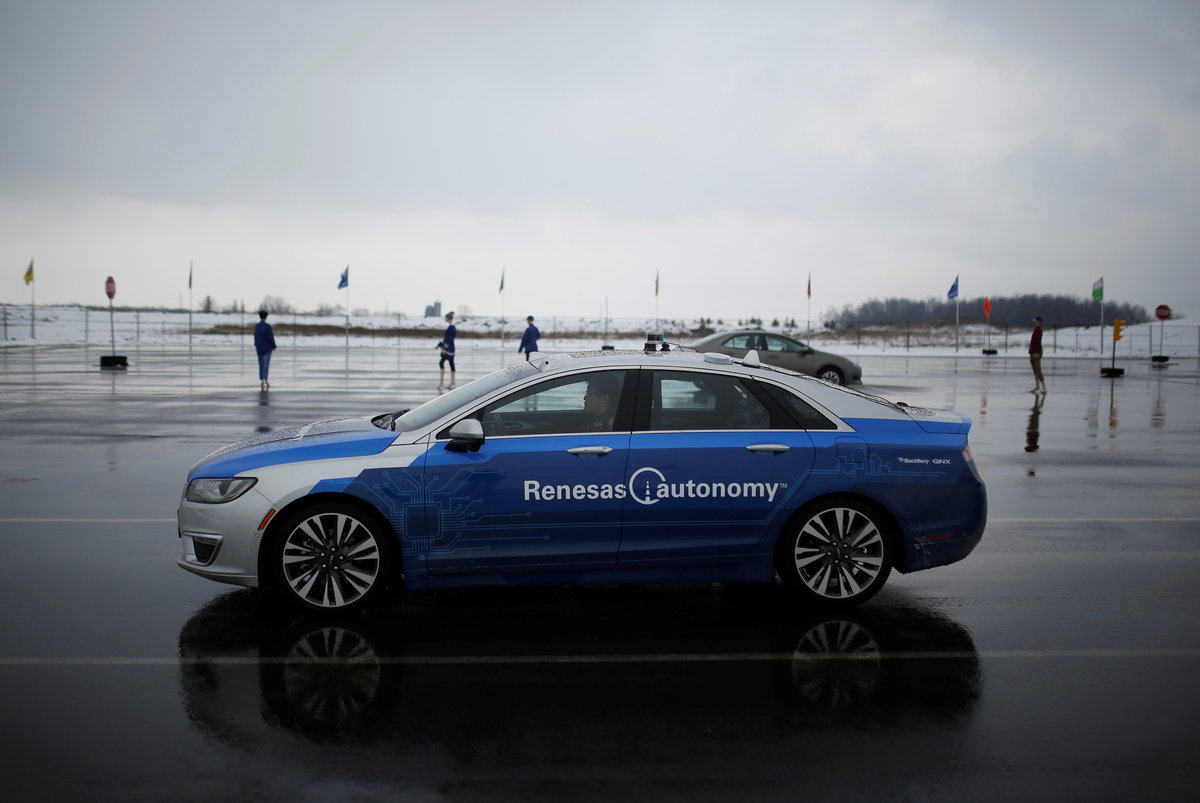
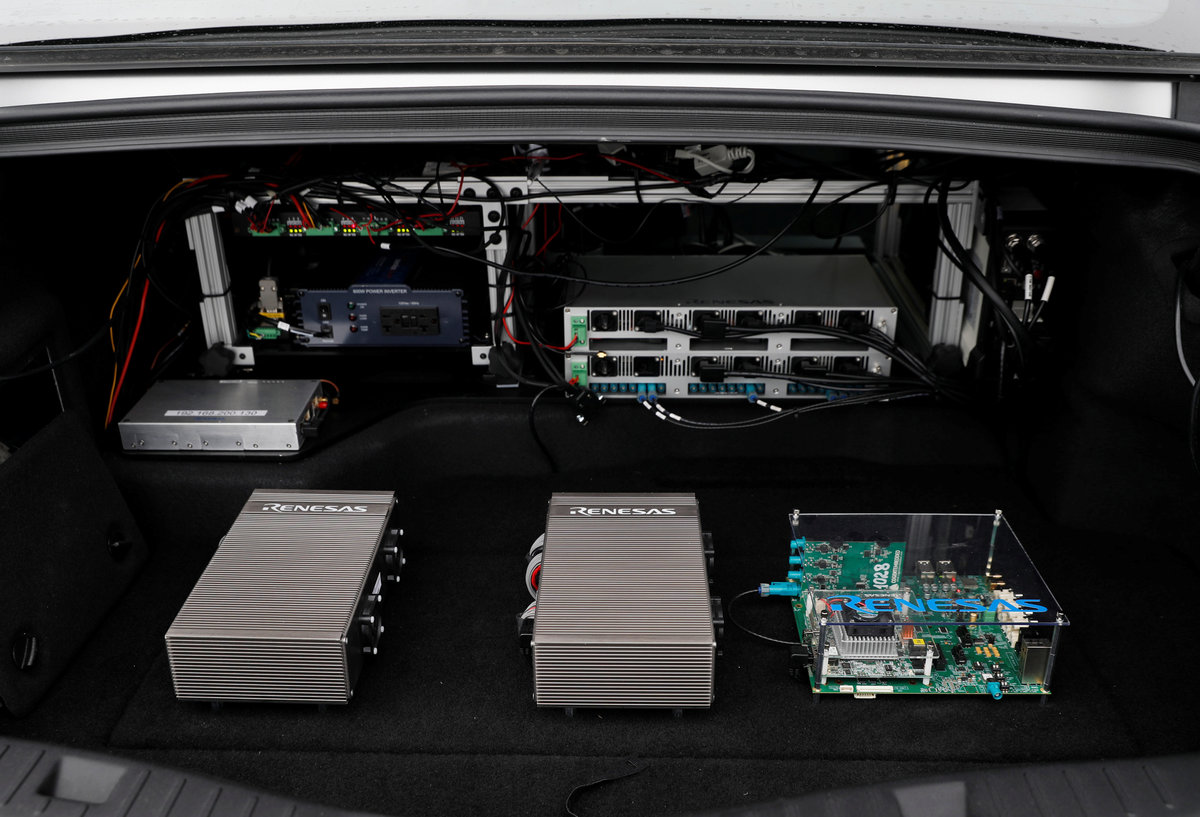
Japanese semiconductor manufacturer Renesas Electronics Corp <6723.T> chose Ontario as the site of its only autonomous test-track because of the harsh winters, along with its proximity to Blackberry's QNX unit which produces the operating system.
The use of high-definition maps helps self-driving vehicles more easily navigate in the snow, even when road markings are not visible, said John Buszek, Renesas' Michigan-based director of the company's autonomous and advanced driver-assistance division.
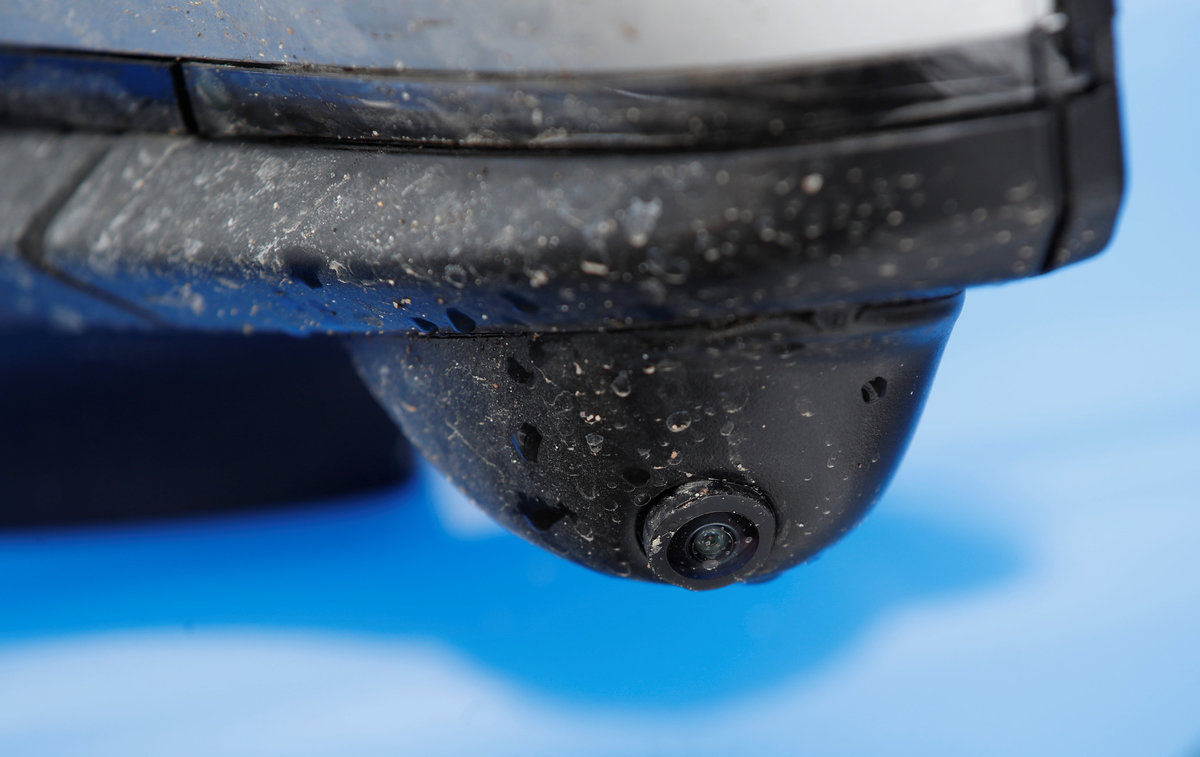
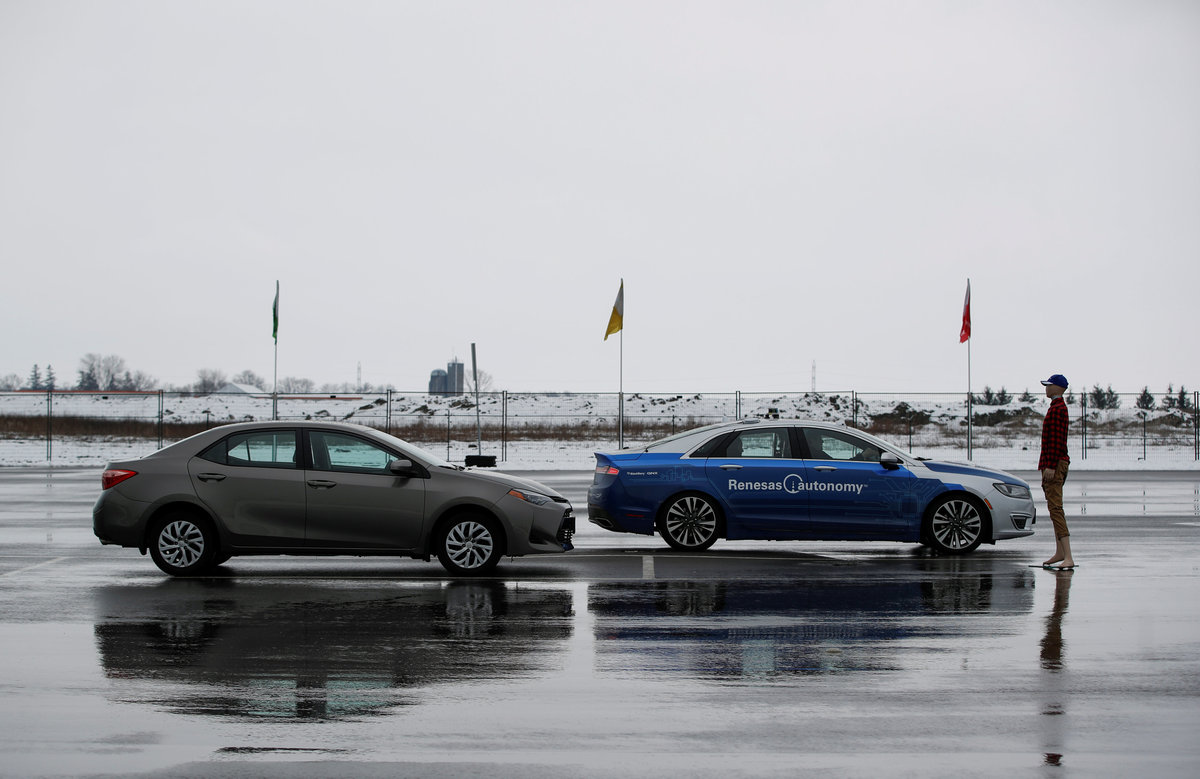
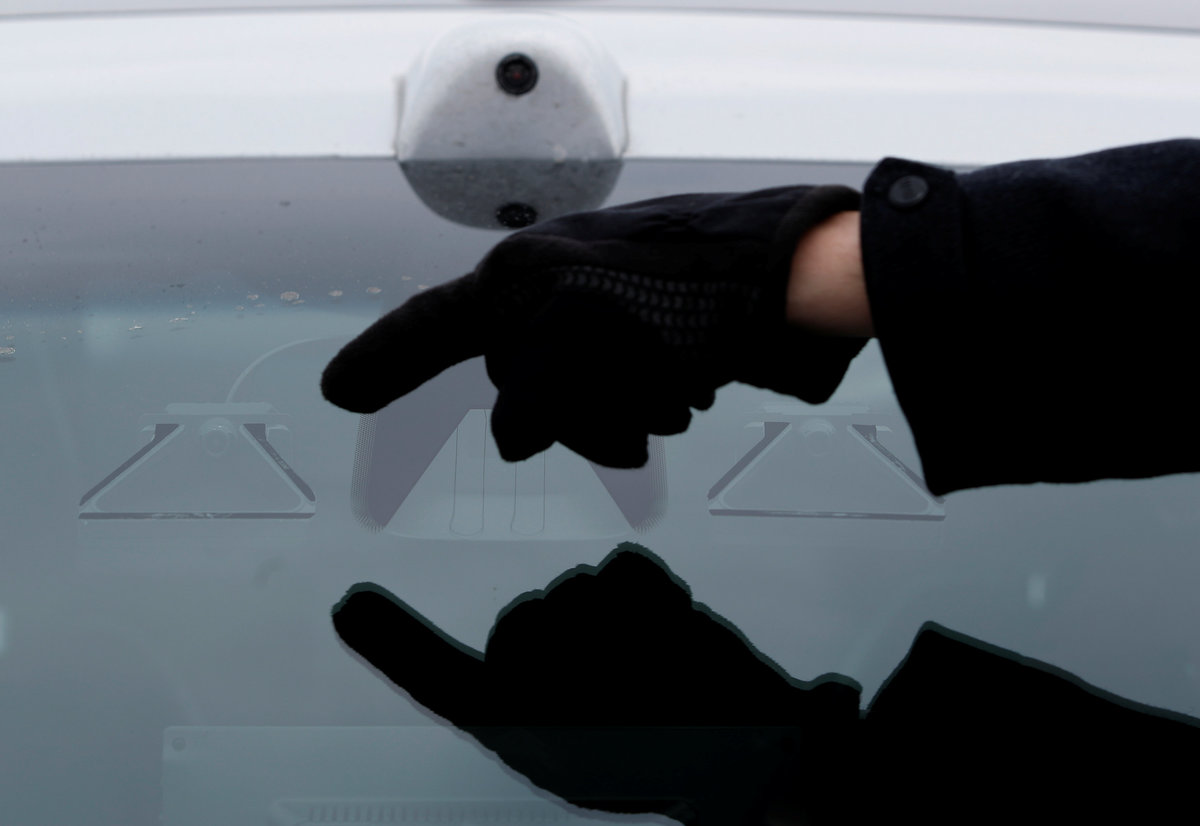
Renesas' Lincoln MKZ sedan, which does not currently drive autonomously on public roads, is still equipped with enough backup cameras and sensors to keep running even if one gets covered in sludge, Buszek said.
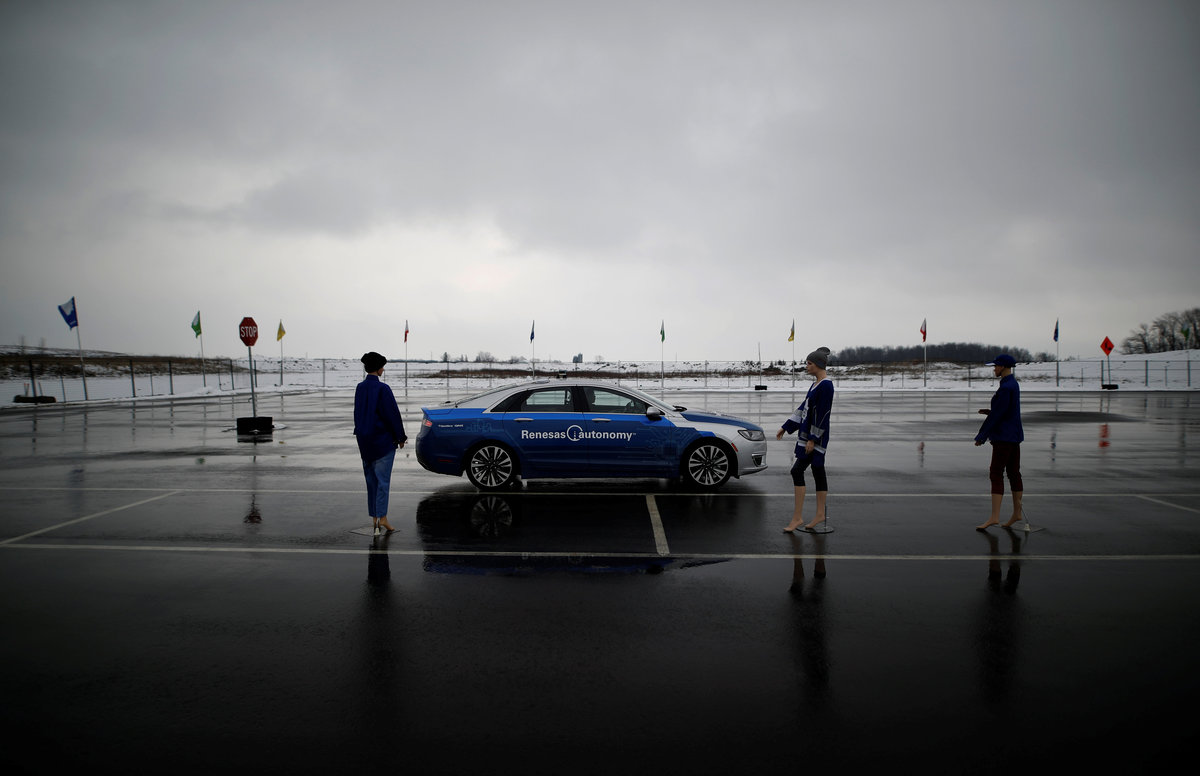
"In order for the car to have enough sensors to be robust against all different types of climates it means there are going to be a lot of sensors," he said during at a recent demonstration at the chipmaker's track in Stratford, Ontario.
While extra cameras, sensors and lidar work well on the track, consumers are less keen on the cost, appearance and inefficiency of a car covered with such lenses. Some automakers are looking at protective coatings to keep a smaller number of lenses free of sludge.
"Ultimately those sensors that you would see on the car today have to be integrated into the car system," said Justin Gammage, industry liaison manager at the University of Ontario Institute of Technology's Automotive Centre of Excellence (ACE) in Oshawa, Ontario.
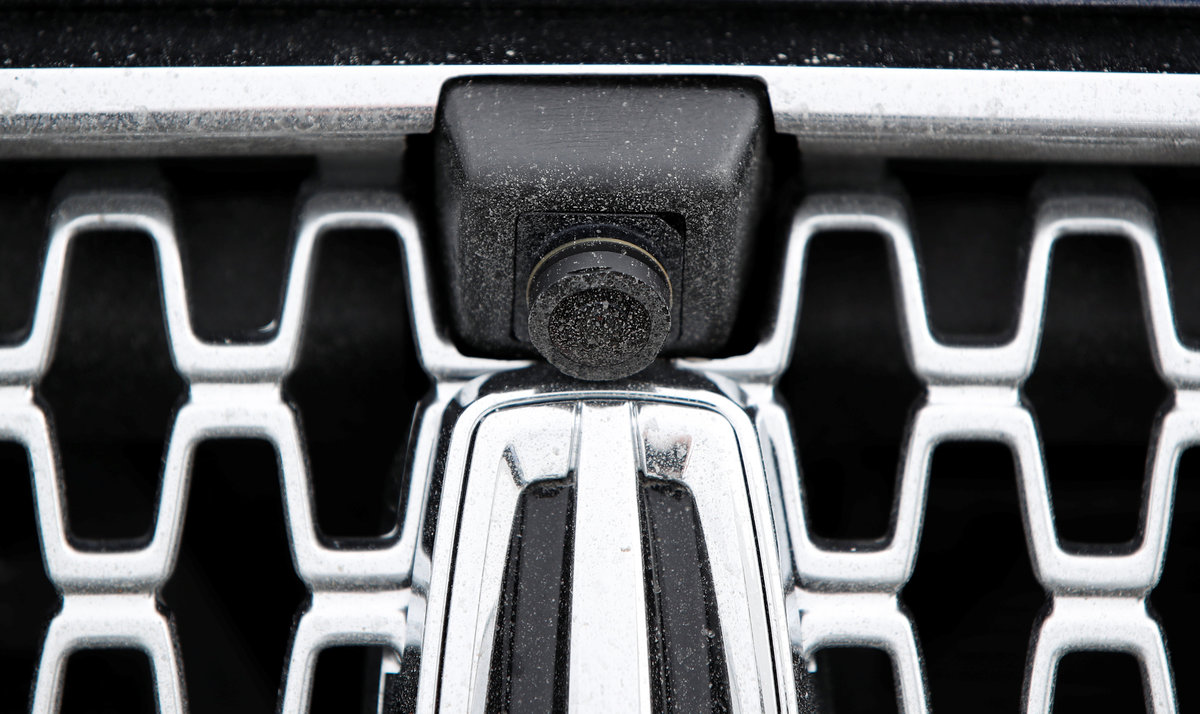
"Customers will pretty much want a car to look like a car looks today, even if has all the autonomous features."
Gammage, formerly General Motors Co's <GM.N> chief scientist in Canada, said researchers are still looking at non-stick coatings as a cost-effective way to protect lenses.
He has yet to find a one-size-fits-all-coating.
"They all have varying degrees of performance. And it's really dependent on what type of conditions they are working in," he said. "One coating might work really well in snow, but not as well in rain. And vice versa."
When self-driving vehicles fail to receive enough data through their cameras, sensors and lidar due to bad weather, they simply will not be able to drive autonomously, McKenzie said.
The public should not expect self-driving vehicles to hit the road in conditions that humans would avoid.
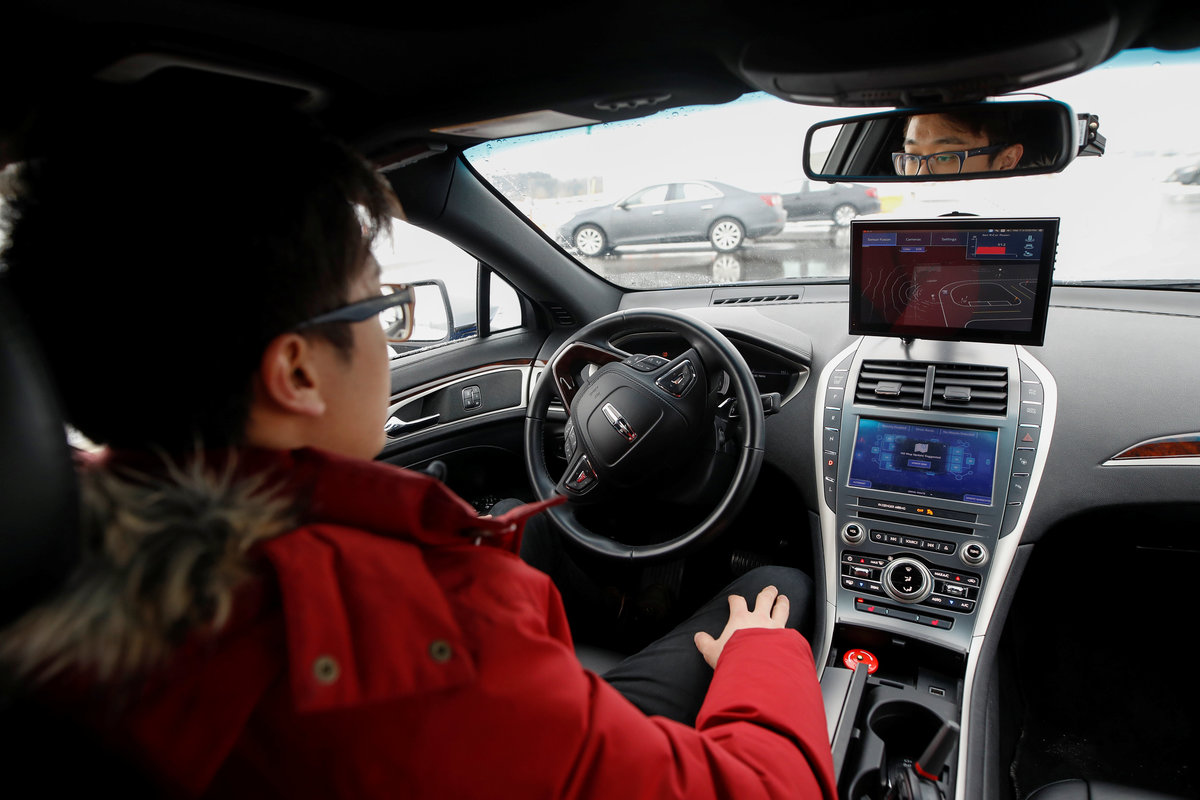
"If I'm not able to get into a car because we're two steps short of a monsoon, why would we expect an autonomous vehicle to operate?"
($1 = 1.3078 Canadian dollars)
(Reporting by Allison Lampert; Editing by Denny Thomas, Matthew Lewis and Cynthia Osterman)