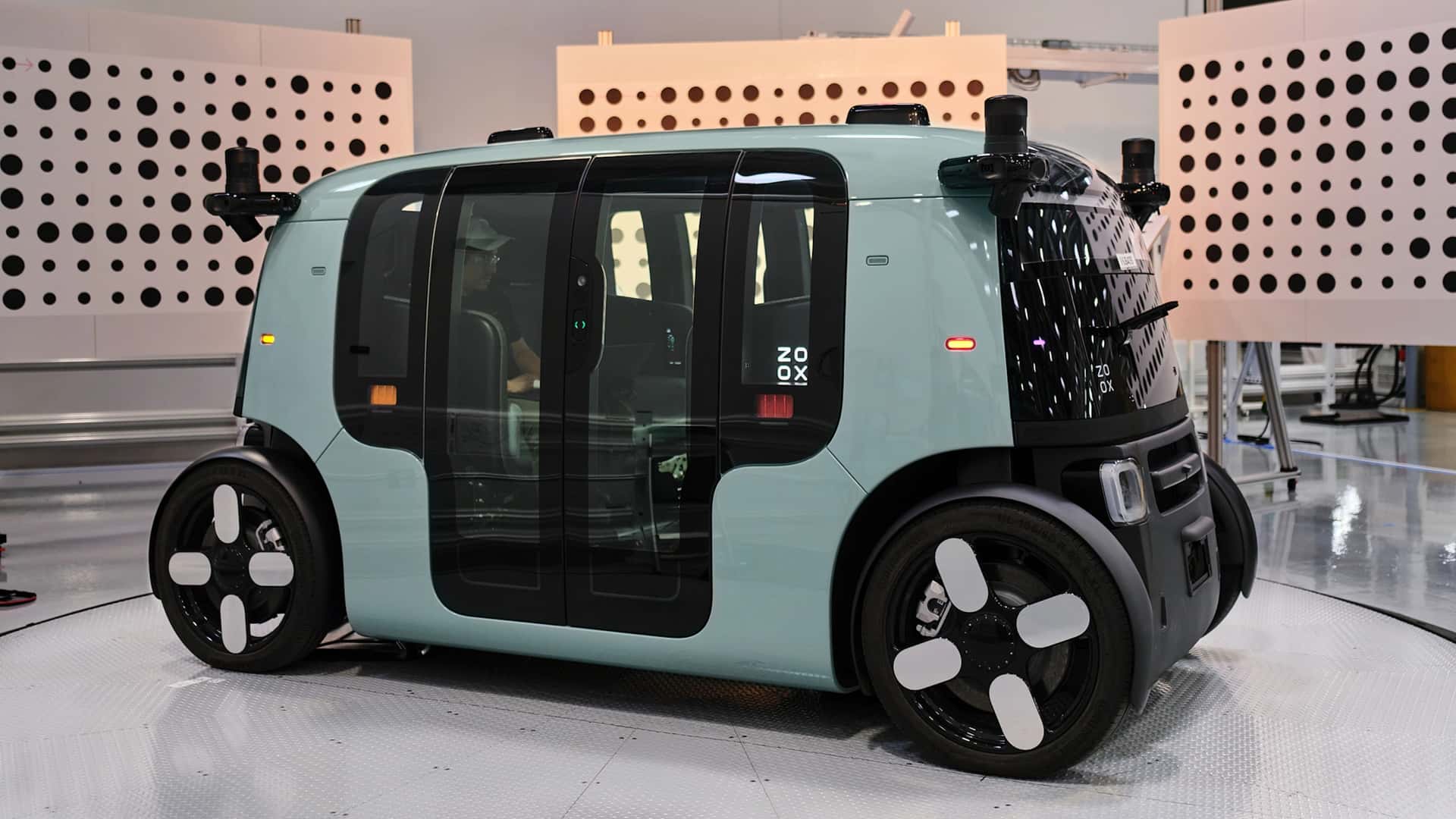
- Zoox's purpose-built robotaxi is the first vehicle of their kind to win approval from the U.S. to start a commercial service.
- The temporary exemption from motor vehicle standards will allow Zoox to deploy up to 2,500 vehicles per year for two years.
- Zoox has been offering free rides in its autonomous pods, which lack a steering wheel and pedals.
The top U.S. road-safety regulator has cleared Zoox to start charging for rides in its unconventional robotaxi pods, which lack typically required car features like a steering wheel, brakes, or side mirrors. Zoox says it's the first time this kind of purpose-built autonomous vehicle has received an exemption from federal motor vehicle safety standards to deploy commercially.
Amazon-owned Zoox has opened up limited passenger rides in parts of Las Vegas and San Francisco, but it hasn't been charging for them. While Waymo uses a fleet of modified Jaguar I-Pace EVs, and Tesla's fledgling Robotaxi service relies on Model Ys, Zoox designs and manufactures its own vehicles in California that are purpose-built for autonomous rides. The pods have two rows of bench seating that face one another, and are bidirectional.
Last year, Zoox won an exemption from NHTSA to roll out vehicles for demonstration purposes. Now it can start offering a paid service, pending state-level approval where that's necessary. On Thursday, Zoox said it planned to start charging fares in Las Vegas next month. In California, Zoox would need permits from the state's Department of Motor Vehicles and Public Utilities Commission to launch a paid service. Zoox says it's "working closely with regulators" in both states to move toward commercial operations.
Under the new temporary exemption, Zoox will be able to deploy up to 2,500 vehicles annually for two years. It will also be subject to "an enhanced, adaptable oversight structure that can evolve as Zoox's technology advances," NHTSA said.
Tesla would need similar approval to roll out its Cybercab, which also lacks a steering wheel and pedals. Cruise, the now-defunct autonomous vehicle startup owned by General Motors, sought an exemption for its Origin shuttle but never received it.
NHTSA made a handful of other announcements around autonomous vehicles on Thursday. It published an interim final rule that lets vehicles built prior to an exemption be eligible for commercial deployment. The agency said it is also streamlining the application process for exemptions. And, alongside the SAE Industry Technologies Consortia, it is funding a three-year consortium that will work on unified national standards for autonomous vehicle performance and safety. Today, self-driving technology companies need to navigate a patchwork of state-level and local laws.
“NHTSA supports the safe development and deployment of automated vehicles. By removing unnecessary barriers to innovation, developing industry guidance, and providing strong enforcement oversight while we create performance requirements, NHTSA is taking a balanced approach to AV regulation,” said NHTSA Administrator Jonathan Morrison in a statement. “These advancements will ensure that the United States continues to lead the world in AV technology in a safe and responsible manner.”
Contact the author: Tim.Levin@InsideEVs.com