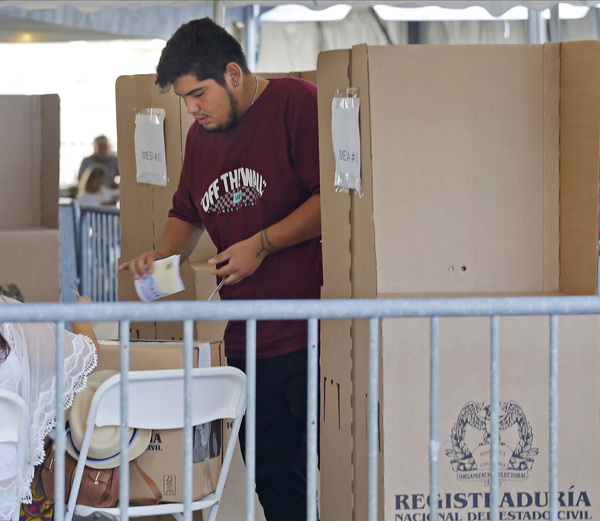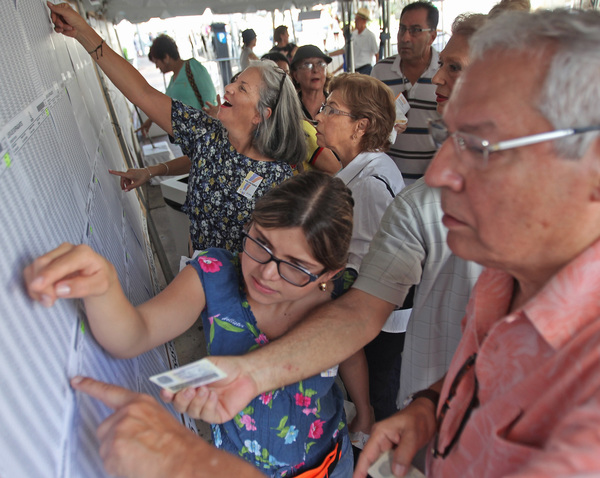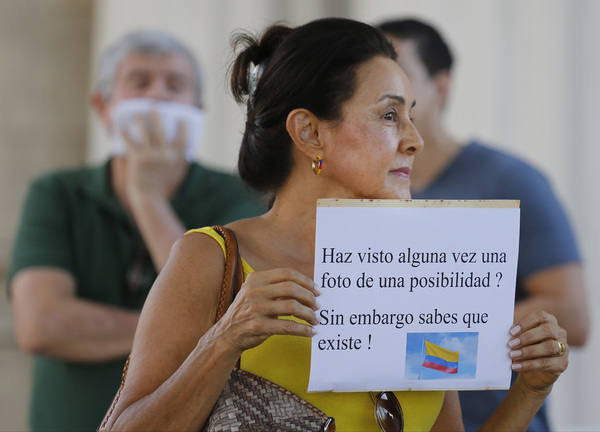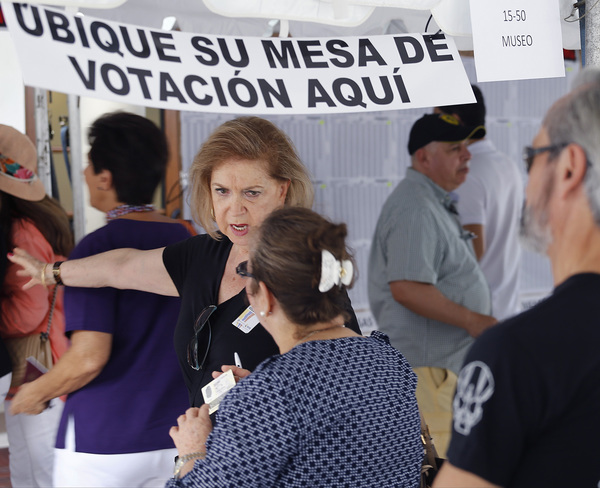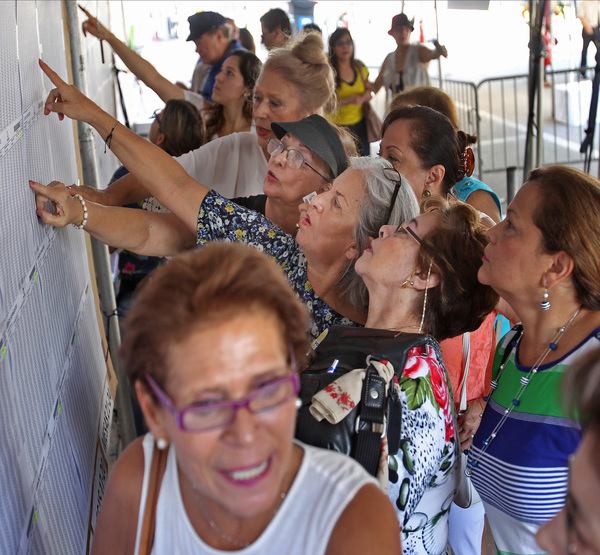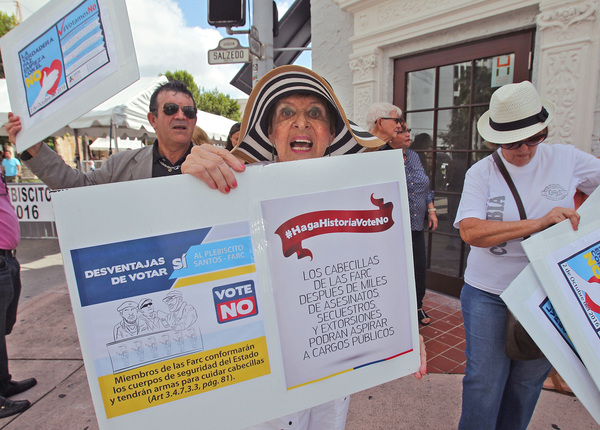
BOGOTA, Colombia _ Opponents of a peace agreement between the Colombian government and the nation's largest rebel group headed to an upset victory Sunday in extremely close voting _ an indication of how divided this nation is over terms of the deal that took nearly four years to negotiate.
With 99 percent of votes counted, "no" votes were ahead by a narrow margin. The count showed 50.2 percent voted against the agreement, which Colombians were asked to judge in an all-or-nothing vote, while 49.8 percent voted in favor. Of about 13 million votes cast, "no" had a 62,000 vote lead. The deal was to have ended a 52- year conflict between the Revolutionary Armed Forces of Colombia and the military.
The vote is not binding, as Colombia's constitutional court upheld President Juan Manuel Santos' right to negotiate and sign a deal on his own. But Santos has said on numerous occasions that a majority of Colombians must approve the deal for it to be implemented.
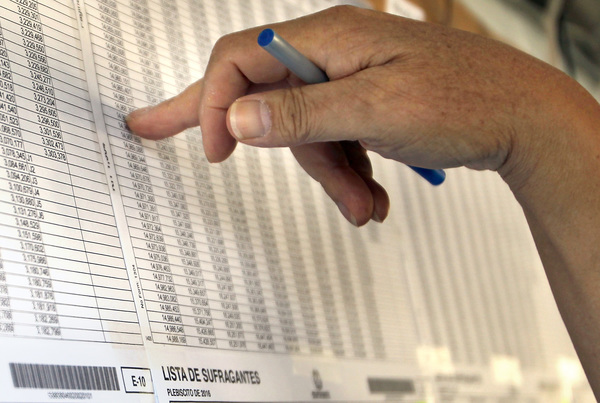
Of 35 million eligible voters, only about 13 million participated.
"I voted against it," said Bogota security guard Jony Prieto. "It was confusing, poorly done and we didn't really know what was included in the deal." Accountant Luis Albeiro Alfonso said he voted against the agreement because it gave light maximum sentences to pacified rebels who committed war crimes, even massacres and kidnappings.
Former President Alvaro Uribe, now a senator, led opposition to the agreement, galvanizing support from military veterans, victims rights' groups and wealthy farmers. If the "no" victory holds, it will solidify his political power in the Senate and give his Democratic Center party a boost ahead of the 2018 presidential election.
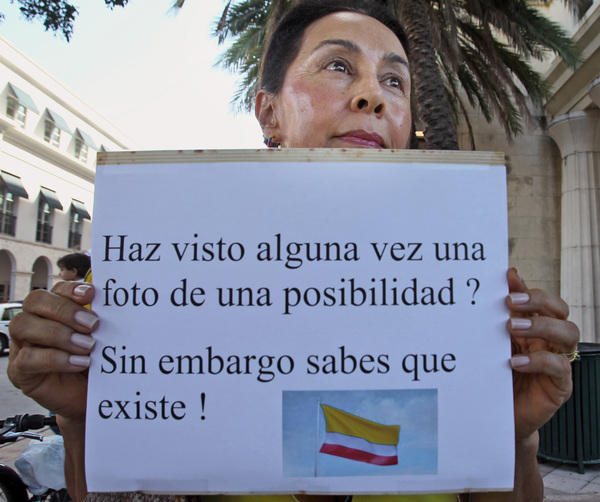
Two hours after the polls closed and the "no" vote appeared to be prevailing, many Colombians were waiting for Santos to emerge and say whether he would push ahead with the peace deal despite a popular rejection, or go to his "plan B" of resuming the 52-year-old conflict.
����
(Kraul is a special correspondent.)