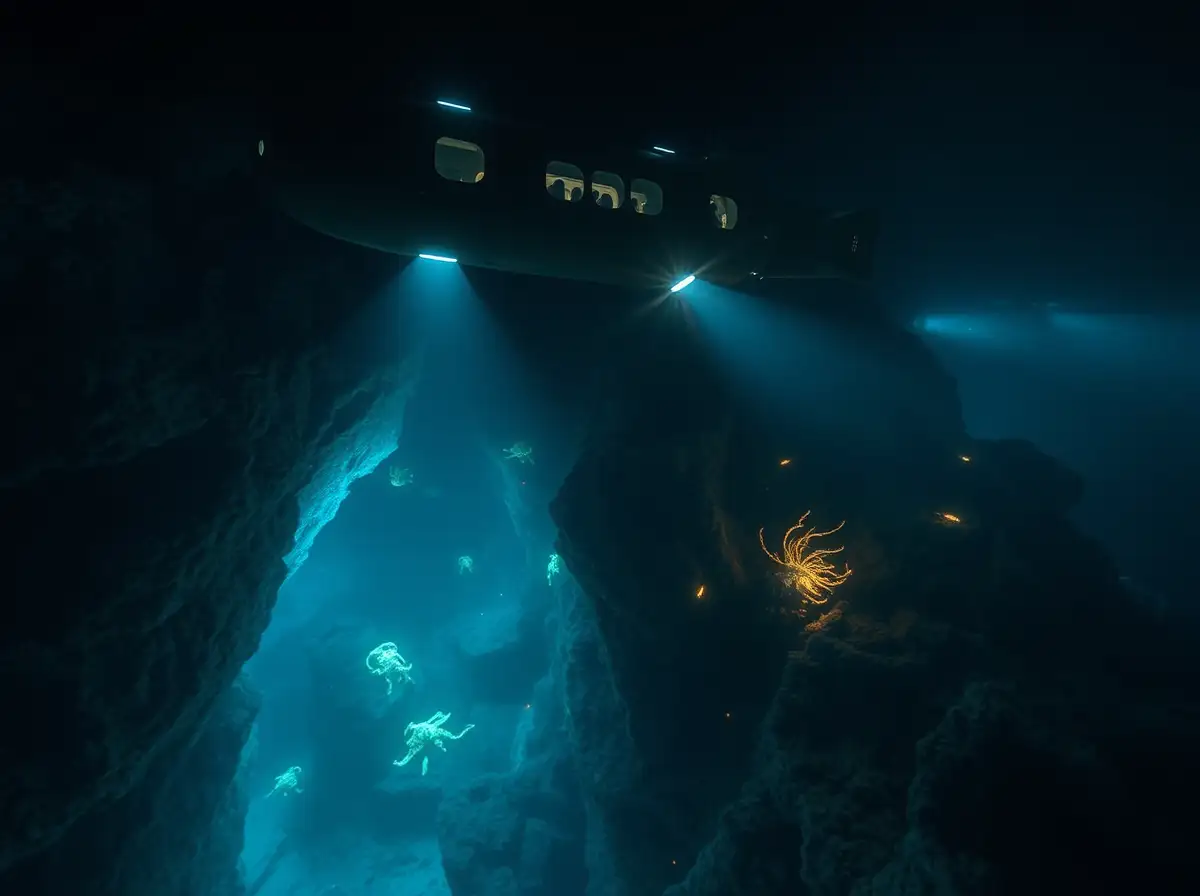
A remarkable scientific investigation beneath the Atlantic Ocean is providing new clues about one of Earth’s most unusual deep-sea ecosystems. In 2023, researchers aboard the JOIDES Resolution drilled approximately 4,160 feet (1,268 meters) into the seafloor at Atlantis Massif, a giant underwater mountain near the Mid-Atlantic Ridge. Years later, analysis of fluids recovered from beneath the ocean floor revealed a chemical signature indicating that some of the water had previously experienced temperatures approaching 572°F (300°C). The discovery is important because it may help explain how fluids reach the remarkable Lost City hydrothermal field, where alkaline vents have sustained a distinctive ecosystem for hundreds of thousands of years. Rather than simply revealing hot water underground, the research provides evidence of a hidden geological pathway connecting deep subsurface processes with life at the seafloor.
The story begins with Atlantis Massif, an enormous geological formation rising several kilometers above the surrounding ocean floor. Unlike conventional volcanic hydrothermal systems, the region exposes mantle rocks that have been altered through interaction with seawater. The Lost City hydrothermal field sits on the massif and is famous for tall white carbonate chimneys that release warm, highly alkaline fluids.
Lost City Fluids
Unlike the extremely hot, acidic fluids associated with many black smoker systems, Lost City fluids are generally much cooler and chemically different. Their chemistry is produced through reactions between seawater and mantle-derived rocks deep beneath the seafloor. Scientists have long wanted to understand exactly how these fluids travel through the complex underground plumbing system before emerging at the surface.
The 2023 drilling expedition offered an unprecedented opportunity to investigate that hidden system directly. The JOIDES Resolution drilled deep into the seafloor and recovered samples that could reveal how fluids move through fractures and rock formations. Scientists later examined the chemistry of water trapped within the borehole and surrounding rocks.
Chemical Memory
According to the research described in the supplied report, the fluids contained a chemical “memory” of exposure to temperatures around 300°C (572°F). That does not necessarily mean the water was currently that hot when sampled. Instead, its chemical composition preserved evidence that it had previously interacted with much hotter geological environments. This distinction is crucial because it allows researchers to reconstruct underground processes that cannot be observed directly.
One particularly important clue came from the chemical composition of the fluids. Water circulating deep beneath the seafloor can react with rocks, dissolving and transporting minerals while its chemistry changes according to temperature and pressure. As that water moves through fractures, it can carry the signatures of previous environments.
Potential Pathway
The newly studied fluids appear to indicate that seawater may descend deep into the crust, become chemically transformed through high-temperature reactions, and later move toward shallower regions where it contributes to the fluids feeding Lost City. If confirmed, this would help explain how a relatively cool hydrothermal system can remain supplied by deep geological reactions without requiring the vents themselves to be located directly above an intense heat source.
The potential pathway is significant because Lost City is unlike most hydrothermal ecosystems known from the deep ocean. Its towering carbonate structures release hydrogen-rich, alkaline fluids that provide chemical energy for specialized microorganisms. Instead of relying on sunlight, these microbes can use chemical reactions involving hydrogen and carbon compounds to support metabolism.
This process is an example of chemosynthesis, a strategy that allows life to thrive in environments completely cut off from sunlight. The Lost City ecosystem therefore offers scientists an extraordinary natural laboratory for studying how organisms survive in extreme environments and how geological processes can create habitats suitable for life.
Origins of Life on Earth
The new findings could also contribute to broader questions about the origins of life on Earth. The chemical conditions found at Lost City have attracted considerable attention because alkaline hydrothermal environments may resemble some settings proposed for early prebiotic chemistry.
Hydrogen-rich fluids, mineral surfaces and chemical gradients can provide ingredients and energy sources relevant to theories about how increasingly complex chemical systems might have developed on the early Earth. The latest subsurface evidence does not prove that life originated at Lost City or at similar hydrothermal systems. However, understanding how these environments form and remain active can help researchers evaluate which geological settings may have offered favorable conditions billions of years ago.
There are also implications for understanding the hidden biosphere beneath the ocean floor. Scientists increasingly recognize that enormous microbial communities exist within rocks and sediments far below the seafloor. These organisms can live without sunlight and survive using chemical energy generated by interactions between water and minerals. The fluids recovered from Atlantis Massif provide another window into this deep environment.
Underground Network
By analyzing their chemical history, researchers can begin to understand how energy and nutrients move through subsurface habitats. The findings demonstrate that the ocean’s biological environment extends far beyond what can be seen at the seafloor itself, with geological processes potentially transporting chemically transformed water through an extensive underground network.
The discovery beneath Atlantis Massif reveals how Earth’s geology, water and deep-sea life are interconnected. The 4,160-foot drilling operation did more than retrieve rock samples; it opened a window into an underground world where seawater can be heated, chemically transformed and transported before emerging into an ecosystem unlike almost anywhere else on the planet.
The apparent 572°F chemical signature offers a tantalizing clue about the hidden journey of Lost City fluids, although researchers will need additional evidence to fully establish the proposed pathway. What makes the discovery so fascinating is its broader message: beneath an apparently empty stretch of Atlantic seafloor lies a dynamic geological system capable of shaping chemistry and supporting life. **The deep ocean may look silent from above, but far below the seafloor, water and rock are engaged in a process that could help explain one of Earth’s most mysterious ecosystems.