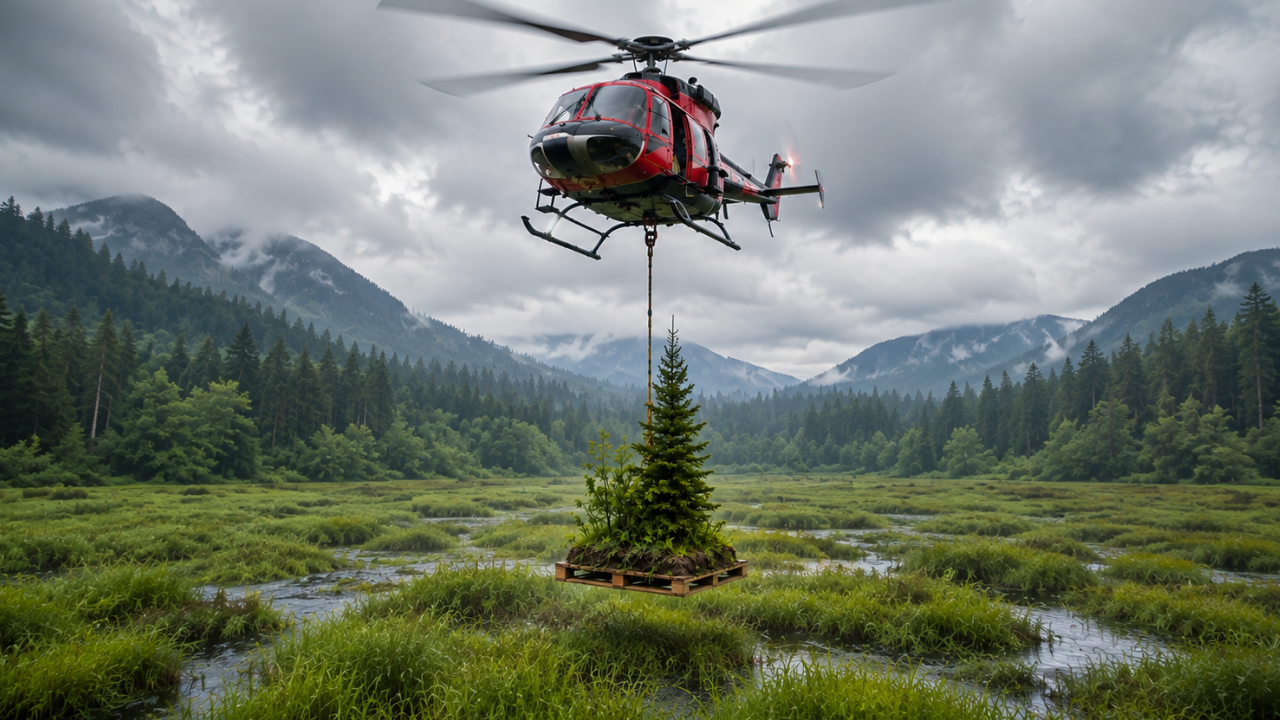
Imagine a helicopter flying over a swamp and dropping down a wooden pallet with soil, a baby tree, and four shrubs on it, like a tiny floating forest. In 2023, that is what happened in Washington state. In a conference abstract presented at the 2025 meeting of the National Association of Wetland Managers , Michelle Bahnick of the Tulalip Tribes described how her team used a helicopter to drop in 90 pallets of pre-planted vegetation into a wetland too dangerous and wet for crews to walk into. The goal was simple: to give native plants a fighting chance against a persistent invasive grass that has been choking Pacific Northwest wetlands for decades.
Get breaking news anytime, anywhere. Download the TOI app now!
The grass that will not quit
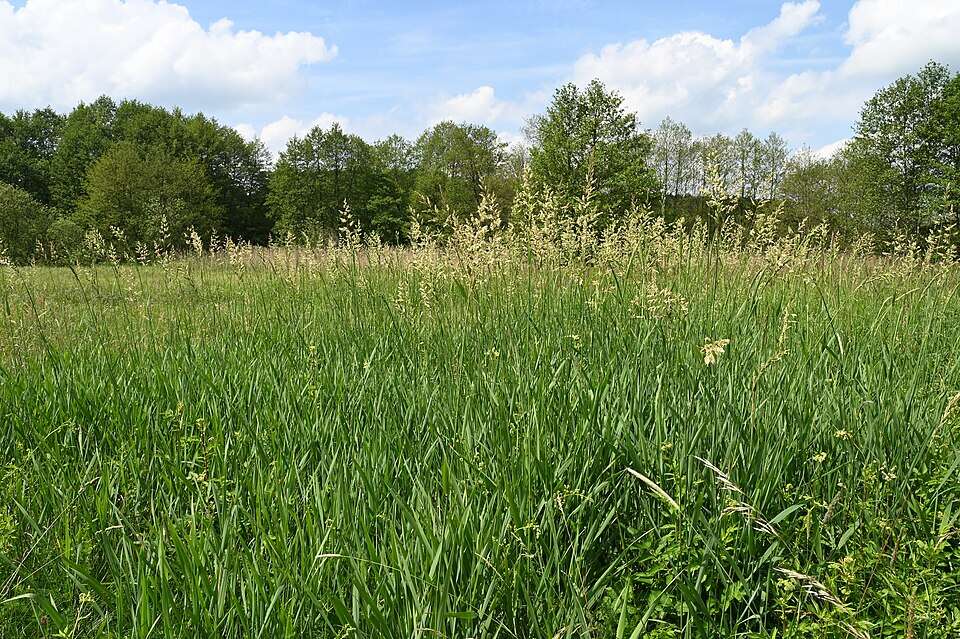
Reed canarygrass, or Phalaris arundinacea, is a fast-spreading perennial that forms dense mats over wetlands. It blocks sunlight, crowds out native plants, and destroys habitat that fish and birds need. A peer-reviewed study in Wetlands Ecology and Management found that once reed canarygrass takes over, it decreases native plant diversity, flattens the height and structure of the wetland canopy, and changes the soil beneath it, lowering organic content while making it wetter. In plain terms, it turns a rich, messy, life-filled wetland into a flat green carpet with almost nothing else living in it.
The researchers compared reed-canarygrass-dominated plots with native-vegetation plots in an urban freshwater wetland in Portland, Oregon, and found that the arthropod communities shifted too, with significantly lower diversity in reed canarygrass stands, and the authors say vegetation structure and soil conditions were stronger predictors than the grass’s abundance itself.
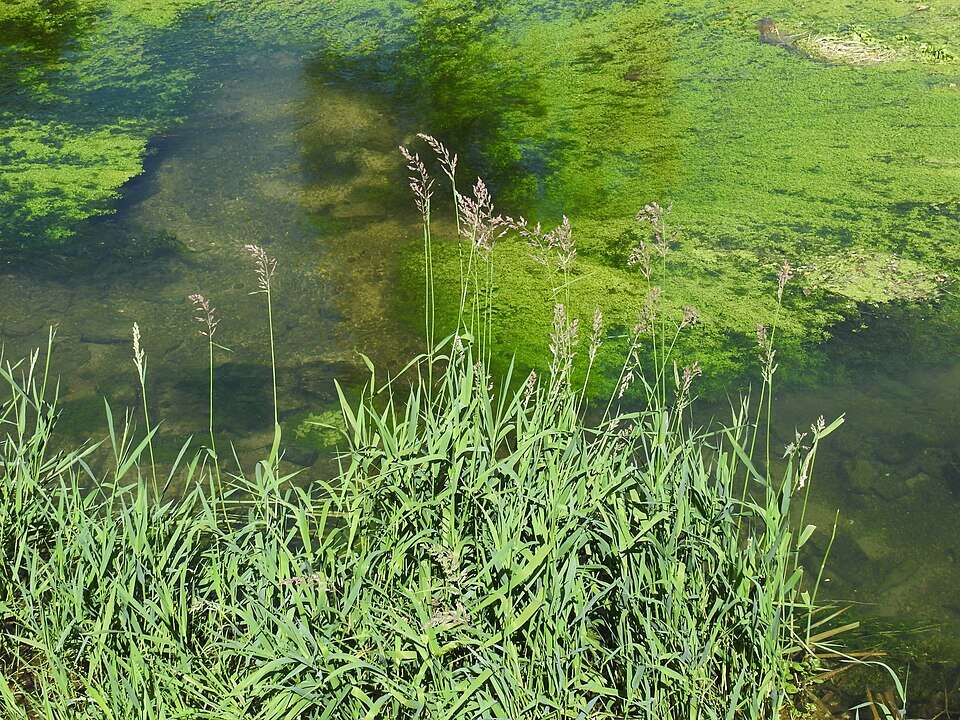
This grass can be especially harmful near streams used by coho salmon, a fish important to tribal food and culture and the regional economy. Young salmon need shade, cover, and food in the small channels that can get blocked by dense reed canary grass.
Why not just pull the weeds
Restoration teams usually walk in, hand-dig the invasive grass, and plant native seedlings themselves. But some wetlands are too soggy, too remote, or too dangerous to reach on foot. That’s exactly the problem the Tulalip Tribes faced in a reed canarygrass-choked wetland near Startup, Washington. So the team decided to try something unconventional.
As detailed in the same NAWM abstract, the Tulalip Tribes built 120 wooden shipping pallets, each filled with burlap sheets, wetland-appropriate soil, degradable planting stakes, and Manila rope, and the abstract specifies that each pallet was planted with one native tree and four native shrubs, five young plants per pallet. Northwest Treaty Tribes says the pallets were pre-planted at the Wallace Creek Hatchery, part of the Washington Department of Fish and Wildlife, so species such as Sitka spruce and western red cedar could take root, and ropes were then used to attach each pallet to a helicopter hook for the flight. Per the same NAWM abstract, the crew successfully installed about 90 of these pallets across three 50-foot by 60-foot plots on October 12, 2023. With five plants on each of those 90 pallets, that works out to about 450 living plants dropped straight onto the problem.
A fair test, not just a hopeful guess
What gives this project credibility is that the tribe didn’t just test one idea. The team also planted 350 willow live-stakes in each of three different comparison plots for a total of 1,050 stakes using an older proven restoration method, according to the NAWM abstract. Three more plots were left unplanted as controls. Before any planting took place, the plant cover of each plot was assessed using a standard technique known as the line-intercept method, which allowed for the accurate monitoring of any future changes.
The tribe plans to monitor all nine plots annually for at least five years to see if the airlifted pallets really help native vegetation survive and shade out the invasive grass better than the older stake method.
Why this could matter beyond one swamp
If the floating pallets prove effective, the strategy could potentially be adapted for other hard-to-reach wetlands around the US, such as tidally influenced floodplains and areas fragmented by beaver channels. The project was funded by a wetland program development grant from the U.S. Environmental Protection Agency, an agency that specifically funds this kind of experimental restoration work.
Final results are still years away, according to the team’s monitoring plan. But the image alone, a helicopter gently dropping a mini forest on a swamp, is a reminder that fixing nature sometimes means borrowing a tool from the sky.