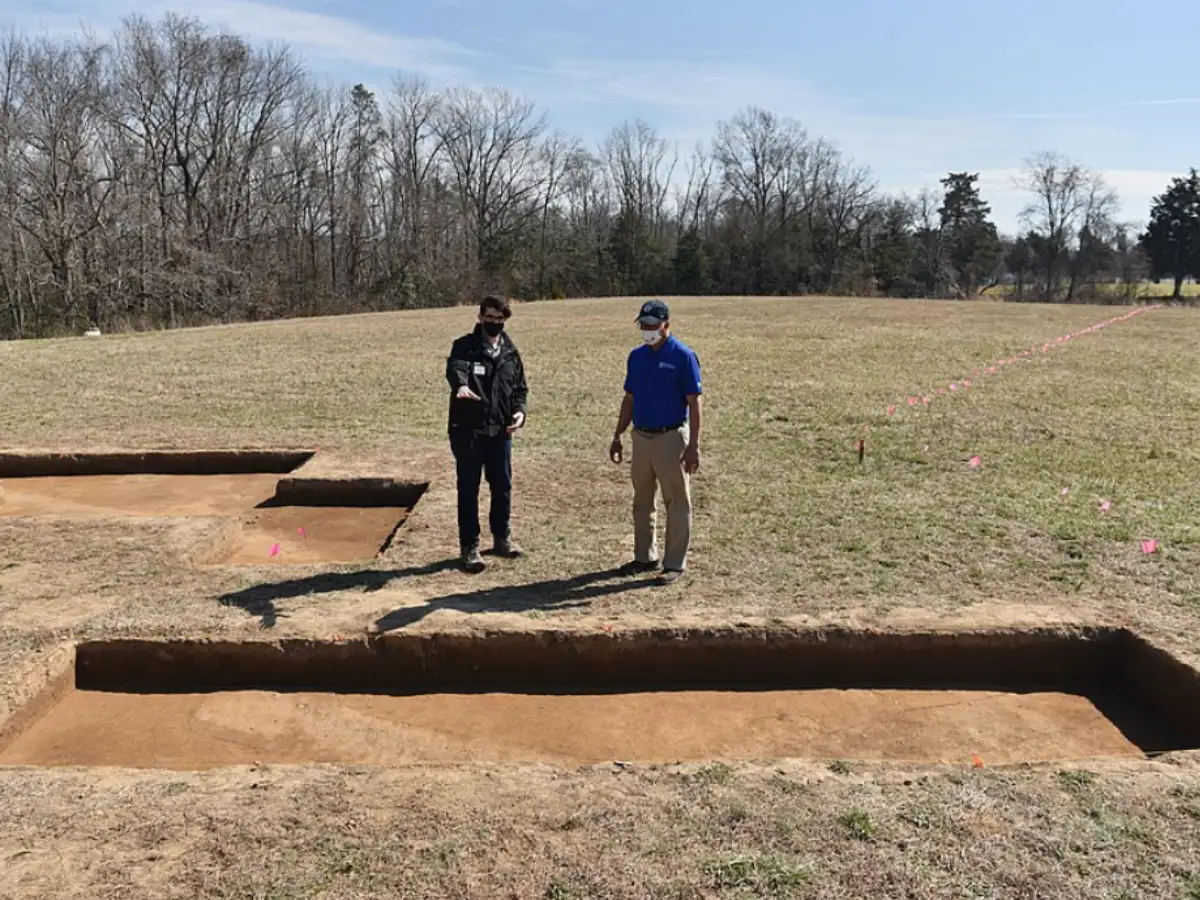
For many archaeologists, locating remains of those common folk who led unremarkable lives in the written record may take decades of laborious fieldwork. For example, in 2022, scholars at Historic St. Mary’s City, Maryland, made such a find while digging up the remains of a teenage boy at St. Mary’s Fort, the site of Maryland's first English colony. The grave might have belonged to a teenager who lived in Maryland in the middle to late 1630s, making it one of the oldest colonial-era burials ever discovered in Maryland.
It would be too tempting to think that the uniqueness of this discovery lies in treasure or fancy grave goods; however, it lies in the rare opportunity to connect with the colony's difficult beginnings through a person, rather than through the governors, documents, and locations. This burial allows historians to see the colony's establishment through the eyes of a teenager.