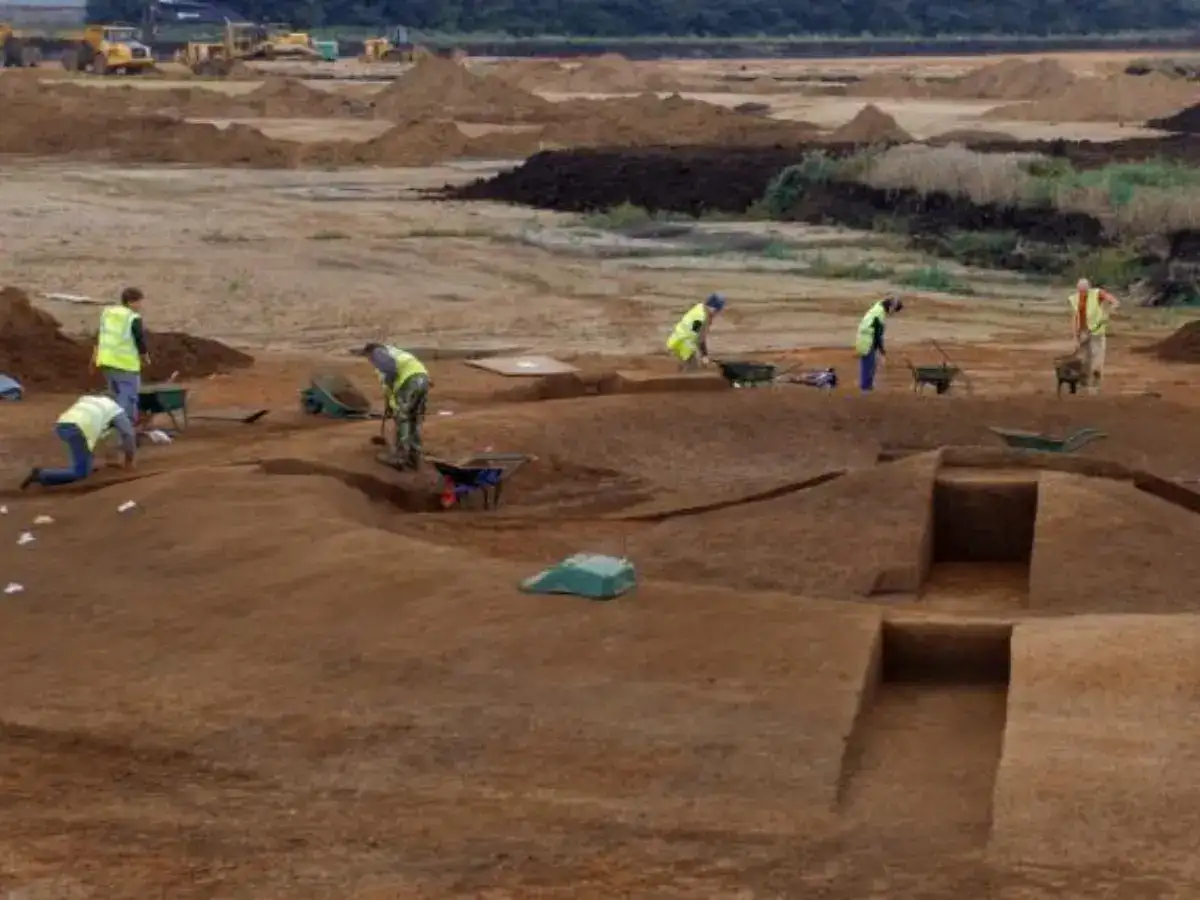
The construction crew responsible for developing a highway in Cambridgeshire, England, anticipated removing soil and preparing land for the building of a new road. However, the construction crew stumbled across some massive ancient bones buried in the soil underneath. According to the Natural History Museum, this turned out to be the beginning of what would become a scientific journey associated with Britain's Ice Age era.
The giant bone remains were unearthed while constructing the A14 road improvement scheme in 2018. By removing soil along the route, scientists and experts have identified signs of ancient landscapes covered up by present-day farming lands. The most notable find was the giant bones of animals associated with the prehistoric Ice Age era.
According to the experts, the excavation went further than uncovering fossilized bones. It involved uncovering a landscape of a period long before the modern-day roads or settlements were even considered.
A road project turned into an archaeological dig
One of the biggest infrastructure projects of the time was the A14 scheme. As per sources from the Cambridge Archaeological Unit, the scope of the project resulted in long excavation trenches being formed across Cambridgeshire, with buried strata being revealed, which otherwise remain concealed below the ground surface.
Large-scale construction activities frequently present a chance for archaeologists since such digging exposes deeper soil strata beneath topsoil. In this particular instance, the construction workers unearthed strata from different periods in history, with prehistoric findings associated with the Ice Age of Britain.
Internet Archaeology called the A14 scheme a "cross-section through rural Cambridgeshire" due to its exposure of the layers relating to climatic changes, human habitation, and ancient ecological systems. Researchers engaged in British development-led excavations have mentioned in a study conducted via Internet Archaeology that significant infrastructure works can give archaeologists access to landscapes that have been sealed away for thousands of years. The finding revealed how contemporary engineering projects may lead to unearthing the past.
What secrets did the giant bones tell
Giant bones related to the animals of the Ice Age were among the most discussed findings made during the excavations. The Natural History Museum in London states that mammoths could be found in various areas of Britain during cooler eras when grasslands and tundra-type regions dominated the terrain. Their bones are commonly found in sediments from old riverbeds, floods, and glacial landscapes.
This background made the findings in Cambridgeshire significant in a scientific context. There was more than one skeleton. The area had been the home to a prehistoric environment at a time far earlier than the present day. According to the Natural History Museum’s educational research about mammoths and their Ice Age-era presence in Britain, fossil records help scientists recreate extinct environments and examine how climate affected ecosystems.
Archaeologists also highlighted the fact that the soil and water conditions in East Anglia make it famous for preserving prehistoric artifacts. Wet ground and sediment layers ensure that ancient artifacts remain protected for millennia, making East Anglia a rich site for archaeological work.