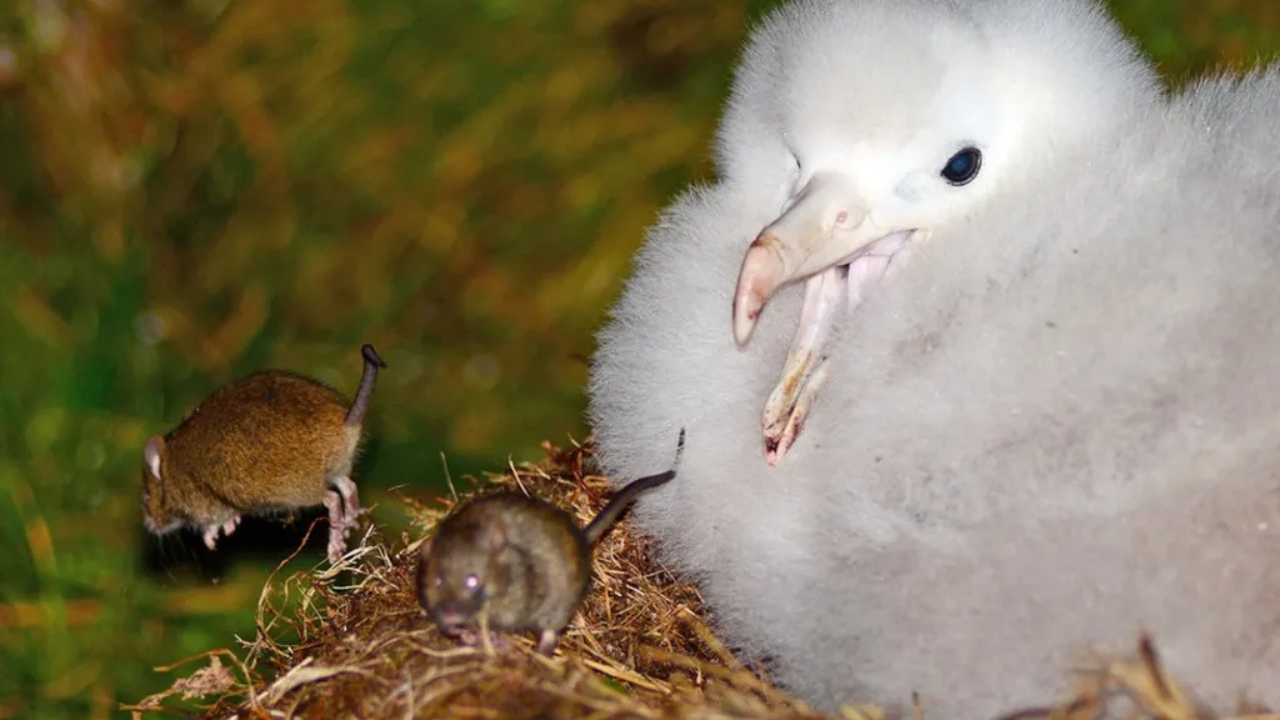
Jaimie Cleeland still gets shivers when she talks about it. For a year, the Australian marine ecologist worked on Gough Island, a speck of volcanic rock in the middle of the South Atlantic Ocean, with the Royal Society for the Protection of Birds (RSPB). She told the ABC in September 2019 that they had a week on Gough where they lost 15 albatross chicks in a row. The killers weren't hawks, cats, storms, but mice. Regular house mice that would be caught using a kitchen trap have now started eating seabirds alive, and they are now pushing an entire species toward extinction.
Get breaking news anytime, anywhere. Download the TOI app now!
A dream job with a dark side
Cleeland's job sounds like something out of an adventure movie. One day she's running a crane to hoist scientists up a cliff on Gough Island; the next she's piloting a supply barge in Antarctica. As she told the ABC, her work is strenuous both physically and psychologically. On one occasion, she found a Tristan albatross with a fishing hook stuck in its beak, and on another, a chick that later turned up in Rio with a cloth in its stomach. The island is home to the Tristan albatross, a giant seabird with a wingspan of about three metres, which breeds almost nowhere else on Earth. BirdLife International figures cited in a 2023 study titled ‘ First evidence of mouse predation killing adult great albatrosses ’ estimate the world’s population at about 1,250 to 1,750 breeding pairs, and Gough has the vast majority of them. Because the species doesn't start breeding until it's seven to fifteen years old, every chick matters a tremendous amount. The ABC report said the species could be extinct in 20 years without urgent intervention, based on population data at the time.
How a tiny mouse takes down a giant bird
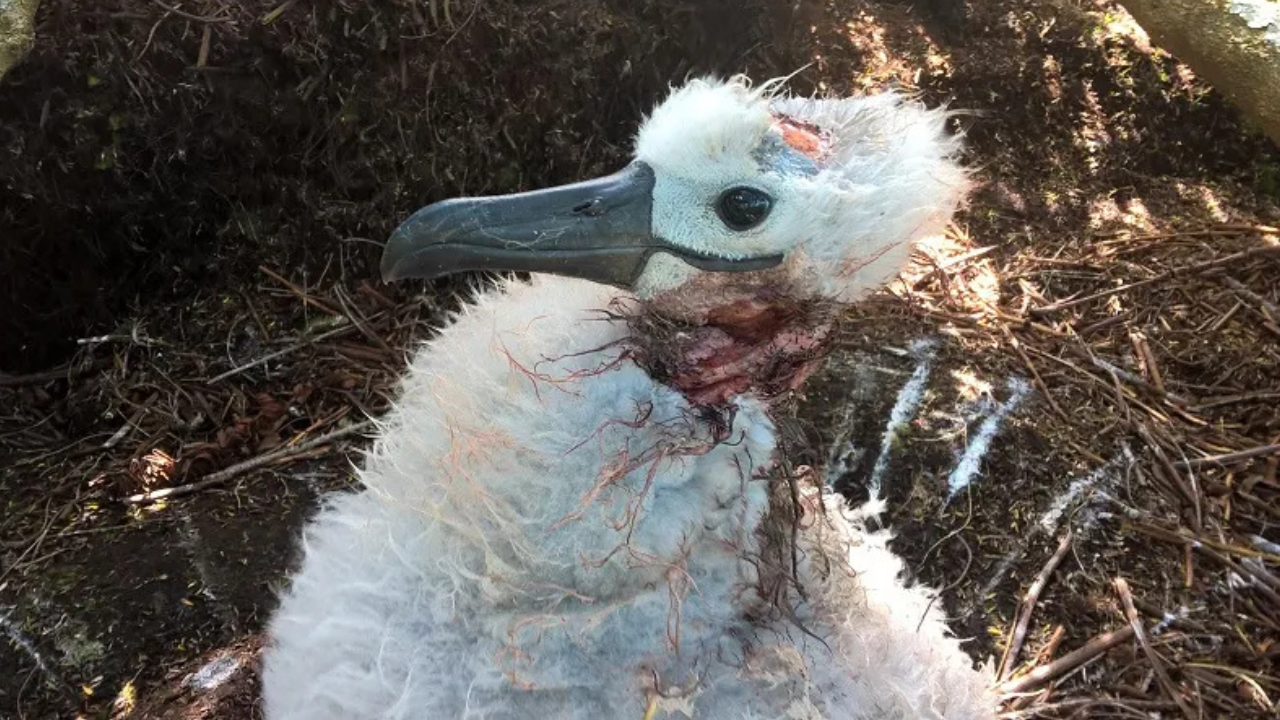
The tiny house mice can kill birds many times heavier than themselves. Cleeland has seen them do it. The mice attack at night when the chicks are sleepy, and their parents are at sea feeding. After a few hours, the chick grows tired, and the mice can inflict a small wound that keeps worsening until the chick dies. In the attack she observed, the entire process took about an hour, starting with the first mouse appearing and ending with the chick’s death. The process resembles one described by Delia Davies in a peer-reviewed Avian Conservation and Ecology study on how mice on Gough Island attack Tristan albatross chicks. It's also worth noting that mice were not supposed to be there. They were brought there unintentionally by sailors in the 19th century. They thrived without natural predators or competition and, over generations, grew around 50 per cent larger than mice on mainland Australia, according to Cleeland.
The scale of the disaster
It would be wrong to view this problem as just some unfortunate chicks. According to new research titled ‘ The impacts of introduced House Mice on the breeding success of nesting seabirds on Gough Island ’ by ecologist Anthony Caravaggi, published in the Ibis journal, the impact on the birds' populations on the island was estimated for the first time. It shows that the mice are responsible for the death of about two million seabirds' eggs and chicks every year, including those of albatrosses, petrels, shearwaters and the endemic bunting and moorhen of the island. Climate change is only making matters worse. As Cleeland pointed out, colder winters historically set back the mouse population. Milder winters mean more mice survive, and it appears that the chick-attacking behaviour spreads through the population at a faster rate.
When even the adults aren't safe
It was long believed that adult albatrosses were too large to be threatened by mice. That assumption has now been overturned. Marine biologist Maëlle Connan and colleagues documented the first confirmed cases of mice killing fully grown adult Tristan albatrosses on Gough Island, and adult wandering albatrosses on nearby Marion Island, in a study published in the journal Biological Invasions. On Gough, two Tristan albatrosses brooding small chicks were found with characteristic wounds in March–April 2021, and one died eight days later after the wound became infested with blowfly larvae.
Is there anything that can be done?
Conservationists have not yet thrown in the towel. In 2021, an aerial-based effort by the RSPB aimed at distributing rodent poison in an attempt to completely eradicate all the rodents on the island. The attempt, however, failed because a few mice survived, thus reviving the danger once more.
Why this matters, even from thousands of kilometres away
It’s easy to scroll past a story about mice and birds on an island most of us will probably never visit. But Gough Island is a cautionary tale of what can happen when a species encounters predators it didn't evolve to deal with. As Cleeland explained, Tristan albatross pairs spend years courting before settling down, and once they have an egg, they take turns incubating it until their partner returns, and it’s a devotion that makes the losses so much worse to watch. Cleeland's year on Gough Island wasn't just about counting dead chicks. It was about documenting an unfolding catastrophe before it was too late to turn things around.