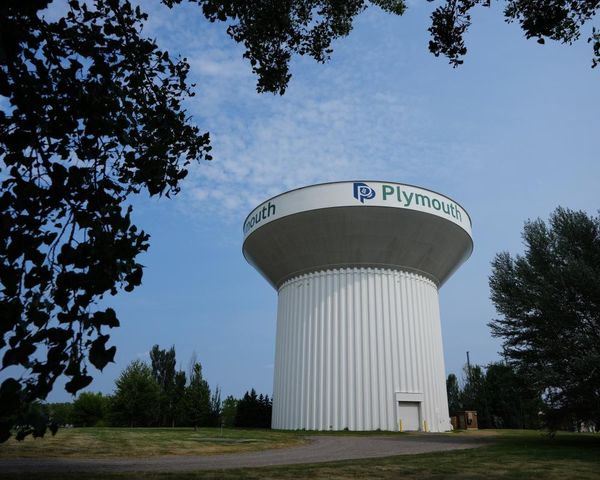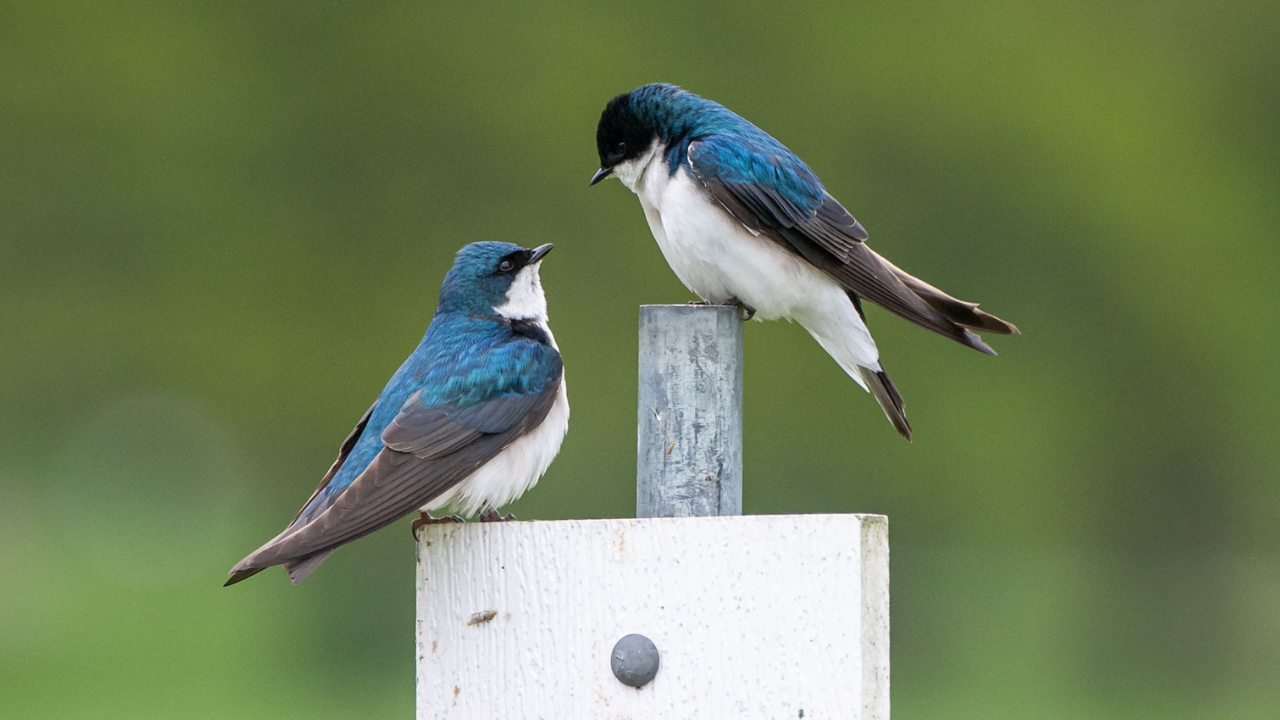
Imagine a town with no birdsong. No swallows swooping over rooftops. No chatter at dawn. That was Nassogne, Belgium, eight years ago. Today, that same town's water tower hosts roughly 500 baby swallows a year.
Get breaking news anytime, anywhere. Download the TOI app now!
In a 2019 Science study, ‘ Decline of the North American Avifauna ,’ researchers led by ornithologist Kenneth Rosenberg found that North American bird populations have fallen by nearly 3 billion since 1970, and the study specifically names swallows, alongside swifts and nightjars, as part of the aerial insectivore group driving that loss. Eight years ago, the town had zero swallows nesting within its limits.
According to L'Avenir , the Belgian outlet that first reported on the project, the water tower is now home to roughly 500 young swallows hatched in 2026 alone.
A tiny Belgian town solves its swallow problem
Thierry Gridlet, a member of the conservation group Natagora Famenne and a Nassogne resident himself, says the town had not hosted a single common house martin, a member of the swallow family and close relative of the barn swallow, for seven or eight years. That changed once local officials decided to act.
How a water tower became a bird hotel
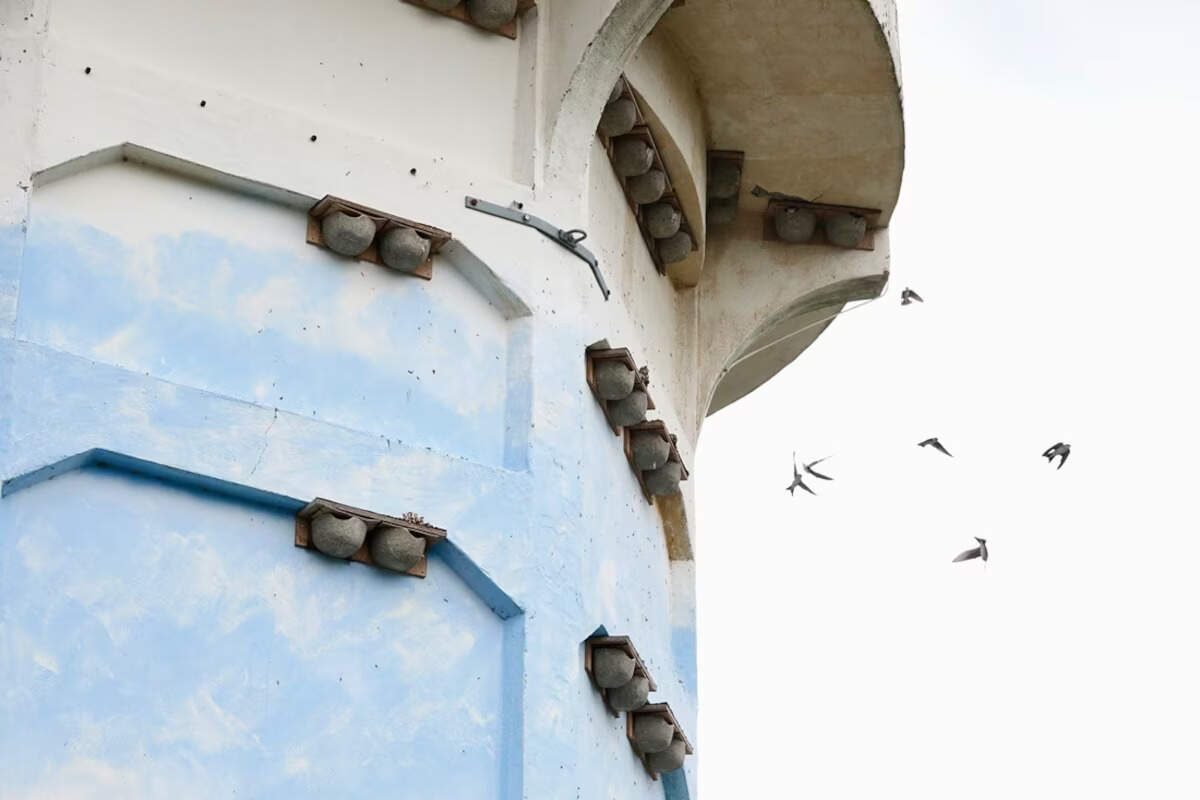
The project began under Nassogne's local nature development plan, the Plan communal de développement de la nature. Éric Heymans, a bird bander with the Royal Belgian Institute of Natural Sciences and a member of the Creaves wildlife rescue center in Saint-Hubert, proposed installing nesting boxes on the town's water tower. The tower sits on the bank of the Étang des Goffes pond. A local roofer mounted 30 double nesting boxes on the structure, which is also painted with nature-themed murals of trees, birds, and fish. A small speaker playing recorded house martin calls was placed at the top of the tower to draw birds in.
Within one week, a pair of house martins had already moved into one of the new boxes. By the end of that same year, seven pairs had settled on the tower.
The numbers that tell the real story
As the colony grew, so did the ambition behind it. Members of the PCDN, along with Charles Carels and Natagora's swallow working group, expanded the project from 30 to 50 double-nesting boxes, bringing the total to 100 nest cups.
According to L'Avenir, today at least 65 of those 100 nests are occupied. Gridlet estimates that each pair raises one, two, or even three broods a year, with an average of four young fledging per brood. Based on that math, Gridlet estimates around 500 young house martins hatched in Nassogne this year alone.
Some birds still build natural mud nests nearby when they can find suitable mud, though that material is becoming harder to find close to the site. House sparrows have occasionally moved into these natural nests too, since the openings on the artificial boxes are too small for them to use.
Why the story matters beyond Nassogne
Readers in the U.S. may not have house martins in their yards, but barn swallows, another member of the same swallow family, are a familiar sight around barns, bridges, and porches nationwide. According to the Science study mentioned above, swallows, along with swifts and nightjars, are among the aerial insectivore species that have seen steep losses as part of a broader decline affecting billions of birds across the continent since 1970.
It did not require expensive technology or years of red tape. It required boxes, patience, and a willingness to try.
What the research says about nest boxes
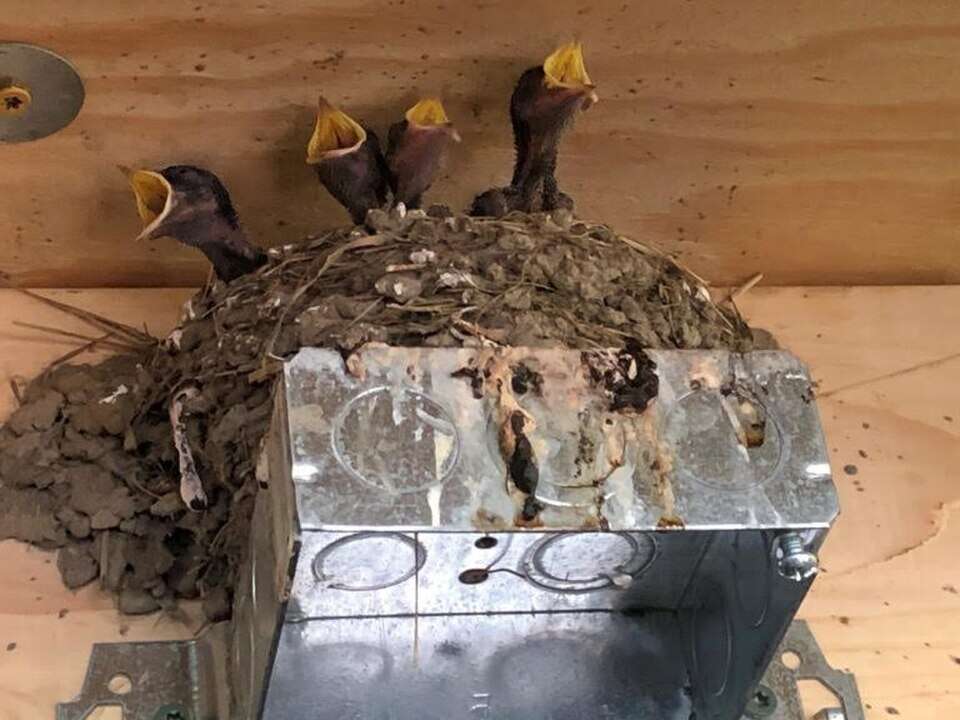
The Nassogne approach is backed by science elsewhere too. According to a study published in the journal Bird Study , barn swallows that used artificial nests produced 75 percent more fledged chicks over a breeding season compared with pairs that built brand-new natural nests for both of their broods. The study also reports that predation rates in artificial nests were no higher than in natural ones, meaning the boxes did not put chicks at greater risk. The researchers concluded that artificial nests are a realistic conservation option for a species in decline.
For many American homeowners, this may not require anything close to a water tower. Barn swallows and purple martins, another native species popular with backyard birders, will readily use simple nesting shelves or boxes mounted under eaves, on barns, or on poles near open fields and water.
A lesson worth borrowing
Gridlet summed it up simply: when humans agree to welcome nature, nature rarely turns a deaf ear. He hopes Nassogne's story inspires other towns to make their own corners of the planet more welcoming to the wildlife living right alongside us.
For a country watching its own swallow populations shrink, that message lands close to home. A few dozen wooden boxes and a little patience turned a swallow-free town into a nursery for 500 new birds in a single year, an example of how small local action can make a difference.