Heads of state were impeached; referendum votes returned surprise results; terror struck repeatedly in Europe. Around the globe, 2016 was a year full of surprises.
_Brexit and the rise of populism in Europe
The equivalent of a political earthquake struck Europe on June 23, when in a referendum over the United Kingdom's future in the European Union, 52 percent voted to leave.
The vote was a measure of widespread unease over immigration, unemployment and the perception that bureaucrats in Brussels were calling too many of the shots. It led to Prime Minister David Cameron's immediate resignation, replaced by Theresa May, who set a timetable for extricating Britain from the EU by the summer of 2019.
But Britain wasn't the only country roiling with newly energized populist sentiment. Nationalists across Europe _ in Germany, Denmark, Austria, Hungary, Italy and elsewhere _ were riding the same wave of populism that seemed to propel Donald Trump into power across the Atlantic.
_Turkey's attempted coup
The Turkish military issued a statement late on July 15 proclaiming it had seized control of the country. After a long night of turmoil _ a bomb exploded at the parliament building in Ankara, and civilians encouraged into the streets by President Recep Tayyip Erdogan confronted soldiers on Istanbul's Bosphorus Bridge _ Turkish television reported in the morning that the coup was over. Afterward a state of emergency was imposed, enabling the government to detain individuals without charge for up to 60 days. Tens of thousands have been arrested and at least 120,000 public workers have been suspended from their jobs on suspicion of being linked to the failed coup.
_A bloody drug war in the Philippines
Soon after Philippine President Rodrigo Duterte was inaugurated on June 30, he launched a war on drugs that has claimed the lives of more than 5,000 suspected drug dealers and users, most of them killed by vigilantes emboldened by Duterte's rhetoric. "Please feel free to call us, the police, or do it yourself if you have the gun _ you have my support," he said on June 6, in a nationally televised address. "Shoot (the drug dealer) and I'll give you a medal." After United Nations human rights experts called on Duterte to stop the extrajudicial killings, the president threatened to pull the Philippines out of the U.N.
_Islamic State terror attacks in Europe
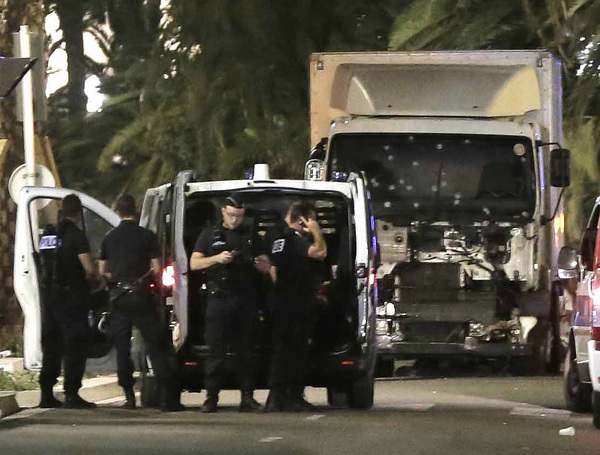
Terror struck Europe several times in 2016. Twin bombings in Brussels on March 22, carried out by a group that was also linked to the 2015 Paris attacks, killed 32. In June, suicide attackers hit Turkey's largest airport, killing 41. The next month, an assailant drove a truck into a crowd of revelers who were celebrating the Bastille Day holiday in Nice, France, leaving 84 dead. Many of the victims were so badly crushed that several bodies took days to identify. Islamic State claimed responsibility for the Brussels and Nice attacks, and was suspected in the attack on Ataturk airport.
_War in Iraq and Syria
America got further drawn back into the war in Iraq _ with new fronts in neighboring Syria _ as the effort to drive out the militant jihadists known as Islamic State led to a violent and protracted fight around the group's Iraq stronghold in the city of Mosul.
The Pentagon now has more than 6,000 troops in Iraq, and on Dec. 10, announced plans to send 200 additional troops to northern Syria, in addition to the 300 already there. U.S.-led coalition warplanes carried out more than 17,000 airstrikes.
Islamic State is still firmly lodged in the two countries, though it lost significant territory. As for the aim of dislodging Syrian President Bashar Assad _ the president, thanks to massive military help from Russia, is re-consolidating government control over much of the country. Peace talks failed.
The city of Aleppo has been left in a fight for its very survival, as Syrian rebels and government forces have turned it into a murderous battleground. Thousands of civilians have fled, and many of the rest are wounded or starving _ an international nightmare that by year's end was drawing to a close.
_An international accord on climate change
A landmark climate change agreement approved by nearly 200 countries went into force in November, the first-ever universal, legally binding global climate deal. The agreement, negotiated in Paris in late 2015, sets out a global action plan to limit the average global temperature rise since pre-industrial times to well below 2 degrees Celsius, the threshold at which scientists say many of the worst effects of global warming could be avoided.
A crucial threshold was reached Oct. 5, when at least 55 nations that collectively account for 55 percent of global emissions had approved the Paris accord. That number had grown to 117 by mid-December, including the world's top polluters, China, the United States, the European Union and India.
The Obama administration played a key role in bringing more than 20 years of difficult climate negotiations to a successful conclusion and pledged to reduce U.S. greenhouse gas emissions by 26 percent to 28 percent below 2005 levels by 2025. But even as the agreement went into effect, there was concern among world leaders that the U.S. could ignore its commitments under the deal, or pull out entirely, once Donald Trump becomes president.
_Europe's refugee crisis
The massive influx of migrants and refugees into Europe that began in 2015 continued into this year, as more than 300,000 people, most of them from Syria, Afghanistan and Iraq, made the dangerous Mediterranean crossing. In March, the EU and Turkey struck a deal that would deport migrants who crossed into Greece back to Turkey. In return, Turkey was promised visa-free travel for its citizens within the EU, and accelerated talks for the country to join the bloc of nations � promises the EU has been slow to deliver on, putting the future of the agreement into question.
_Colombian peace agreement
In late November, the Colombian legislature approved a peace deal aimed at ending a civil war that started in 1964. The accord between the government and the leftist guerrilla group, the Revolutionary Armed Forces of Colombia, or FARC, was approved two months after voters narrowly rejected a similar deal in a national referendum. This time President Juan Manuel Santos, who was award the Nobel Peace Prize in October, saved the deal by giving up on a popular mandate and going directly to Congress, where his party holds a majority. Opposition legislators boycotted the vote vowed to fight the new accord, which they argue goes too easy on the rebels.
_Brazil political crisis
After months of bitterly contested proceedings, Brazil's Senate voted in August to remove President Dilma Rousseff from office, marking a turbulent finale to 13 years of center-left government in Latin America's largest country. Rousseff, a onetime guerrilla-turned-economist and the nation's first female president, was convicted of breaking fiscal responsibility law. The more conservative vice president, Michel Temer, will serve out the rest of her term, which ends in 2018. The impeachment rocked a nation saddled by a crippling recession, an ongoing investigation into widespread corruption and a crisis of confidence in the political system _ and it reached its boiling point just as Brazil was poised to host the 2016 Olympic Games.
_El Chapo arrest
In a deadly, predawn shootout in early January, Mexican naval special forces captured Joaquin "El Chapo" Guzman, the world's most sought-after drug lord and commander of a vast narcotics empire that stretches across continents. Guzman, a billionaire thanks to his Sinaloa cartel, which traffics in cocaine, marijuana, heroin and methamphetamine, had escaped from prison the previous July _ for the second time _ using an elaborate tunnel out of Mexico's top maximum-security facility. He had been jailed for less than 17 months, and there had been a great deal of doubt in Mexico that he'd ever see the inside of a cell again. The day after the arrest, Rolling Stone published a secret interview that the actor Sean Penn had conducted with Guzman than fall.
_Panama Papers
In April, hundreds of reporters in more than 70 countries unveiled a nearly yearlong global investigation and began publishing a series of articles on millions of leaked financial documents dubbed the "Panama Papers," a trove of information bigger than anything WikiLeaks or Edward Snowden ever obtained. The effect has been like shining a flashlight into a series of dark rooms packed with money and lies. The documents leaked from the Panama-based law firm Mossack Fonseca _ and examined by journalists at outlets including The Guardian, the BBC and the Miami Herald _ have forced global leaders and public figures to answer for the massive amounts of wealth they had hidden in offshore tax havens, outside the scrutiny of auditors and voters.
Pakistani Prime Minister Nawaz Sharif became the target of a corruption probe as a result of the leaked documents; Iceland's prime minister, Sigmundur David Gunnlaugsson, stepped down in April after reports that he and his wealthy wife concealed millions of dollars' worth of investments.
_South Korea's president is impeached
As the daughter of a onetime military dictator, South Korea's Park Gyun-hye brought a certain amount of baggage with her to the country's presidency. But few could have predicted the way in which her past would catch up with her. In early December, Park was impeached for, among other things, providing classified information to a close friend who was allegedly extorting huge donations from major corporations.
Park, who is South Korea's first female president, has not yet been permanently removed from office. But with her approval ratings close to zero, it's hard to imagine her bouncing back.
_Obama's historic trip to Cuba
The record will show that the Tampa Bay Rays defeated Cuba's national baseball team on a March day in Havana, 4-1. But what most people will remember isn't the score, but one of the fans in the stands: President Barack Obama, making the first visit to Cuba by a U.S. president since 1928.
Obama was criticized by Republicans for making the trip, and for being in the ballpark in the aftermath of a terrorist attack in Brussels. But he argued that it was time to begin normalizing relations. Plus, the baseball score gave him bragging rights over Cuban leader Raul Castro.
Castro's brother and predecessor, Fidel Castro, the charismatic icon of Cuba's leftist revolution, died Nov. 25 at the age of 90.
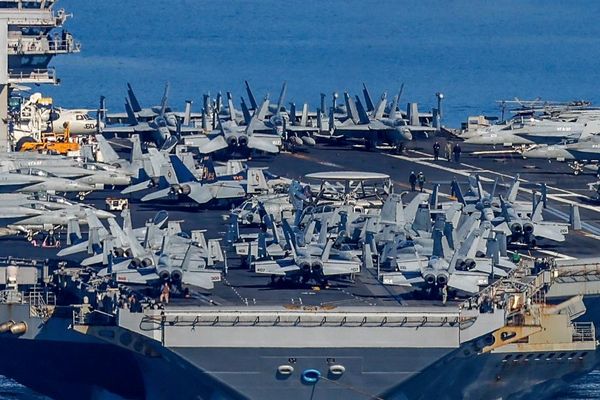
_Rising tensions in the South China Sea
When Chinese customers begin boycotting Kentucky Fried Chicken, it's a sign that an international dispute has hit home. And that is what happened at a KFC outlet in Tangshan, China, in July, as tensions spiked between the United States and China over maritime rights in the South China Sea.
Put simply, China claims maritime territory it doesn't own _ at least, an international court says it doesn't. Countries throughout the part of Asia continued to dispute China's claims, and they are backed by the U.S. Political tensions continued throughout the year. As for the chicken? That's just collateral damage.