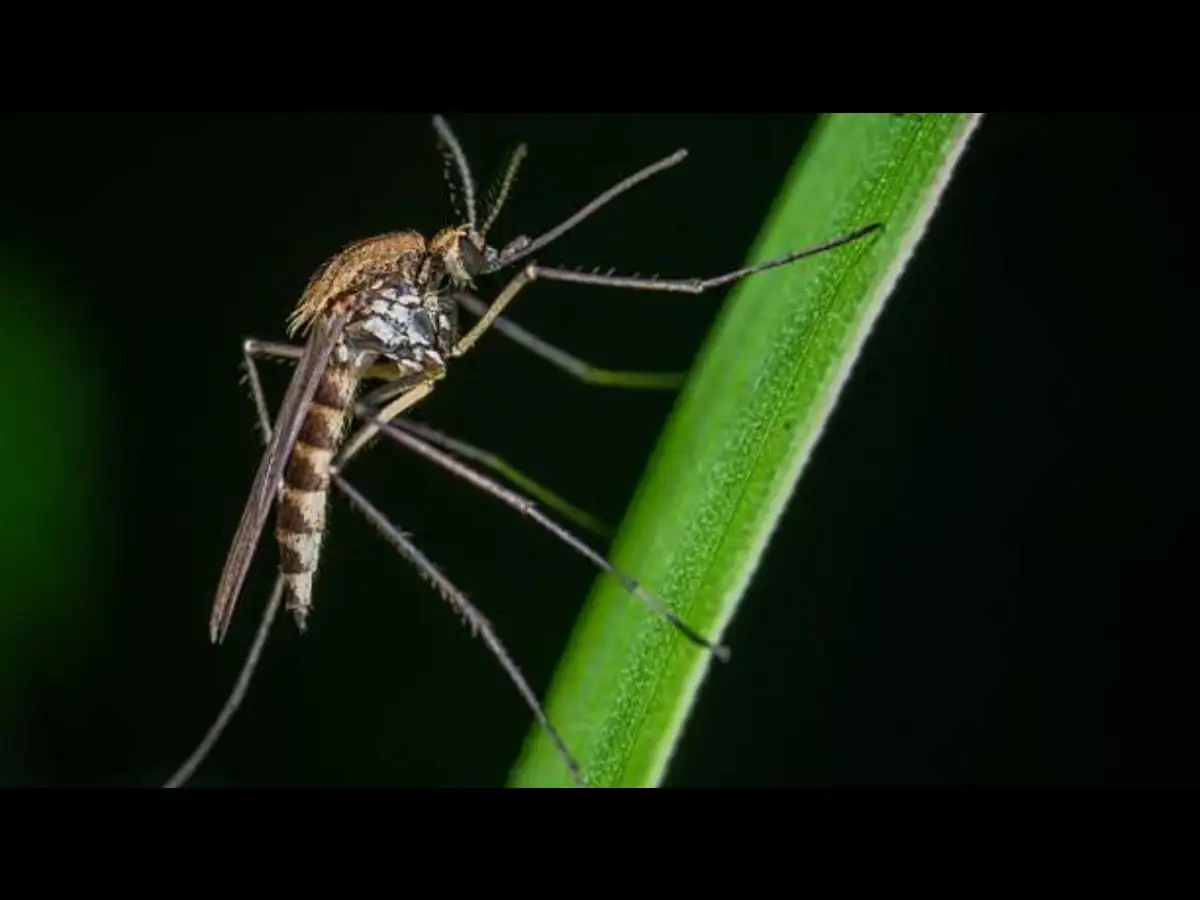
A laboratory colony of dengue-spreading mosquitoes in Delhi has given researchers a reason to look more closely at insecticide resistance. The insecticide α-cypermethrin killed 97.91% of adult female Aedes aegypti at the study’s diagnostic dose. That is an extremely high kill rate, but it sits just below the 98% threshold used to classify the mosquitoes as fully susceptible.
The finding does not mean the insecticide has stopped working. Instead, researchers say the small survival gap and the mosquitoes’ strong detoxification response could be an early warning worth watching. The research was published in the journal Frontiers in Tropical Diseases.
Lakhwani R, Narwal K, Ojha S, Jha S, Samal RR and Kumar S (2026). “Molecular docking analysis and biochemical characterization of metabolic detoxification enzymes in adults ofAedes aegyptiL. (Diptera: Culicidae) exposed to α-cypermethrin.”Frontiers in Tropical Diseases, 7:1882408. doi:10.3389/fitd.2026.1882408.
What did the Delhi mosquito study find?
Researchers tested 12 concentrations of α-cypermethrin using a World Health Organization bottle bioassay. Four replicate bottles were used for each concentration, with 20 young female mosquitoes placed inside each treated bottle for one hour. Mortality was then checked 24 hours later.
At the diagnostic dose of 10 micrograms per bottle, 97.91% of the mosquitoes died.
First author Dr. Rohit Lakhwani described the result as “an early sign these mosquitoes could be developing resistance,” although the experiment did not establish whether the surviving mosquitoes could pass reduced susceptibility to their offspring.
The mosquitoes used in the experiment were particularly interesting because they were not collected from a current dengue outbreak area or from neighborhoods where insecticides were being used. The colony was acquired in 2009, supplemented in 2017 and maintained under controlled conditions without insecticide selection pressure.
That makes the result something researchers say needs careful interpretation rather than immediate alarm.
Why are the surviving mosquitoes important?
The study looked beyond mortality to examine what was happening inside the mosquitoes after exposure to α-cypermethrin.
The researchers examined five enzymes using biochemical measurements and computer-based molecular docking. β-esterase showed the strongest predicted binding to α-cypermethrin. Its activity increased 21.41-fold at the concentration that killed half the mosquitoes and 17.46-fold at the concentration that killed 90%.
The enzyme may help break the insecticide’s ester bonds before the chemical reaches its target in the mosquito’s nervous system.
CYP450 activity also doubled, while α-esterase activity increased more than sevenfold. Together, these results suggest that the mosquitoes may be mounting a layered detoxification response rather than relying on a single biological mechanism.
The response was not the same across all five enzymes. Glutathione S-transferase activity decreased after exposure, while acetylcholinesterase showed the weakest predicted binding among the enzymes examined.
That distinction matters. The findings do not establish that β-esterase or CYP450 have already made this mosquito population resistant. Instead, they point to a strong short-term detoxification response that deserves further investigation.
Why does this matter for dengue?
Aedes aegypti is the primary mosquito vector for dengue and can also spread Zika, chikungunya and yellow fever.
According to the World Health Organization, about half of the world’s population is at risk of dengue, with an estimated 100 million to 400 million infections reported each year.
Mosquito control remains an important part of dengue prevention. Any gradual reduction in insecticide effectiveness could therefore make outbreak control more difficult.
But the Delhi study does not show that α-cypermethrin is failing in India or elsewhere. The researchers tested a laboratory colony, not wild mosquitoes living in communities or outbreak zones.
The authors also noted several possible explanations for the small amount of survival, including mosquito age, nutrition, environmental variation, natural biological differences and genetic drift during long-term colony maintenance.
What happens next?
Field research will be important to determine whether the same enzyme response occurs in wild Aedes aegypti populations and whether it develops into stable insecticide resistance under real-world conditions.
The researchers point to several ways of protecting existing mosquito-control tools, including rotating insecticides, using chemicals that inhibit detoxification enzymes, biological control and removing mosquito breeding sites.
For households, the study also emphasizes basic mosquito-control measures. Water-holding containers should be emptied and scrubbed each week, stored water should be tightly covered and damaged screens should be repaired. Insecticide products should also be used according to their labels.
The key message from the research is not that α-cypermethrin has suddenly failed. It still killed almost 98% of the mosquitoes tested.
Instead, the study highlights why scientists are watching the small fraction that survived. The mosquitoes’ rapid activation of detoxification enzymes could provide an early indication of biological changes that may become more important if they persist in field populations.
FAQs
Did the insecticide stop working?No. It killed 97.91% of the tested mosquitoes.
Does this prove insecticide resistance?
No. Researchers say field studies are needed to confirm whether resistance is developing.