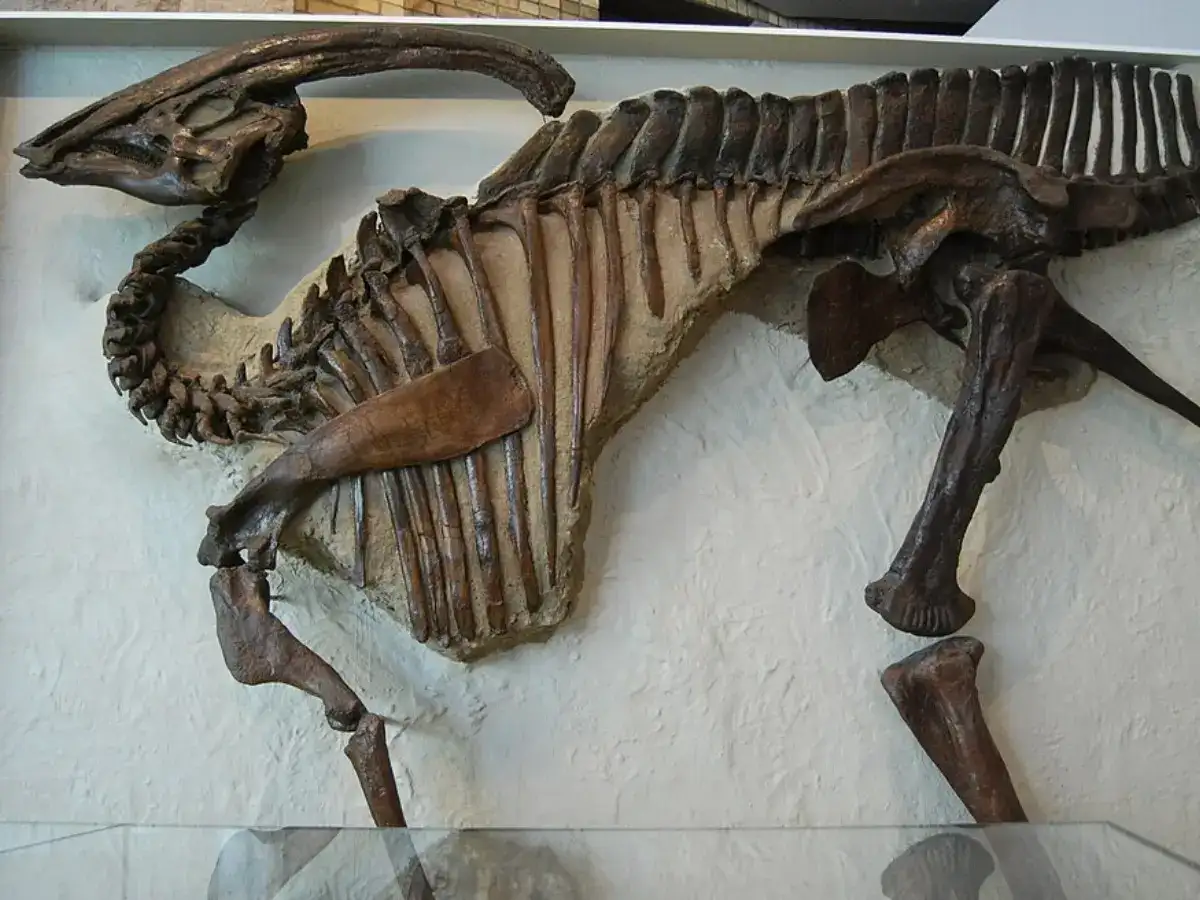
In 2009, a high school student went on a fossil-hunting expedition in southern Utah and made a discovery that catched paleontologists off guard. Kevin Terris found a small dinosaur fossil that was later confirmed to be the youngest, smallest and most complete Parasaurolophus fossil found to date.
According to a study published in PubMed Central, his discovery was important as Parasaurolophus is probably one of the most iconic dinosaurs on Earth. They have been recognized worldwide for the long, backwards-curving crest found behind the head.
Adult fossils had been studied for decades, while juvenile fossils were extremely rare. Therefore, this particular fossil became extremely important for studying the growth stages of these unique crests. This particular fossil showed just how much contributions made by students during field work can be used in scientific research.
A school fossil trip leads to an incredible discovery
Kevin Terris made this discovery as part of his school's field work. As seen in the research paper, the Parasaurolophus' fossil, RAM 14000, contained a complete skeletal structure along with the head. This level of completeness is rare in juvenile dinosaurs due to their fragile nature and tendency to scatter.
As was noted by scientists, this fossil was “the ontogenetically youngest and most complete Parasaurolophus known.” In other words, this particular dinosaur fossil was a representation of the youngest developmental period found so far, with a great deal of information.
Not only was the discovery made due to the rarity of this fossil, but also the process by which the discovery was made. Paleontologists often search for fossils in the desert in Utah by looking at fragmented rocks in challenging weather conditions. It takes a great deal of patience and skill to spot any valuable fossils.
Significance of the small crest
Perhaps the greatest significance of this particular discovery was the crest that the fossil contained. Adult Parasaurolophus dinosaurs possessed large hollow crests that may have produced sounds and provided signals for visual cues. The development of such crests in young dinosaurs had remained a mystery for scientists.
The juvenile specimen showed the presence of a low, rounded crest, which began developing even during its early stages. Scientists determined that Parasaurolophus started growing its crests even before the skull reached 25% of the maximum adult size. This information proved useful for comparing Parasaurolophus to other members of the family. According to researchers, the development of the crest on Parasaurolophus occurred sooner than in several relatives. The authors of the study stated this specimen gives valuable insight into the ontogeny of Parasaurolophus.