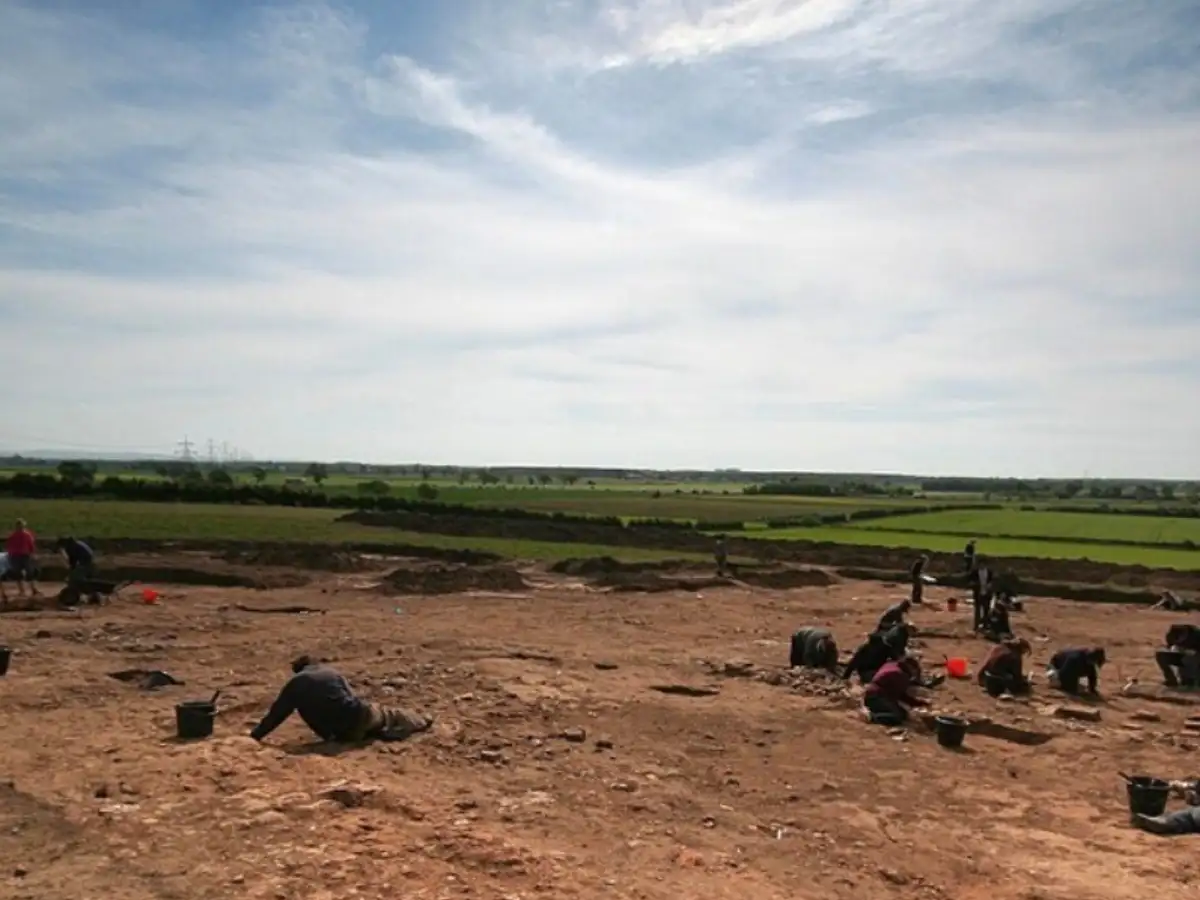
Archaeologists are accustomed to finding bones, but they are far less accustomed to finding brains. That is what made a discovery in York, England, so remarkable in 2008. During excavations at Heslington East, researchers recovered a human skull from a waterlogged pit and noticed something unexpected inside it: soft tissue that appeared to have survived for more than two and a half millennia.
Subsequent scientific analysis confirmed that the material was ancient brain tissue, making it one of the most unusual archaeological discoveries ever made in Britain. A major study published in Royal Society Open Science later identified preserved brain proteins within the tissue and proposed a mechanism that may explain how such an exceptionally fragile organ survived for roughly 2,600 years.
The find immediately attracted attention because brains are normally among the first tissues to decompose after death. Yet in this case, something about the burial environment and the tissue's chemistry appeared to interrupt the normal process of decay.