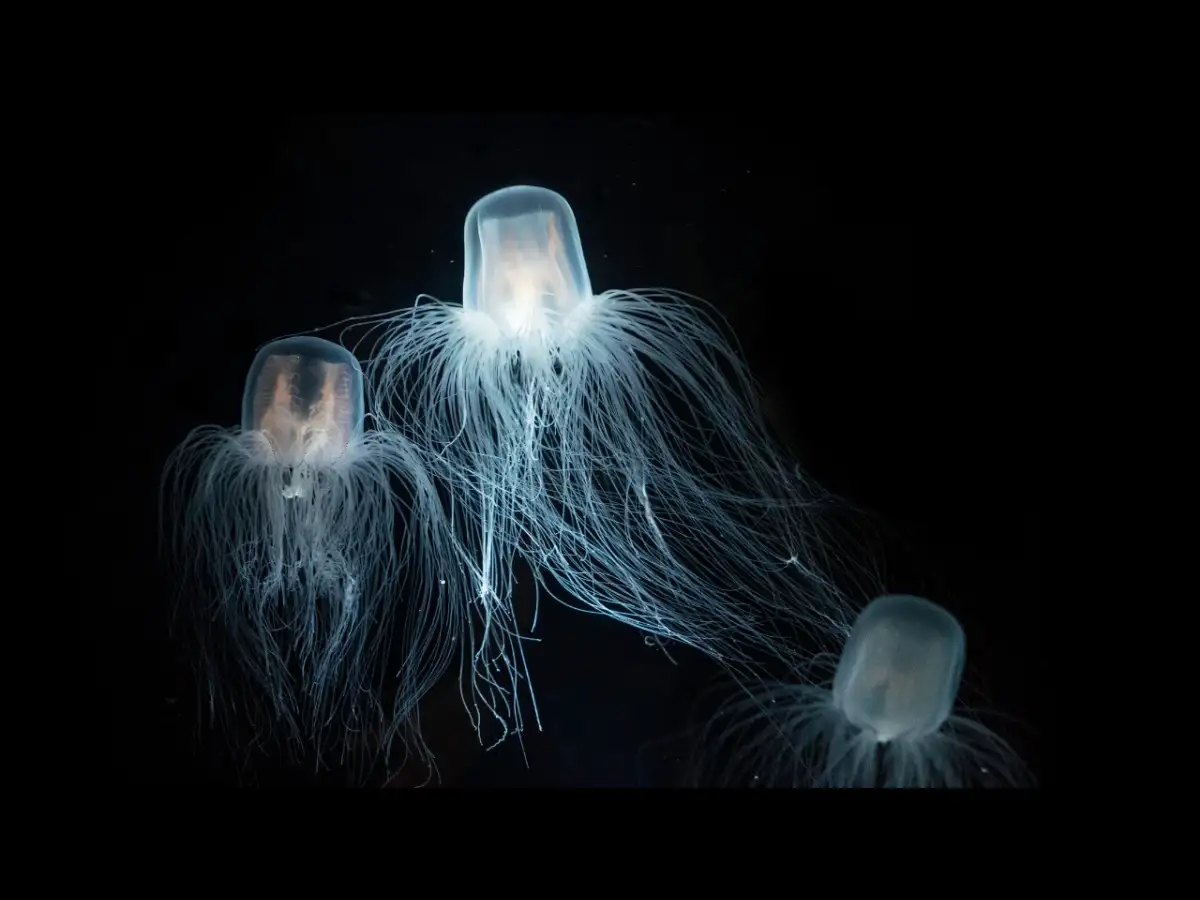
Moon jellyfish are now found in oceans across the globe, but scientists say they did not spread there naturally. A landmark 2005 study revealed that human activity, especially global shipping, has helped these marine creatures reach distant waters. The findings also uncovered a surprising level of hidden jellyfish diversity beneath the waves, as per a report by Live Science.
Scientists have long warned about invasive species disrupting ecosystems, and in 2005, researchers revealed that moon jellyfish had quietly joined that growing list. According to a study published in the Proceedings of the National Academy of Sciences (PNAS), these jellyfish have spread across oceans worldwide, with human shipping identified as the main reason behind their remarkable expansion.
How Did Moon Jellyfish Travel So Far?
The research found that moon jellyfish could not have naturally reached so many distant parts of the world. To investigate their spread, scientists combined genetic evidence with a computer simulation that recreated nearly 7,000 years of possible movement based on ocean currents and the jellyfish's limited swimming ability, as per a report by Live Science.
The results pointed to one clear explanation. Ships were carrying the animals across oceans. Large vessels take in seawater for stability, known as ballast water, before releasing it at distant ports. Marine organisms can also attach themselves to ship hulls, allowing them to travel far beyond their native habitats.
Study leader Mike Dawson of the University of California, Davis explained, "Marine organisms traverse the globe in ballast water, on ship hulls and through the trade of exotic species such as tropical fish. This has potential to displace local marine species, threaten ecosystems and cause billions of dollars in damage and preventive control."
Why Are Scientists Concerned?
The findings showed that moon jellyfish have established themselves in waters around Japan, California, western Europe and Australia. They are also found in Mexico, Alaska and along the Atlantic coast of the United States. According to the researchers, they were nowhere near as widespread just 500 years earlier.
The study also noted that nearly a quarter of marine species found in international harbors are believed to be non-native, illustrating how global shipping has transformed marine ecosystems, as per a report by Live Science.
Matthew England of the University of New South Wales, who helped develop the computer model, said, "Until now our knowledge of natural and human-assisted dispersal of species has been insufficient to confidently track and predict the spread of non-indigenous marine species. Now we have a tool that can include data on currents, geography and the biology of an organism to help separate natural dispersal from that which happens through shipping."
What Else Did the Study Reveal?
Beyond tracking their spread, DNA analysis delivered another surprise. Researchers discovered that moon jellyfish diversity had been underestimated for years.
Dawson said, "We identified 16 species of moon jellyfish, revealing that marine biodiversity is actually much higher than was thought previously."
The findings, published in the Proceedings of the National Academy of Sciences (PNAS) and attributed to researchers from the University of California, Davis and the University of New South Wales, highlighted not only how human activity has reshaped marine life but also how much remains to be discovered beneath the ocean's surface.
FAQs
How are moon jellyfish spreading around the world?Scientists say ships transport them through ballast water and on ship hulls.
What did researchers discover besides the invasion?
They identified 16 previously unknown moon jellyfish species.