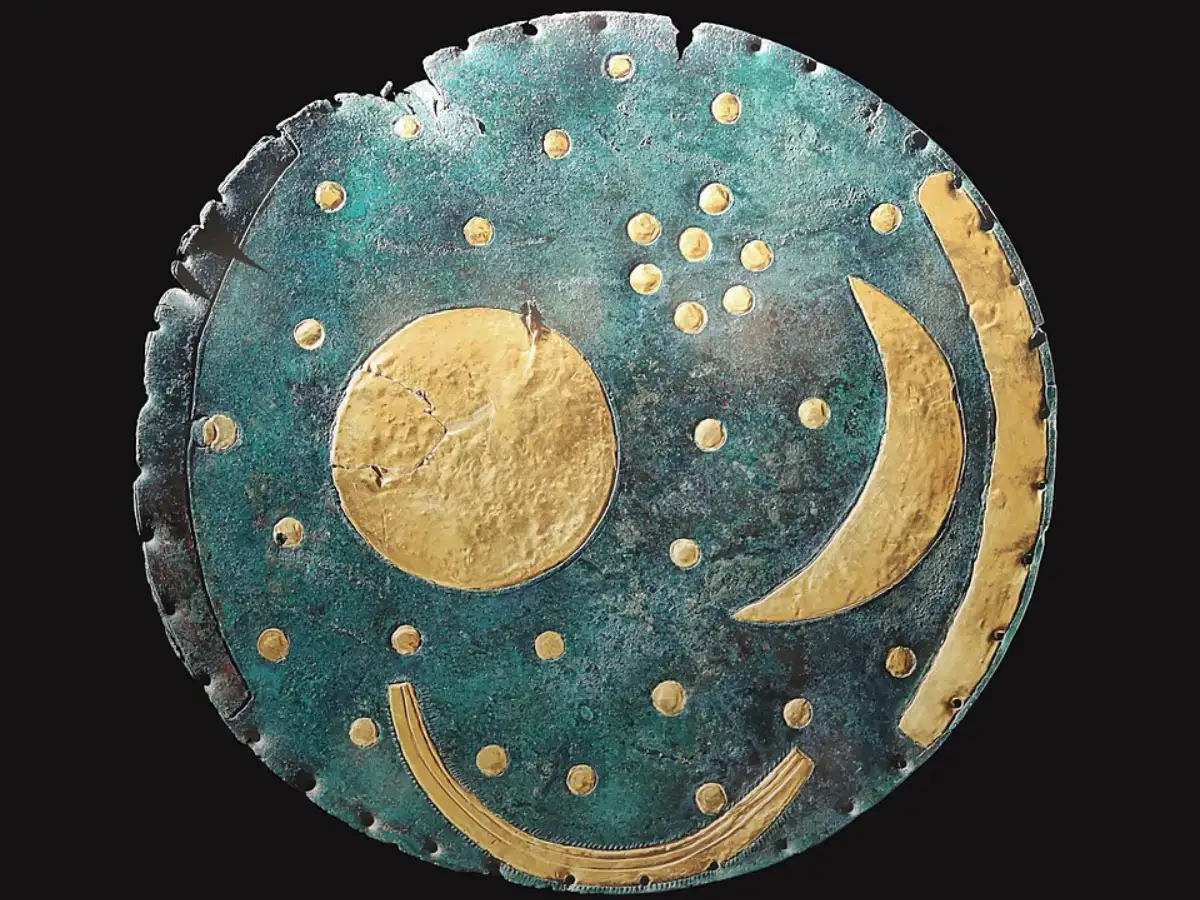
In 1999, two men with metal detectors illegally dug into a hilltop in rural Germany and found something that would shake up the world of archaeology. It wasn't a chest of coins or a pile of weapons, though those were present too. Tarnished and flecked with gold, it was a bronze disc, about the size of a vinyl record. They didn’t know what they were holding. At first, no one else did either.
This disc, now called the Nebra Sky Disc, is thought to be the oldest known depiction of the cosmos ever found. You can think of it as the first star map of humanity, created over 3,600 years ago by people living long before writing existed in central Europe.
Stolen before it could be studied
The disc did not reach the scientists immediately. It was illegally dug up, sold on the black market, and circulated for years before a police sting operation retrieved it in 2002. By that time, the original dig site had been disturbed, and some context had been lost for good.
That messy beginning is part of what makes the Nebra disc such a complicated story. It was found with two swords, two axes, two spiral bracelets, and a chisel, putting it inside a Bronze Age hoard. But since it was looted rather than carefully excavated, some of what we could have learned about how and why it was buried is lost forever.
But enough survived to make scientists stop and think.