In October 1997, California wildlife officials dumped enough fish poison into a Sierra Nevada reservoir to kill every living fish in it, all in an effort to wipe out a single invasive species. According to the U.S. Environmental Protection Agency (EPA), California wildlife officials treated the entire Lake Davis reservoir with rotenone in October 1997 to eradicate invasive northern pike. The operation appeared to work initially. Within about two years, the fish it was designed to eliminate was back.
Get breaking news anytime, anywhere. Download the TOI app now!
Northern pike, a toothy, fast-growing predator native to northern Europe, Russia, and parts of North America, including the Great Lakes region, was discovered in Lake Davis in the mid-1990s. No one has confirmed exactly how the pike got there. Fish biologist Peter Moyle of UC Davis told NPR that most theories point to an angler, possibly from Minnesota or another place where the species is legally fished, who wanted a similar fishing experience closer to home.
California authorities saw the fish very differently. Pike can grow large enough to eat prey up to half their own body size, including waterfowl and small mammals. Moyle pointed out that Lake Davis sits within the Sacramento River watershed, feeding directly into the ecologically fragile Sacramento-San Joaquin Delta downstream. Officials feared that if pike escaped the lake, they could work their way down the entire river system, threatening the state's salmon and steelhead populations along the way.
Poisoning an entire reservoir to stop one species
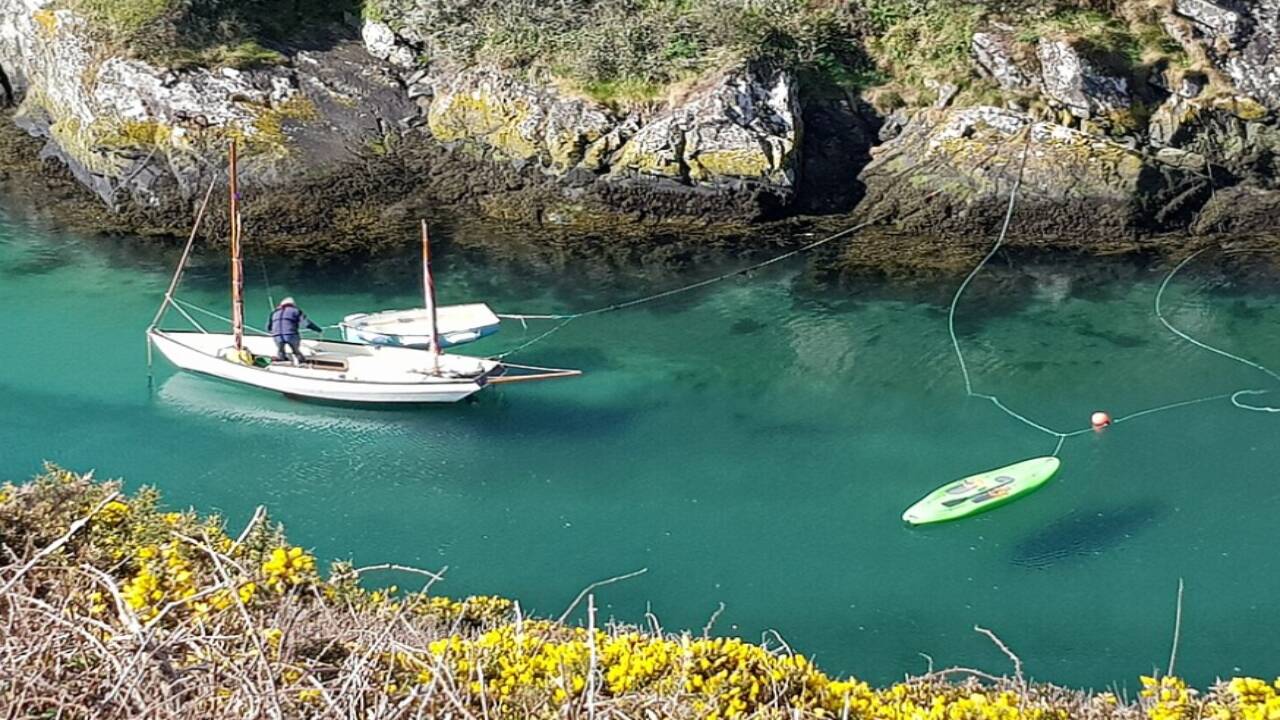
According to an EPA summary of the project , Lake Davis is a 4,026-acre reservoir in Plumas County, formed by damming Big Grizzly Creek, a tributary of the Middle Fork Feather River, sitting at 5,775 feet above sea level with a maximum depth of 108 feet. In October 1997, the California Department of Fish and Game treated the entire lake with rotenone, a chemical commonly used in fisheries management to kill fish indiscriminately by blocking their ability to use oxygen at the cellular level. The treatment killed more than just the pike. Every fish species in the reservoir died in the process, since rotenone does not distinguish between an invasive predator and the native trout the state was actually trying to protect downstream.
The 1997 treatment also created problems beyond the lake itself. According to Fox News, poison from the operation leaked into a nearby creek, and residents near Lake Davis, outraged over the environmental danger, won a $9.2 million damages settlement from the state. Despite the expense and the disruption, the treatment failed to solve the problem it was designed to fix permanently. Fox News reported that pike reappeared in Lake Davis roughly 18 months after the original treatment, either through illegal reintroduction by an angler or because some pike survived the original poisoning.

A second, even larger attempt a decade later
Rather than abandon the fight, California returned to Lake Davis a decade later. According to NPR, the state launched dozens of boats in September 2007, pouring thousands of gallons of a newer, more potent liquid rotenone formulation into the lake and its tributaries as part of a $17 million operation, making it the state's most expensive battle against an invasive species at the time. The same EPA document noted that despite the original 1997 effort, pike were never fully eliminated and had subsequently re-established themselves in the reservoir, which is precisely what made this second, larger treatment necessary. Officials used GPS mapping to cover the reservoir more thoroughly than in the original effort.
What finally worked, and what the whole saga still says about invasive species
This time, the pike did not return. California's Department of Fish and Wildlife now describes Lake Davis as fully restored to a productive trout fishery, regularly stocked and popular with anglers visiting the surrounding Plumas National Forest. The state had actually solved a similar problem once before with far less difficulty. Pike discovered in nearby Frenchman Lake in the late 1980s were successfully eliminated with a single rotenone treatment in 1991 and never returned. The gap between that quick success and the decade-long, multimillion-dollar struggle at Lake Davis shows how unpredictable invasive-species eradication can be, even when the science and chemicals are the same.