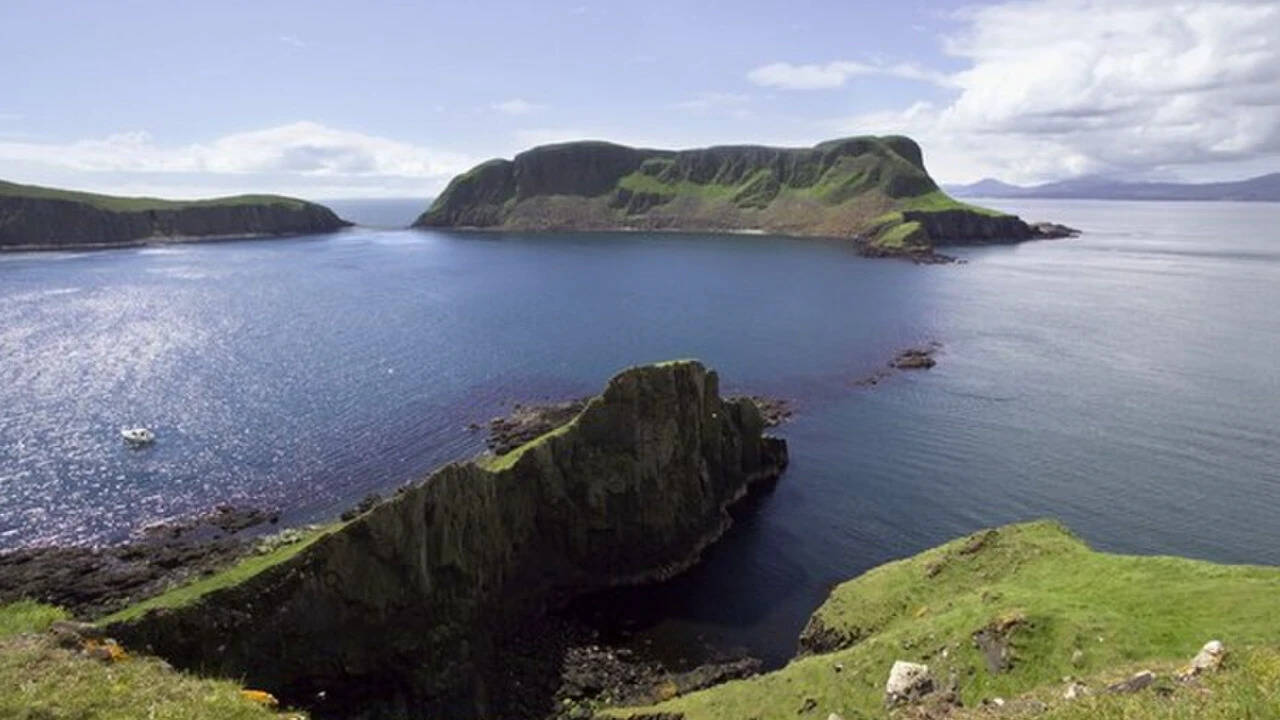
Most 21-year-olds probably get cash, a watch, maybe a car on their birthday. Adam Nicolson got three islands. In 1978, he inherited the Shiants, a group of uninhabited islands in the Minch, the stretch of sea between the Outer Hebrides and the Scottish mainland, from his father, Nigel Nicolson. There was no jetty, no electricity. But the islands did have birds, more than 150,000 seabirds gather there to breed each year, according to conservation reports on the project, and a smaller, less welcome population of black rats. In a 2002 study titled ‘ Stable isotopes reveal evidence of predation by ship rats on seabirds on the Shiant Islands, Scotland ’ in the Journal of Applied Ecology, ecologist Paul Stapp used chemical traces in rat tissue to show that the rats on the islands had been feeding on seabird eggs and chicks. That discovery helped shape later conservation work on a patch of rock most people will never set foot on.
Get breaking news anytime, anywhere. Download the TOI app now!
Three islands, one enormous bird colony
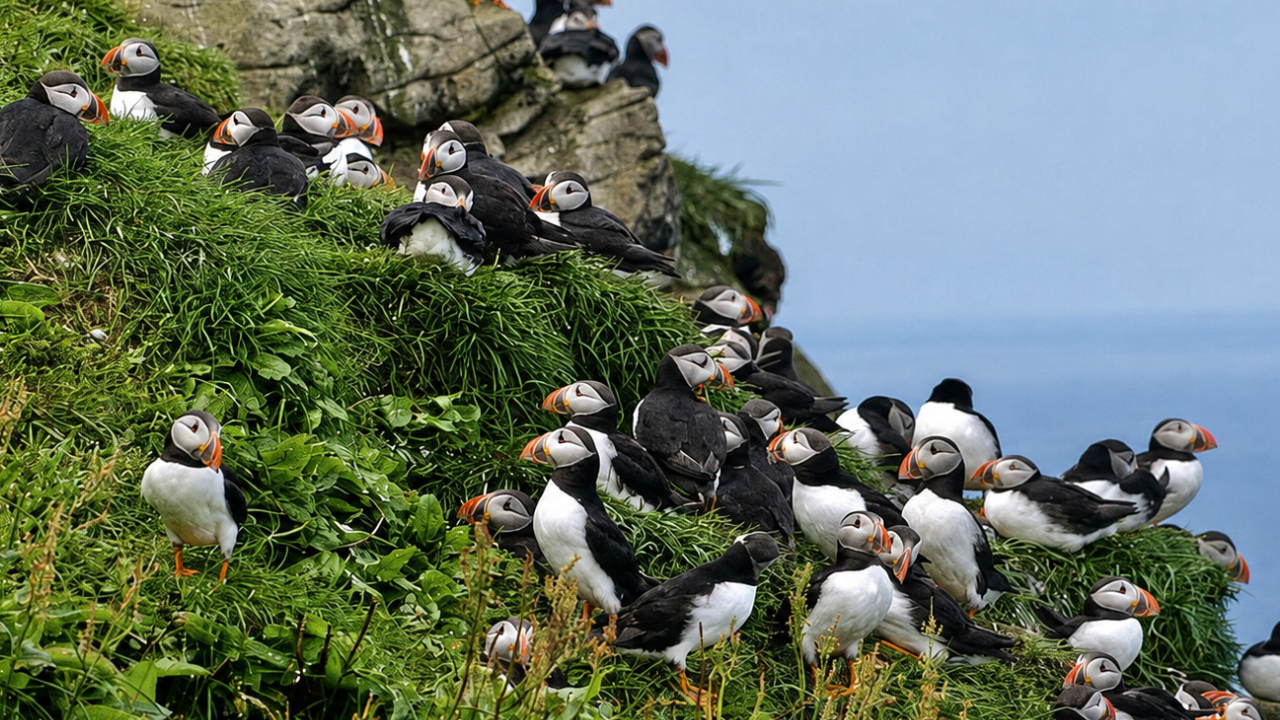
The Shiants are tiny, but they support an unusually large bird colony. In his book titled ‘Sea Room,’ Nicolson says that the number of puffins that arrive each year constitutes one out of eight of the total number found in Britain, together with razorbill, guillemots, shags, kittiwakes and fulmars. Nicolson describes the islands as an "organising node" in a complex network of life spanning the entire North Atlantic. To him, the birds were more than scenery.
The rats were the source of the trouble. According to BBC coverage, the rats are believed to have reached the island after a shipwreck around the turn of the 20th century. Rats are strong swimmers and opportunistic creatures, and on islands with no native predators they can severely reduce ground-nesting bird populations. As highlighted in Stapp's report, there was another issue: the Shiants were home to one of the two surviving naturalised black rat populations in Britain, which contributed to the delay in solving the problem.
When science caught up with the rats
Stapp’s method, stable isotope analysis, reads chemical signatures left in tissue to reconstruct diet. The results show that the chemical signature of rat tissue collected near seabird colonies closely matched that of egg and chick tissue, evidence, the study concluded, that rats were feeding on eggs and chicks during the breeding season. Project records estimate there were about 3,600 rats on the islands in a 2012 survey, with numbers higher in the summer. So RSPB Scotland, Scottish Natural Heritage and the Nicolson family decided it was time to do something.
The rescue mission
Winter on remote islands is a difficult time to work, and that's when the eradication team decided to do it. In a 2019 paper detailing the work, conservation scientists Charlotte Main, Elizabeth Bell and colleagues wrote that between October 2015 and March 2016, experts installed 1,183 bait stations across the entire Shiants archipelago, including sea cliffs that are accessible only to rope-access climbers. Teams camped on the islands through winter and, for two years more, monitoring continued to confirm no rats remained. By March 2018, the islands were declared rat-free, meeting the internationally agreed two-year standard for eradication success.
Why this matters beyond three small islands
While the Shiants have recovered, seabirds across the rest of the UK are struggling. According to the official statistics by the Joint Nature Conservation Committee in 2026, at least eight seabird species have experienced a dramatic decrease in number across Britain since 1986, when the monitoring process started: Arctic skua numbers have dropped 93% while shags decreased in numbers by 71%. As per the JNCC report, only the razorbill population has shown a remarkable increase over the years, rising by 110%.
The reasons may vary, but scientists have identified the effects of warming sea waters on food chain disruption, a decline in prey like sand eels, and pollution as some of the issues facing seabirds. These pressures are far more serious than rats on one particular island, and they can't be addressed solely with bait stations. That is the reason why the Shiants have become important for the seabirds. With rats eradicated, they have provided a haven to the seabirds that have been threatened elsewhere. Storm petrels were heard calling for the first time on the Shiants in 2017, according to RSPB and NatureScot reports, and the first confirmed storm-petrel chick followed in 2018; the species had not bred there while rats were present.
A gift passed down, not owned
Nicolson had never thought of the Shiants as ordinary property. He has said that he feels more like a temporary custodian than an owner. Sea Room ends with him preparing, over time, to pass the islands to his own son, Tom, as his father did for him.
It is an old-fashioned custom, but it carries a modern message: some things are only yours to care for temporarily. You take care of them for a while, and then you pass them on, hopefully in better shape than when you found them.