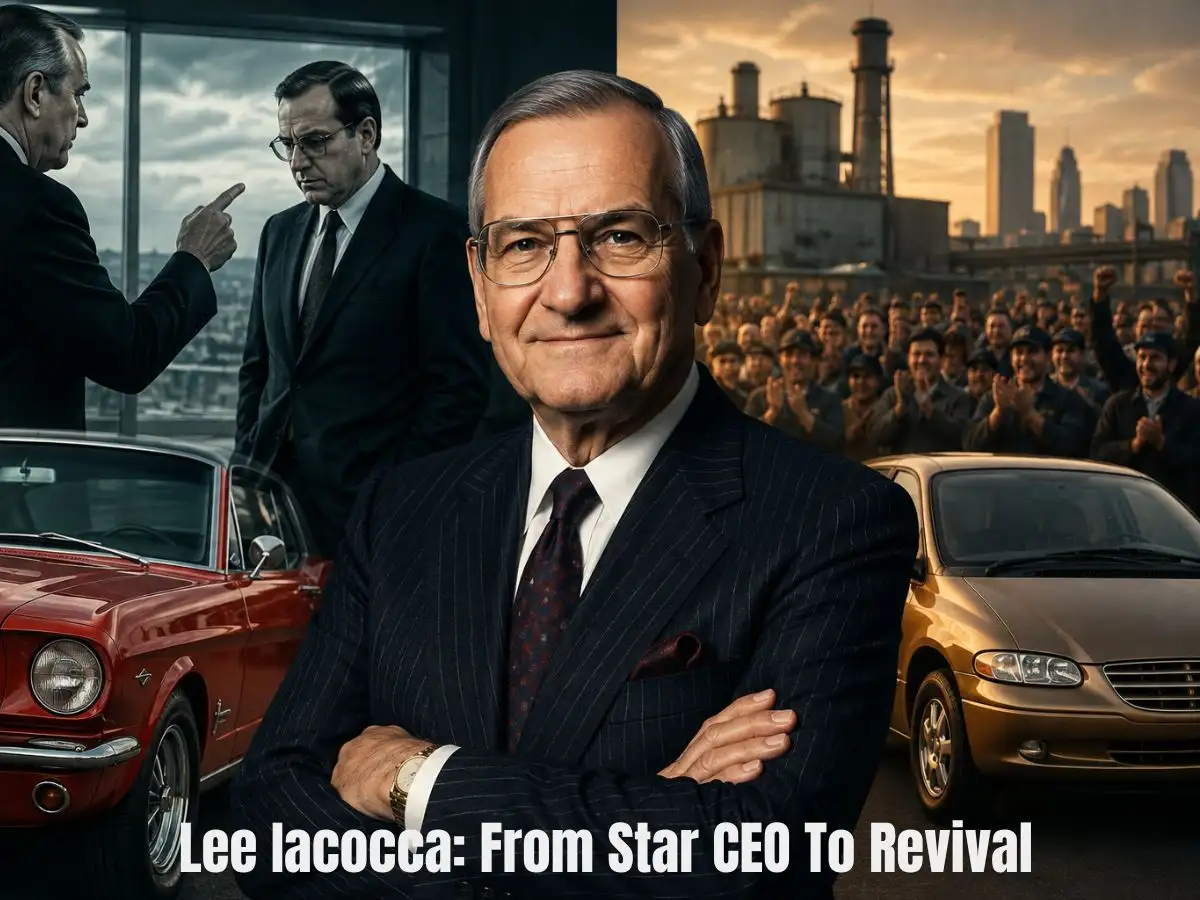
Lee Iacocca’s career is one of the more remarkable stories in the history of the American automobile industry. The executive who played a major role in bringing the Ford Mustang to market was dismissed by Henry Ford II in 1978 after years at Ford. Just a few years later, Iacocca was leading rival automaker Chrysler, which was facing a severe financial crisis. His move from Ford to Chrysler turned a bitter corporate exit into one of the most closely watched turnarounds in the US auto industry.
Iacocca and the rise of the Mustang
Iacocca had risen through Ford’s ranks and became closely associated with some of the company's most successful products. Among them was the Ford Mustang, which became one of the defining American cars of its era.
The Mustang’s arrival in the 1960s helped Ford capture the attention of younger buyers, while the car went on to become an important part of the company's identity. Iacocca was among the executives involved in the programme that brought the model to the market.
His success at Ford eventually took him to the top of the company. But his relationship with Henry Ford II deteriorated, culminating in Iacocca’s dismissal in 1978.
Henry Ford II fired Iacocca
Iacocca’s departure from Ford was particularly striking because of his long association with the company and his contribution to some of its best-known products. The firing was reportedly personal as well as professional. Iacocca later recalled Ford telling him, “Sometimes you just don’t like somebody.”
The remark became closely associated with the episode because it captured the unusual nature of the split between the Ford chairman and one of his most prominent executives. For Iacocca, however, losing his job at Ford did not mark the end of his career. It soon became the beginning of a much bigger challenge.
From Ford to struggling Chrysler
After leaving Ford, Iacocca joined Chrysler at a time when the automaker was in serious financial trouble. The company was struggling with weak sales, rising costs and intense competition from other US manufacturers as well as Japanese automakers.
Iacocca took charge of an organisation that needed more than a new product or a marketing campaign. Chrysler required a broad financial and operational turnaround, and its survival was far from guaranteed.
One of Iacocca’s biggest challenges was convincing the US government and lawmakers that Chrysler deserved assistance. The company ultimately received federal loan guarantees, giving it the financial breathing room needed to restructure its business.
How Iacocca helped turn Chrysler around
At Chrysler, Iacocca pushed for major changes, including cost reductions and a sharper focus on vehicles that could generate stronger demand. The company also introduced products that became important to its recovery, particularly its front-wheel-drive K-cars and the minivans that helped create a major new segment in the American automobile market.
Iacocca also became an unusually visible corporate leader. His direct television appearances and advertising campaigns made him a household name, something relatively uncommon for an automobile executive. That public profile helped turn Chrysler’s recovery into a personal story as well, with Iacocca becoming closely identified with the company’s fight for survival.
From dismissal to record profits
The contrast between Iacocca’s departure from Ford and his subsequent success at Chrysler became the defining feature of his career story. In 1978, Ford had ended the tenure of an executive associated with the Mustang, one of the company's most successful products. Within five years, Iacocca had helped put Chrysler on a much stronger financial footing and led the company to record profits.
The turnaround became an example of how a corporate setback can sometimes lead to an even bigger opportunity. Iacocca’s career also demonstrated the importance of leadership during periods when a company is forced to make difficult decisions about costs, products and its overall strategy.
Why the Iacocca story still matters
Iacocca’s story continues to attract attention because it goes beyond the rivalry between Ford and Chrysler. It is a story about corporate power, personal disagreements and the unpredictable nature of executive careers.
Being fired from one of America's biggest automakers could have ended Iacocca’s reputation as a leading industry figure. Instead, his move to Chrysler gave him an opportunity to build an even more remarkable legacy.
The executive who was shown the door by Ford ultimately became the public face of Chrysler’s fight for survival, turning a painful career setback into one of the most notable turnarounds in American business history.