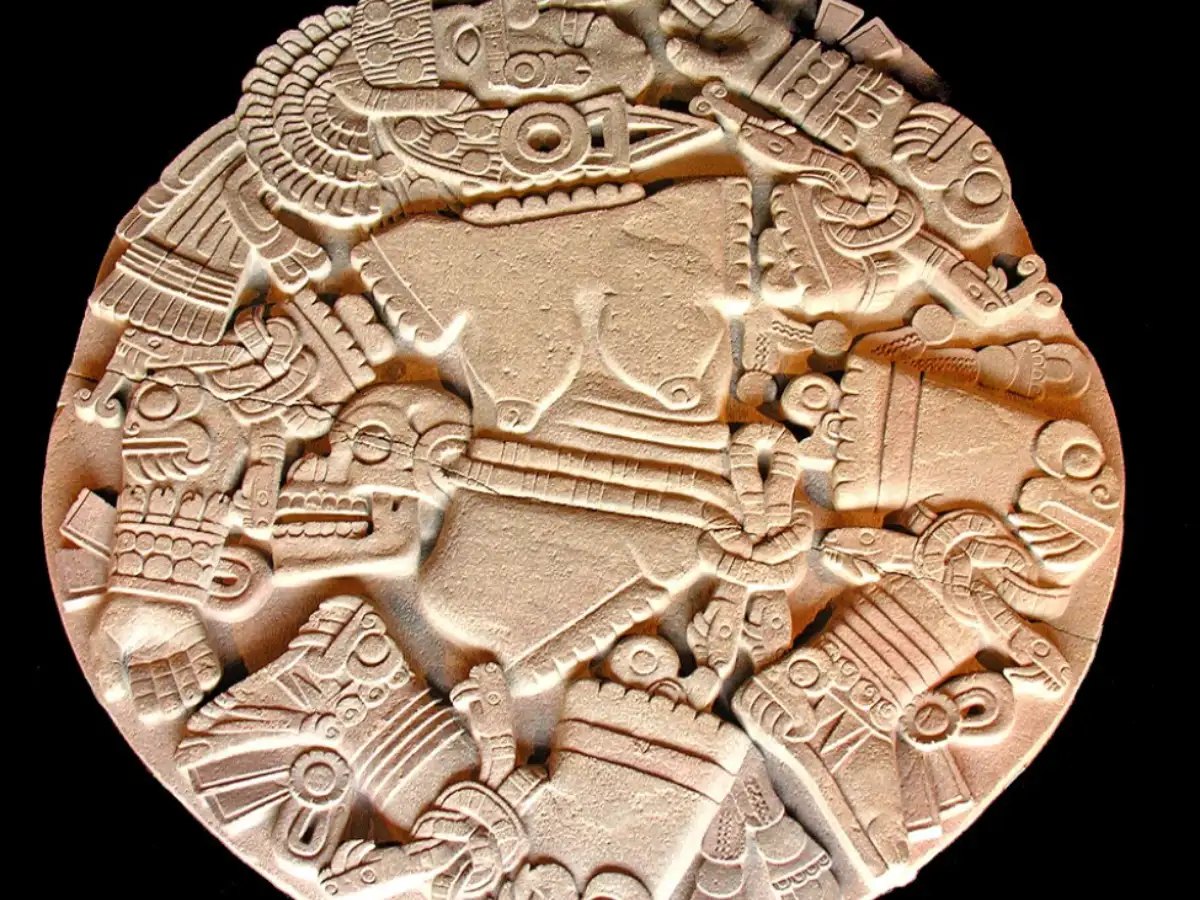
Some of the most important archaeological discoveries begin with a carefully planned excavation, while others begin when someone digging for an entirely different reason hits something unexpected beneath the ground. On February 21, 1978, utility workers carrying out electrical work near the Metropolitan Cathedral struck a massive carved stone disk buried beneath the modern city. According to Harvard University’s Templo Mayor Project, the discovery occurred during utility work at the intersection of Guatemala and Argentina streets, just steps away from the cathedral. What initially appeared to be an unusual obstruction quickly became one of the most important archaeological finds in modern Mexican history: the Coyolxauhqui Stone, a monumental sculpture depicting the Aztec moon goddess Coyolxauhqui.
The discovery immediately attracted attention because of both its size and its location. Mexico City’s historic center sits directly above the former ceremonial heart of Tenochtitlan, the capital of the Mexica, often known as the Aztecs. Historians had long known that major remains of the ancient city likely survived beneath the streets, but the Coyolxauhqui Stone provided dramatic proof that important parts of the sacred precinct were still there. More importantly, the discovery triggered a new phase of archaeological investigation that would transform understanding of the Templo Mayor, the most important religious structure in the Mexica world.