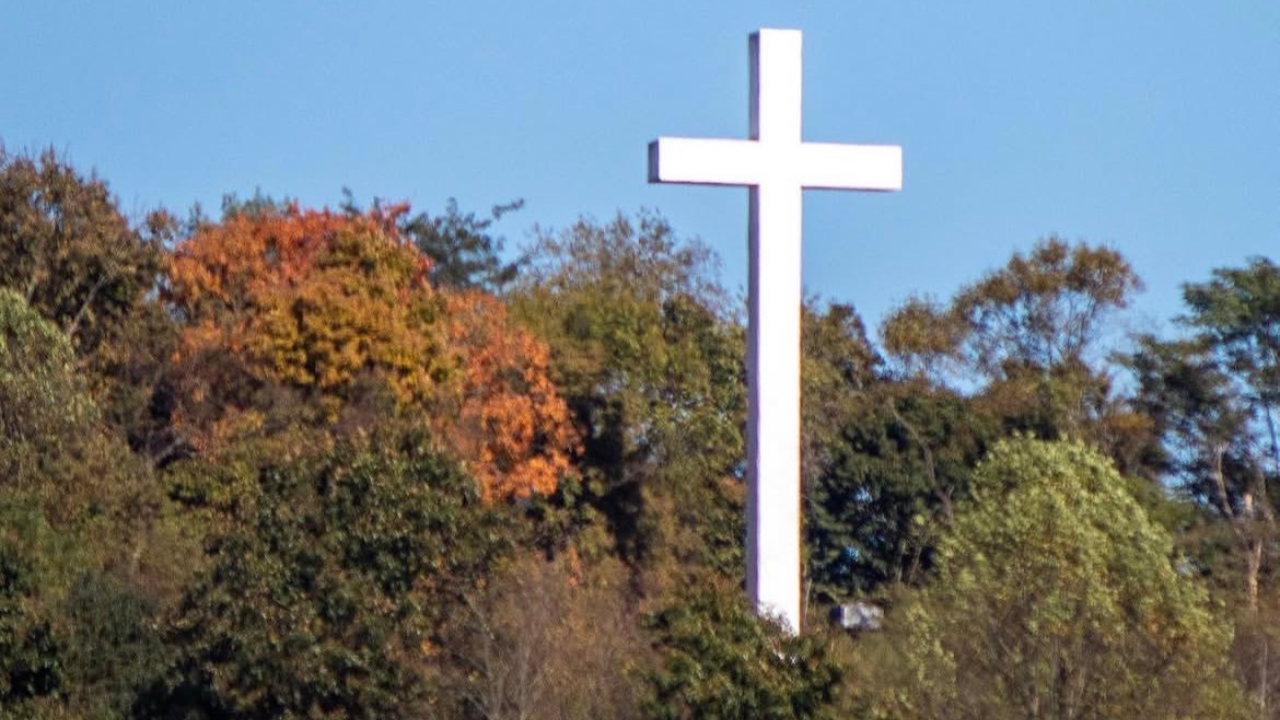
Walter L. “Bud” Schwartz built the Nelsonville Cross in 1973 as a memorial to his wife, Elizabeth “Betty” Smith Schwartz. The 65-foot metal cross stands on Kontner Hill above Nelsonville, Ohio, the town where Betty was born and raised. She died in January 1972 at age 66, and after her death, Bud began visiting Nelsonville regularly. She had grown up there and had attended the First Presbyterian Church in town. Bud also drove past her childhood home during those visits. According to an account by Rev. John L. Evans , the pastor of that church, Bud, Evans and his wife decided to build a cross overlooking Nelsonville as a memorial to Betty and as a tribute to God. The project was started quickly: land was secured on Kontner Hill, one of the highest points overlooking the city. The finished cross was made from steel and aluminum and covered in white material. Its main vertical section measures 65 feet, while the cross arms extend 25 feet.
Get breaking news anytime, anywhere. Download the TOI app now!
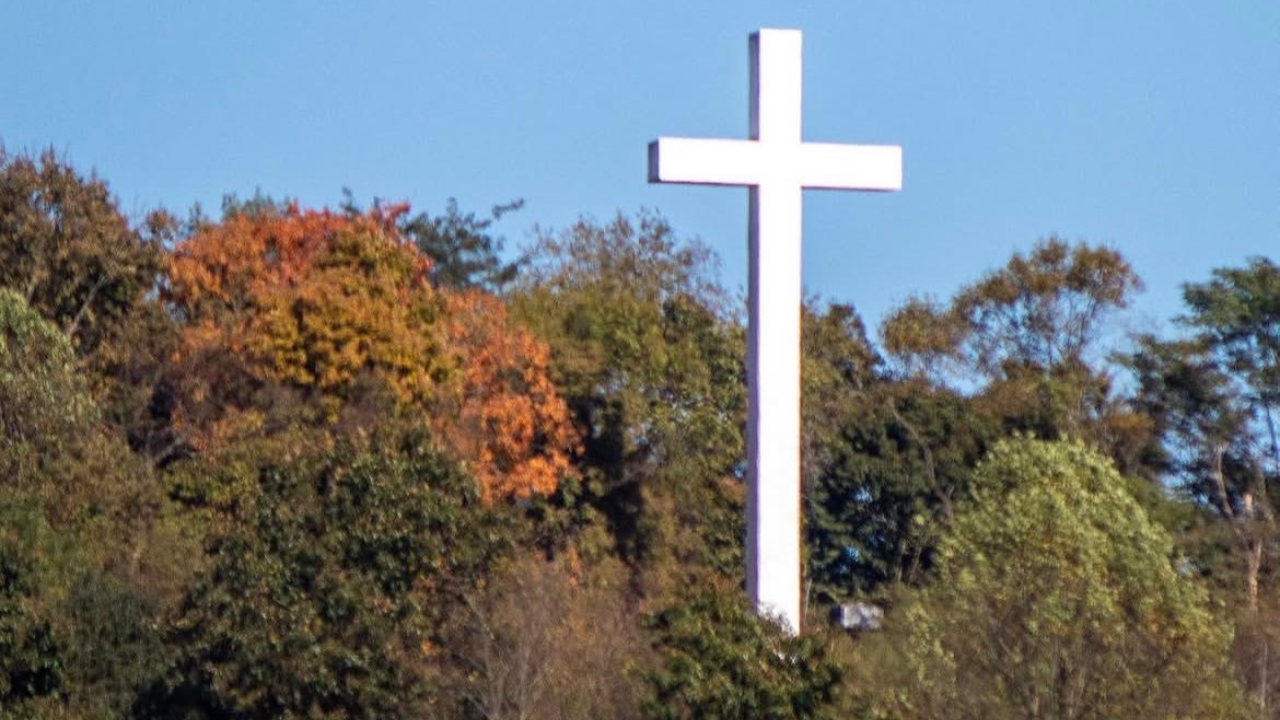
The memorial was built above Nelsonville
The land for the project came through the Nelsonville Lumber Company, with help from local residents and property owners. The cross was designed by Columbus architect Fred Wright. The project also involved local businesses and workers who reduced their charges or donated time. Evans' account says the total cost was $17,500. Schwartz eventually deeded the land and cross to the First Presbyterian Church, which held it in trust for the other Christian churches in Nelsonville. A concrete base supports the structure, which itself rises about eight feet above the hilltop, so the overall height of the original monument was greater than the 65-foot height of the cross.
The monument was erected and dedicated on April 8, 1973. A plaque at its base identifies it as both “A Tribute to God” and “A Memorial to Betty.” The historical account preserved by Athens County OHGENWEB says that the plaque also credits Rev. Evans, the city, the county engineer's office, local utilities and other people who contributed labor or assistance to the project. The cross was also designed to be visible after dark, as seen by the three mercury-vapor lights that illuminated it at night, making it visible from much of Nelsonville. At the time, newspapers described it as the world's largest metal cross. The claim belonged to the original publicity surrounding the monument and does not mean it remains the world's largest cross today.
Schwartz kept the lights burning
The monument was not intended to be a one-time construction project, since Schwartz also made arrangements for its maintenance. Evans wrote that keeping the cross illuminated cost about $400 a year in 1973. Schwartz paid the lighting expenses and planned to continue doing so during his lifetime, and also placed $35,000 in trust for future maintenance after his death. The surrounding property gradually became a small park, and by 1974, an access road had been partially constructed. Additional land was donated to enlarge the site, and local volunteers worked on the road and landscaping.
The cross soon became a recognizable part of Nelsonville's landscape, and could be seen from roads around the city and from other elevated areas. In 1974, Schwartz wrote a song called Beautiful Nelsonville Cross . Luella Shew and Virginia Watters arranged the music, and copies sold for $1. The proceeds from the track went toward the cross fund. At an unfortunate time in June 1981, strong winds badly damaged the structure. Repairs required more than $30,000, and Schwartz sold his home to help cover the rebuilding costs. The OHGENWEB account records that the replacement cross was erected in October 1983, with Schwartz present for the installation.
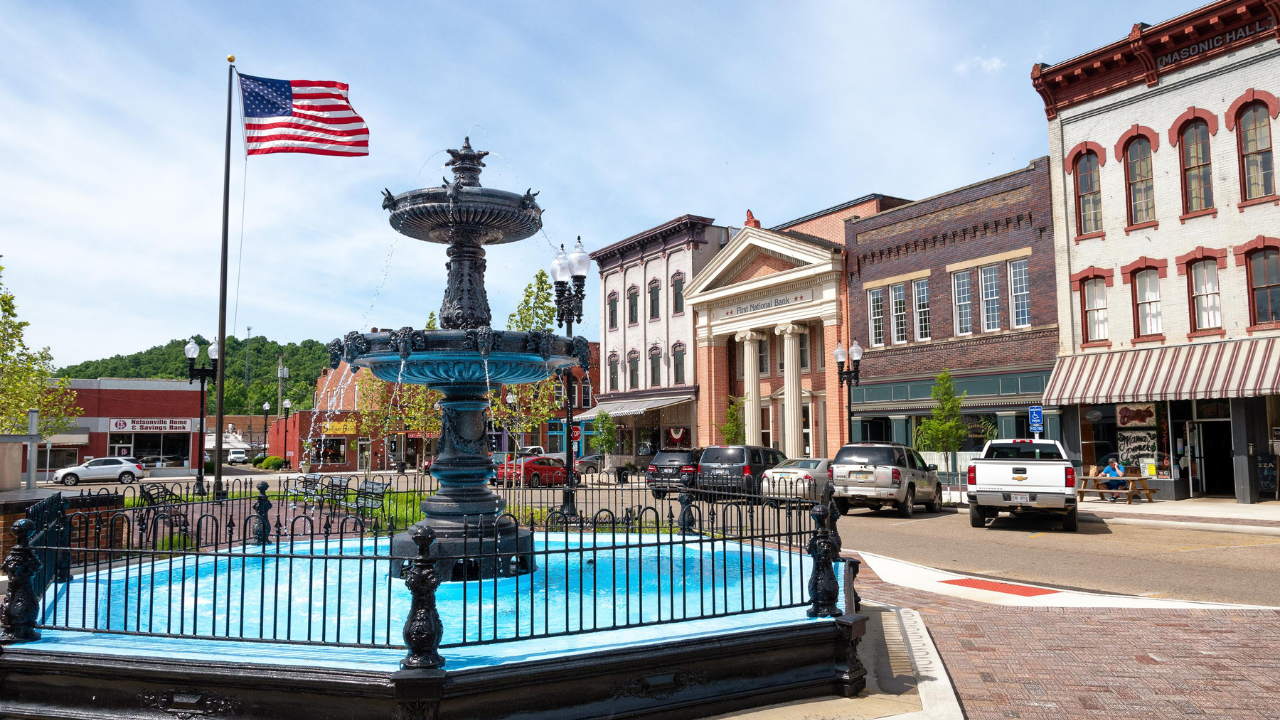
The cross was rebuilt and remains visible today
The cross was rebuilt but later, its lighting system became a problem. The original mercury-vapor lights were repeatedly vandalized, and the cross eventually became difficult to see at night. In 1996, First National Bank and members of the local community helped restore the lighting system. The new lights were placed in a protected box mounted on a pole. The surrounding landscape also changed, as trees that had blocked views of the cross from parts of the city were eventually removed. The monument remained on Kontner Hill as development continued elsewhere in Nelsonville.
Schwartz died in 1989 and was buried beside Betty at Greenlawn Cemetery in Nelsonville. The cross he had built remained on the hill above the city. The monument is still visible from Nelsonville today, and the Hocking Valley Scenic Railway lists the Nelsonville Cross among the historic sites passengers can see from its route through the area. The cross is no longer the largest of its kind, but its original purpose has remained clear. It was built by a widower in memory of a woman who grew up in Nelsonville, and it continues to stand above the town where her story began.