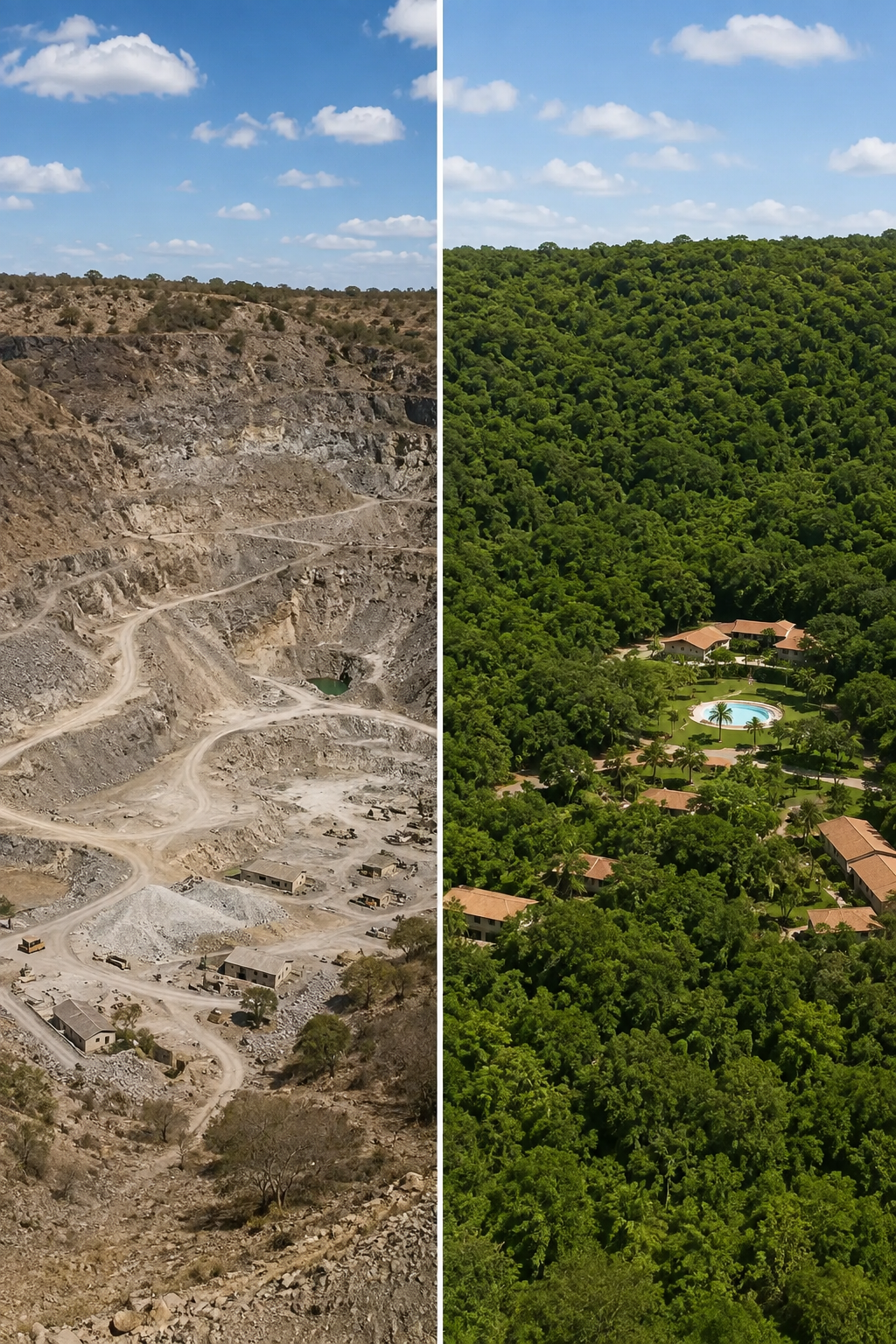
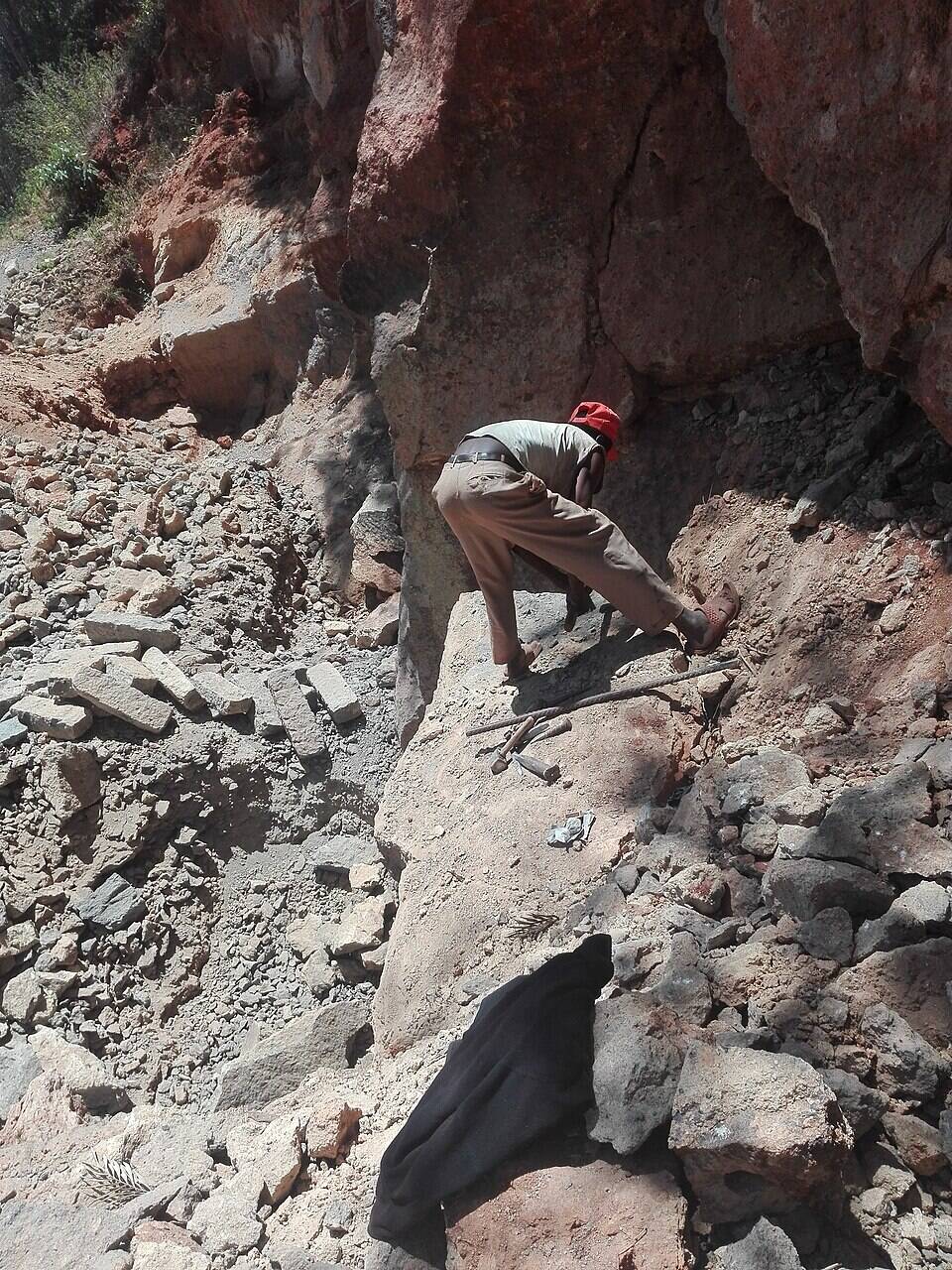
Years of cement production had left a coastal quarry in Kenya almost devoid of life by 1971. Exposed coral rock, saline groundwater and scorching temperatures created conditions where little could survive. Instead of abandoning the site, Bamburi Cement began an ambitious restoration experiment to test whether nature could recover the damaged landscape.
Get breaking news anytime, anywhere. Download the TOI app now!
According to the study Land Reclamation Efforts in Haller Park, Mombasa , the first restoration attempts produced disappointing results. Of the 26 tree species planted in the limestone quarry, only three survived the first six months: Casuarina equisetifolia, Conocarpus lancifolius and the coconut palm. Rather than abandoning the project, Swiss ecologist Dr René Haller used these surviving species as the foundation for a long-term restoration programme. More than five decades later, the former quarry has been transformed into Haller Park, part of a restored landscape spanning more than 200 hectares that supports forests, wetlands and hundreds of plant and animal species.
Restoring the soil before restoring the forest
Among the three surviving species, Casuarina equisetifolia proved to be the most valuable pioneer tree. It tolerated the quarry's salty groundwater, intense heat and nutrient-poor limestone while growing rapidly enough to provide shade. Its roots also hosted nitrogen-fixing bacteria that gradually enriched the barren ground. Yet the project soon encountered another obstacle. Although the trees were growing, their needle-like leaves contained high concentrations of tannins, making them difficult for microorganisms to break down. Without decomposition, no humus formed, preventing other plants from taking root.
Research published on Land Reclamation Efforts in Haller Park, Mombasa also notes that the breakthrough came through careful observation rather than expensive technology. Dr René Haller noticed that red-legged millipedes were feeding on the fallen Casuarina needles. He introduced hundreds of the millipedes into the plantation, where they broke down the tough leaf litter into nutrient-rich organic matter. Their droppings, together with bacteria, fungi and other soil organisms, gradually formed the first layer of fertile humus on the quarry floor.
When nature began doing the work
The Casuarina trees began reproducing naturally, while their shade reduced ground temperatures and helped retain moisture. Other plant species established themselves without continuous planting, marking the beginning of ecological succession, the natural process through which pioneer species prepare the environment for increasingly diverse communities of plants and animals.
That is what happened at Bamburi. As vegetation became denser, insects, reptiles and birds arrived on their own. Wetlands formed in abandoned quarry pits, while fish and amphibians colonised the new habitats. Larger animals, including giraffes, hippopotamuses, giant tortoises, antelopes and crocodiles, were introduced only after the vegetation could support them. Today, Haller Foundation notes that it is home to more than 400 plant species, around 180 bird species and about 30 mammal species, many of which depend on habitats that did not exist half a century ago.
From barren quarry to thriving ecosystem
The Bamburi restoration has become an important case study in showing how degraded industrial landscapes can be revived through ecological processes. This is because biodiversity restoration always starts with soil restoration, where pioneer species play a major role in improving soil structure and creating conditions for underground life. As the ecosystem develops, human intervention becomes less important. According to Science , ecological restoration delivers benefits that extend beyond biodiversity conservation. Rehabilitated landscapes can stabilise soils, reduce erosion, improve water quality, store carbon and create habitats that support both wildlife and surrounding communities.
More than 50 years after only three of 26 tree species survived in the quarry, the Bamburi experiment remains a reminder that ecosystem recovery rarely depends on a single breakthrough. Instead, it unfolds through a chain of small ecological changes, each creating the conditions for the next, until a barren landscape becomes a living one.