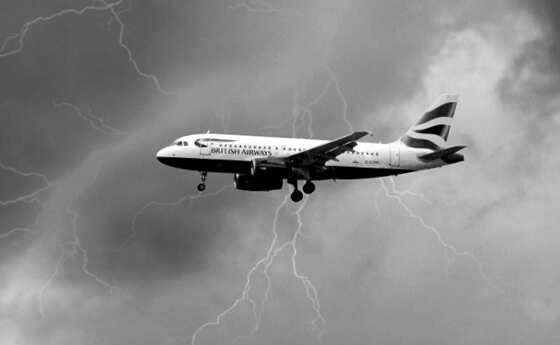
Human resilience is put to the test in the hardest way possible at times. On Christmas Eve of 1971, what started as an ordinary journey through the Peruvian rainforest led to one of the most amazing survival stories in the history of aviation. A regular passenger flight full of travellers flying on holiday got caught up in a storm and was hit by lightning. This resulted in the breakup of the plane mid-air and the scattering of its passengers in a rugged and inaccessible region.
Get breaking news anytime, anywhere. Download the TOI app now!
Juliane Koepcke was 17 years old when, in 1971, she fell about 10,000 feet from an aeroplane hit by lightning over the Amazon region. She managed to survive the fall still strapped to her seat before spending 11 days trekking in the wilderness until she was rescued by lumberjacks. Details of her survival story and subsequent jungle trip are elaborately described in a personal review written by Juliane Koepcke and posted on the BBC Magazine under the title Juliane Koepcke: How I Survived a Plane Crash .
Descent to the canopy
According to BBC magazine, the teenager was seated beside her mother during the crash when the plane descended into chaos following a lightning strike. She ended up spinning down the open sky while still strapped to her three-seater seat.
When she woke up the next morning, she learned that she had a fractured clavicle, deep cuts in her arms, and also a bad concussion. Despite her condition and the shock she felt, her first reaction was to look for her mother. While trying to find her way amidst the wreckage site, she found herself surrounded by nothing but empty debris and a pack of sweets, which would become her only nutrition throughout her journey. Realising that she could not be seen under the thick cover of trees, she started walking.

Journeying the river of life
The difficult task of navigating the dense jungle was further discussed in an anniversary report by ABC News . According to this report, perhaps her upbringing in a remote research camp enabled her to make wise decisions under pressure. Remembering her father’s suggestion that the flowing water would help her return to human civilisation, she began looking for a small stream and followed it downstream.
The ABC report adds that she had grown up at Panguana, the remote rainforest research station her parents founded, and had been homeschooled there before later finishing school in Lima. It also notes that she was likely the only person in her row wearing a seat belt, a small detail that may have helped turn an otherwise fatal plunge into survival.
The ABC News feature describes how she spent over a week walking and swimming through waters filled with dangerous predators like piranhas and caimans, keeping to the middle of the river to avoid hidden threats. Her condition worsened as her wounds became infested with insect larvae. On the eleventh day, she stumbled upon a small boat that local workers had left behind. According to the account, she used fuel from a container on the boat to clean her wounds.
A few loggers from the area came back to the place after some time and found the hurt teenager lying in their temporary shelter. They gave her first aid and took her to the hospital by river. This incident is considered to be one of the examples of human survival that shows the importance of knowledge.