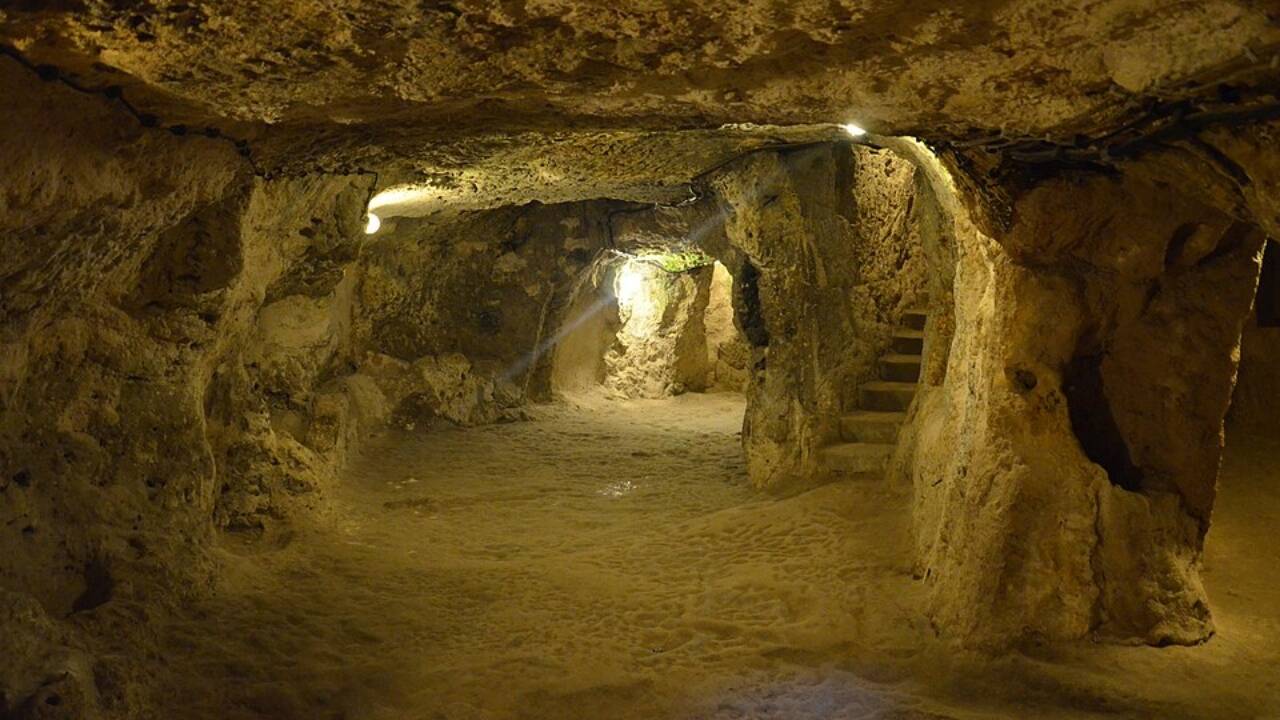
In 1963, a resident in Derinkuyu, in Turkey’s Cappadocia region, reportedly became curious after his chickens repeatedly disappeared through a narrow opening in the basement of his house. During a house renovation, the resident widened the crack for inspection and stumbled upon a hidden passageway that led to a huge underground settlement. This discovery revealed Derinkuyu, a vast city extending up to 85 meters below the surface of multiple levels, with ventilation shafts, storage rooms, churches, and living quarters that can shelter nearly 20,000 people. BBC noted that the accidental discovery opened a window into one of the world’s most developed underground settlements.
Get breaking news anytime, anywhere. Download the TOI app now!
A city carved beneath volcanic rock
Derinkuyu lies in Cappadocia, a region known for its soft volcanic tuff, which is easy to carve yet strong enough to remain structurally stable. As reported by the BBC, the complex eventually expanded into an interconnected network consisting of tunnels and chambers spread across 18 accessible levels, thus becoming the deepest known underground city in Turkey. Furthermore, archaeologists believe that the area included homes, kitchens, food storage, schools, and many such facilities that allowed thousands of people to live below ground for an extended period of time. It is worth noting that the underground city displayed ingenious engineering, including more than 50 ventilation shafts for the supply of fresh air throughout the complex.
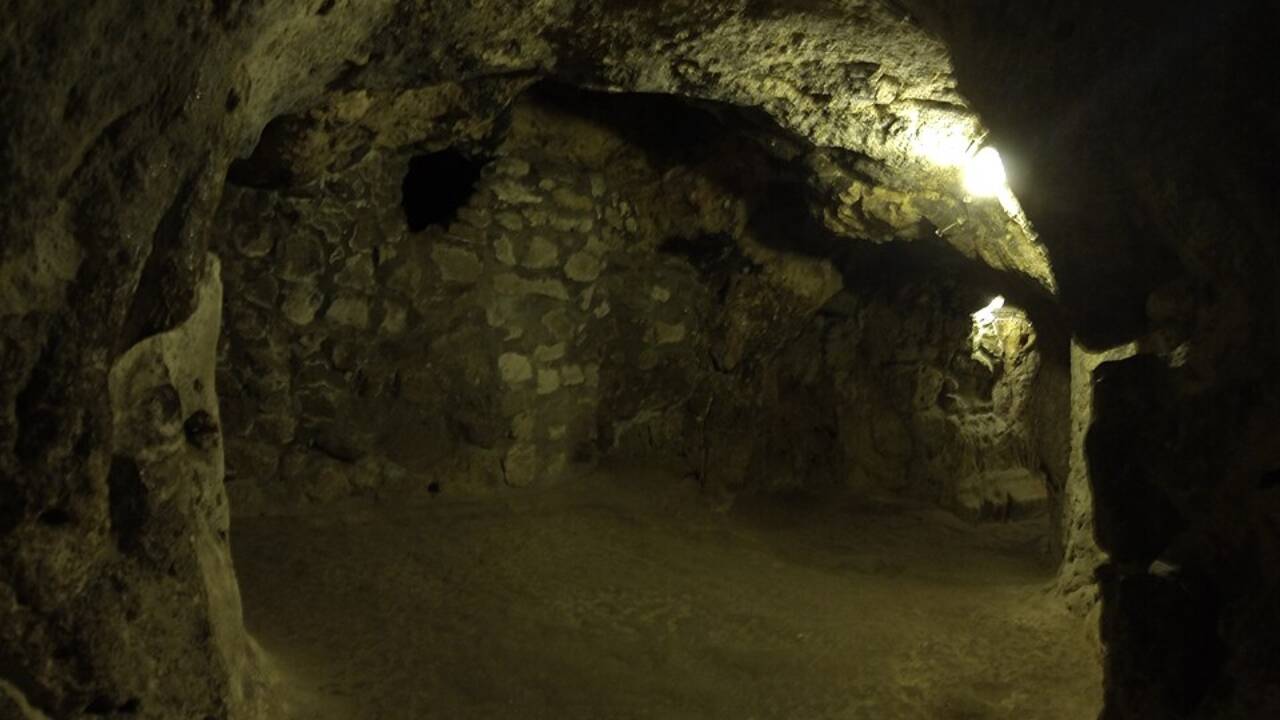
Historians believe that Derinkuyu was not constructed all at once but rather was expanded over time by successive civilisations. According to UNESCO and the BBC, the earliest sections may date back to the Phrygians during the first millennium BCE, and then the later inhabitants of the complex expanded. Historians theorised that during periods of invasion and religious persecution, residents would likely have retreated underground, where massive circular stone doors could seal off entrances for intruders. Notably, these heavy doors could only be moved from inside the underground complex, providing an effective defence against attackers.
Designed to support life below the surface
Derinkuyu was more than a temporary refuge, as noted by the BBC. The underground city contained facilities that could allow entire communities to survive for months if the need arose. The deep wells underground supplied fresh water, while dedicated areas were made to store grain, livestock, and wine. Separate spaces served as communal kitchens and schools. Additionally, spaces of worship were also allocated, thus highlighting the city’s ability to function almost like a self-contained settlement under the earth. Researchers also noted that the naturally cool underground temperatures helped the people who lived underground to preserve food supplies throughout the year, with the extensive ventilation system ensuring breathable air even in the deepest levels underground. According to Turkey’s Ministry of Culture and Tourism, a portion of the discovered city is currently open for tourists to visit, while archaeologists continue to study its construction techniques, historical developments, and links to other settlements across Cappadocia, as they believe that much of Turkey’s underground network remains unexplored.