Archaeological discoveries are usually associated with planned excavations, research teams, and years of careful investigation, which is one reason the story of Derinkuyu remains so captivating. In 1963, a homeowner carrying out renovations in Cappadocia reportedly knocked through a wall and discovered a hidden passage leading into something far larger than anyone expected.
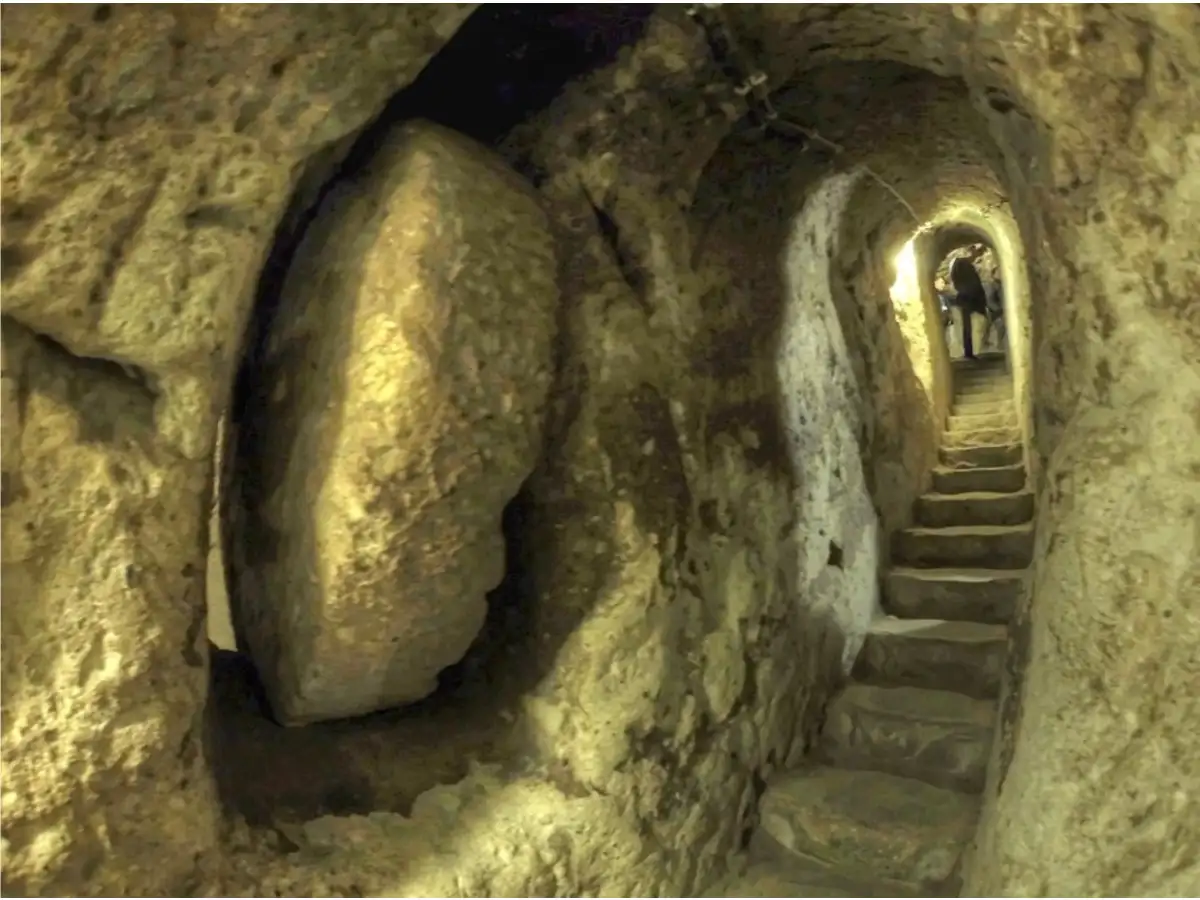
What initially appeared to be a concealed corridor eventually revealed one of the most extraordinary underground settlements ever identified: Derinkuyu, a vast subterranean city carved beneath central Turkey. Today, scholars regard the site not as a legend or a curiosity but as a complex archaeological landscape whose tunnels, rooms, and infrastructure continue to raise important questions about how people lived below the surface for extended periods.
A routine renovation exposed something enormous
The appeal of Derinkuyu begins with the contrast between the discovery and what was discovered. Home renovations are among the most ordinary activities imaginable, yet in this case a demolished wall became the entrance to an underground world that had remained hidden from modern view.
A feature published by the Yale Globalist places Derinkuyu within Cappadocia’s wider network of underground settlements and identifies it as the largest discovered underground city in the region, with estimates suggesting it could once have accommodated more than 20,000 people. That scale is what transforms the story from an unusual household discovery into a major archaeological event.
The hidden passage was not leading to a forgotten room or isolated chamber; it was leading to an entire built environment extending deep beneath the landscape. The realization changed how people viewed the region because it revealed that what appeared on the surface represented only part of the historical landscape.