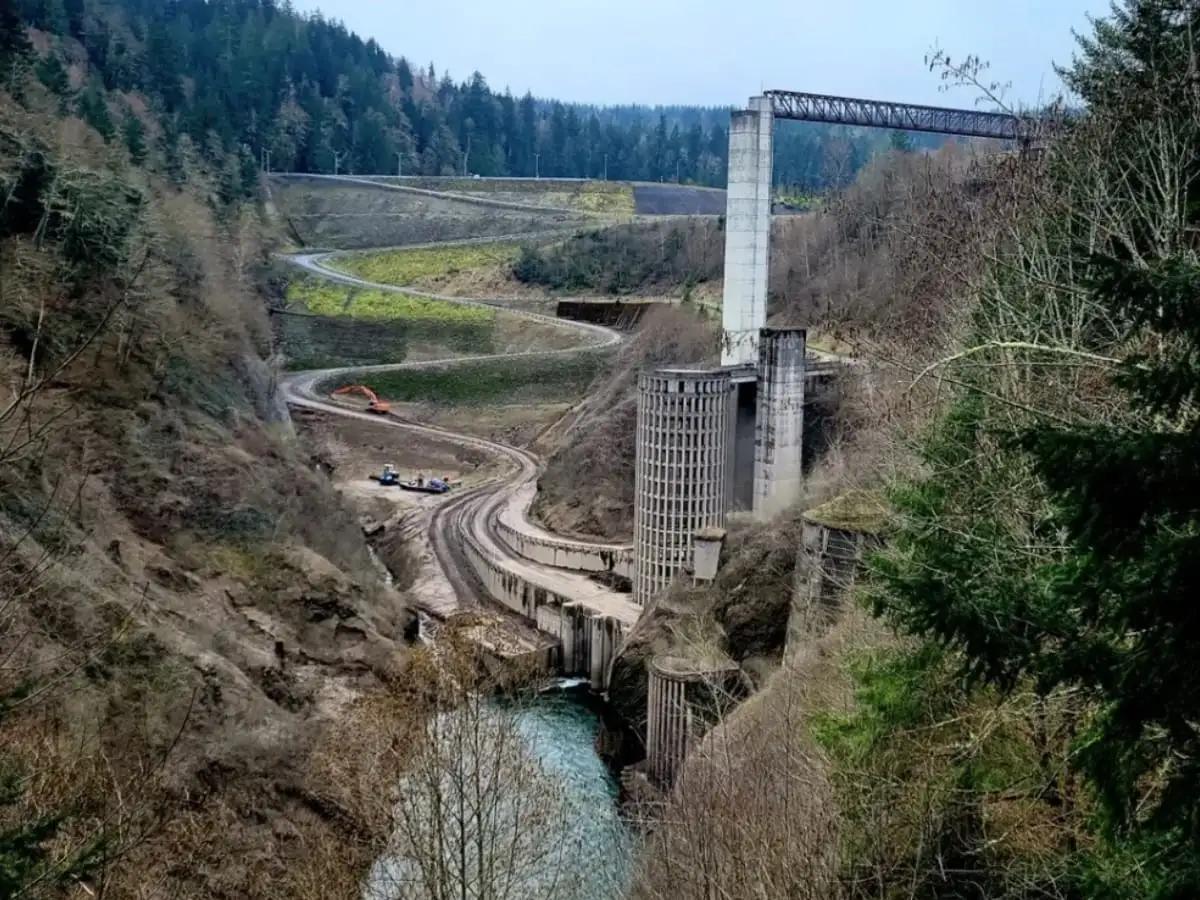
For much of the 20th century, American engineers built large dams to control rivers and protect growing communities from floods. The Mud Mountain Dam in Washington State is one example of how those decisions played out over time, and of the tradeoffs that came with them.
The dam was completed in 1948 to prevent flooding downstream communities, but it cut off salmon migrations. The U.S. Army Corps of Engineers later spent $112 million on what is billed as the nation's largest trap-and-haul fish passage facility, able to transport up to 1.2 million fish per year. The project aimed to balance public safety and environmental considerations, as reported in the 2018 press release from the Corps. It's a tale of shifting priorities in America as much as it's a tale of engineering.
A dam born from disaster
Mud Mountain Dam is located on the White River in Washington, upstream of Enumclaw, and it keeps the river from seasonally flooding communities all the way to Tacoma. The rock-filled, earthen dam was constructed by the Army Corps following years of catastrophic floods and not just to harness electricity. Its goal was simply to provide a temporary water barrier and to save lives, homes, and businesses.