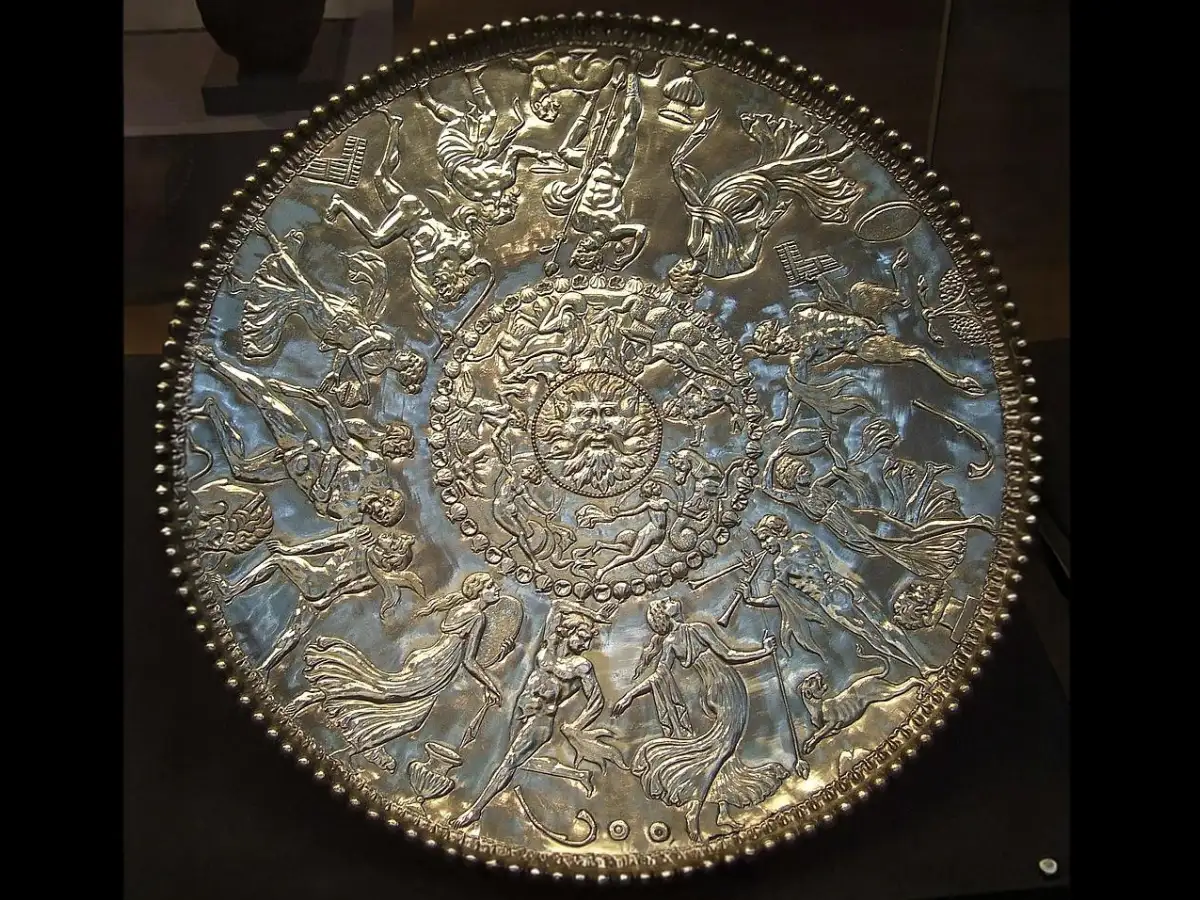
In January 1942, a hired plowman named Gordon Butcher plowed a field in West Row, a sleepy village near Mildenhall in Suffolk, England. It was the middle of World War 2, and no one was out looking for treasure. But then his plow struck something metallic and hard in the ground, and he drew up a piece of ancient silver, then another, and another. What came out of that cold field that day was to be one of the most extraordinary Roman discoveries ever made in Britain.
Most people today have not heard of the Mildenhall treasure, but they should. It’s one of those rare stories where an unplanned moment opened up a whole different view of the ancient world.
What was actually in the ground
The Mildenhall Treasure is a hoard of 34 items of Roman silver tableware dating from the fourth century AD, and by far the most valuable Roman objects, both artistically and by weight of bullion, ever found in Britain. The collection includes platters, bowls, goblets, ladles and spoons, all decorated with elaborate carvings of sea gods, mythological figures and Bacchic scenes. At the heart is the Great Dish, a massive silver platter, nearly two feet across and weighing over 18 pounds.
Think of it this way: imagine you find your great-great-grandmother's whole set of fine China buried in a back yard, except it's 1,600 years old, made of solid silver, and carved with the faces of Roman gods. That is about the extent of what Butcher pulled out of a Suffolk field on a normal winter working day.