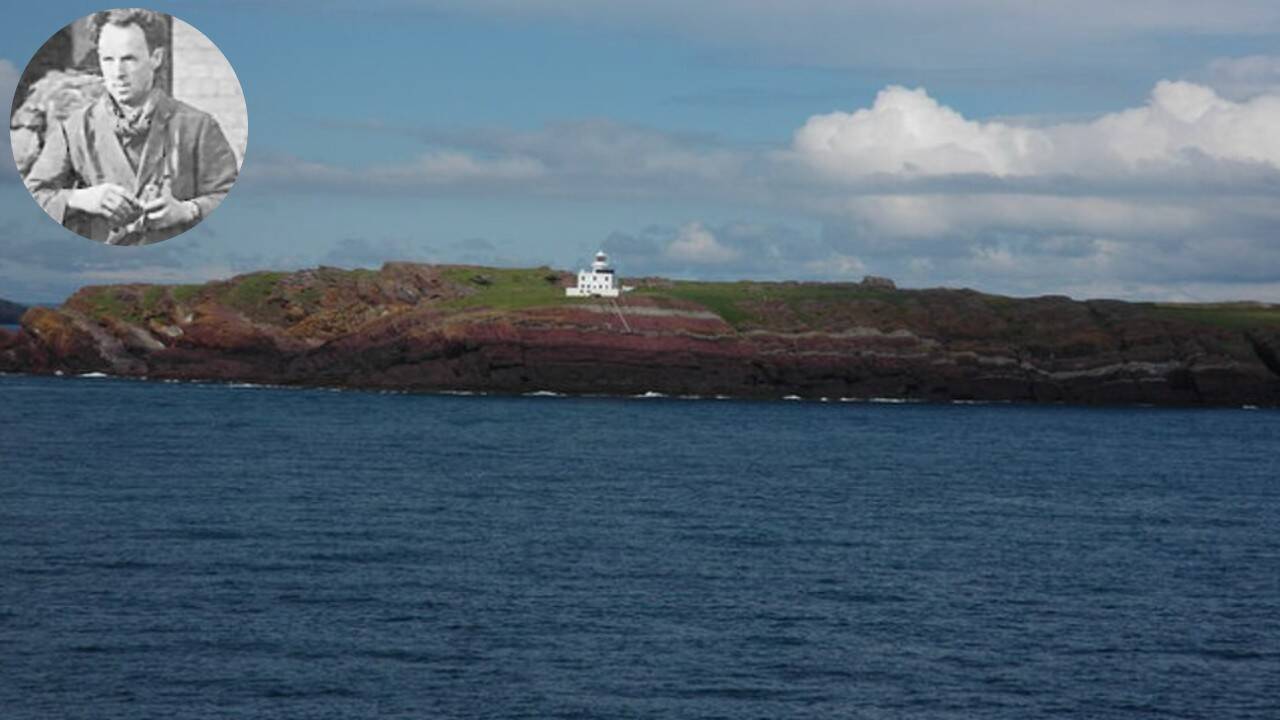
In 1927, a twenty-three-year-old Welsh naturalist named Ronald Lockley moved with his family to Skokholm Island, where he later helped establish Britain's first bird observatory. Seeking a life devoted to nature and self-reliance, Lockley leased Skokholm Island, a windswept 200-acre island four miles off the Pembrokeshire coast in Wales. At the time, the island was uninhabited and could be reached only by navigating strong tidal currents in a small open boat. Its sole major human structure was an abandoned, roofless stone farmhouse that had fallen into deep disrepair. Undeterred by the severe isolation and harsh maritime climate, Lockley moved onto the island alongside his wife Doris, determined to rebuild the stone cottage and establish a working homestead.
Get breaking news anytime, anywhere. Download the TOI app now!
At first, Lockley approached Skokholm as a site for farming. He kept livestock and experimented with rabbit farming, but the island's wildlife soon became the more important part of his life there. Skokholm was home to large seabird colonies, including Atlantic puffins, Manx shearwaters and European storm petrels. According to the Wildlife Trust of South and West Wales' history of Skokholm Island , Lockley is credited with pioneering studies of puffins and Manx shearwaters and establishing Britain's first bird observatory on the island in 1933. His growing interest in these birds turned the island into a long-term ornithological field station.
Restoring an abandoned island and studying native seabirds
To document the island's birds, Lockley developed practical field methods. He focused on the habits of the Manx shearwater, a seabird that spent its days far out at sea and returned to land only at night to avoid predators. By marking nesting burrows and building wooden inspection hatches, Lockley tracked individual birds over multiple seasons.
His research suggested that shearwaters often return to the same burrow and mate year after year. He also documented their extraordinary navigational abilities, showing that shearwaters moved far from the island and could travel thousands of miles across the Atlantic Ocean to return to their home burrows on Skokholm.
Establishing Britain's first bird observatory
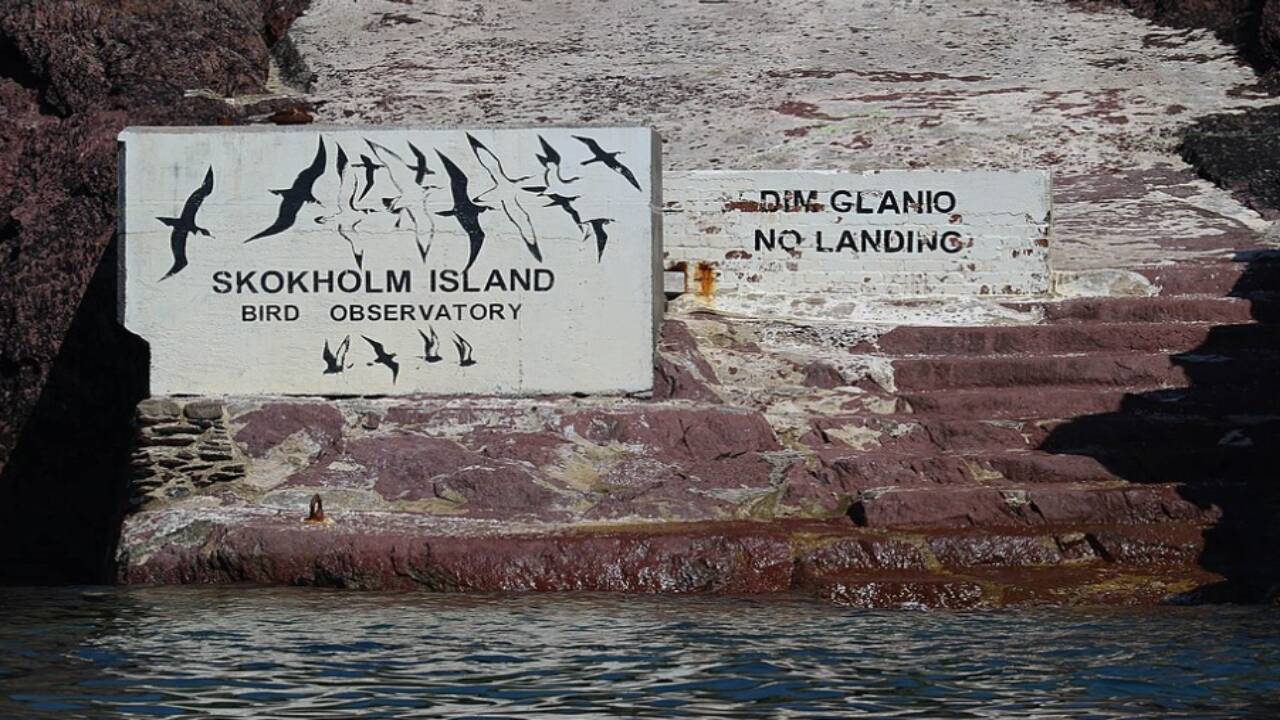
By 1933, Lockley’s informal field station had attracted widespread attention from naturalists across Europe. Realising the need for a standardised approach to tracking wild bird populations, he built a Heligoland trap to capture, ring and release migratory birds safely. That same year, he officially established the Skokholm Bird Observatory, marking the creation of the very first bird observatory in Great Britain.
The British Trust for Ornithology's Life Cycle publication notes that Skokholm became Britain's first Bird Observatory in 1933 under Ronald Lockley and that its bird-ringing programme continued, apart from the war years, until 1976. Lockley also studied the island's large rabbit population, recording its social behaviour and burrowing habits. His observations later contributed to his natural history writing and are widely thought to have influenced Richard Adams's Watership Down . His meticulous observations of rabbit social hierarchies, burrow engineering, and territorial defence were later published in his scientific writings, which are widely thought to have influenced Richard Adams' Watership Down.
Lockley and his family remained on Skokholm until 1940, when the Second World War brought his thirteen-year stay on the island to an end. By then, the small field station he had developed had grown into an important centre for British ornithology.
The enduring legacy of a thirteen-year isolation
The Skokholm Bird Observatory's 2022 annual report records that two of the island's modern Heligoland traps were constructed on the footprints of traps originally erected by Lockley in 1933 and 1935. Today, Skokholm Island is recognised as a National Nature Reserve, a Site of Special Scientific Interest, and a Special Protection Area. The bird observatory Lockley founded in 1933 still operates today and provides long-term data on seabird populations and climate impacts. What started as a young naturalist’s decision to move with his family to an uninhabited island ultimately transformed Skokholm into a world-renowned centre for marine ecology and field research.