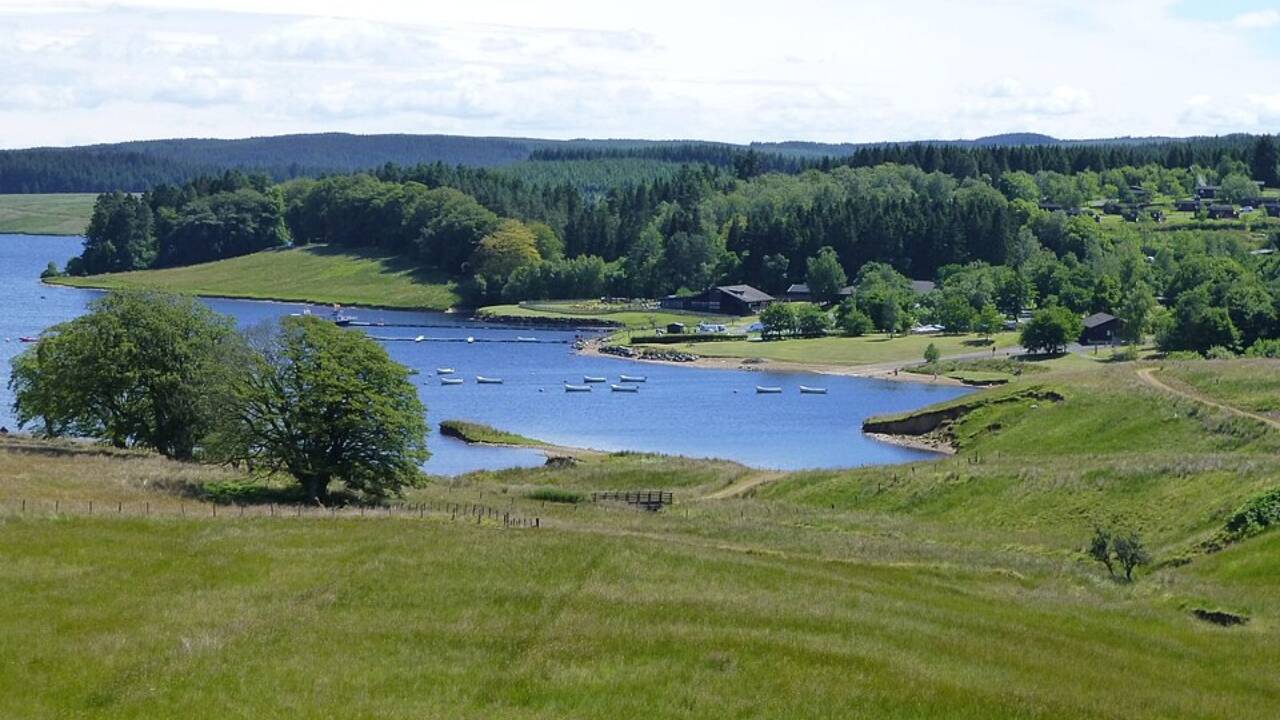
While driving through Northumberland today, it is easy to mistake Kielder Forest for the evergreen landscapes of Canada or Scandinavia. However, stretching across more than 60,000 hectares, it is home to towering conifers, rare birds of prey, red squirrels and restored peatlands. Interestingly, the Kielder Forest was not created as a wilderness; instead, in 1926, it began as a strategic timber reserve born of the lessons of the First World War. According to The Guardian, thousands of unemployed ex-servicemen were recruited to plant the first trees, thus laying the foundations for a forest that has evolved over the past century from a commercial timber plantation into one of the country’s most significant conservation landscapes.
Get breaking news anytime, anywhere. Download the TOI app now!
Born from war and built by veterans
The origins of Kielder lie in the timber shortages exposed during World War I. According to Forestry England , Britain’s woodland cover had fallen to around 5% by 1919, leaving the country powerless when wartime shipping disruptions restricted timber imports needed for trenches, railways and construction. In response to this, Parliament established the Forestry Act of 1919 to rebuild national timber reserves while employing demobilised servicemen. In the spring of 1926, seven years later, the commission began planting trees around Kielder Castle on Northumberland’s remote moorlands. Thousands of unemployed ex-servicemen undertook the physically demanding job of draining bogs, preparing the land and planting millions of conifer saplings by hand. Notably, over the following decades, the plantation expanded to around 250 square miles, becoming England’s largest forest.
At first, Kielder was managed almost exclusively as a commercial timber plantation, with fast-growing Sitka spruce alongside Norway spruce and lodgepole pine dominating the landscape because of their ability to thrive on the region’s poor upland soils and produce timber relatively quickly. Furthermore, Forestry England noted that the forestry villages, narrow-gauge railways and timber infrastructure were developed to support harvesting, with the expectation that domestic production would strengthen Britain’s long-term economic and strategic security. By the mid-20th century, Kielder had transformed into one of the country’s most important sources of home-grown wood.
From a timber-producing unit to a wildlife haven
However, by the 1960s, attitudes towards forestry began to change as The Guardian reported that foresters increasingly recognised that large commercial plantations could also provide habitats for wildlife, store carbon and support recreation. Therefore, Kielder slowly shifted from a single-purpose timber landscape to a mixed-use forest where biodiversity conservation became a crucial management objective. Forestry England began diversifying tree species and included protecting ancient bogs, restoring streams and reducing commercial intervention around sensitive habitats. Additionally, peatlands, some more than 10,000 years old, received special attention because they store more carbon than the forest’s trees combined, thus making their restoration important for both biodiversity and climate mitigation.
Kielder now supports one of the country’s strongest populations of red squirrels, whose decline elsewhere has been driven by habitat loss and competition from invasive grey squirrels. Moreover, ospreys have successfully returned as well after an absence of around two centuries, while goshawks, otters, water voles, black grouse and numerous woodland birds are also thriving across the forest. Conservationists have coupled habitat restoration with carefully managed timber harvesting, demonstrating that commercial forestry and biodiversity conservation need not be mutually exclusive.
Today, Kielder remains a working forest , supplying sustainable timber to Britain’s construction and manufacturing sectors; however, its role has expanded far beyond commodity production. It is worth noting that the forest now attracts visitors for hiking, cycling, wildlife watching and astronomy within the Northumberland International Dark Sky Park. Thus, what began as a government initiative to manage wartime timber shortages and unemployment has now become one of Europe’s best-known examples of integrated forest management.