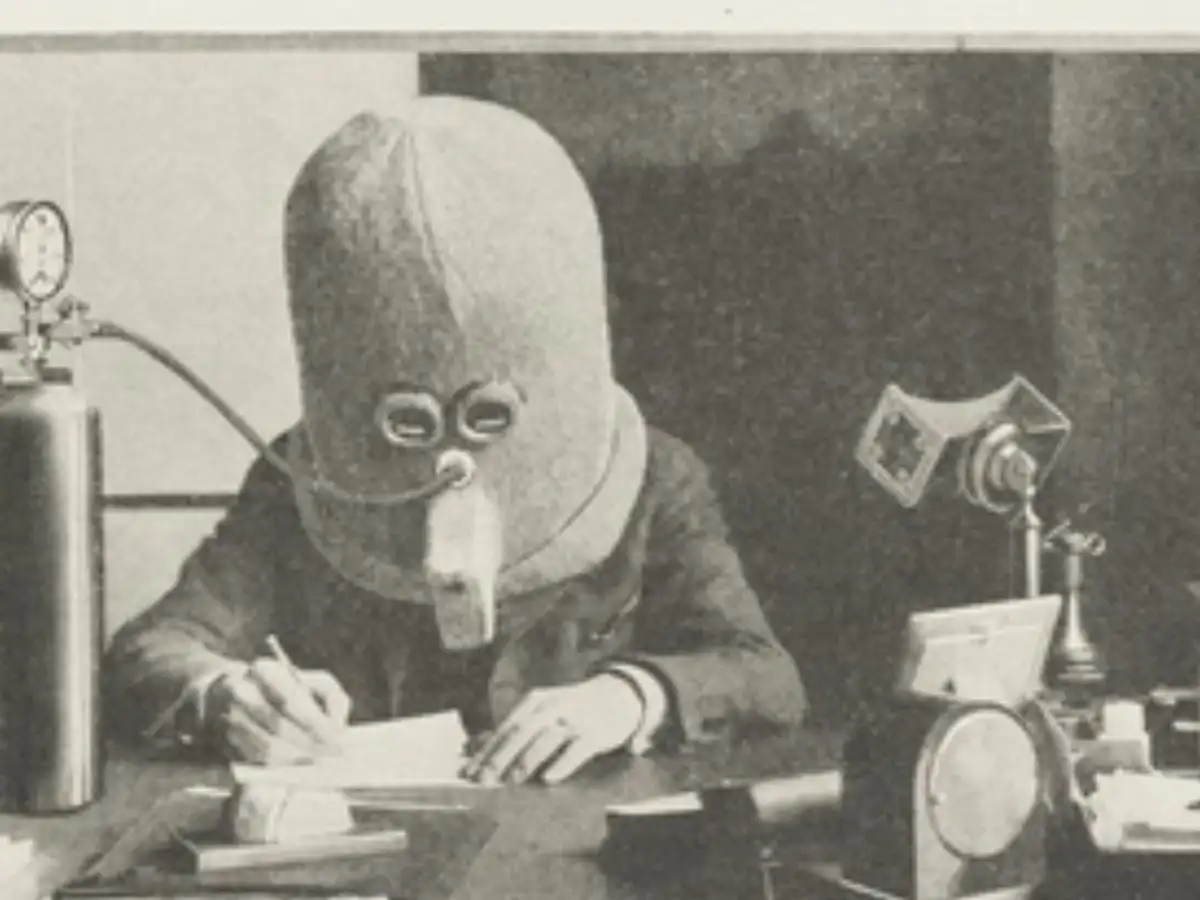
Think your noise-cancelling headphones are extreme? A century ago, one inventor came up with a much stranger solution to workplace distractions: a giant wooden helmet that covered your entire head and even pumped in oxygen.
Back in 1925, inventor and science publisher Hugo Gernsback unveiled a bizarre creation called "The Isolator" — a helmet designed to shut out the world so people could focus on reading and writing without interruptions.
And when we say shut out the world, we mean it.
The contraption was built from wood, lined with cork, wrapped in felt, and fitted with tiny glass windows for the eyes. According to Gernsback, it could block roughly 75% of surrounding noise. But that wasn't enough for him.
Determined to eliminate visual distractions too, he later redesigned the helmet with blackened glass featuring only two thin viewing slits. The result? Wearers could see little more than the page directly in front of them while everything else vanished from sight.
The invention looked less like office equipment and more like something from a science-fiction movie.
But there was another problem. People who wore the helmet for more than about 15 minutes reportedly became sleepy. Gernsback's solution was equally unusual: attach an oxygen tank to the device. A tube would feed extra oxygen into the helmet, supposedly boosting alertness and keeping the wearer awake.
Yes, this productivity gadget literally came with life support.
Gernsback later claimed an improved version could block as much as 90-95% of external sounds, turning users into isolated islands of concentration. Still, even by 1920s standards, the helmet was bulky, awkward and far from practical.
Yet nearly 100 years later, the Isolator continues to fascinate people.
The reason is simple: while the technology looks ridiculous today, the problem it tried to solve feels surprisingly modern. Long before smartphones, social media, emails or endless notifications, Gernsback believed human attention was constantly under attack.
Today's workers rely on focus apps, website blockers, quiet workspaces and expensive headphones. Gernsback relied on cork, felt, darkened glass and an oxygen tube.
Different century. Same struggle.
The Isolator never became the future of office work — thankfully. But its strange legacy lives on as one of history's most memorable attempts to protect the human brain from distraction.
And looking at modern productivity hacks, maybe the gap between us and that giant wooden helmet isn't as large as we'd like to think.