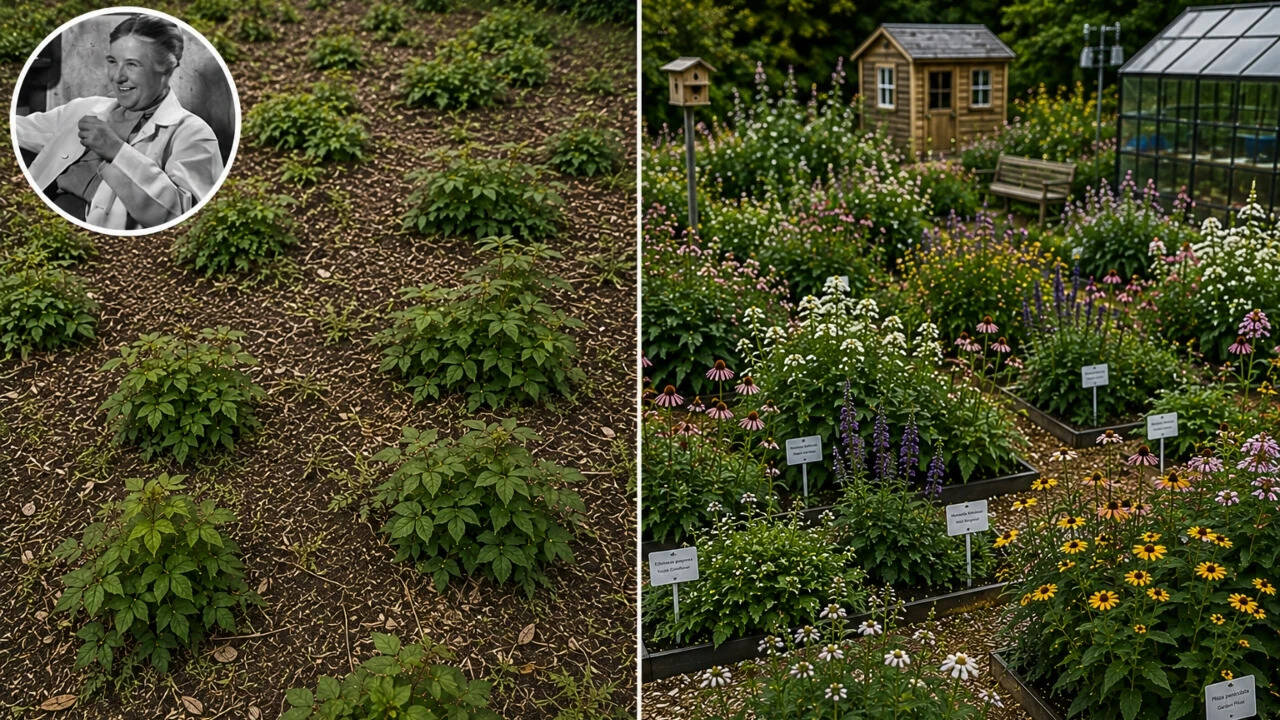
When Edith A. Roberts arrived at Vassar College in 1919, she was entering a field in which ecology was still emerging as a distinct scientific discipline. In the following year, Roberts convinced Vassar College to give her roughly four acres of difficult land along the Fonteyn Kill, a stream running through the Poughkeepsie campus. The starting point of this journey was anything but conventional, as Vassar’s records describe the given plot as 4 acres of poison ivy with few oak trees. However, Roberts and her students converted the land into an outdoor ecological laboratory where native plants could be studied not merely as individual specimens, but as communities growing under the environmental conditions in which they naturally occurred. Notably, by the time the botanist retired in 1949, the outdoor lab contained more than 675 plant species.
Get breaking news anytime, anywhere. Download the TOI app now!
From a poison ivy patch to an ecological laboratory for native species
Edith A. Roberts’ idea was more ambitious than simply replacing unwanted vegetation with attractive plants. As per the college’s records, she and her students first carried out a floristic survey of Dutchess County to determine which plants were native to the region and the kinds of natural communities in which they occurred. They then used the acquired information to design the laboratory around plant associations, thus recreating different combinations of vegetation alongside the environmental factors that supported them. Vassar’s historical accounts note that the botanist treated the site both as a teaching facility and as a place for experimental research, which naturally allowed the students to observe ecology outdoors rather than limiting their work to a conventional laboratory.
In her 1933 paper, The Development of an Out-of-Door Botanical Laboratory for Experimental Ecology, published in the journal Ecology, Roberts explained the scientific reasoning behind the project. She wrote that the outdoor laboratory integrated controlled experimental observations with the conditions found in nature. She shared that the original aim was to study plants alongside their surroundings, including transitions between plant communities, instead of just treating the species as isolated botanical specimens.
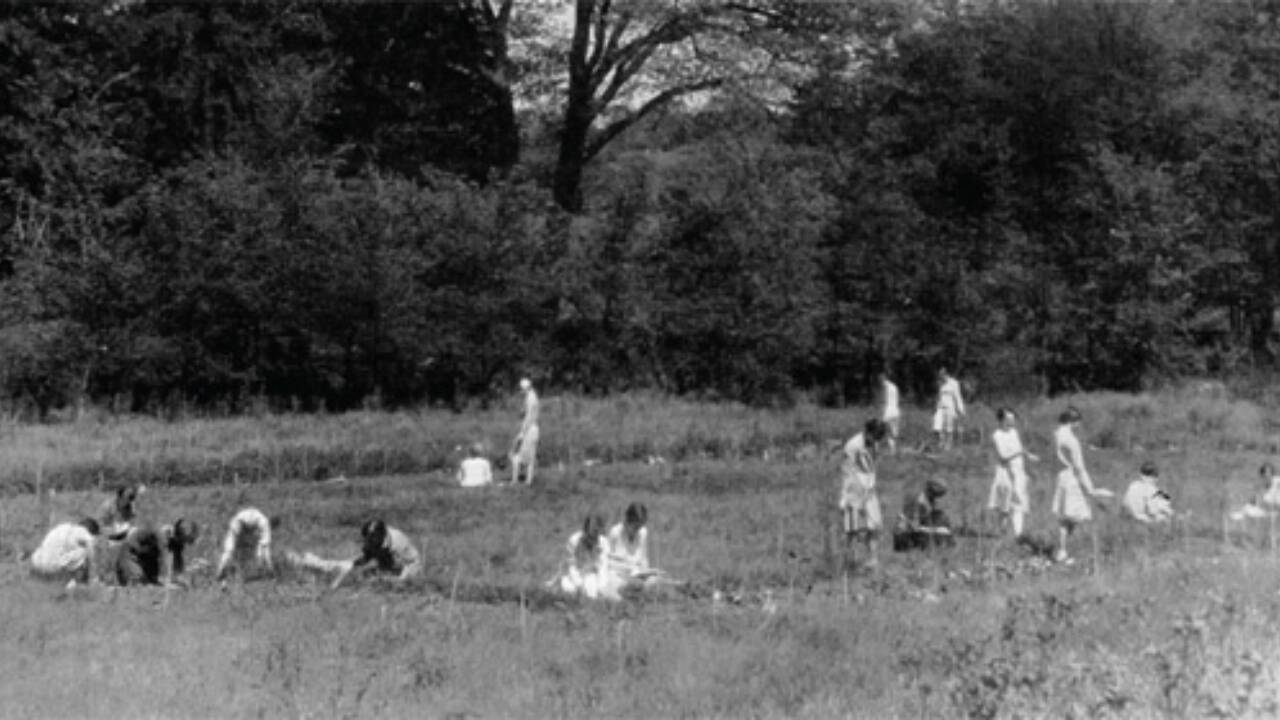
Furthermore, Roberts wanted the laboratory to demonstrate that native plants could have both ecological and aesthetic benefits. According to Vassar biology professor Meg Ronsheim’s historical accounts, the botanist created paths through the plantings so the general public could experience the beauty of Dutchess County’s native flora. Therefore, her work connected botanical research, education, conservation and landscape design during a time when the use of locally native vegetation was far from mainstream landscaping.
The garden that changed how native plants were viewed
In 1929, Roberts and landscape architect Elsa Rehmann published American Plants for American Gardens. The University of Georgia has cited that the book was among the early influential works promoting native plants and applying ecological principles to landscape design. Instead of treating gardens as collections of attractive species, Roberts and Rehmann emphasised plant groups suited to the particular combinations of climate, soil, topography and light.
The scale of Roberts’ experiment grew substantially: Vassar records state that more than 675 plant species had been established by 1949. Other historical accounts describe the original four-acre project expanded to about seven acres. Therefore, Roberts transformed a degraded patch dominated by poison ivy and a few native oak trees into a large living collection, which was organised around the ecology of the surrounding region.
It is worth noting that Roberts’ retirement did not mark the end of the site’s ecological story. Vassar reported that maintenance declined in the following years, while road construction in 1965 altered the site’s hydrology and eliminated some of its original plant associations. In the 1990s, restoration efforts began again, including invasive species removal and construction of the boardwalk, and by the 2010s, the college’s students and faculty were once again studying the area, examining subjects ranging from road salt and water quality to the long-term effects of wetland restoration on biodiversity and ecosystem health.