
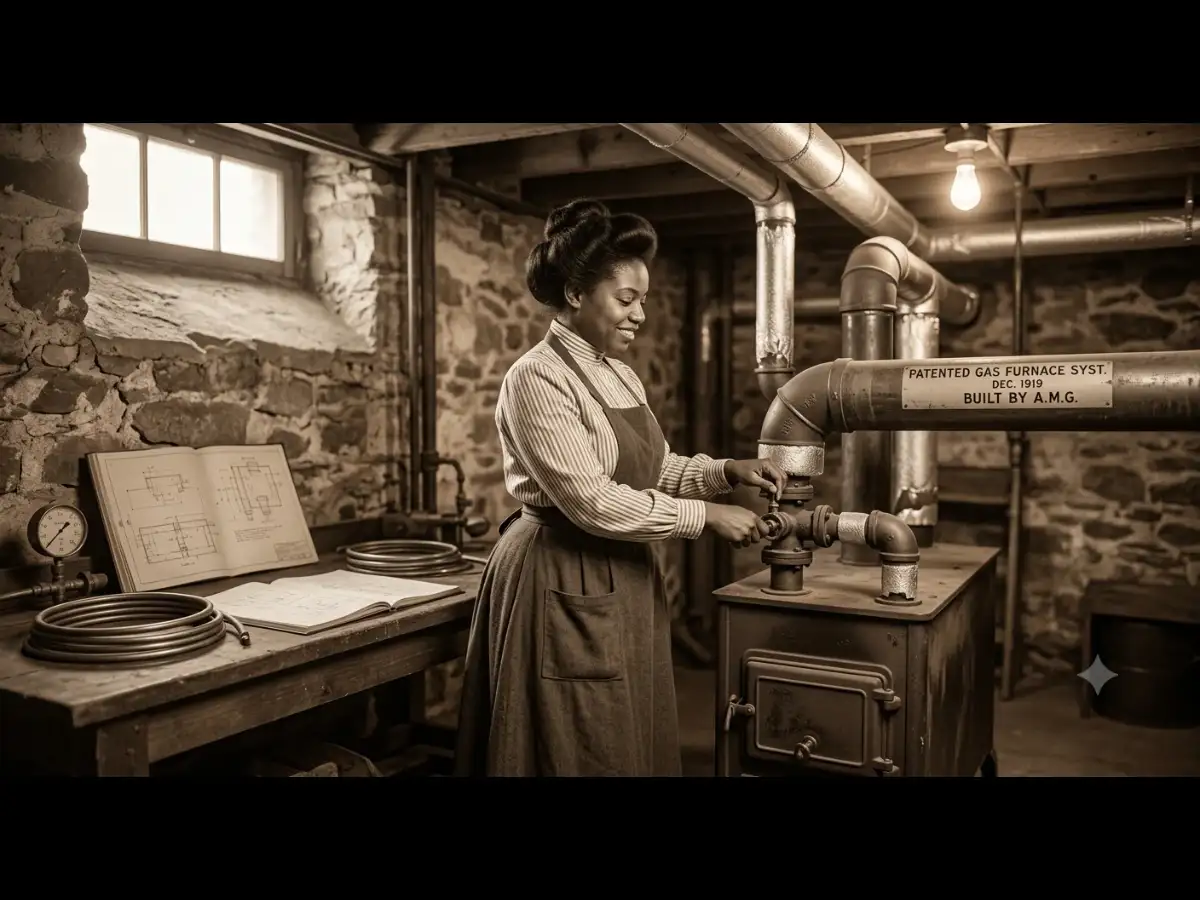
In 1919, an African-American woman inventor created a central heating system powered by gas laying foundation for the future systems. Alice H. Parker received U.S. Patent No. 1,325,905 for a heating furnace that used natural gas instead of wood or coal. Her design drew cool air into the furnace, passed it through heating chambers and sent warm air through ducts to different parts of a building. The system also included separate heating units that could be controlled independently. This feature connected her design with the later development of zone heating. Parker’s patent is now discussed as part of the history of central heating and HVAC systems.
Alice H. Parker and the 1919 heating furnace patent
In 1919, an African-American woman inventor created a central heating system powered by gas laying foundation for the future systems. Alice H. Parker was from Morristown, New Jersey. Historical records about her personal life are limited. The available records identify her as the inventor named on U.S. Patent No. 1,325,905.
The patent was for a “Heating-Furnace.” Parker filed the application on July 9, 1918, under serial number 244,080. The United States patent was granted on December 23, 1919. The patent document identifies Alice H. Parker of Morristown, New Jersey, as the inventor.
The invention used gas as fuel and included several heating units. Each unit had its own gas heater. The patent described a system in which the heating units could be controlled independently. Warm air could then be directed through separate ducts to different parts of a building.
This arrangement is important because it went beyond the idea of producing heat in one location. Parker's design considered how heat could be moved through a building and how different areas could receive different amounts of heat.
What was the problem Parker wanted to address?
Homes in the period often depended on fireplaces and stoves that burned wood or coal. These systems produced heat near the location of the fire. Heating a whole house could therefore be difficult. Parker lived in New Jersey, where winter temperatures created a need for household heating. Howard University reports that her interest in the problem was connected with the difficulty of heating the entire home with the methods available at the time.
Wood and coal also required work. Fuel had to be obtained, stored and placed into the heating system. A fire also had to remain burning when heat was needed. Parker's design used natural gas as the fuel. It was intended to reduce the work connected with handling solid fuel. It also moved the source of heat away from the rooms and used ducts to distribute heated air.
How Alice Parker's heating system worked?
The patent gives details about the way the furnace was arranged. The system included a cold-air supply and several heating units.
The basic process can be understood in several steps:
- Cool air entered the furnace: Air was brought into the heating system through a cold-air box.
- Gas supplied the heat: Gas burners were placed inside heating chambers.
- Air passed around the heating chambers: The design created passages that allowed incoming air to move through the furnace.
- Heat was transferred to the air: The air was warmed as it moved through the heating arrangement.
- Warm air entered ducts: The heated air was directed into ducts connected with different areas of the building.
- Different areas could be regulated: The patent described independently controlled heating units and separate ducts for different rooms or floors.
The patent drawings show multiple heating units connected to ducts. Each heating unit contained combustion chambers and gas heaters. The design also included controls for the amount of gas supplied to the heaters. This means the system was not simply a gas burner connected to one room. It was a system for producing heat and moving that heat through a building.
The zoning idea in Parker's design
One part of the Alice H. Parker patent is connected with the idea of zone heating. The patent described multiple heating units that could be controlled independently. Each unit had hot-air ducts leading to different parts of a building. This allowed heating in different rooms or floors to be regulated according to need. Modern zone heating uses a similar basic principle. A building can be divided into areas, with each area receiving control over its temperature.
Parker's design should not be described as the invention of the modern thermostat or modern HVAC system. Those technologies developed through many inventions over many years. However, the independent heating concept in her patent is one reason historians and educational organizations connect her work with later zone-heating systems and thermostatic control.







.jpeg?w=600)




