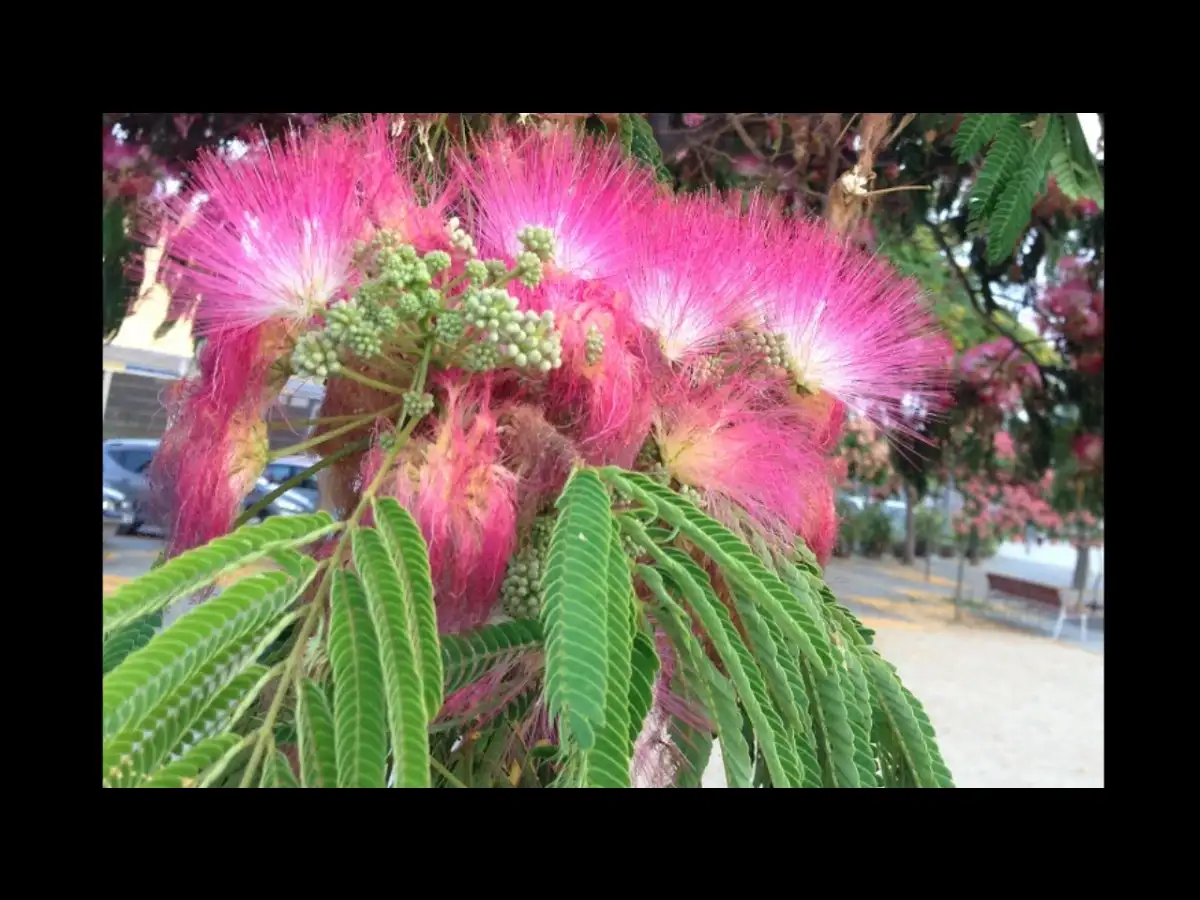
In 1917, botanist Joseph Rock introduced albizia to Hawai‘i as part of efforts to restore forests that had been cleared over the years. More than a century later, the fast-growing tree has become a major invasive species concern across several Hawaiian islands.
By 2018, an estimated 63,000 acres were heavily infested with albizia on O‘ahu and eastern Hawai‘i Island, according to the Hawaii Invasive Species Council’s Strategic Plan for the Control and Management of Albizia in Hawaii. The estimate included about 20,000 acres on O‘ahu and 43,000 acres in eastern Hawai‘i Island.
Albizia is native to Indonesia, Papua New Guinea, the Solomon Islands and Australia. It was introduced to Hawai‘i partly because of its exceptionally fast growth. At the time, the ability to quickly establish on damaged land was seen as an advantage for reforestation. State records also show that the tree was used as an ornamental plant.
But the same characteristic that made albizia attractive for reforestation later made it difficult to control.
The tree can grow extremely tall and develop a top-heavy structure. Large branches or entire trees can fall, particularly during storms, creating risks for homes, roads and power lines. The Hawai‘i-Pacific Weed Risk Assessment classified albizia as a high-risk invasive species because of its ability to spread and establish across large areas.
Albizia has established populations on Kaua‘i, O‘ahu, Maui and Hawai‘i Island. However, the 63,000-acre figure is not a statewide estimate. It refers specifically to the 2018 strategic plan’s assessment of heavy infestations on O‘ahu and eastern Hawai‘i Island.
Dense albizia stands can also compete with native vegetation, adding to concerns about the tree’s impact on Hawaiian ecosystems.
With infestations spread across such large areas, removing every albizia tree was considered unrealistic. Instead, the state’s strategy focused on targeted management, particularly in locations where the trees posed the greatest ecological, safety or infrastructure risks.
Groups including the Big Island Invasive Species Committee have worked with residents, government agencies and utility companies to tackle trees in high-risk areas. Researchers have also investigated biological control methods that could help slow the tree’s spread alongside physical removal.
The coordinated response dates back to 2013, when Hawai‘i’s legislature passed a resolution urging the Invasive Species Council to develop a comprehensive interagency plan to control and eradicate albizia statewide, initially focusing on Hawai‘i Island. The resolution also called for research into biological control methods.
The Hawaii Invasive Species Council subsequently developed its strategic plan, which was adopted in 2018. Rather than proposing the complete removal of every albizia tree, the plan focused on documenting the tree’s distribution, evaluating control methods and developing site-specific management strategies.
The history of albizia offers a striking example of how the perceived value of a species can change over time.
In 1917, its rapid growth appeared to offer a practical solution to Hawaii’s forest-loss problem. Decades later, that same ability to grow and spread quickly contributed to the tree becoming a difficult invasive-species challenge.
More than a century after its introduction, albizia remains established across several Hawaiian islands. Its story shows how a decision that appears beneficial under the conditions of one era can create a very different environmental and safety challenge when a fast-growing species finds conditions that allow it to spread extensively.