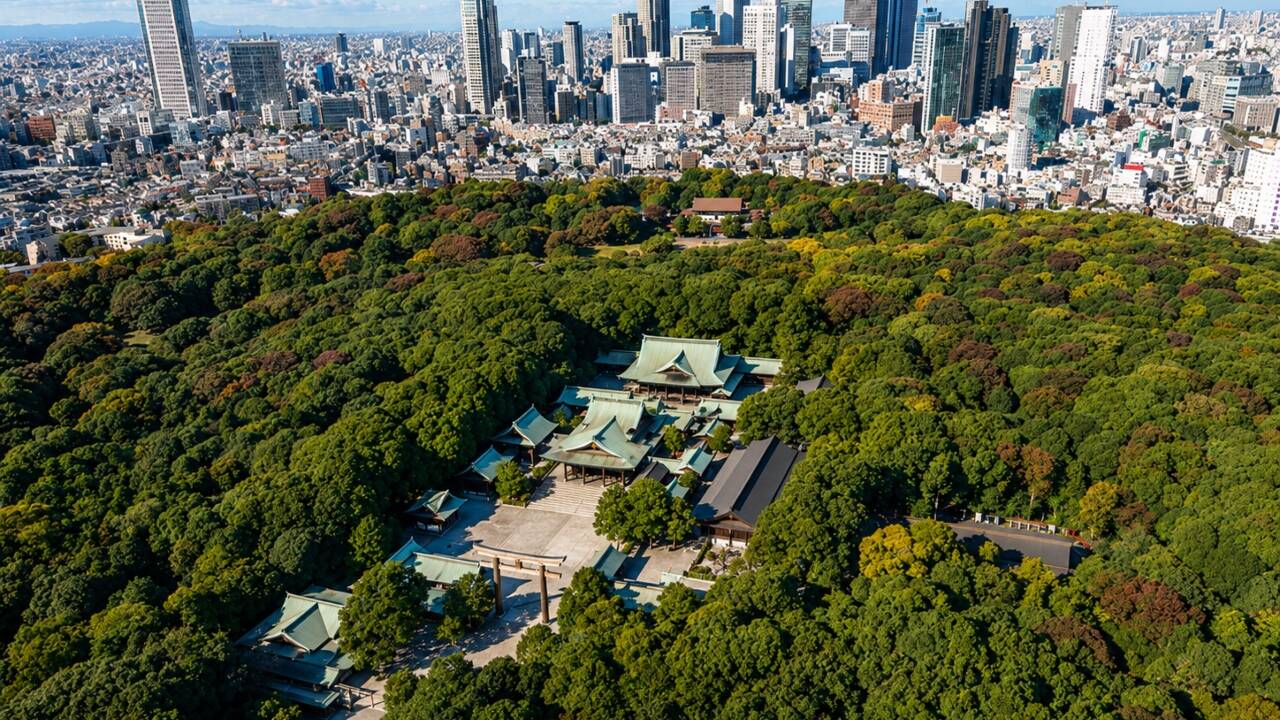
In the heart of one of the world’s busiest cities lies a forest that was never meant to stay the way it was planted. Hidden behind the bustling streets of Tokyo’s Harajuku district, the woodland surrounding Meiji Jingu Shrine was conceived in 1915 with an ambition to create a self-sustaining forest that would continue to evolve naturally for at least 150 years without any human intervention post the planting phase. More than a century later, the plan is unfolding in the manner the designers had once envisioned. According to the Meiji Jingu Shrine , the forest was established through one of Japan’s largest civic environmental projects, with 110,000 volunteers planting 100,000 donated trees. Today, the 70-hectare woodlands stand as one of Tokyo’s most important urban ecosystems, which is also considered a landmark in the country’s ecological forestry.
Get breaking news anytime, anywhere. Download the TOI app now!
A forest designed to outlive its creators
The idea for Meiji Jingu emerged after the deaths of Emperor Meiji in 1912 and Empress Shōken in 1914, when plans were made to build a shrine dedicated to their memory. The planners chose to create an “eternal forest” that would grow naturally over generations instead of just surrounding the shrine with formal gardens. According to the official Meiji Jingu Shrine history, planning began in 1915 under the leadership of famous forester Dr Seiroku Honda, alongside botanists and landscape architects, who intensively studied the local soil, climate and ecological succession. Following the inspection, instead of designing a landscape that looked perfect immediately, they mapped how a forest would change over a period of roughly 150 years, thus allowing pioneer species to gradually give way to a stable evergreen broadleaf forest dominated by oak, chinquapin and camphor trees.
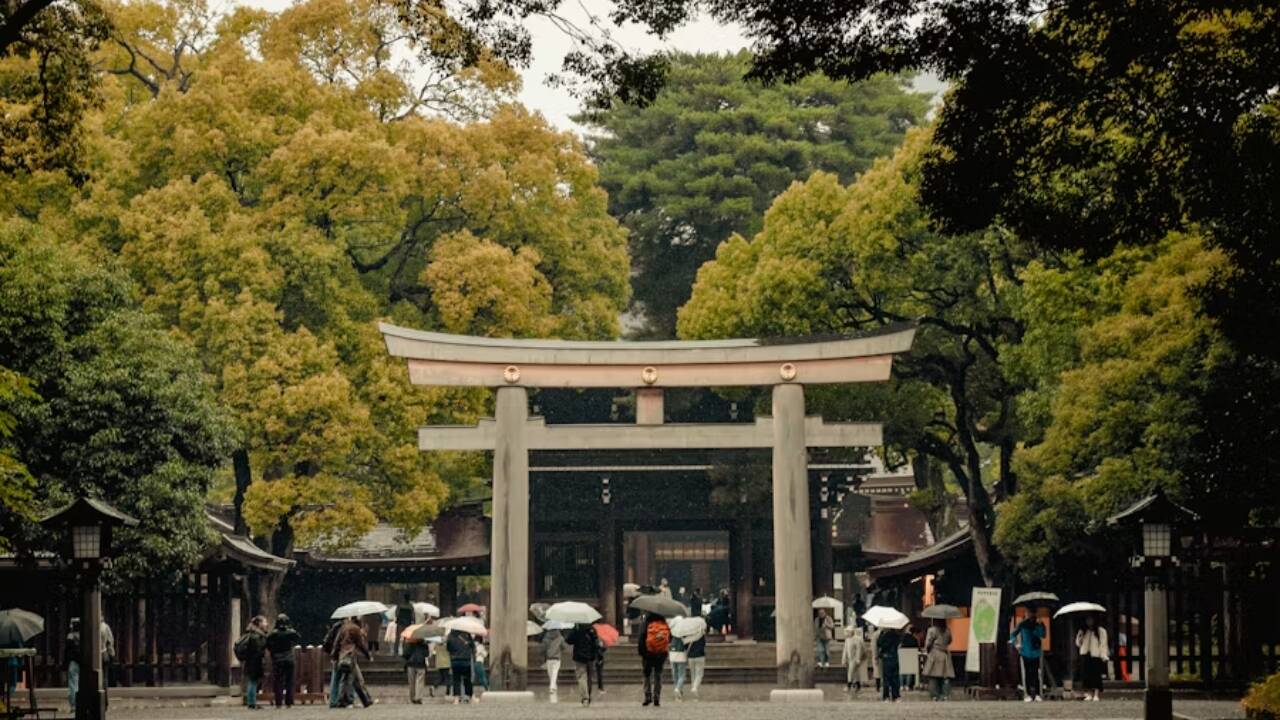
The Japanese government’s magazine, Highlighting Japan , reported that people from every prefecture donated approximately 100,000 trees representing 365 indigenous species, while around 110,000 young volunteers travelled to Tokyo to help plant them. Following the arrival of the volunteers, every tree was deliberately positioned according to ecological principles rather than ornamental design, thus ensuring the woodland would eventually regenerate on its own without any replanting or intensive maintenance. While the shrine’s precinct opened on 1 November 1920, designers knew that the real project would unfold over the next century or beyond.
The forest was designed to manage itself
One of the most notable aspects of the Meiji Jingu is what happened after the last sapling was planted. The shrine’s management principles reported that virtually nothing is removed and nothing is added, with fallen leaves remaining where they land, dead trees are left to decompose naturally, allowing the natural regeneration to determine which species thrive over time. This hands-off policy was entirely intentional. Japan for Sustainability noted that the planners had predicted that early growing conifers would slowly be replaced by shade-tolerant evergreen broadleaf species as the woodland matured, a transition that researchers say is occurring much as anticipated.
The planned competitive elimination explains why the forest now contains around 230 primary tree species, down from the original 365 donated varieties. Far from an ecological loss, this reduction represents the successful transition toward the stable, climate-resilient climax forest the founders intended.
Today, the forest supports numerous birds, insects and other wildlife that are unusually rarely associated with central Tokyo. The dense canopy moderates temperatures, absorbs rainfall, stores carbon and reduces urban noise while creating a natural buffer between the shrine and the surrounding metropolis. Furthermore, researchers increasingly cite Meiji Jingu as one of the earliest large-scale demonstrations of ecological restoration based on natural succession rather than conventional landscaping, which later influenced concepts of sustainable urban forestry.
More than 100 years after the work began, Meiji Jingu continues to evolve toward the mature forest that was originally envisioned by its designers. The shrine’s official website has shared that the woodland remains a sacred space where ecological processes are allowed to proceed largely undisturbed, thus making it a place of worship as well as a living ecological experiment. In an era when several restoration projects are judged over years or decades, Meiji Jingu demonstrates the value of planning across human lifetimes. Therefore, what began in 1915 as an ambitious project for an “eternal forest” has now become one of the world’s most enduring examples of how ecological science, public participation and patience can create a forest that truly builds itself.