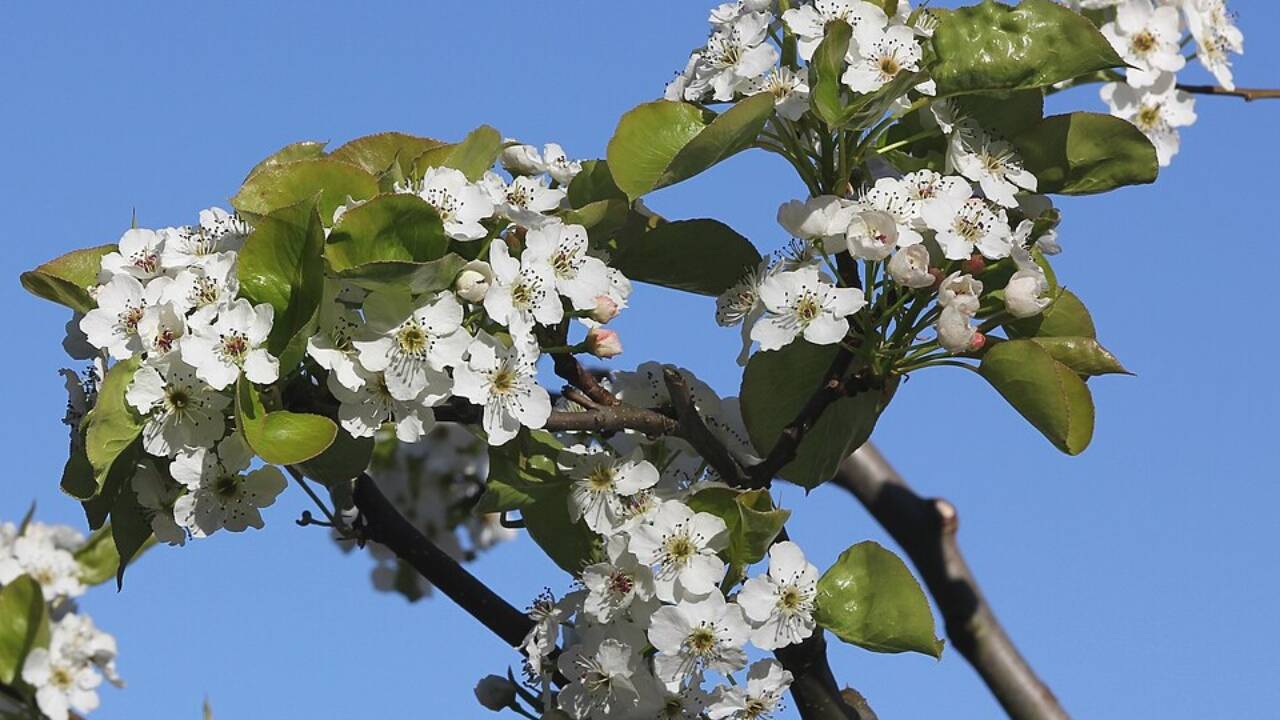
What began as a scientific effort to protect America’s pear orchards has now become one of the country’s most enduring ecological cautionary tales. More than a century after the U.S. Department of Agriculture (USDA) imported Callery pear (Pyrus calleryana) from East Asia, the tree’s descendants have spread beyond orchards and suburban streets, with the species now invading roadsides, abandoned fields and forests across the country. According to the USDA’s National Invasive Species Information Center (NISIC), Callery pear was first imported in 1908 to develop pear trees resistant to fire blight, a bacterial disease that threatened commercial pear production.
Get breaking news anytime, anywhere. Download the TOI app now!
From disease-resistant import to landscaping sensation
According to the USDA, additional Callery pear germplasm that was collected from China helped expand the breeding programmes aimed at improving fire blight resistance. Furthermore, researchers recognised the species’ ornamental qualities. Notably, at the USDA’s Glenn Dale Plant Introduction Station in Maryland, horticulturists selected a nearly thornless form that became the ‘Bradford’ cultivar, which was first sold commercially in 1961. Its profusion of white spring blossoms, glossy foliage, rapid growth and tolerance of the urban environment rapidly made it one of the most widely planted ornamental trees in the United States.
For decades, Bradford pears seemed ideal for landscaping because individual trees were self-incompatible and produced little or no viable seed when planted alone. However, this assumption changed when nurseries introduced additional Callery pear cultivars, including Aristocrat, Chanticleer, Cleveland Select and others. According to NC State Extension , pollen exchange between genetically different cultivars overcame this self-incompatibility, thus allowing fertile fruit to develop. With birds consuming the plant’s small fruits and dispersing the seeds across fields, roadsides and forests, the ornamental planting soon turned into a source of wild populations.
Once established outside cultivated landscapes, the escaped offspring reverted to the characteristics of wild Callery pears. The Missouri Department of Conservation has noted that these trees commonly develop long, sharp thorns and rapidly form dense and nearly impenetrable thickets that outcompete native grasses, shrubs and young trees. As they leaf out early and tolerate a wide range of soil and environmental conditions, they gain a competitive advantage over much of the native vegetation, reducing biodiversity and altering habitats across much of the eastern United States. The USDA’s National Invasive Species Information Center therefore identifies Callery pear as an invasive species that is capable of transforming natural ecosystems.
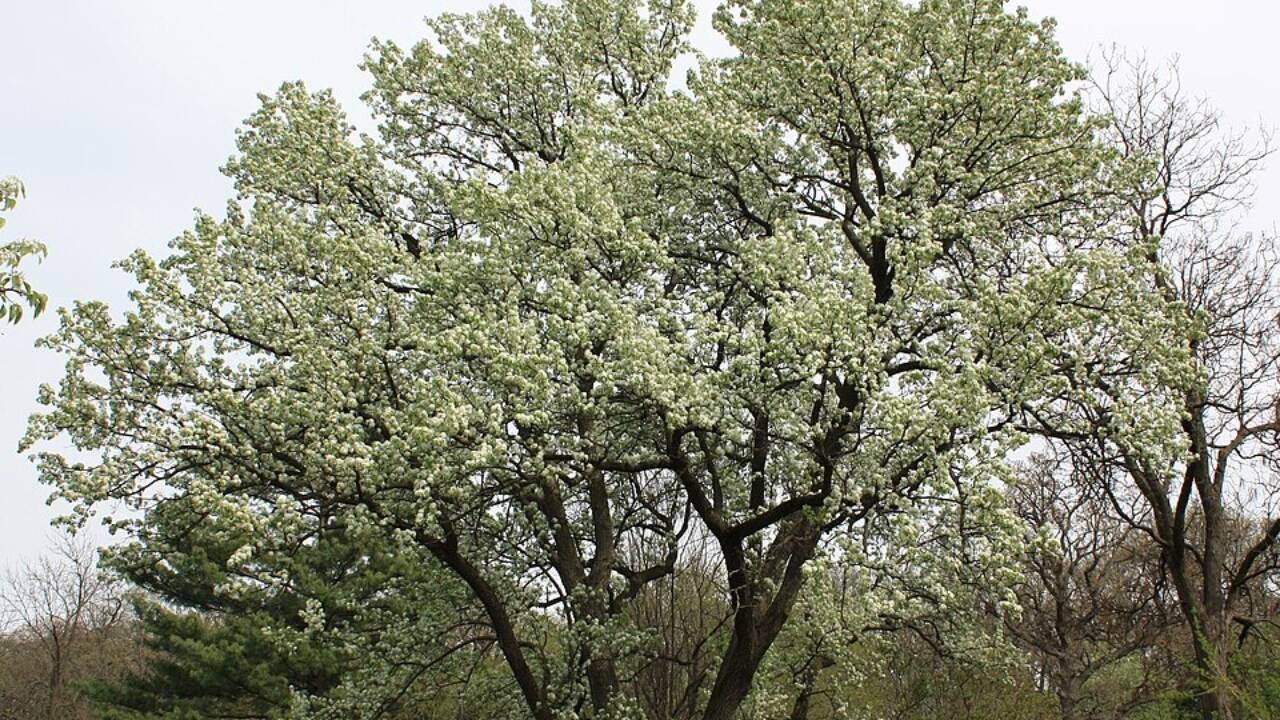
Additionally, the USDA’s National Invasive Species Information Center has also noted that Bradford pears develop narrow branch angles, which make mature trees highly susceptible to splitting during storms or even under their own weight after 15 to 20 years of growth. Their showy white blossoms are considered equally notorious for producing a pungent odour that attracts flies and other pollinating insects. Combined with the tree’s rapid spread, these characteristics have transformed a once-celebrated ornamental tree into a management challenge for landowners and conservation agencies.
A pushback against an ecological mistake
Growing scientific evidence has prompted policymakers and conservation groups to discourage the tree’s continued use. Several U.S. states classify Callery pear as an invasive species, while other states have restricted or banned the sale of this species and launched initiatives that encourage landowners to replace Bradford pears with native alternatives. Furthermore, scientists emphasise that planting seemingly ‘sterile’ ornamental cultivars is no longer considered an effective safeguard, as genetically different Callery pear varieties can still cross-pollinate and produce fertile offspring. The Callery pear therefore stands as a reminder that even well-intentioned agricultural innovations can have unforeseen outcomes when introduced species escape cultivation.