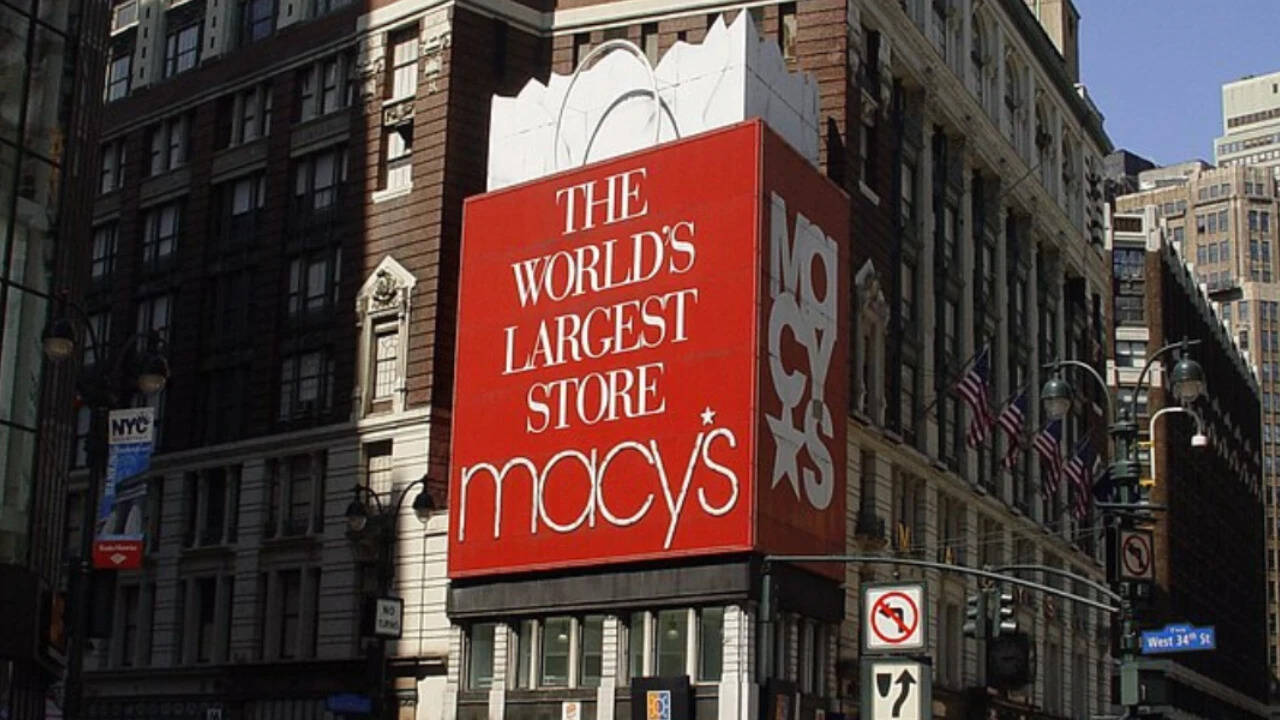
Last week, workers took down the giant red shopping bag that has wrapped around Macy’s flagship store in Herald Square for more than 30 years. ABC7 New York reports that the removal has revealed a small, weathered building hidden in the corner of the store that most shoppers never even noticed. That building was never owned by Macy's. The reason is a petty and costly feud dating from 1900.
Get breaking news anytime, anywhere. Download the TOI app now!
Macy's tried to buy an entire city block
At the turn of the 20th century, Macy's was still on 14th Street, in Manhattan's Ladies' Mile shopping district. The store’s owners, the Straus family, wanted more space to expand. They turned their attention to Herald Square and started buying land, lot by lot, on the block between Broadway and Seventh Avenue, 34th Street and 35th Street. Almost every owner agreed to sell. One did not.
A rival swooped in first
A landowner, Alfred Duane Pell, had made an informal agreement to sell his small corner plot to the Straus family for $250,000. A much larger sum was offered by an agent acting for Henry Siegel before the deal was closed. Siegel owned Siegel-Cooper, a huge rival department store on Sixth Avenue called “The Big Store.” Gothamist reports Siegel’s agent offered Pell $375,000 for the same tiny plot and Pell took the deal.
The buyer was a man named Robert H. Smith. Many believed Smith was acting on behalf of Siegel, but, as is often the case with old real-estate stories, the exact link was never conclusively established.
Why buy one tiny corner?
Siegel had no real plans to open a store on the site. His goal appears to have been leverage, Untapped Cities notes. He was reportedly looking to trade the land for Macy’s former 14th Street building, which the store was about to vacate when it moved uptown.
Macy's shot down the deal. Instead, the Straus family built their huge new flagship store around the corner plot they couldn't buy, leaving a small gap in an otherwise complete city block. The store opened in 1902, but that one stubborn corner was outside of Macy's control.
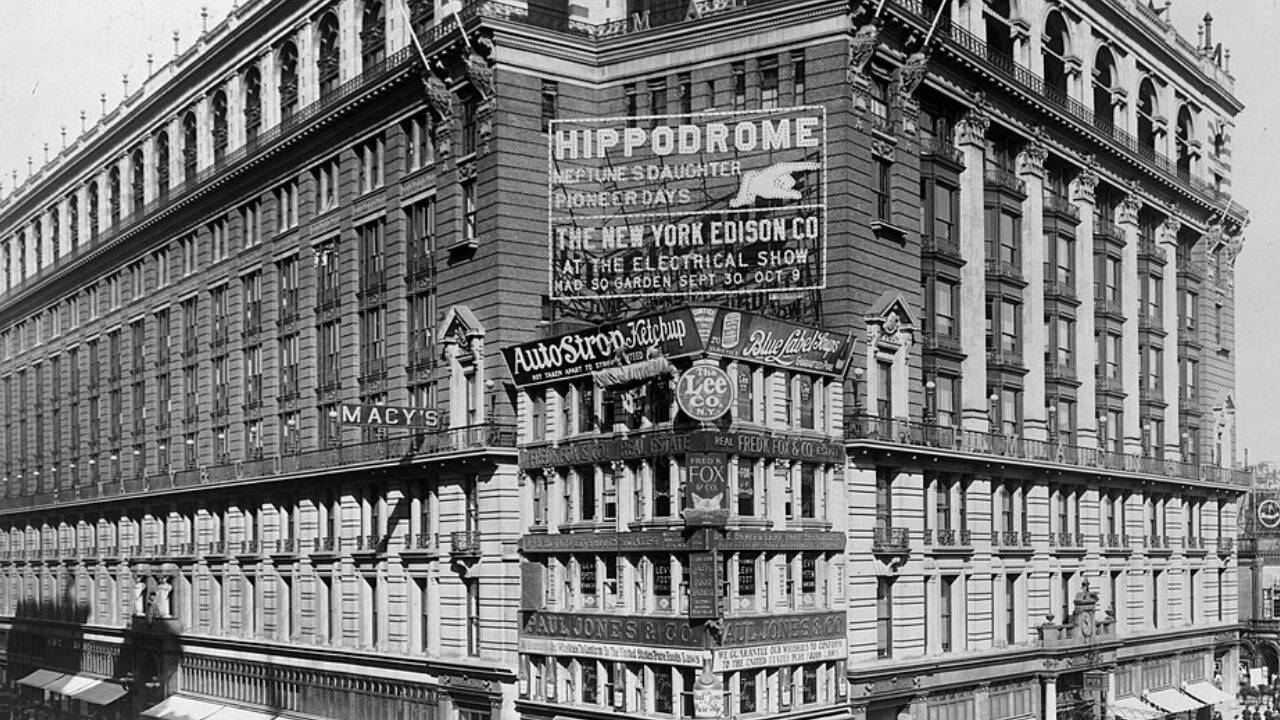
From cigar shop to Million Dollar Corner
A year later, Siegel tore down the original little building and built the five-story structure that still stands there today. Untapped Cities' research shows that he leased the new building to the United Cigar Store Company for $40,000 a year. Siegel never made his trade, and he lost ownership of the building not long after.
The plot then went on to earn itself a nickname. The New York Times at the time reported that in December 1911 the little building was sold again, this time for $1,000,000, a record price for so small a patch of land. New Yorkers began calling it the Million Dollar Corner, and the name has stuck for well over a century.
The billboard years, and why the bag came down
Eventually, Macy’s accepted the situation in the most practical way possible. According to Untapped Cities, around 1945 Macy’s began advertising on the building’s facade, turning its old rival’s foothold into free promotion for its own name. For the next decades, the billboard changed many times. ABC7 New York reviewed archival photos of the sign dating back to the 1950s, when it read “This is Macy’s,” and as recently as 1992 when it read “The World’s Largest Store.” The original version of the now-famous red shopping bag was already a familiar sight by 1994.
So why did it come down now? The sign was taken down after a dispute between the building’s owner and the company that holds the advertising rights, said Dan Biederman, president of the 34th Street Partnership, to ABC7 New York. One company owns the building, and the other wants to keep an advertising sign up on it, he said, adding that the two sides have not reached a new agreement.
What Macy's says comes next
Macy's own public framing pointed to a different reason. In a statement to ABC7 New York, Macy’s said the sign was outdated and is being removed as part of a broader site update by the billboard’s owner. The company said new branding for Herald Square would be revealed soon, but no details have been given.
But for now, passers-by are just getting used to it. ABC7 New York spoke to several people who said that they found the bare corner odd after seeing the bag there for decades.
Why this decades-old feud still matters
Macy’s built one of the world’s biggest department stores, but never managed to buy back that one little corner. More than 120 years later, the plot is still owned separately, still making headlines, and still resting quietly in the middle of Herald Square. It's a small reminder that even the giants of retail don't always get what they want.